Description
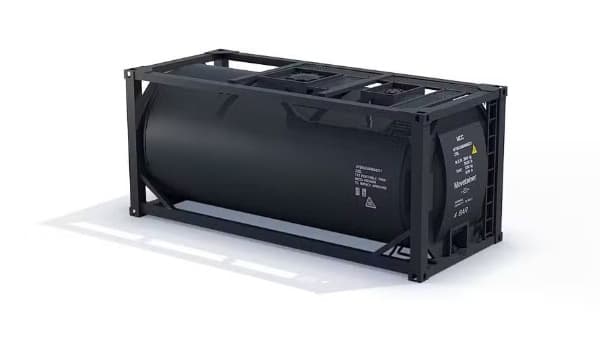
The 20-foot tank container, also known as a tank container or ISO tank, is a specialized transport unit designed to carry and store bulk liquids, whether food, chemical, petroleum, or gaseous. Unlike standard dry containers, it incorporates a stainless steel tank fixed inside a standard ISO frame, combining the robustness of a maritime container with the sealing and chemical resistance of an industrial-grade tank. This type of container is used in many sectors: agri-food, chemicals, petrochemicals, energy, pharmaceuticals, and water treatment. It meets the requirements of intermodal transport, whether by sea, rail, or road, and can be handled with standard port and terminal equipment (cranes, spreaders, heavy forklifts).
Technically, the 20-foot tank container complies with ISO 668 standard dimensions: approximately 6.06 m long, 2.44 m wide, and 2.59 m high. These dimensions give it the same footprint as a 20-foot dry container, making it easy to integrate into existing logistics chains. The inner tank is generally made of stainless steel (often grade 316L for corrosive or food products), with a thickness suited to pressure and mechanical stress. It is surrounded by a load-bearing structure of Corten or galvanized steel, ensuring the rigidity of the assembly and protecting the tank from impacts during handling. The frame is equipped with standard corner castings, allowing stacking, lifting, and securing according to international standards. The volumetric capacity of such a container is generally between 24,000 and 26,000 liters, depending on the design and type of tank. The tare weight varies with materials and equipment, but is higher than that of an equivalent dry container, which must be taken into account when calculating payload.
One of the main advantages of this container is its compliance with international regulations. It is ISO certified, guaranteeing its dimensions and structural strength. For the transport of dangerous goods, it meets the requirements of the IMDG (International Maritime Dangerous Goods Code) for sea transport, ADR for road transport, and RID for rail. CSC (Convention for Safe Containers) certification attests to its safety and suitability for international transport. These compliances are essential for shippers handling products classified as dangerous (flammable, corrosive, toxic liquids, etc.). It is important to note that compliance also depends on the specific use: not all tank containers are necessarily suitable for all products. For example, transporting liquefied gases requires pressure tanks, while food liquids require specific materials and cleaning procedures (often food-grade stainless steel with suitable seals and valves).
The concrete uses of this container are varied. In the agri-food industry, it allows the transport of fruit juices, vegetable oils, wine, syrups, or concentrates, while complying with hygiene standards (often HACCP). In the chemical sector, it is used to transport solvents, acids, bases, resins, or intermediate products. For energy, it can contain fuels, lubricants, or additives. Finally, in the gas field, special tanks can transport LPG or other liquefied gases under pressure. Beyond transport, the tank container can be used as a temporary storage unit on an industrial site, particularly when liquids must be kept awaiting processing or shipment. It can also serve as a mobile reservoir for construction sites or events requiring water or fuel supply.
Maintaining a tank container is crucial to ensure its longevity and operational safety. After each use, the tank must be cleaned according to strict procedures, often with products suited to the type of goods transported. For food products, cleaning with hot water and steam, followed by visual inspection and sometimes bacteriological testing, is recommended. For chemicals, rinsing with specific solvents may be necessary. Valves, seals, and closure systems must be checked regularly to detect any wear or leaks. The external structure (frame, ladder, walkway) must be inspected to prevent corrosion, especially in marine environments. Regular maintenance helps maintain certification and avoid costly downtime.
When purchasing a used or new tank container, several points require attention. It is essential to check the condition of the inner tank: look for cracks, corrosion pitting, or residues from previous products. Certificates of conformity (ISO, CSC, IMDG, ADR) must be up to date and correspond to the intended use. The actual capacity and tank material (stainless steel 304, 316, 316L) must be confirmed, as they determine compatibility with products. The heating or insulation system, if present, must be tested. Finally, ensure the container has not been involved in an accident or major leak, which could compromise its structural integrity. Inspection by an approved body may be advisable for major transactions.
In France, the transport of dangerous goods by tank container is subject to ADR regulations for road, which impose specific training for drivers, safety equipment, and detailed transport documents. For sea transport, the IMDG code applies, with segregation and stowage rules. Rail transport is governed by RID. Companies using this type of container must therefore ensure compliance of their operations and traceability of products. In addition, the storage of dangerous liquids is governed by ICPE regulations (Installations Classified for Environmental Protection), which may impose containment, monitoring, and declaration measures.
This 20-foot tank container is offered new, with a Corten steel structure and a stainless steel tank. It is stackable and can be lifted by the corners, facilitating storage and handling. Its modular design allows easy access for inspection and maintenance. It is a durable solution for professionals who need to transport or store liquids safely, while benefiting from a standardized format compatible with existing infrastructure. Whether for regular or occasional use, this container offers a reliable alternative to conventional road tankers, with the advantage of being shippable by sea without transshipment.
In summary, the 20-foot maritime tank container is a versatile, standardized piece of equipment suitable for many industrial sectors. It combines the robustness of an ISO container with the functionality of a transport tank. Its purchase represents an investment for companies wishing to internalize their liquid logistics or have mobile storage capacity. It is recommended to clearly define needs (product type, volume, frequency of use, regulatory constraints) before choosing the exact model, as different configurations exist (single-wall, double-wall, insulated, with or without heating system). An experienced supplier can advise on the most suitable solution and assist the buyer with compliance procedures.
To further examine maintenance, several levels of intervention should be distinguished. Internal cleaning is the most frequent operation. It can be performed by specialized washing stations equipped with high-pressure rotary systems and nozzles that reach all tank walls. For food products, hot potable water with food-grade detergents is generally used, followed by a clear water rinse and steam disinfection. For chemicals, the choice of cleaning product depends on the nature of the residue: organic solvent, alkaline solution, or diluted acid. In all cases, the operator must wear appropriate personal protective equipment and follow safety data sheets. After cleaning, a visual inspection of the tank is essential, supplemented if necessary by a conductivity test or a sample for analysis. Cleaning traceability is often required by customers and authorities, especially for pharmaceutical or food products.
Preventive maintenance also concerns ancillary equipment. Bottom valves, top valves, pressure relief systems, and seals must be inspected at regular intervals. Rubber or PTFE seals wear over time and must be replaced as soon as they show signs of hardening, cracking, or deformation. Heating systems, often consisting of electric resistances or coils with heat-transfer fluid circulation, must be tested to verify proper operation and the absence of hot spots. Thermal insulation, when present, must be checked to detect any degradation that would impair energy efficiency. Finally, the external metal structure must be inspected for corrosion, especially at welds and water accumulation areas. Anti-corrosion treatment can be applied periodically.
The regulations applicable to the transport of dangerous goods in France deserve detail. The ADR (European Agreement concerning the International Carriage of Dangerous Goods by Road) classifies goods according to their hazard and imposes requirements for packaging, labeling, documentation, and training of personnel. For a tank container, this translates into requirements for tank design (test pressure, thickness, materials), safety equipment (valves, filling limit devices), and periodic inspection procedures. In France, the TMD (Transport of Dangerous Goods) decree specifies how ADR applies nationally. Drivers must hold a basic ADR training certificate and, if applicable, a tank specialization. Companies must appoint a TMD safety adviser responsible for ensuring compliance. For sea transport, the IMDG code imposes similar rules, with requirements for stowage and segregation of containers. RID for rail and ADN for inland waterways complete the framework. It is therefore essential to properly identify the hazard class of the product transported and verify that the tank container is certified for that class.
The storage of dangerous liquids in tank containers is also regulated. ICPE regulations subject certain activities to authorization, registration, or declaration, depending on stored volumes and product nature. Containment, leak detection, firefighting, and monitoring measures may be imposed. Tank containers used as fixed storage must often be installed on impermeable areas with retention basins. It is recommended to consult the prefecture or a specialized engineering firm before any installation.
Regarding sector-specific use cases, several concrete examples can be cited. In the agri-food industry, tank containers are used to transport concentrated fruit juices, purees, edible oils, vinegar, wine, or milk. They must then meet strict hygiene requirements: food-grade materials, no retention areas, easy cleaning, HACCP certification. In chemicals, acids (sulfuric, hydrochloric), bases (caustic soda), solvents (acetone, toluene), resins, or liquid polymers are transported. Chemical compatibility between the product and the tank material is paramount: 316L stainless steel resists many corrosive products, but some require special coatings or more noble materials. In the petroleum sector, tank containers can hold fuels, lubricants, additives, or used oils. They are then subject to dangerous goods transport rules and must be equipped with grounding devices to avoid electrostatic charges. In the energy field, pressure tanks are used to transport LPG, ammonia, or industrial gases. These containers are designed to withstand high pressures and undergo rigorous periodic inspections. Finally, in the pharmaceutical sector, small-capacity tank containers can be used to transport active ingredients or ultra-pure solvents, with extreme cleanliness requirements.
Comparing the 20-foot tank container with other sizes and types helps clarify its positioning. The 20-foot container is the standard format for tanks, offering a good compromise between capacity and maneuverability. There are also 30-foot or 40-foot tank containers, but they are less common because the additional capacity is limited by the maximum load allowed on roads and ships. Moreover, a 40-foot tank container would be harder to handle and store. 20-foot tank containers are often stackable, optimizing space at port terminals or depots. Compared to a 20-foot dry container, the tank container offers reduced payload capacity due to the weight of the tank and frame, but it allows transporting bulk liquids without individual packaging, reducing costs and waste. Compared to a conventional road tanker, the tank container has the advantage of being compatible with sea and rail transport without transshipment, simplifying international logistics. Compared to a flexitank (a flexible bag installed in a dry container), the tank container offers better resistance, greater safety, and better protection against contamination, but it is heavier and more expensive to purchase. The choice between these solutions depends on the volume to be transported, frequency, product nature, and regulatory constraints.
Finally, accessories and options available for this type of container should be mentioned. These include access ladders, roof walkways, electric or steam heating systems, thermal insulation, bottom valves with standard fittings (Camlock, DIN, etc.), level sensors, grounding systems, integrated toolboxes, or document storage compartments. These options allow adapting the container to specific needs and improving safety and productivity of operations. It is recommended to define them according to the intended use and regulatory requirements.
In conclusion, the 20-foot maritime tank container is a complete technical piece of equipment, requiring a good understanding of standards, maintenance procedures, and logistical constraints. Its purchase must be carefully considered and supported by a supplier capable of advising on the right configuration. With proper maintenance and compliant use, it offers a durable and efficient solution for the transport and storage of bulk liquids, contributing to the performance and safety of industrial supply chains.