Description
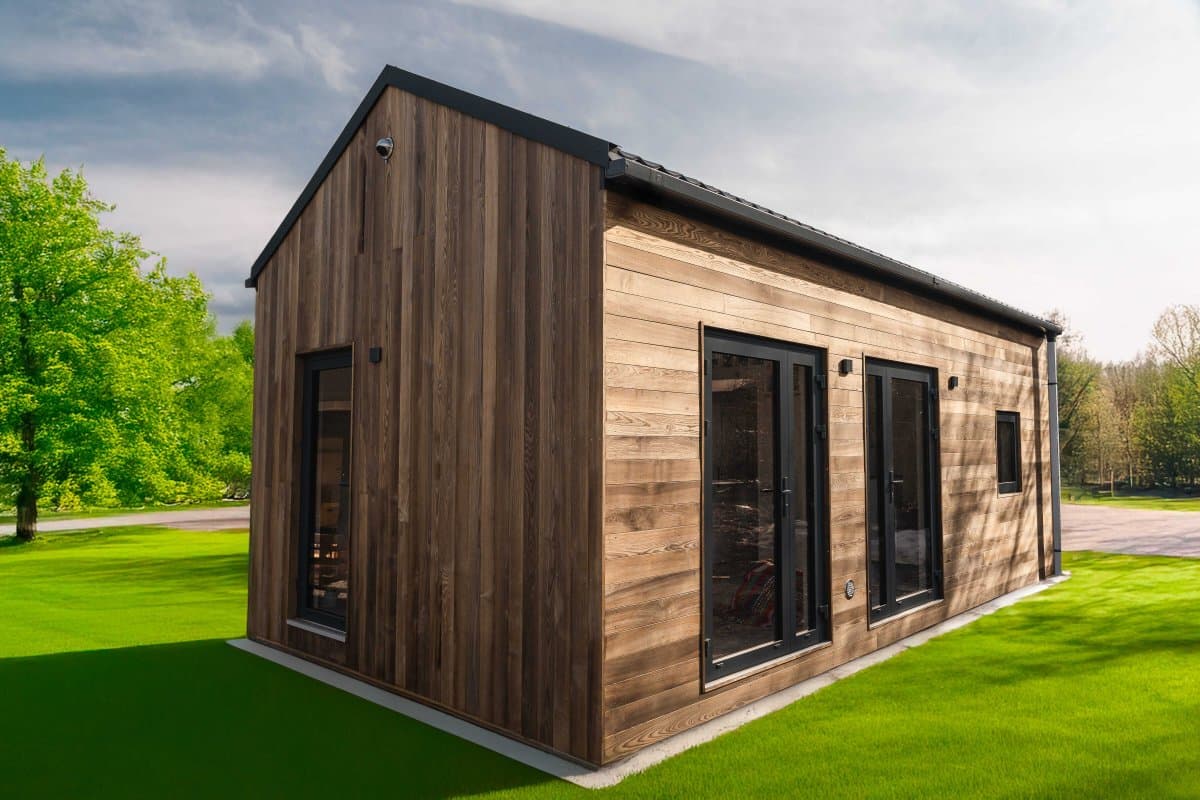
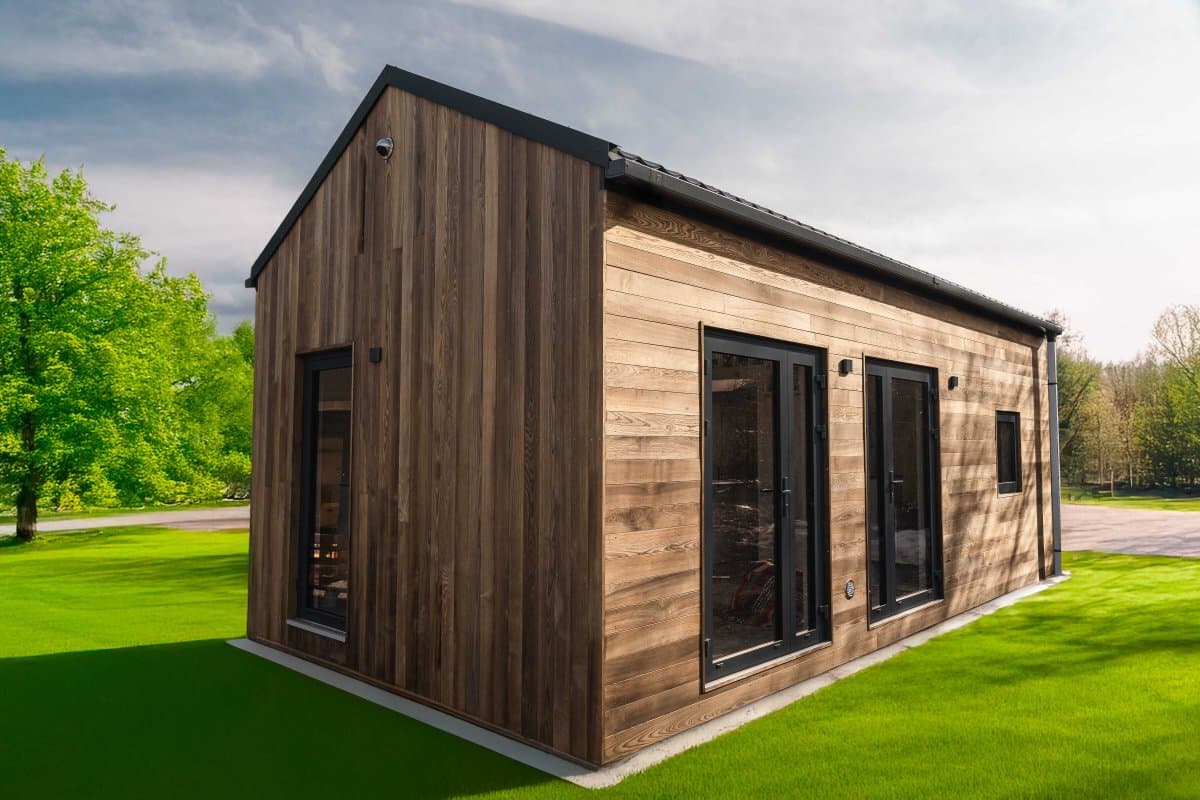
The Finnish Kota wooden chalet captivates with its authentic Scandinavian style and robust construction. Its pitched roof gives it an elegant silhouette inspired by traditional Nordic houses. The structure is made of KVH timber, a solid finger-jointed wood from a patented German process that guarantees high mechanical strength and excellent long-term stability. This type of wood is known for its load-bearing capacity and resistance to deformation, making it a reliable choice for durable construction.
The thermo-treated ash cladding offers many advantages. This heat treatment deeply modifies the wood's structure, making it naturally resistant to weather, insects and fungi. Thermo-treated ash is thus rot-proof and can withstand decades without major alteration. Its caramel-brown colour changes with the light, adding a unique and warm aesthetic touch to the whole. Moreover, this material comes from sustainably managed forests, certified FSC or PEFC, guaranteeing environmentally friendly harvesting. By choosing this chalet, you contribute to a responsible approach, especially since for each build, trees are planted through partnerships with reforestation organisations.
This wooden chalet is designed to offer a pleasant, bright and healthy living or working space. It can be used as a secondary home, garden office, artist's studio or relaxation area. Its modular design allows it to be adapted to different uses, according to your needs. Insulation can be reinforced for year-round use, but even as is, the solid wood offers interesting thermal inertia, keeping it cool in summer and retaining heat in winter.
Maintaining the chalet is simple. Regular cleaning with clear water and an annual check of joints and fixings are enough to maintain its appearance and solidity. The thermo-treated ash cladding does not require frequent chemical treatment, but a stain or specific oil can be applied every five to ten years to revive the colour and reinforce protection. It is advisable to clear snow from the roof in winter to avoid overload, and to check gutters to prevent infiltration.
Buying a wooden chalet like the Finnish Kota involves considering certain points of vigilance. Check that the ground is well levelled and stable to receive the structure. Ensure that the foundations are suitable, for example concrete pads or a slab, to avoid humidity problems. Find out about local planning regulations: in France, a prior declaration of works is often required for constructions over 5 m², and a building permit may be necessary depending on the surface and location. It is also important to respect distance rules from property boundaries. Finally, consider the orientation of the chalet to optimise natural light and energy efficiency.
Transport and installation must be carefully planned. The chalet is delivered as a kit, which facilitates transport and allows on-site installation. It is recommended to use professionals for assembly, to guarantee the stability and waterproofing of the whole. KVH timber and thermo-treated ash cladding are quality materials, but they must be handled with care to avoid damage during assembly.
In terms of energy performance, the chalet can be equipped with additional insulation, double-glazed windows and a suitable heating system. This allows it to be used as a year-round living space, with optimal comfort. The solid wood design offers good humidity regulation, creating a healthy and pleasant indoor environment.
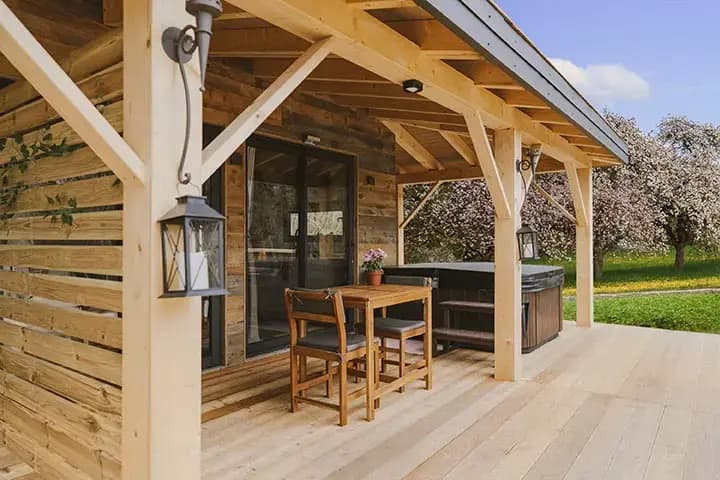
The Scandinavian style of the Finnish Kota integrates harmoniously into various environments, whether rural, forest or seaside. Its caramel-brown colour blends with nature and adds a warm touch. This chalet is an ecological and aesthetic alternative to traditional constructions, combining modernity and respect for the environment.
To summarise, the Finnish Kota wooden chalet is a durable and elegant solution for creating extra space. Its KVH timber structure, thermo-treated ash cladding and pitched roof make it a quality product designed to last. Whether you are looking for a refuge, an office or a living space, this chalet will meet your expectations with charm and robustness.
Let us now look deeper into the practical aspects of long-term maintenance. Thermo-treated ash, although naturally resistant, may see its colour become more uniform over time under UV exposure. To preserve the original caramel brown, a saturator or pigmented oil can be applied every two to three years in highly exposed areas. It is advisable to clean the cladding with a soft brush and neutral soap, avoiding high-pressure cleaners that could mark the wood. Metal parts, screws and fixings should be checked annually and tightened if necessary; a light greasing of door hinges prolongs their proper functioning. If moss or lichen appears on the roof, gentle brushing is preferable to chemical products. These simple actions, carried out once or twice a year, help maintain the chalet's appearance and performance over several decades.
Regarding transport regulations, the chalet is designed to be delivered as a kit, which involves packages of varying dimensions and weights. In France, road freight transport is governed by the Highway Code and the Transport Code. If you organise the delivery yourself, note that any vehicle over 3.5 tonnes GVW is subject to traffic restrictions, including bans on public holidays and during pollution peaks. For exceptional convoys, prior authorisation is required from the prefecture when the dimensions exceed regulatory limits (width over 2.55 m, length over 16.5 m for an articulated combination, or weight over 44 tonnes). The carrier must also comply with lashing and signalling rules. If you use a professional, they will handle these formalities. It is also recommended to check access conditions to your land: road width, presence of bridges, overhead lines or steep slopes. A feasibility study can be requested from the carrier. Finally, for deliveries abroad, customs rules and accompanying documents (invoice, packing list, certificate of origin) must be prepared.
Let us now address sector-specific use cases. In the tourism sector, this chalet can serve as unusual accommodation for campsites, glamping sites or guest houses. Its Scandinavian aesthetic attracts customers seeking nature and comfort. Operators appreciate its ease of installation and low maintenance. For event professionals, it can be used as a reception area, ticket office or temporary catering space. In the health and wellness field, it can become a consultation room, yoga studio or meditation space, thanks to its soothing atmosphere. Artists and craftspeople find a bright and inspiring workshop. Individuals use it as a teleworking office, guest room, playroom or garden refuge. In the agricultural sector, it can serve as a storage room for tools or a changing room for workers. Finally, local authorities can install it as an annex post office, tourist information point or community space. This versatility is enhanced by the possibility of customising the interior layout: partitions, insulation, electricity and plumbing can be adapted according to use.
Let us now compare the Finnish Kota with other types of modular constructions. Converted shipping containers, often used for site offices or tiny houses, offer great robustness and increased security thanks to Corten steel. However, they are less aesthetic and can be subject to condensation if insulation is poorly done. Wood naturally regulates humidity and offers superior thermal comfort. Traditional wooden chalets, such as garden sheds, are often less well insulated and intended for seasonal use. The Finnish Kota stands out with its KVH structure and thermo-treated cladding, giving it superior durability and finish. Compared to tiny houses on trailers, it is less mobile but more stable and generally more spacious. Finally, compared to masonry constructions, it is faster to install, more ecological and often less expensive. The choice will depend on your priorities: mobility, aesthetics, budget, energy performance or regulatory constraints.
Regarding foundations, several options are available. Concrete pads are quick to install and raise the chalet to avoid humidity. A concrete slab offers better stability and allows the integration of a heated screed. Foundation screws, or helical piles, are suitable for sloping or unstable ground. Whatever your choice, it is essential to follow the manufacturer's recommendations and use a professional for sizing. Poorly made foundations can lead to structural deformation and infiltration.
Insulation is a key point for year-round use. KVH timber already offers good thermal resistance, but additional insulation in wood wool, rock wool or cellulose fibre can be added in walls, roof and floor. Windows and doors should be equipped with double or triple glazing and high-performance frames. A mechanical ventilation system (VMC) can be installed to ensure healthy air renewal and prevent condensation. For heating, a wood stove, radiant panels or a heat pump are common solutions. The electrical installation must comply with NF C 15-100, and it is recommended to use a qualified electrician.
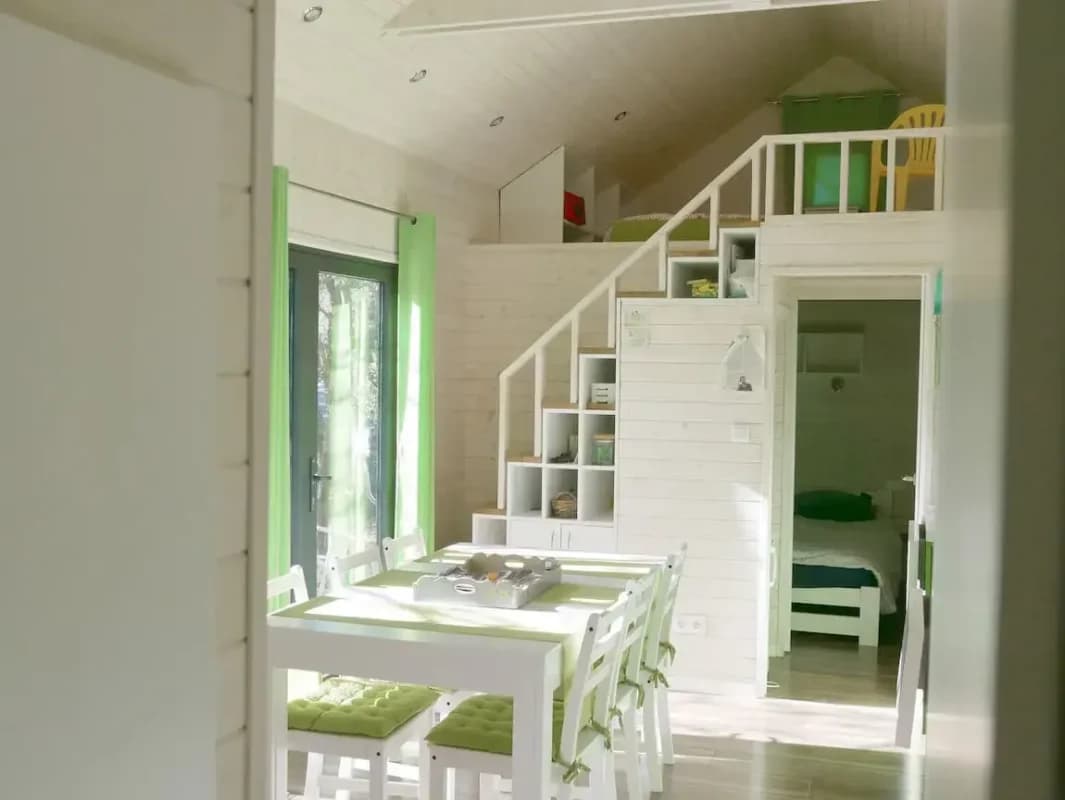
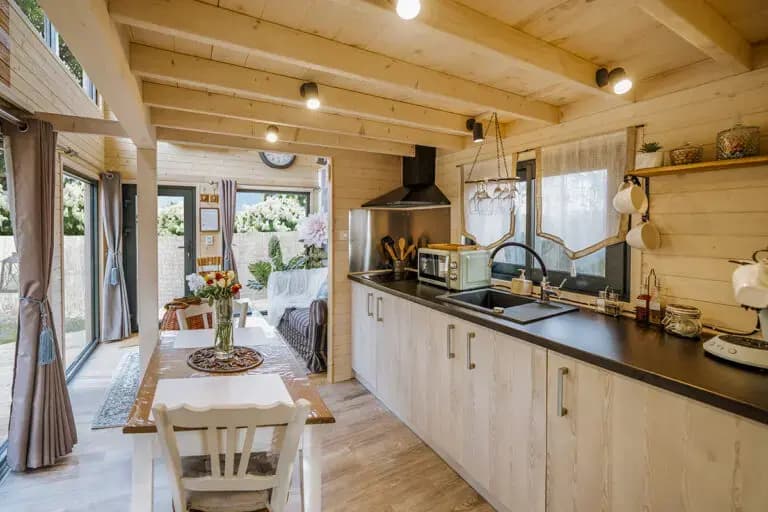
The interior layout can be fully customised. You can create a single living room or several small rooms, depending on the available surface. Partitions can be made of plasterboard or wood panelling. The floor can be covered with parquet, tiles or vinyl. The ceiling height allows for a mezzanine for additional sleeping space. The possibilities are vast, but care must be taken not to overload the structure and to respect safety rules, particularly regarding evacuation and fire protection.
In conclusion, the Finnish Kota wooden chalet is a high-end product that combines aesthetics, durability and versatility. Whether you are an individual looking for extra space or a professional wishing to develop an activity, it offers a reliable and ecological solution. Its moderate maintenance, compliance with standards and adaptability make it a lasting investment. Do not hesitate to consult an advisor to study your project and define the configuration best suited to your needs.
To usefully complete this overview, let us examine the question of choosing size and location. A chalet like the Finnish Kota is generally available in several sizes, and the choice depends on the final use. For a teleworking office or an extra studio, a compact size is enough and limits ground impact. For tourist accommodation or a tiny house habitable year-round, a more generous size allows for a sleeping area, a kitchenette and a shower room. The declarable ground footprint and total height must also be taken into account, as they determine planning permissions. The location should avoid flood zones, respect planting distances from existing trees and preserve views and sunlight. A year-round shading study helps position openings and limit summer overheating.
In terms of sustainability and environmental footprint, wood is a material that stores carbon throughout its life. Thermo-treated ash, obtained by steam and high-temperature treatment without chemicals, is part of a low-impact approach. The KVH structure, made from finger-jointed wood, values wood sections and limits workshop waste. These construction choices are accompanied by easier end-of-life: chemically untreated wood can be recovered for energy or composted according to local channels, while metal elements are recyclable. For projects concerned about their carbon footprint, it is relevant to favour local supplies, limit transport and optimise insulation to reduce heating needs in the long term.
Finally, the question of financing and asset value deserves attention. A quality wooden chalet is a durable asset that enhances land and can generate rental income as part of an accommodation activity. Depending on the case, it can be integrated into a primary or secondary residence project, or operated professionally. It is recommended to consult a management advisor or an accountant to understand the tax aspects and possible energy renovation aids, which vary according to the nature of the project and location. A well-designed, maintained and locally compliant installation preserves the investment value and ensures peaceful use for many years.