Description
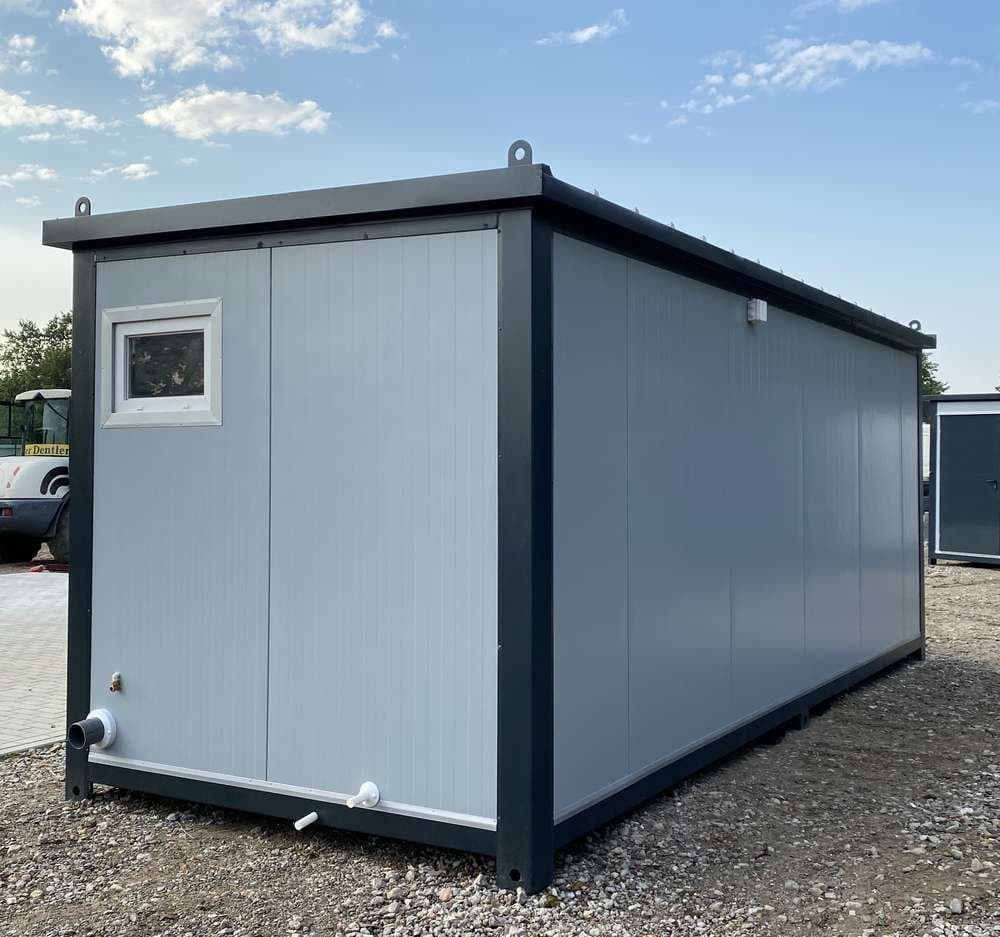
The foldable container bar 3 x 2 m in Rose RAL 3014 is a modular solution designed for professionals in events, mobile catering and temporary layout. It stands out from standard shipping containers by its fully demountable and self-assembly design, which allows it to be transported, stored and deployed without heavy lifting equipment or specialized labor. This product combines the robustness of a metal structure with the flexibility of a foldable module, making it a versatile tool for pop-up bars, festival kiosks, seasonal sales points or temporary reception areas. In the following paragraphs, we detail its technical characteristics, concrete uses, points to watch when buying, its maintenance and the regulatory aspects related to its transport and installation in France.
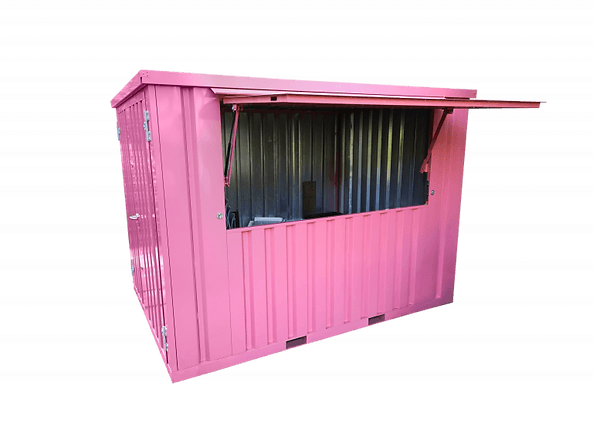
Let's start with dimensions and structure. The foldable container bar 3 x 2 m has external dimensions of 2952 mm length, 2290 mm width and 2240 mm height. Inside, the usable space measures 2795 mm length, 2130 mm width and 2100 mm height. These dimensions bring it close to a 10-foot container, while offering a floor area of about 6 m², sufficient to install a counter, refrigerated displays, beer taps or light cooking equipment. The door, located on the short side, measures 1750 mm width and 2050 mm height, allowing the passage of bulky items such as a beer keg, a refrigerator or a worktop. This double-door configuration on the short side is particularly suitable for bar use: staff can move easily and service is done through the main opening, while the foldable awning protects customers from bad weather.
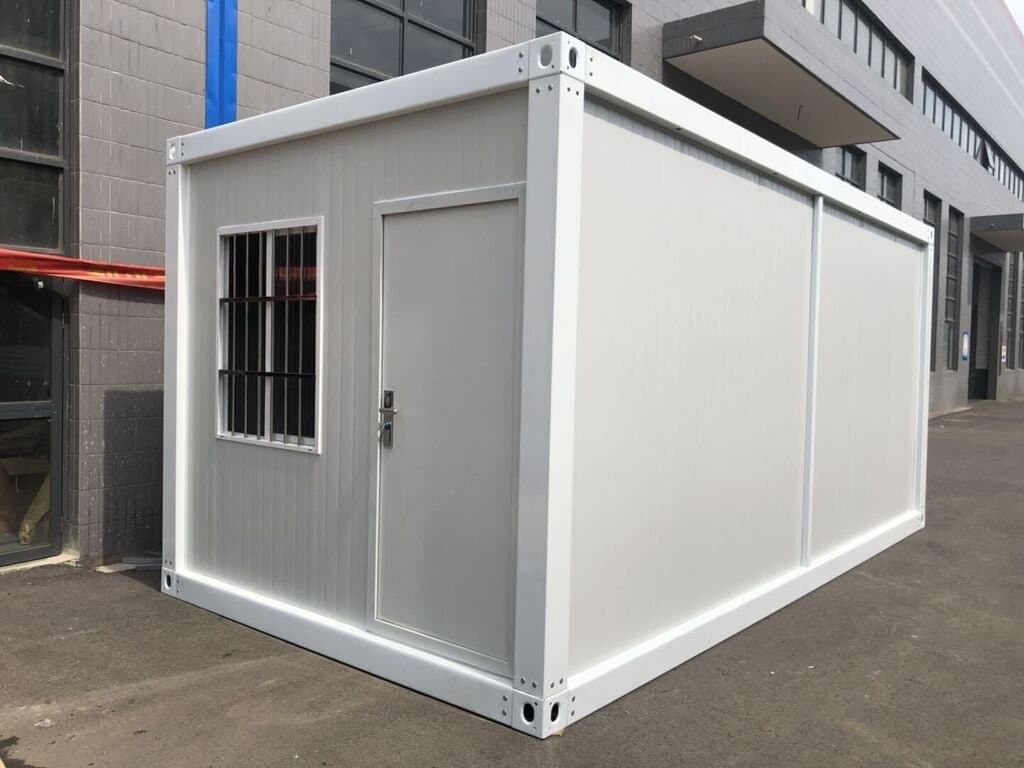
The structure is fully self-supporting, including the floor. This means the container does not require a special foundation or additional chassis to be stable once assembled. The floor is an integral part of the rigidity system, ensuring good resistance to distributed loads and repeated traffic. The panels are removable, allowing complete disassembly and flat storage. The roof is secured on both sides by two cylinder locks, ensuring reliable closure when the container is left on site with equipment inside. This securing is an important point for multi-day events or temporary outdoor installations.
The color Rose RAL 3014 is a bright and eye-catching shade, often used to attract attention in a commercial or festive environment. It is not a standard color for shipping containers, which are generally painted blue, green, red, gray or yellow. The choice of RAL 3014 allows customizing the container and integrating it into a visual identity. The product is available in all RAL colors, offering great freedom of customization for companies, local authorities or event organizers. The paint is applied to a metal structure, probably steel, ensuring good outdoor durability. However, it is advisable to check the exact nature of the coating (epoxy paint, polyurethane, etc.) with the manufacturer, as UV and corrosion resistance can vary depending on finishes.
Let's move on to concrete uses. The foldable container bar 3 x 2 m is primarily intended for selling and serving drinks or food at events. It can be installed in a public square, at a festival, in a market, in a garden, on a terrace or in a private space. Thanks to its foldable awning, it provides a covered space for customers and protects the counter from rain or direct sunlight. The awning can be locked, allowing the container to be left in place overnight with goods inside, provided the site is secure. The double door on the short side facilitates supply of kegs, crates and equipment. Once the event is over, the container disassembles quickly and stores in a reduced volume, which is an advantage for companies that do not have large storage space.
Beyond bar use, this container can be used as a site office, sales outlet, reception point, changing room, technical room or secure storage space. Its modularity and ease of movement make it suitable for temporary sites, living bases, work zones, sports or cultural events. It can also serve as a street kitchen, tasting stand, pop-up shop or information desk. The interior height of 2100 mm allows most people to stand upright without discomfort, which is an important criterion for a work or service space. The 6 m² area is sufficient to fit an L-shaped counter, a small preparation area and a storage corner.
Another advantage lies in the forklift pockets located on the container base. These pockets allow moving the assembled container using a forklift, without having to disassemble it. This facilitates handling on site, repositioning between events or loading onto a truck. It is important to note that the container does not have ISO lifting corners like a standard shipping container, meaning it cannot be handled with a gantry spreader or reach stacker. Movement must be done with a suitable forklift, ensuring load distribution and stability.
Let's now address points to watch when buying. First, check the quality of the steel and the type of anti-corrosion protection. Standard shipping containers are generally made of Corten steel (weathering steel), which offers good resistance to atmospheric corrosion. For a foldable container, it is recommended to ask for the steel grade used and the surface treatment. Next, ensure that the folding and assembly system is designed to withstand repeated cycles. Hinges, locks and seals must be robust and easy to operate. An assembly test before purchase can be useful to assess ease of assembly and rigidity of the whole.
The question of waterproofing is also crucial. A container bar must protect the interior from rain and humidity. Check for seals on panels and doors, as well as the quality of locks. The roof secured by two cylinder locks is a good point, but ensure these locks are resistant to break-in and corrosion. Finally, it is advisable to inquire about the warranty offered by the manufacturer or dealer, as well as the availability of spare parts (panels, seals, locks).
Regarding maintenance, a foldable painted steel container requires regular maintenance to preserve its appearance and durability. It is recommended to clean surfaces with mild detergent and clear water, avoiding abrasive products or strong solvents that could damage the paint. Scratches and paint chips should be treated quickly with suitable anti-rust paint, especially if the container is exposed outdoors. Seals should be inspected periodically and replaced if worn or cracked. Locking mechanisms and hinges should be lubricated to prevent jamming. Finally, before each assembly, check the condition of panels and fasteners.
On the regulatory side, installing a container bar on public land or in a public-access building (ERP) may require specific authorizations. In France, installing a temporary structure on public roads is subject to a temporary occupation authorization (AOT) issued by the town hall or prefecture. For ERPs, fire safety, accessibility and hygiene rules apply. If the container is used for catering or alcohol sales, comply with regulations on drinking establishments and obtain necessary authorizations. Furthermore, transporting the container on public roads must comply with the Highway Code: depending on dimensions and weight, a convoy may be subject to size restrictions or special signage. It is recommended to contact local authorities and a specialized carrier to organize movement in full compliance.
Let's briefly compare this foldable container to standard shipping containers. A 10-foot dry container has external dimensions of about 2991 x 2438 x 2591 mm, i.e., a height greater than our model (2240 mm). The foldable container bar is therefore lower, which can facilitate transport and integration into covered spaces. On the other hand, it offers a comparable floor area and a wider door on the short side. The main difference lies in modularity: a standard shipping container is not demountable, while the foldable container can be disassembled and stored flat. This characteristic is an asset for companies that must frequently move their sales point or have little storage space.
In terms of customization, the foldable container bar can be equipped with many options: counter, shelves, lighting, electrical outlets, air conditioning, insulation, flooring, signage, etc. It is advisable to precisely define the intended use before buying, as interior fittings can influence the configuration. For example, for a bar, it may be useful to provide a serving hatch, a stainless steel worktop, a sink and a refrigeration system. For a site office, thermal insulation, heating and electrical outlets will be preferred. Since the container is self-supporting, it can receive equipment fixed to the walls, subject to load limits.
The color Rose RAL 3014 is a strong aesthetic choice. It can be combined with other RAL colors to create a coherent visual identity. The container is available in all RAL colors, allowing it to be harmonized with a graphic charter. The paint must be applied according to best practices to ensure good durability. Regular maintenance helps preserve the color's brightness and prevent fading due to UV.
Let's now delve into sector-specific use cases, as the foldable container bar 3 x 2 m finds varied applications depending on the trade. In the hotel and restaurant sector, it allows creating a pop-up terrace or an annex bar without permanent construction. Establishments can thus increase their capacity during the summer season, then disassemble the structure off-season. Caterers and food trucks can use it as an additional service point or as a remote preparation space. In events, organizers of festivals, trade shows, weddings or sports competitions appreciate its mobility and quick assembly. Local authorities can use it as an information kiosk, ticket sales point or association kiosk. Construction companies see it as a site office or break room for teams, while farmers can use it as a direct sales outlet or equipment storage. Finally, individuals can install it in a garden for private use (pool house bar, reception area). This diversity of uses explains the interest in choosing a foldable model rather than a rigid container.
Now let's compare the 3 x 2 m format to other sizes of foldable or standard containers. A 10-foot foldable container (about 3 m) offers a similar area, but our model has a width of 2290 mm, slightly less than the 2438 mm of a shipping container. A 20-foot container (6 m) doubles the area, but it is heavier, bulkier and requires more powerful lifting equipment. For a bar or kiosk, the 3 x 2 m format is often sufficient and easier to integrate into a restricted space. An 8-foot container (2.4 m) would be too small to accommodate a counter and storage space. The 3 x 2 m format therefore represents a good compromise between compactness and functionality. Additionally, there are 20-foot foldable containers, but their weight and price are higher. The choice will depend on frequency of use, number of people to serve and transport constraints.
Regarding transport, a distinction must be made between transporting the disassembled container and the assembled container. Disassembled, it comes as stacked panels, considerably reducing volume and allowing transport by light truck or even trailer. Assembled, it can be moved with a forklift and loaded onto a flatbed truck. In both cases, it is recommended to properly secure the load and check weights and dimensions with the carrier. In France, road freight transport is subject to size rules (maximum width 2.55 m, maximum height 4 m, maximum length 16.5 m for an articulated vehicle). The assembled container, with its 2290 mm width and 2240 mm height, remains within standard dimensions, facilitating transport without an exceptional convoy. However, once loaded on a truck, the total height may exceed 4 m depending on the chassis used. This point should therefore be checked with the carrier.
Let's also address insulation and thermal comfort. An uninsulated steel container can become very hot in summer and cold in winter. For bar or office use, it is often necessary to add thermal insulation (mineral wool panels, polyurethane foam, etc.) and interior cladding. This insulation improves occupant comfort and reduces condensation. It can be done by the manufacturer or by a specialized fitter. Note that adding insulation slightly reduces interior volume. For seasonal use, light insulation may suffice. For year-round use, more efficient insulation is recommended, with a heating and ventilation system.
Ventilation is another important point. A closed and occupied space must be properly ventilated to avoid accumulation of humidity and CO2. Ventilation grilles can be installed on the walls, or a mechanical ventilation system can be added. For a bar, ventilation is also necessary to evacuate cooking odors and equipment heat. It is advisable to plan these installations from the design stage.
Finally, let's not forget safety. The container must be stable once assembled, especially if installed on sloping ground or exposed to wind. It is recommended to anchor it to the ground or ballast it if necessary. The cylinder locks on the roof must be in good condition and locked when the container is left unattended. Emergency exits must be clear. If the container is used as an ERP, it must comply with fire safety standards (M1 or A2-s1,d0 class materials, fire extinguishers, emergency lighting, etc.). It is strongly advised to consult an approved inspection body before opening to the public.
In summary, the foldable container bar 3 x 2 m in Rose RAL 3014 is a modular, robust and versatile product, suitable for many professional and event uses. Its compact dimensions, wide door, foldable awning and self-supporting structure make it a practical solution for mobile bars, kiosks, site offices and temporary sales spaces. Before purchase, it is recommended to check manufacturing quality, waterproofing, ease of assembly and regulatory aspects related to installation and transport. Regular maintenance will extend its lifespan and preserve its appearance. For any questions about options, colors or accessories, it is advisable to contact the supplier directly, who can provide detailed information and personalized advice.