Description
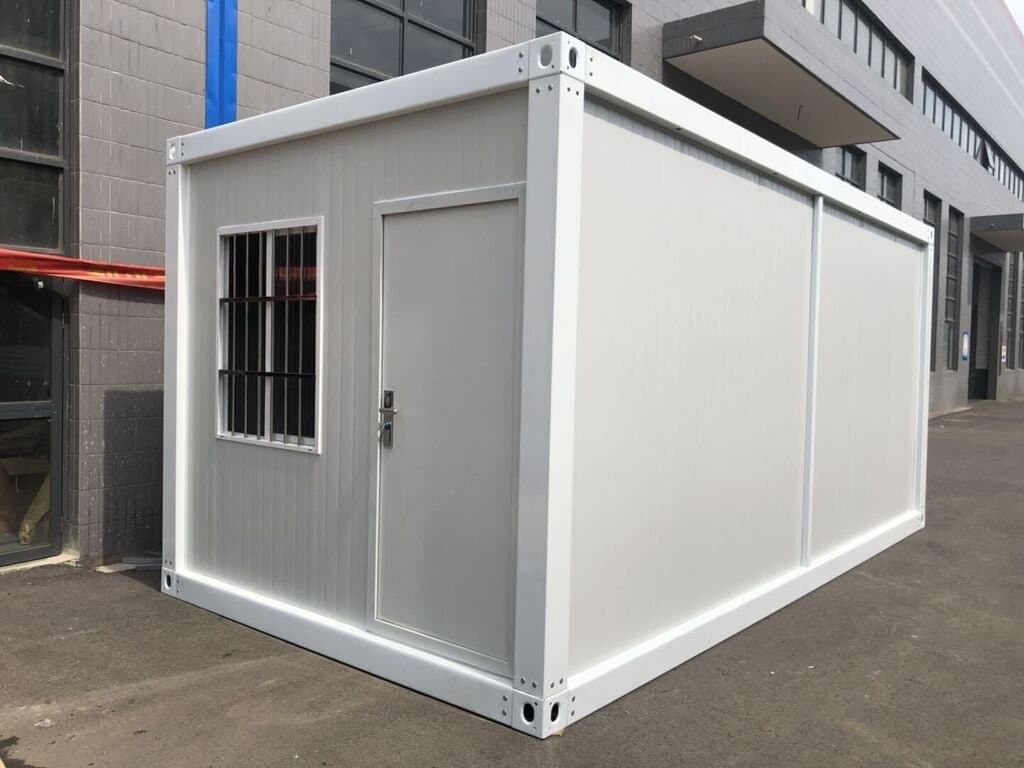
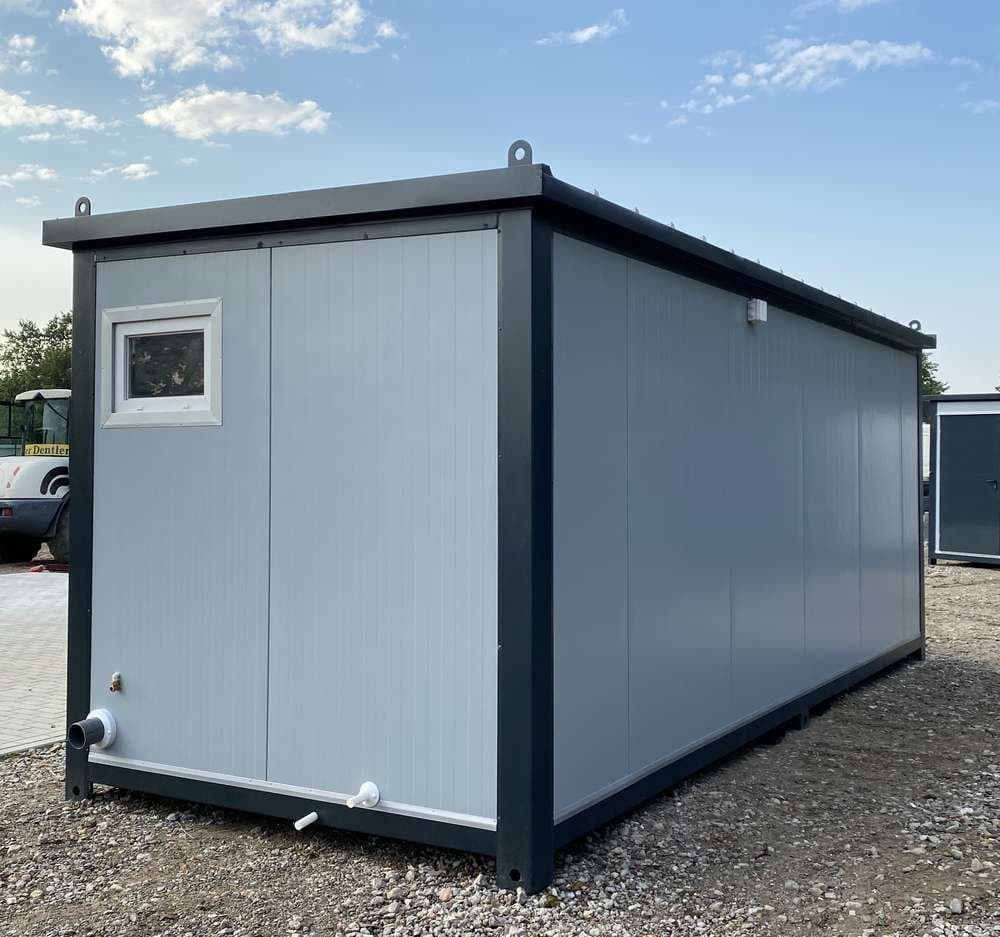
The 18 m² office container offered by D.S. Globe Conteneur is a durable, mobile workspace solution designed for professionals who need to set up a functional office on a construction site, industrial site or logistics platform. With its 6 meters length, 3 meters width and 2.5 meters height, it provides an immediately usable floor area of 18 m², without heavy construction work or complex planning procedures in most temporary use cases. This format is based on a standard 20-foot maritime container, whose external dimensions are standardized by ISO 668 (approximately 6.058 m long, 2.438 m wide and 2.591 m high for a standard dry container). The 3-meter width announced here corresponds to an internal usable width after fitting out, or to a widened configuration depending on the model: we invite you to verify this dimension with our sales team before ordering, as it determines road passage and transport dimensions. In any case, the interior space allows for several workstations, a meeting area, a storage corner for documents and IT equipment, without feeling cramped.
The structure of a maritime container relies on a Corten steel frame, a low-alloy steel that remarkably resists atmospheric corrosion thanks to the formation of a protective oxide layer on the surface. This same steel is used for maritime transport containers exposed to sea spray and saline atmospheres. A fitted-out office container retains this structural robustness: it can be moved, loaded and unloaded by suitable lifting equipment (reach stacker, mobile crane, forklift equipped with container forks) without losing its integrity. The walls, roof and floor are made of profiled sheets and marine plywood or reinforced OSB panels, depending on the fittings. The corners are equipped with standardized corner castings, drilled to receive lifting and securing twistlocks. These blocks comply with ISO 1496-1 standards, which define the strength and handling requirements for series 1 containers.
The interior fitting of an 18 m² office container generally includes thermal insulation of the walls, ceiling and sometimes the floor. This insulation is essential to ensure comfortable use in both summer and winter, as mentioned in the existing description. In summer, it limits the temperature rise inside the container, which could otherwise reach difficult-to-bear levels under direct sunlight. In winter, it reduces heat loss and helps maintain a correct working temperature with electric heating or a suitable stove. Interior finishes vary: PVC panels, melamine panels, painted plywood or plasterboard on a frame. The floor can be covered with linoleum, carpet or laminate panels. The most advanced models include a complete electrical installation with a protection panel, 230 V sockets, LED lighting, and sometimes reversible air conditioning or a fan heater. It is important to specify that these equipments are not systematic: each office container can be configured differently. We recommend that you tell us precisely your needs (number of workstations, available electrical power, water needs, sanitary facilities, etc.) so that we can guide you towards the appropriate configuration.
The main use of an 18 m² office container is as a site office. On construction, public works or civil engineering sites, it serves as an administrative base: visitor reception, coordination meetings, storage of plans and contractual documents, work supervision station. Its mobility is a major asset: it can be delivered by container truck, placed on the ground on concrete blocks or wooden sleepers, then moved as the site progresses. At the end of the site, it is taken back and reused on another site, which avoids the construction of temporary bungalows and reduces demolition costs. In the industrial sector, it can serve as a supervision station, maintenance room, office for quality or HSE teams, or control room close to installations. In logistics, it becomes a dock operations office, a room for drivers, or a goods entry and exit management station. Finally, some professionals use it as a temporary commercial premises (seasonal sales, trade fair stand, on-site real estate sales office), subject to verifying local authorizations for occupying public or private land.
French regulations govern the installation and transport of this type of structure. Regarding road transport, a 20-foot container is generally transported on a container truck or container trailer. The authorized gross combined weight (PTRA) and payload depend on the vehicle and current regulations. The maximum authorized dimensions in France for a category 1 exceptional convoy are 2.55 m wide, 4.00 m high and 16.50 m long, with possible derogations for certain categories. A standard 20-foot container complies with these width and height limits, but the convoy length (tractor + trailer + container) may approach or exceed 16.50 m depending on the configuration. It is therefore imperative to verify the necessary authorizations with state services (DREAL) and the prefecture for any exceptional transport. Furthermore, unloading on site must be carried out by suitable lifting equipment and on a stable, flat area. We advise you to provide sufficient maneuvering space for the truck and crane, as well as a drop-off area accessible without overhead obstacles (power lines, tree branches).
Regarding urban planning, the installation of an office container may be subject to authorization depending on its duration, surface area and local urban planning regulations. As a general rule, a temporary installation of less than three months may be exempt from building permits, but this duration varies depending on municipalities and areas (classified sites, protected areas, etc.). Beyond that, a prior declaration of works or a building permit may be required. We invite you to contact your municipality's urban planning department before any permanent installation. D.S. Globe Conteneur does not replace the competent authorities and does not provide legal advice on urban planning; this information is given for guidance and must be verified on a case-by-case basis.
Maintenance of an office container is relatively simple but regular. The structure should be visually inspected at least once a year: looking for rust spots, especially on edges, welds and lower walls, checking roof waterproofing (no perforation, no failing seal), checking openings (doors, windows) and their seals. Exposed metal parts can be protected with suitable anti-rust paint. If the container is equipped with an electrical installation, it is recommended to have the panel and sockets periodically checked by a qualified professional, in accordance with NF C 15-100 standards for low-voltage installations. Interior cleaning should be done with non-abrasive products to avoid damaging the finishes. In case of humidity, the installation of dehumidifiers or additional ventilation may be necessary, especially in regions with high humidity such as the Marseille region during winter.
Buying a used or new office container requires some points of vigilance. First, check the structural condition: a container that has suffered a significant impact may have deformations of the cross member or uprights, which affects its rigidity and its ability to be stacked or lifted. Then, ensure that the interior fitting corresponds to the intended use: insulation, electricity, joinery, finishes. A low-end office container may seem attractive on price but require rapid work. Always ask for detailed photos of the interior and exterior, as well as the manufacturing date and usage history if available. Finally, check the compliance of electrical equipment and the absence of hazardous materials (asbestos in old panels, for example). D.S. Globe Conteneur carefully selects its containers and can provide you with additional information on each available unit.
The indicated price of €2,000.00 excl. VAT corresponds to a basic offer for this 18 m² office container. This price may vary depending on condition (new, recent used, standard used), fitting options (air conditioning, heating, sanitary facilities, number of workstations) and delivery costs. We invite you to contact us for a personalized quote including transport to your site, in Marseille and throughout France. Our team based in Marseille knows the local delivery constraints and can assist you in preparing your project, whether for a one-time need or for a fleet of several units.
To further the reflection, it is useful to compare this 18 m² office container with other solutions on the market. A 10-foot container (about 3 m long) offers an area of about 7 m²: it is suitable for a single workstation or a technical room, but quickly becomes cramped for receiving public or working with several people. Conversely, a 40-foot container (about 12 m long) offers nearly 28 m², which allows for several partitioned offices, a meeting room and a reception area, at the cost of reduced mobility and a greater need for drop-off space. The 20-foot format, which corresponds to our 18 m² model, represents a proven compromise between usable area, ease of transport and cost. There are also high cube containers, about 30 cm taller than standard models, which provide additional visual comfort and allow ceiling insulation without reducing headroom too much. Finally, other types of containers can be converted into offices: the open top (removable roof) facilitates the installation of bulky equipment, the flat rack (without side walls) is more suitable for transporting out-of-gauge loads than for interior fitting, and the reefer (refrigerated container) already has efficient insulation and a refrigeration unit, but its conversion into an office is more complex and more expensive. The standard dry container remains the most economical and widespread base for office fitting.
Beyond construction and industry, sector-specific use cases are multiplying. In events, an 18 m² office container can serve as a security control room, technical control room or ticket office at a festival or outdoor trade show. In agriculture, it becomes a farm office near silos or greenhouses, or a light packaging room. In telecommunications and energy, it can accommodate a maintenance team on a remote site, with minimal but real comfort. In training, it can be fitted out as a classroom for on-site sessions, particularly for construction or logistics trades. Finally, some local authorities use it as a temporary office for field teams (urban cleaning, green spaces, municipal police) or as a reception room for decentralized administrative offices. Each use requires adaptations: PMR access, sanitary facilities, water and electricity networks, signage, etc. We advise you to precisely define your program before choosing options.
Routine maintenance deserves further detail. Beyond the annual inspection, it is recommended to check after each significant weather event (storm, heavy rain, prolonged frost) the condition of the roof, any gutters and joinery seals. Superficial rust marks should be treated quickly: brushing, application of an anti-rust primer then a finishing paint suitable for the metal substrate. Door and window hinges can be lubricated once or twice a year. If the container is equipped with air conditioning, the air filter must be cleaned or replaced according to the manufacturer's recommendations, and the condensate circuit checked to avoid overflow. If heating is present, an annual check by a professional is recommended, especially if it is a combustion appliance. The floor should be inspected to detect any weakness or infiltration; a damaged floor can be repaired by localized replacement or by applying a protective coating. Finally, if the container is stored idle, it is preferable to leave slight ventilation to avoid condensation, and to close the openings to limit intrusions.
Regarding transport, some additional details are useful. The empty weight of an 18 m² office container is generally between 2,200 and 2,800 kg depending on insulation and equipment, which remains compatible with most container trucks and trailers. The total loaded weight (container + fittings + equipment) must be checked not to exceed vehicle and road limits. In France, container transport is subject to the rules of the highway code and, for exceptional convoys, to obtaining prior authorization. Convoy signage (signs, flashing lights) and escort may be required depending on dimensions and weight. It is also necessary to ensure that the delivery site is accessible to heavy goods vehicles: road width, bridge and tunnel height, ground strength, presence of overhead cables. For delivery in Marseille and neighboring municipalities, our team knows the local constraints and can anticipate these points. Finally, if the container is to be placed on private land, it is recommended to provide concrete blocks or sleepers to avoid direct contact with the ground and limit rising damp.
The choice between purchase and rental also deserves mention. Buying an 18 m² office container represents an initial investment, but it quickly becomes profitable if use is recurrent or if the company wishes to customize it permanently. Rental, on the other hand, is suitable for one-time needs or short-duration sites: it avoids tying up cash and storage costs between uses. D.S. Globe Conteneur can assist you in analyzing these two options, based on the duration of your project, frequency of use and your budget constraints. We do not commit to rental deadlines or rates without prior study, but we can provide you with a detailed quote after understanding your need.
Finally, it should be remembered that this 18 m² office container is a technical product, whose performance depends heavily on the quality of the fitting and installation. A well-insulated, properly ventilated container connected to a suitable electrical supply will offer satisfactory comfort in all seasons. Conversely, a poorly insulated or poorly maintained container can become uncomfortable and energy-intensive. We therefore invite you to let us know your requirements from the start: number of workstations, heating or air conditioning needs, presence of sanitary facilities, internet access, etc. Our role is to guide you towards the most appropriate configuration, without unnecessary oversizing. Based in Marseille, we operate throughout the Provence-Alpes-Côte d'Azur region and organize deliveries throughout France. Whether you are a general contractor, developer, industrialist, logistics operator or local authority, we put our experience with maritime containers at the service of your project.
In summary, the 18 m² office container is a robust, mobile and adaptable solution that combines the strength of a maritime container with the comfort of a fitted-out workspace. It is aimed at professionals in construction, industry, logistics and services who are looking for a solution that is quick to implement, without heavy work, and can be moved according to their changing needs. With its generous dimensions, it offers an interior volume conducive to teamwork, while remaining transportable by conventional means. For any technical question or to organize a visit, do not hesitate to contact D.S. Globe Conteneur.