Description
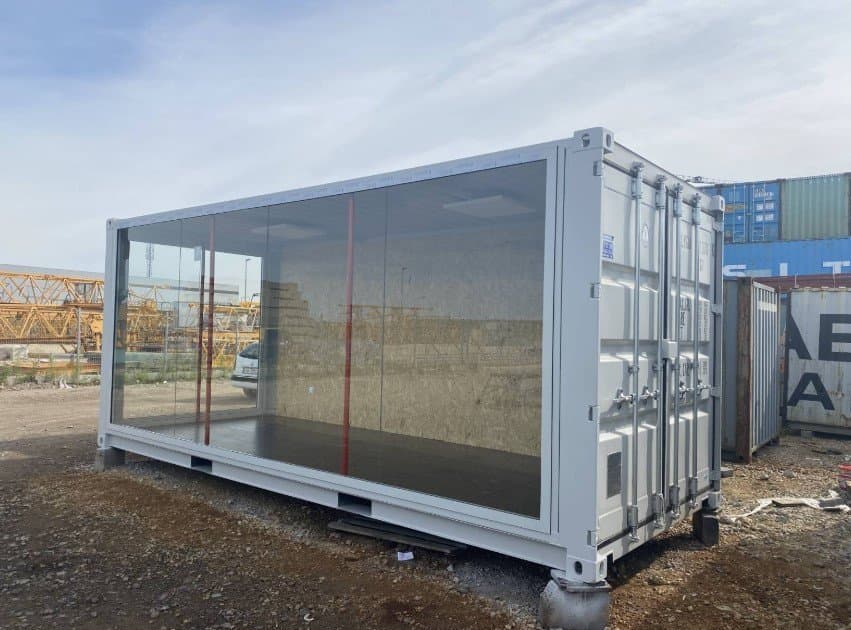
The 20-foot exhibition container we offer is a new dry van (DV) shipping container, transformed into a versatile presentation space. It retains the dimensional and structural characteristics of the standard 20-foot container while incorporating modifications that make it particularly suitable for trade shows, promotional events, and mobile showrooms. Its exterior dimensions are 6.06 meters long, 2.44 meters wide, and 2.59 meters high, providing an interior area of approximately 14.79 square meters. This generous surface allows for a welcoming stand, product displays or communication materials, and comfortable public reception. The white color of this container gives it an aesthetic neutrality that easily integrates into various environments and highlights the exhibited items.
The structure is based on a Corten steel frame, known for its corrosion resistance and durability, ensuring a long lifespan even under intensive use. The walls, roof, and floor comply with ISO 668 and ISO 1496 standards, ensuring compatibility with international handling and transport systems. The floor is typically made of hardwood panels (often 28 mm thick marine plywood), capable of supporting heavy loads, allowing the installation of displays, furniture, or small equipment without risk of deformation. The original double-leaf marine door is retained to preserve watertightness and security during transport and storage. It can be equipped with locking bars and seals, as on a standard container.
The main transformation consists of adding large windows. These glazed surfaces, generally made of tempered glass or polycarbonate, are integrated into the side or front walls, depending on the chosen configuration. They provide optimal visibility of the interior and abundant natural light, reducing the need for artificial lighting during the day. This transparency attracts the attention of passersby and creates a direct link with the displayed products. The windows can be fixed or opening, and their sizing is designed not to compromise the rigidity of the structure. Metal reinforcements are often added around the openings to maintain the mechanical strength of the assembly.
This exhibition container has applications in many fields. It can serve as a mobile stand for trade shows, commercial fairs, festivals, or markets. Companies can present technological products, clothing, artworks, building materials, or services. It can also be used as a pop-up point of sale, reception office, demonstration space, or even as a temporary meeting room on a construction site. Its mobility is a major asset: it can be transported by truck, train, or ship, and quickly installed on site using suitable lifting equipment (forklift, mobile crane). Once positioned, it only requires simple shoring to be stable and operational.
Purchasing a new modified exhibition container involves checking several points. First, ensure that the modifications were carried out properly, with clean welds, anti-corrosion treatment on cut areas, and correct sealing of the glazing. Then, it is advisable to check compliance with safety standards, particularly regarding wind resistance and stability, especially if the container is to be installed outdoors and exposed to weather. In France, installing a container on private land may require a planning permission depending on the duration and nature of the project; it is recommended to inquire with the town hall. For temporary use during an event, a prior declaration may be sufficient, but rules vary by municipality. Road transport is subject to weight and dimension regulations: a 20-foot container generally complies with size limits, but its weight must be taken into account, especially if loaded. The empty weight of a standard 20-foot DV container is about 2.2 to 2.4 tonnes, and its maximum allowed payload is often around 28 tonnes, but these values may vary slightly depending on the manufacturer and modifications made.
Maintaining an exhibition container is relatively simple. Windows should be cleaned regularly with non-abrasive products to preserve their transparency. Steel walls can be washed with soapy water; in case of scratches or paint chips, anti-corrosion touch-up is recommended to prevent rust spread. Door and window seals should be inspected periodically and replaced if necessary to maintain watertightness. The wooden floor should be protected from excessive moisture; a water-repellent treatment can extend its life. If the container is used outdoors, it is prudent to check the rainwater drainage system (gutters, channels) and ensure the roof does not retain standing water.
In terms of customization, this container can be equipped with many options: LED interior lighting, power outlets, air conditioning or heating, additional thermal insulation, flooring, removable partitions, reception counter, etc. These fittings must be carried out by professionals to ensure electrical safety and compliance with current standards. Insulation, in particular, is a key point if the container is to be used in cold or hot weather: adding insulating panels (rock wool, polyurethane foam) helps maintain a comfortable temperature and reduce energy consumption.
The new 20-foot exhibition container we offer is therefore a turnkey solution for companies seeking to combine mobility, visibility, and professionalism. It is delivered in excellent condition, ready to use after interior fitting according to your needs. Its design from a standard shipping container guarantees proven robustness, while its windows make it an effective communication tool. Whether for one-time or recurring use, it represents a durable and scalable investment.
In summary, the strengths of this container lie in its Corten steel structure, standardized dimensions, interior area of nearly 15 m², white color, original marine door, and large glazed surfaces. Points of vigilance concern verification of modifications, compliance with planning and transport rules, and regular maintenance of glazing and seals. By choosing this container, you opt for a reliable and customizable base, suitable for many professional uses.
To delve deeper into maintenance, it is useful to distinguish seasonal interventions and post-event checks. Before each use, a quick visual inspection helps identify possible impact marks on the windows, detached seals, or emerging rust spots on the uprights. After an outdoor trade show, a complete wash with clean water and a mild detergent removes dust and pollution residues, particularly on glazed surfaces that quickly lose their transparency. Alcohol- or ammonia-based products should be avoided on polycarbonate, as they can cloud the material; a neutral soap and microfiber cloth are preferred. For steel, a protective wax applied once or twice a year on exposed parts slows the onset of corrosion, especially near the sea where salt air is aggressive. Hinges and locking bars of the marine door benefit from lubrication with suitable grease to maintain their maneuverability. Finally, if the container remains stationary for a long time, it is recommended to check for insect or rodent nesting in gaps and maintain minimal ventilation to avoid condensation, especially if the interior is insulated.
Transport regulations deserve special attention, as they determine the logistical feasibility of each move. In France, road transport of a 20-foot container is generally carried out on a container truck or flatbed trailer. The container dimensions (6.06 m long, 2.44 m wide, 2.59 m high) remain within standard authorized road limits without an exceptional convoy, but the total height of the loaded vehicle can approach 4 meters, requiring verification of routes used (bridges, tunnels, overhead lines). The authorized gross train weight (GTW) and the truck's payload must be respected; an empty 20-foot container weighs about 2.2 to 2.4 tonnes, but once fitted out (insulation, furniture, electrical equipment), its weight can increase significantly. It is therefore prudent to know the actual empty weight after transformation and declare it to the carrier. For international journeys, the container can be shipped as an intermodal transport unit (ITU) by sea or rail, provided it has retained its ISO corner fittings and CSC certification (Convention for Safe Containers) if required by the carrier. The presence of windows does not affect these anchor points, but may require additional protection (film, panels) during transport to prevent breakage. Finally, for on-site installation, the use of a mobile crane or high-capacity forklift is often necessary; the cost and availability of such equipment must be included in the event budget.
Sector-specific use cases are varied and help better understand the value of this container. In the luxury and jewelry sector, it serves as a secure display case for precious items, with custom interior fittings (lit displays, safe, alarm system). For automobiles, it can become a compact showroom where a vehicle is displayed behind the windows, with a reception area for advisors. In the food industry, it is used at gastronomic fairs to present fresh products or local specialties, provided insulation and a suitable cooling system are included. The fashion sector sees it as a pop-up store, with racks, fitting rooms, and checkout. Artists and galleries use it as a mobile exhibition space for sculptures, photographs, or digital installations. Local authorities and associations can set up an information point, temporary polling station, or awareness stand. In training, it becomes a demonstration room for technical equipment, tools, or software. Each use involves specific constraints: security, lighting, electricity, accessibility for people with reduced mobility, etc. It is therefore essential to define the functional specifications upfront.
Comparing this 20-foot exhibition container with other sizes and types of containers helps make an informed choice. The 40-foot container offers an area of about 30 square meters, double, but it is heavier (about 3.8 to 4.2 tonnes empty) and less maneuverable; it is suitable for large trade shows or permanent showrooms, but its transport and installation cost more. The 10-foot container, more compact (about 3 meters long, 7 square meters), is suitable for small spaces or highly mobile interventions, but it limits exhibition space and the number of simultaneous visitors. The 20-foot high cube (HC) container gains about 30 centimeters of interior height, improving comfort and allowing vertical fittings, but it can cause size issues on certain routes. The open top container, without a rigid roof, is useful for loading bulky objects from above, but it is less suitable for closed exhibition. The flat rack, without side walls, is used for transporting out-of-gauge loads, not for public reception. The reefer container, insulated and equipped with a refrigeration unit, is essential for temperature-sensitive products, but its energy consumption and cost are higher. Finally, the exhibition container differs from the standard dry container by its windows and finishes, making it a communication tool rather than a simple container. The choice therefore depends on use, budget, frequency of moves, and local regulatory constraints.
Another practical aspect concerns interior fitting and utilities. Electrical installation must comply with NF C 15-100 for low-voltage installations, with a distribution board, residual current devices, and proper grounding. If the container is powered by a generator, available power and voltage quality must be checked. For lighting, low-consumption LED solutions are preferred, as they generate little heat and reduce system load. Air conditioning or heating must be sized according to insulation and interior volume (about 33 cubic meters for a standard 20-foot). Ventilation is often neglected: a simple-flow VMC or high and low ventilation grilles help renew air and prevent humidity. For accessibility, a ramp or suitable threshold can be added at the door, but any structural modification must preserve the container's rigidity. Finally, interior decoration (paint, flooring, wall covering) must use materials compatible with steel and resistant to humidity.
The question of security also deserves attention. In exhibition configuration, the container can attract attention and tempt theft. It is therefore recommended to provide a reinforced locking system (high-security lock, armored padlock) and, if necessary, an alarm or surveillance. Windows, if opening, must be equipped with locks. In case of displaying valuable goods, specific insurance can be taken out to cover risks of theft, glass breakage, or damage. Regarding personal safety, glass should be marked if it may be hit, and sharp edges should be protected. Electrical installations must be checked periodically, and extinguishers suitable for risks (electrical, wood, textile) should be placed nearby.
The 20-foot exhibition container is therefore part of a comprehensive approach where technology, regulations, and use converge. Its purchase represents an investment that can be amortized over several events, especially compared to the cost of renting traditional stands or building temporary structures. Its modularity allows it to be adapted to different contexts, and its resale value generally remains decent on the second-hand market, as the maritime base is sought after. To maximize its lifespan, regular maintenance and quality fittings are essential. Finally, it is advisable to be accompanied by professionals for transformation, transport, and installation, to ensure compliance and safety of the whole.