Description
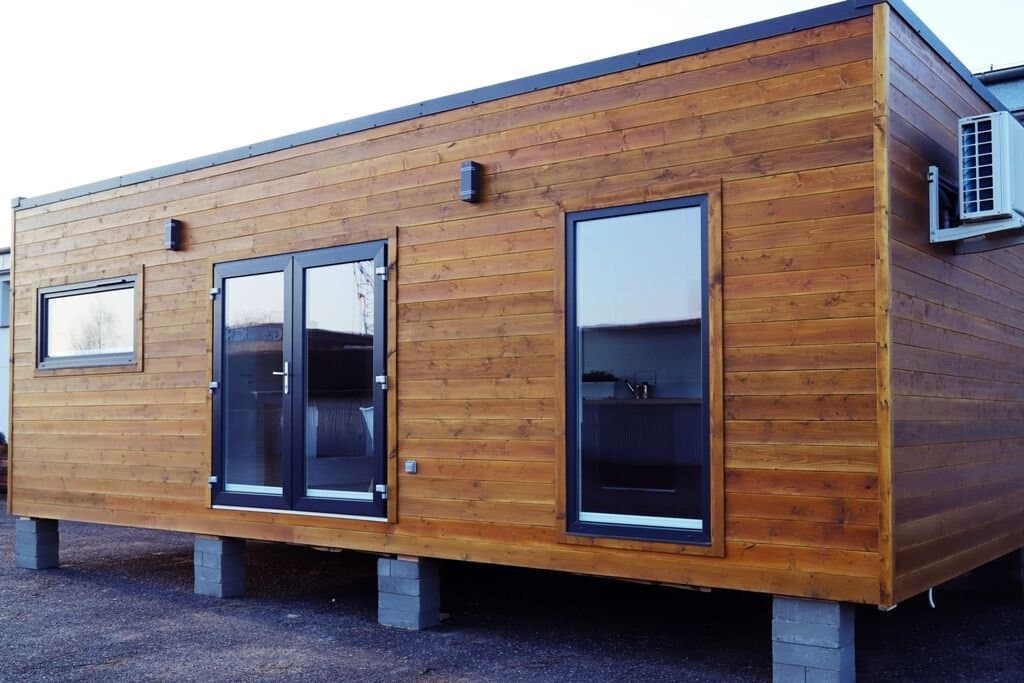
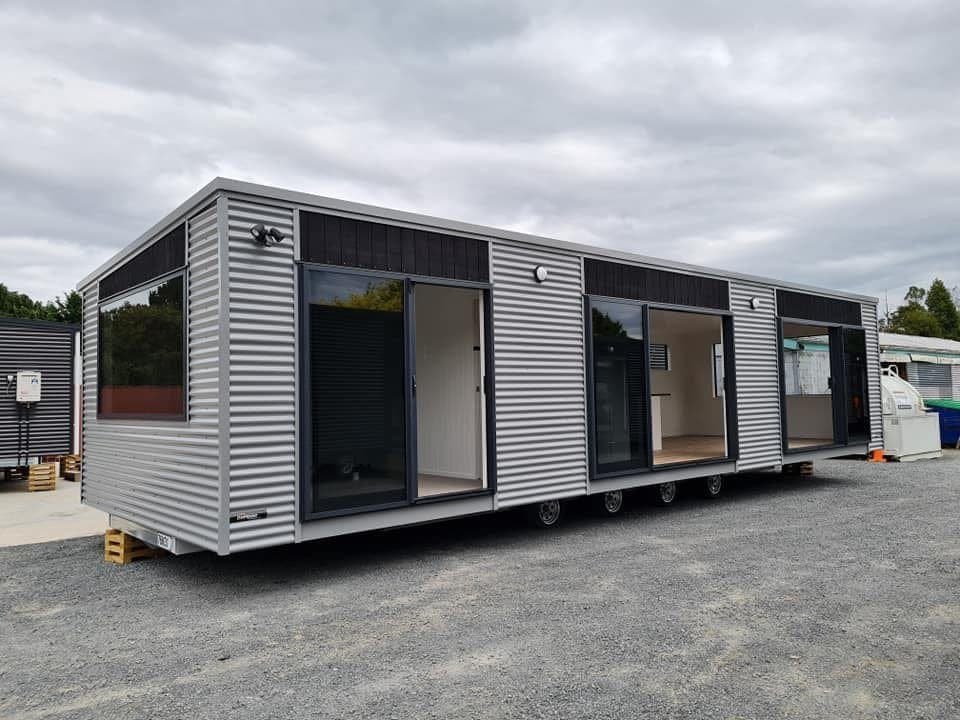
The T2 habitable container from D.S. Globe Conteneur is a 48 m² modular housing solution, designed to provide a functional and comfortable living space. It stands out from standard shipping containers thanks to its reinforced insulation and complete interior fit-out, making it suitable for residential or professional use. This product is aimed at those looking for an alternative to traditional construction, whether for a primary or secondary residence, a site office or temporary accommodation. In this description, we detail its technical characteristics, equipment, possible uses, and the points to consider for an informed purchase.
Let's start with dimensions and structure. This habitable container is 12 metres long, 4 metres wide and 3.5 metres high, giving a living area of 48 m². These dimensions are larger than those of a standard 40-foot shipping container, which measures approximately 12.19 m long, 2.44 m wide and 2.59 m high (or 2.89 m for a high cube). The 4-metre width and 3.5-metre height provide a significantly more spacious interior volume, improving comfort and the feeling of space. The total weight is around 8 tonnes, which remains within road transport limits, but requires verification of lifting and towing capacities. The structure is likely made of Corten steel, a weathering steel that resists corrosion through the formation of a protective surface layer. This material is commonly used in the manufacture of shipping containers for its durability, particularly in marine environments. The floor, often 28 mm marine plywood, is here covered with a coating suitable for habitation, as mentioned for the bathroom (floating screed floor). The walls and roof are made of profiled steel sheets, ensuring rigidity and weather resistance.
Insulation is a key element of this habitable container. The walls are insulated with 10 cm thick rock wool, while the floor and ceiling benefit from 15 cm insulation. Rock wool is a mineral, non-combustible insulating material that offers excellent thermal and acoustic performance. It reduces heat loss in winter and limits heat gain in summer, helping to maintain a pleasant indoor temperature throughout the year. This thick insulation is superior to that found in many basic habitable containers, where insulation may be absent or limited to a few centimetres. It also improves acoustic comfort by attenuating outside noise. It is important to note that insulation must be complemented by good airtightness and suitable ventilation to avoid condensation problems. The presence of an air-to-air heat pump with app control suggests that the heating and air conditioning system is integrated, which is an asset for temperature regulation.
Now let's move on to the interior layout, which is fully furnished and equipped. The kitchen is described as fully equipped, with appliances from Bosch, a brand recognised for the quality of its household appliances. It includes a built-in fridge and freezer, a Bosch 4-zone induction hob, a built-in Bosch convection oven, a built-in Bosch dishwasher, and an extractor hood with fan. The kitchen also has a stainless steel splashback, integrated LED lighting, integrated power sockets, and soft-close doors and drawers with lacquered doors. An additional power socket is mentioned. This complete equipment allows cooking and food storage in optimal conditions, without having to invest in additional appliances.
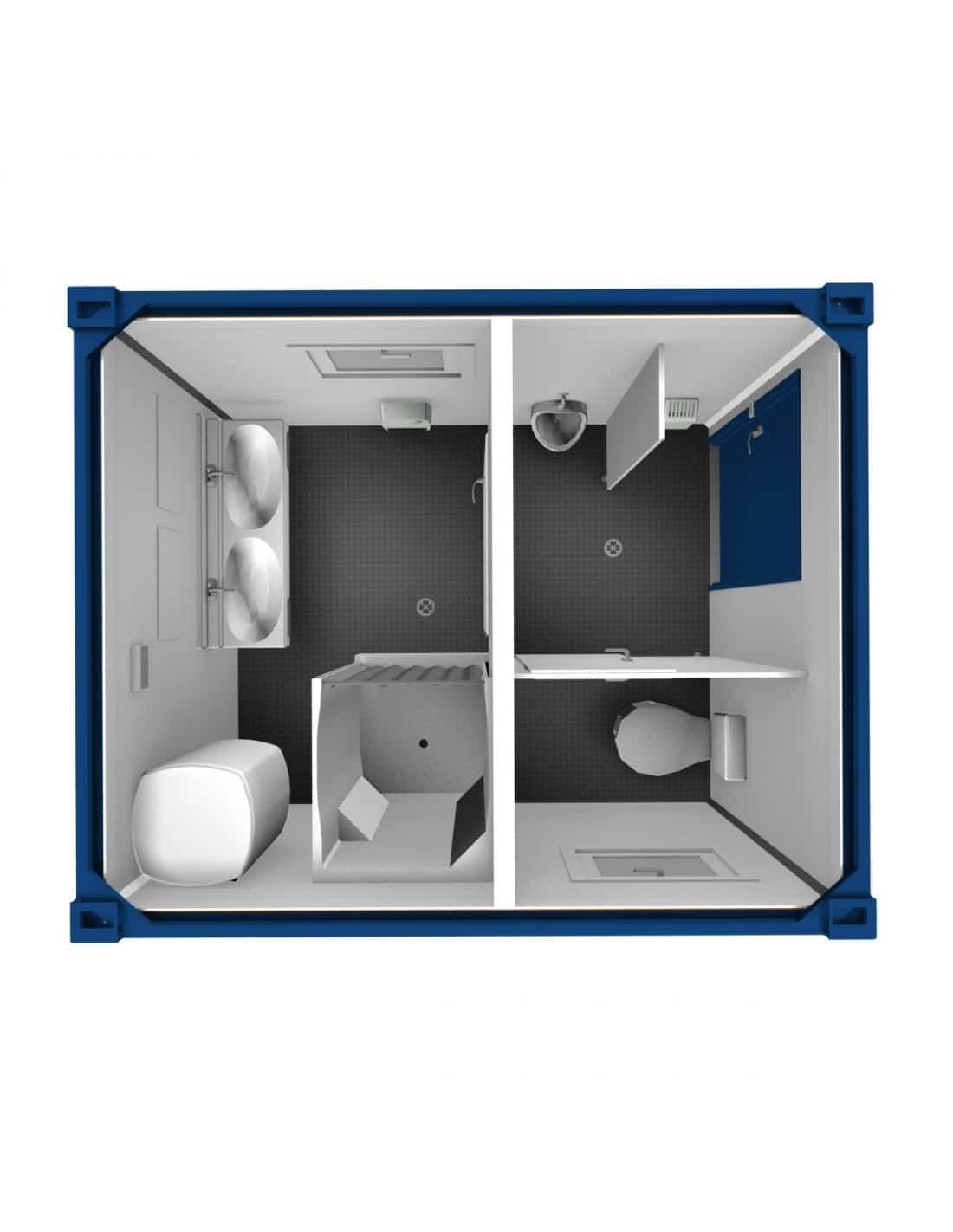
The bathroom is just as complete. It includes a 90 × 90 cm shower screen, a 100-litre integrated water heater, an electric towel rail, a smart bathroom fan, and an electric underfloor heating with a suitable floor covering (floating screed floor). A bathroom cabinet with storage is provided, and the installation is ready for a washing machine. Integrated LED lighting and finishes (carpet and wallpaper for damp rooms) complete the set. This equipment guarantees a high level of sanitary comfort, comparable to that of a conventional home.
The rest of the living space consists of two bedrooms, a living room with sofa and coffee table, and a dining area with a dining table and four chairs. The presence of an air-to-air heat pump with app control allows temperature regulation remotely, an advantage for users wishing to manage their comfort from their smartphone. Integrated LED lighting in all rooms ensures efficient and energy-saving brightness.
This T2 habitable container can be used in many contexts. As a primary or secondary residence, it offers an economical and rapid alternative to traditional construction. It can also serve as a site office, technical room, temporary accommodation for workers, or even an unusual guest room. Its relative mobility (it can be moved by truck crane) makes it suitable for projects requiring flexible installation. However, it should be noted that its weight of 8 tonnes and its oversized dimensions (4 m wide) involve specific transport constraints. In France, road transport of wide loads is subject to regulations: beyond 2.55 m wide, an exceptional convoy is required, with prior authorisations and traffic restrictions. It is therefore advisable to check with the competent authorities and use a specialised carrier.
In terms of maintenance, a habitable container requires minimal monitoring. The steel structure should be inspected regularly for any signs of rust, especially if the container is exposed to a humid or saline environment. An anti-corrosion treatment can be applied if necessary. Insulation and sealing must be checked to avoid water infiltration and thermal bridges. Household and sanitary equipment must be maintained according to the manufacturers' recommendations. Ventilation is crucial to avoid condensation, especially in damp rooms such as the bathroom. A mechanical ventilation system can be an advantage.
When buying a habitable container, several points of vigilance should be considered. It is essential to verify compliance with the construction and housing standards in force in the installation region. In France, installing a habitable container may be subject to urban planning rules: depending on the duration of installation and the surface area, a building permit or prior declaration may be required. It is recommended to consult the local urban plan (PLU) of the municipality. In addition, electrical and sanitary compliance must be ensured to guarantee the safety of occupants. It is also wise to check the origin of the container: if it is a reconditioned shipping container, it may have been exposed to harsh conditions, and chemical treatments (such as methyl bromide) may have been used for fumigation. Thorough cleaning and verification of the absence of toxic residues are then necessary. In the case of this product, it is presented as a new or specifically renovated habitable container, with new equipment, which reduces these risks.
Compared to other modular housing solutions, this T2 container positions itself as a turnkey option. Its price of EUR 7000 is competitive given the complete fit-out and branded equipment. It offers a living area of 48 m², which is larger than many studios or small apartments. Its modular design allows for extensions or combinations of several containers to create larger spaces. However, additional costs related to transport, installation (foundations, connections to utilities) and possible administrative authorisations should not be overlooked.
To complete this presentation, let's examine in more detail the practical aspects of installation and use. Setting up a habitable container requires site preparation. Ideally, the ground should be stable and level to receive the foundations. These can be of different types: concrete pads, concrete slab, or lightweight foundation systems suitable for modular constructions. The choice depends on the nature of the soil, the duration of installation and local constraints. A sloping site will require earthworks. It is also important to plan connections to utilities: drinking water, electricity, wastewater disposal. If the container is not connected to the main sewer, a septic tank or individual sanitation system may be required. For electricity, a dedicated line with an electrical panel compliant with NF C 15-100 standards is essential. Since the container is equipped with household appliances and a heating/air conditioning system, the available electrical power must be sufficient (generally between 6 and 12 kVA depending on use). A study by a qualified electrician is recommended.
Regarding transport regulations, moving this container 4 metres wide and 8 tonnes requires an exceptional convoy of category 2 (width between 2.55 m and 4.50 m). In France, this implies a traffic authorisation issued by the prefecture, a predefined route, and sometimes escort by a pilot vehicle. Exceptional convoys may only travel on authorised roads, and time restrictions (peak hours, weekends, public holidays) may apply. The cost of transport can therefore be significant, especially for long distances. It is advisable to use a carrier specialising in containers, equipped with truck cranes or suitable low-loaders. Unloading on site also requires a mobile crane or a forklift with sufficient capacity (at least 10 tonnes). Site access must be checked: road width, presence of bridges, overhead lines, etc.
Now let's look at sector-specific use cases. In the construction sector, this T2 container can serve as a site base for workers: changing rooms, canteen, site offices. Its speed of installation and comfort make it a popular solution for long-term projects. In the events sector, it can be used as a dressing room for artists, a catering area, or temporary accommodation for staff. Local authorities can use it as a temporary post office, vaccination centre, or community room. In the tourism sector, it can become unusual accommodation (cottage, guest room) thanks to its original appearance and interior comfort. For individuals, it represents an option for a house extension, accommodation for students or elderly people, or a secondary residence in a garden. Finally, in industry, it can serve as a technical room, control room, or office for maintenance teams.
Let's now compare this T2 container with other sizes and types of habitable containers. A T1 container (one bedroom) would offer a smaller surface area, often around 24 to 30 m², which may suit a single person or a couple, but would be too cramped for a family. Conversely, a T3 (three bedrooms) would offer more space, but would be heavier and more cumbersome to transport. The T2 positions itself as a good compromise for a small family or a couple wanting a comfortable living space. In terms of type, there are basic habitable containers, uninsulated, intended for seasonal use, and high-end containers with luxurious finishes. This T2 falls into the category of comfortable habitable containers, with careful insulation and quality equipment, without falling into ostentatious luxury. It is also possible to find standard shipping containers converted into housing, but these often have a width of only 2.44 m, which limits the interior layout. The 4 m width of this model offers a much more pleasant interior space.
Another important point is durability and long-term maintenance. The Corten steel structure is designed to resist corrosion, but it requires periodic maintenance. It is recommended to inspect the roof and walls at least once a year, clean gutters and rainwater outlets, and touch up any scratches with anti-rust paint. Seals around windows and doors must be checked and replaced if necessary. Rock wool insulation can lose its effectiveness if exposed to moisture; it is therefore necessary to ensure that the vapour barrier is intact. Electrical and plumbing systems must be checked regularly by professionals. The air-to-air heat pump requires annual maintenance (filter cleaning, refrigerant check). The 100-litre water heater must be descaled periodically. Bathroom ventilation must be kept in good working order to prevent mould.
Finally, it is useful to mention energy aspects. Thanks to its thick insulation, this habitable container has good energy efficiency. Heating and air conditioning consumption will be lower than in an uninsulated container. The air-to-air heat pump has a generally high coefficient of performance (COP), allowing efficient heating or cooling. LED lighting reduces electricity consumption. To go further in energy savings, it is possible to install photovoltaic solar panels on the roof, provided that the structure can support the additional weight and that the orientation is favourable. This would allow the container to be partially powered by electricity, reducing both the energy bill and the carbon footprint.
In conclusion, the T2 habitable container from D.S. Globe Conteneur is an innovative housing solution, combining the robustness of a shipping container with a careful and comfortable interior fit-out. Its generous dimensions, high-performance insulation and quality equipment make it a relevant choice for various residential or professional projects. However, it is advisable to research the regulatory and logistical aspects before starting. With proper maintenance, this container can offer a sustainable and pleasant living environment.