Description
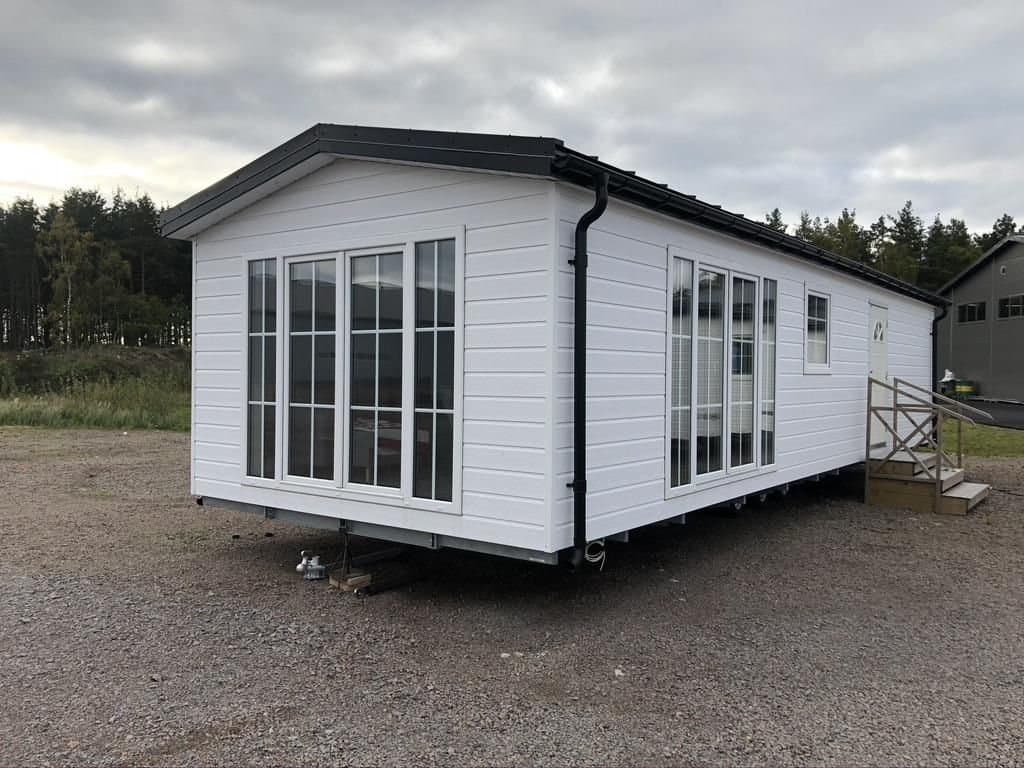
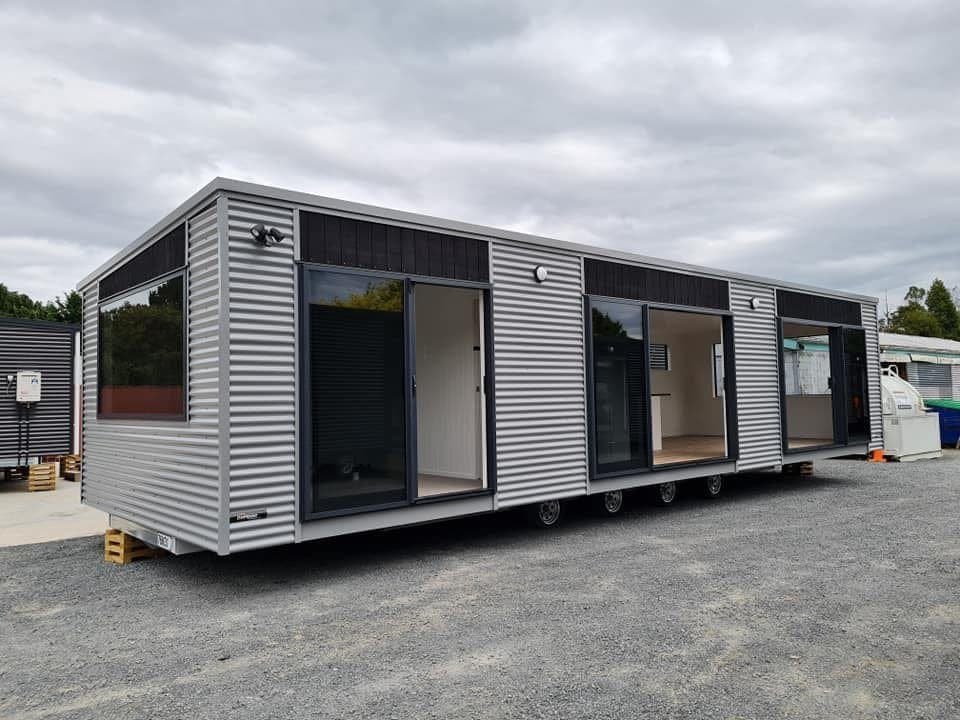
The 48 m² 2-bedroom habitable container is a modular housing solution combining the strength of a shipping container with a complete interior fit-out. Measuring 12 metres long, 4 metres wide and 3.5 metres high, it offers generous volume and immediate comfort. Its weight of around 12 tonnes reflects robust construction designed to last. This model stands out for its careful insulation: the walls are lined with 10 cm rock wool, while the floor and ceiling have a 15 cm layer. This configuration ensures good thermal inertia and appreciable acoustic comfort, whether for residential or professional use.
The interior layout has been designed to meet the needs of a household or a workspace. It includes two bedrooms, a living room, a fully equipped kitchen and a functional shower room. The kitchen includes Bosch-brand appliances: built-in fridge and freezer, four-zone induction hob, convection oven, dishwasher. An extractor hood with fan removes odours. Doors and drawers have soft-close fittings, and the lacquered fronts provide a neat finish. A stainless steel splashback protects the walls behind the worktop. LED lighting is integrated, and additional power sockets are provided for everyday convenience.
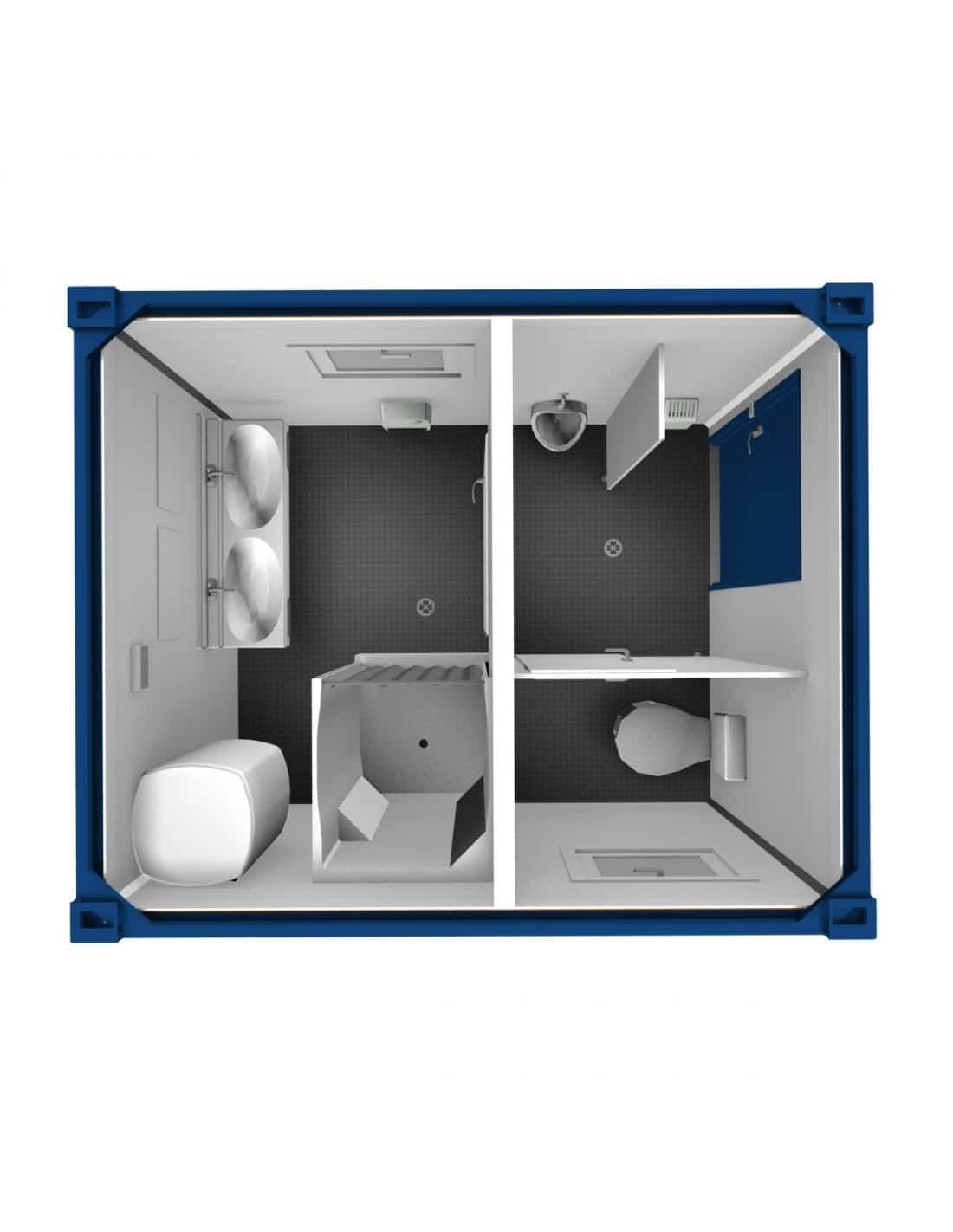
The shower room includes a 150 cm × 150 cm shower with panels, a 150-litre water heater, an electric towel rail, a smart fan and electric underfloor heating. A vanity unit with storage, a washing machine ready to be installed, LED lighting and coverings suited to wet rooms complete this space. The living room is furnished with a sofa, a coffee table and a dining table with four chairs. An air-to-air heat pump with app control regulates the temperature and provides optimal comfort in all seasons.
This habitable container is built on a shipping container base, generally in Corten steel, giving it high mechanical strength and good weather resistance. Standard shipping container dimensions are defined by ISO 668 and ISO 1496, ensuring compatibility with transport and lifting infrastructure. However, the specific dimensions of this model (12 m × 4 m × 3.5 m) exceed the scope of standard ISO containers, which means special precautions for transport and installation. It is essential to check planning permissions and abnormal load transport rules before any delivery.
Installing a habitable container requires site preparation. A stable, level ground is essential to avoid any deformation of the structure. Concrete pad or slab foundations are recommended. Connection to utilities (water, electricity, drainage) must be anticipated. This type of modular construction is often used as a main or second home, site office, technical room or temporary accommodation. Its relative mobility allows for a later move, provided suitable lifting and transport means are available.
In terms of maintenance, regular checks of the roof and openings for watertightness are advisable. The external steel walls can be cleaned with soapy water and protected with anti-rust paint if necessary. The internal rock wool insulation must stay dry; any infiltration must be treated quickly to avoid loss of insulation and mould growth. Electrical and plumbing equipment must be checked periodically, and the water heater and heat pump maintained according to the manufacturers' recommendations.
Buying a habitable container involves checking several points. First, ensure the structure is sound: no perforating rust, intact welds, good condition of seals. Then, confirm that the interior fit-out meets electrical safety standards (RCD, earthing) and ventilation requirements. For a permanent installation, a building permit may be required depending on local regulations. In France, habitable containers are considered constructions and subject to planning rules (prior declaration or building permit depending on surface area and installation duration). It is recommended to contact the local planning department before any project.
Transporting a container of this size is classified as an abnormal load. In France, an abnormal load is subject to prior authorisation and traffic restrictions (times, routes). The 4-metre width exceeds the standard gauge, requiring specific signage and possibly an escort. The 12-tonne weight must be taken into account when choosing the truck and lifting crane. It is advisable to use a specialist carrier to organise delivery and on-site installation.
This 2-bedroom habitable container is offered at €8,500. It represents an interesting alternative to traditional construction, with shorter lead times and controlled costs. Its complete fit-out and quality equipment make it a turnkey solution for many uses. Whether for extra accommodation, a site office or a second home, it offers a functional and comfortable space, ready to use after connection to utilities.
For any technical questions or to arrange a visit, please contact D.S. Globe Conteneur. Our team supports you throughout your project and advises you on the steps to follow.
Let us now look in more detail at the practical aspects of routine and preventive maintenance. A habitable container, even built on a robust maritime base, remains exposed to external aggression: rain, humidity, sea spray if you are by the coast, or significant temperature variations. The first regular check concerns the roof. Although the original structure is designed to drain water, the addition of equipment (vents, extractor flues, cable passages) can create singular points where watertightness must be checked. Inspect seals and membranes every six months, and replace them as soon as they show signs of wear. The side walls, in Corten steel, are protected by original paint. If you notice deep scratches or early corrosion, sand lightly and apply a suitable anti-rust paint. An annual wash with clean water and mild soap is enough to remove deposits and preserve the appearance.
Inside, rock wool insulation plays a key role in thermal and acoustic comfort. It is vulnerable to moisture: untreated water infiltration can reduce its effectiveness and encourage mould. Ensure sufficient ventilation, especially in the shower room and kitchen. The bathroom's smart fan and the kitchen hood help remove humidity. Open the windows for a few minutes each day, even in winter, to renew the air. Floor and wall coverings should be cleaned with non-abrasive products. The electric underfloor heating requires no particular maintenance, but avoid covering it with a thick rug that would hinder heat diffusion.
Technical equipment deserves specific attention. The air-to-air heat pump must be maintained according to the manufacturer's recommendations: cleaning or replacing filters, checking the refrigerant circuit by a qualified professional. The 150-litre water heater must be descaled periodically, especially in areas with hard water. Annual servicing by a plumber is advisable. The Bosch appliances (fridge, oven, hob, dishwasher) are standard household appliances: refer to their respective manuals for routine maintenance. The washing machine, if you install it, must be connected to a compliant water supply and drain.
French regulations strictly govern the transport and installation of this type of structure. As indicated, a habitable container is considered a construction under the Town Planning Code. If you plan to install it for more than three months, a prior declaration is generally required for a floor area between 5 and 20 m², and a building permit above 20 m². However, rules may vary between municipalities, particularly in protected areas (listed sites, near historic monuments, nature reserves). It is essential to consult your municipality's Local Urban Plan (PLU) and check with the relevant department. In addition, if the container is intended for habitation, it must comply with safety and sanitation standards: ventilation, guardrails, electrical installations compliant with NF C 15-100, etc. Decent housing must also meet energy performance criteria, even if habitable containers are not subject to the same requirements as traditional new builds.
Transport to the installation site is a delicate stage. Because of its out-of-gauge dimensions (4 metres wide), the convoy is classified as exceptional. In France, abnormal load regulations require prior authorisation issued by the prefecture, a defined route, and sometimes an escort. Traffic may be restricted at night, at weekends and on public holidays, as well as in certain urban areas. The 12-tonne weight requires a low-loader or flatbed truck and a mobile crane with suitable capacity for lifting. Also allow for clear access on site: road width, height of overhead lines, presence of signs or trees. A specialist carrier will manage these constraints and obtain the necessary permits.
Sector use cases for this 48 m² 2-bedroom habitable container are varied. In construction, it can serve as a comfortable site office, with a meeting area and sanitary facilities, for a project lasting several months. Teams appreciate the thermal comfort and the ability to work remotely from site. In events, it can be used as an artist dressing room, catering space or temporary accommodation for crews. Local authorities see it as a solution for emergency or transitional housing, particularly after disasters. In tourism, it can be converted into unusual accommodation (gîte, guest room) on a campsite or reception area. Companies can also use it as a living base for travelling teams, or as a technical room to store sensitive equipment. Finally, for individuals, it is an option for a second home, a workshop or accommodation for a relative, with quick implementation.
Let us now compare this 48 m² 2-bedroom model with other sizes and types of habitable containers. Standard shipping containers are 20 feet (about 6.06 m) or 40 feet (about 12.19 m) long, 2.44 m wide and 2.59 m high (or 2.89 m in high cube version). A 20-foot container offers around 15 m², suitable for a small studio or individual office. A standard 40-foot container offers around 30 m², allowing a one-bedroom or small two-bedroom layout. The model presented here, with its 48 m², sits above these areas thanks to a width of 4 metres and a height of 3.5 metres, creating a more spacious interior volume. It is close to a small apartment. In terms of price, a basic 20-foot habitable container can cost between €15,000 and €25,000 depending on the fit-out, while a fitted 40-foot can exceed €30,000. At €8,500, this 48 m² two-bedroom model is positioned in a competitive segment, but bear in mind that transport and installation are additional to the budget.
Other types of containers exist: the reefer (refrigerated) container is insulated and can be converted into housing, but its cooling system must be replaced or adapted. The open top container (open roof) is useful if you need to load tall objects, but less common for habitation. The flat rack container (without side walls) is not suitable for housing without major work. The high cube container offers an extra 30 cm of height, valuable for avoiding a low-ceiling effect. Finally, so-called "new build" or "one-trip" containers are preferred for habitation because they are less rusty and easier to fit out. The two-bedroom model described here appears already fitted and ready to use, saving you the work.
If you compare with traditional construction, the habitable container has advantages: shorter implementation time (a few weeks versus several months), controlled cost, potential mobility, and a modular aspect. It also has limits: limited surface area, need for foundations, exceptional transport, and sometimes mixed acceptance in aesthetic or regulatory terms. For a permanent housing project, it is advisable to assess the total cost carefully (purchase + transport + installation + connections + any taxes) and to check administrative feasibility in advance. This 48 m² two-bedroom container is an interesting option for functional, equipped housing, provided you comply with the regulatory framework and plan for logistical constraints.
Finally, remember to check that your project is compatible with local planning rules and to work with professionals for transport and installation. D.S. Globe Conteneur is available to provide further information and guide you towards best practices.