Description
The 48 m² T3 habitable container is a modular housing solution designed to offer comfort close to that of a traditional home. It stands out for its generous dimensions and complete fit-out, making it a functional and durable living space.
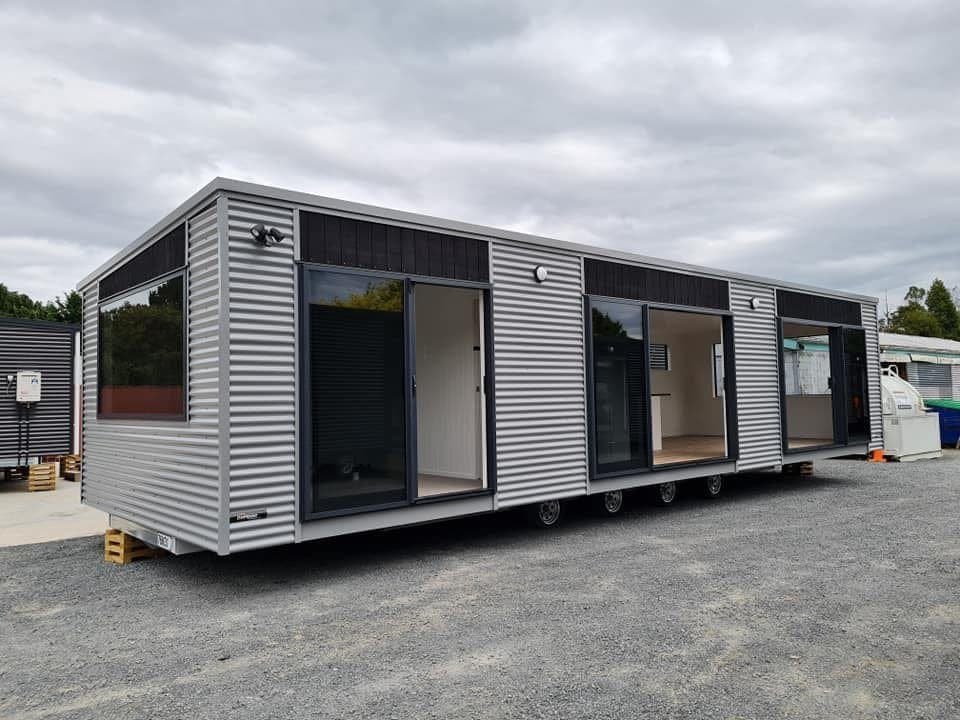
This container takes the form of a rectangular module 12 metres long, 4 metres wide and 3.5 metres high, weighing around 12 tonnes. These dimensions, far larger than standard shipping containers (generally 6.06 m long, 2.44 m wide and 2.59 m high), provide a living area of 48 m², divided into three bedrooms, a living room, a kitchen and a bathroom. The ceiling height is sufficient for residential use, and the increased width offers a much more comfortable interior volume than a classic container.
The structure is made of Corten steel, a self-weathering steel that resists corrosion through the formation of a protective surface layer. This feature is essential for equipment intended to remain outdoors. The container is insulated with rock wool: 10 cm in the walls and 15 cm in the floor and ceiling. This thermal and acoustic insulation helps maintain a stable indoor temperature and reduce noise nuisance, whether for residential or professional use. The interior finish includes suitable coverings, including carpet and moisture-resistant wallpaper in the bathroom.
The interior layout has been designed to be immediately usable. The kitchen is fully equipped with Bosch appliances: a built-in fridge and freezer, a four-zone induction hob, a built-in convection oven and a built-in dishwasher. An extractor hood with fan removes odours and steam. Doors and drawers have soft-close mechanisms, and the kitchen doors are lacquered. LED lighting is integrated, and power sockets are placed in practical locations. A stainless steel splashback completes the set.
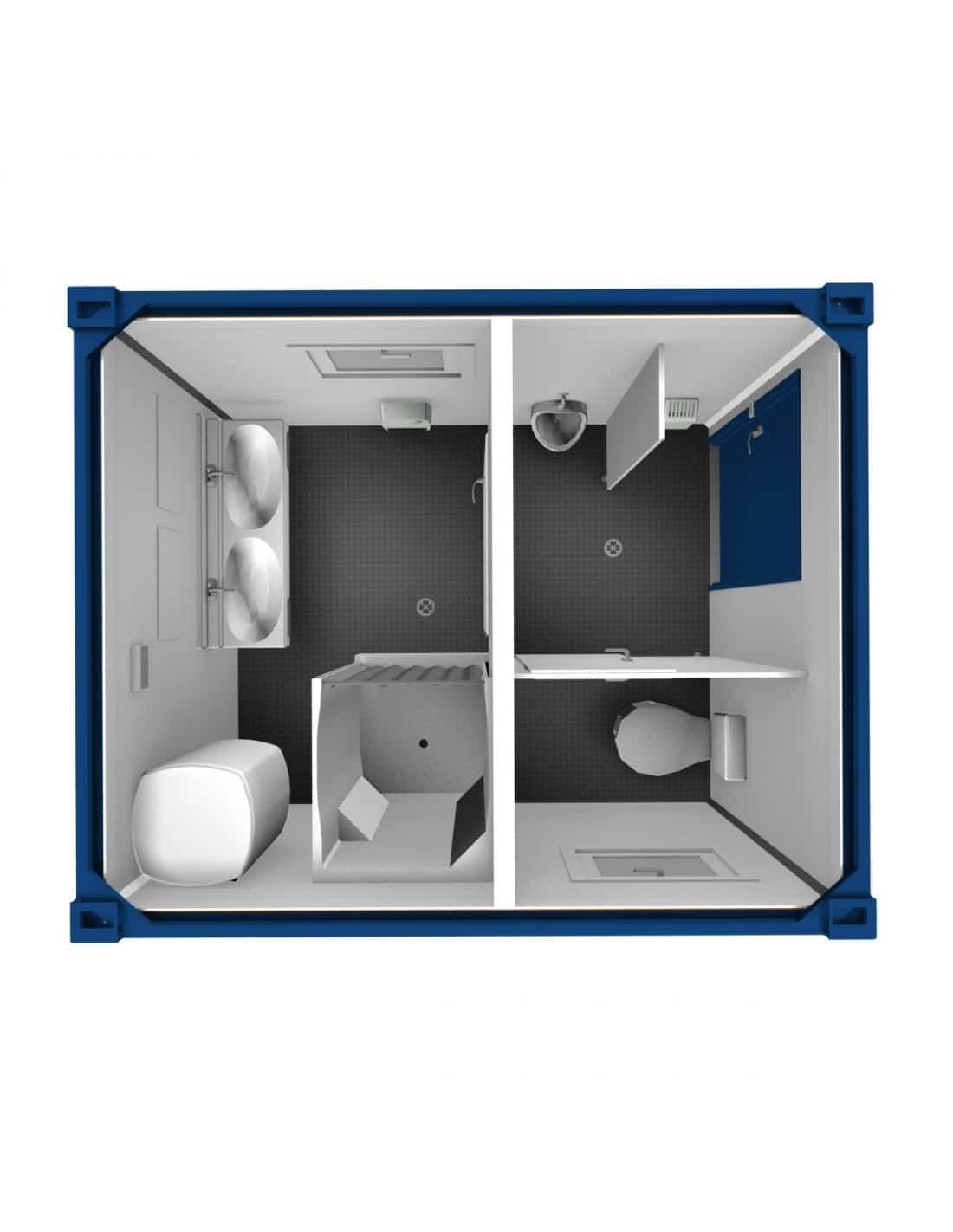
The bathroom includes a 90 cm × 90 cm shower screen, a 100-litre integrated water heater, an electric towel radiator, a smart fan and an electric underfloor heating. A vanity unit with storage is provided, and the installation is ready for a washing machine. Integrated LED lighting and moisture-resistant finishes ensure a healthy and practical space.
The living room is furnished with a sofa, a coffee table and a dining table with four chairs. An air-to-air heat pump with app control regulates the temperature as needed. Integrated LED lighting provides even brightness.
This habitable container can be used in many contexts. It is a temporary or permanent housing solution for individuals, whether on a building plot, while renovation work is completed, or as a second home. For professionals, it represents a comfortable site office, a changing room for teams, or accommodation for travelling staff. Local authorities can use it as a technical room, meeting room or reception area. Its modularity also allows several modules to be assembled to create larger complexes, subject to local planning rules.
Maintaining a habitable container is relatively simple. The exterior paint should be checked regularly and any scratches touched up to prevent corrosion. Seals should be inspected periodically, especially around openings. The interior insulation requires no particular maintenance, but it is advisable to check for damp, especially in the bathroom. Electrical and plumbing equipment must be maintained according to the manufacturers' recommendations.
Before purchasing, several points deserve your attention. Check that the container complies with applicable construction standards, particularly regarding electrical safety and structure. Make sure the insulation and equipment are suited to your climate zone. Find out about the necessary administrative procedures: in most cases, installing a habitable container requires a building permit or prior declaration, depending on the surface area and duration of installation. It is also important to plan connections to utilities (water, electricity, drainage) or stand-alone solutions. Finally, transport and handling must be entrusted to equipped professionals, as the module's weight and dimensions require suitable lifting equipment.
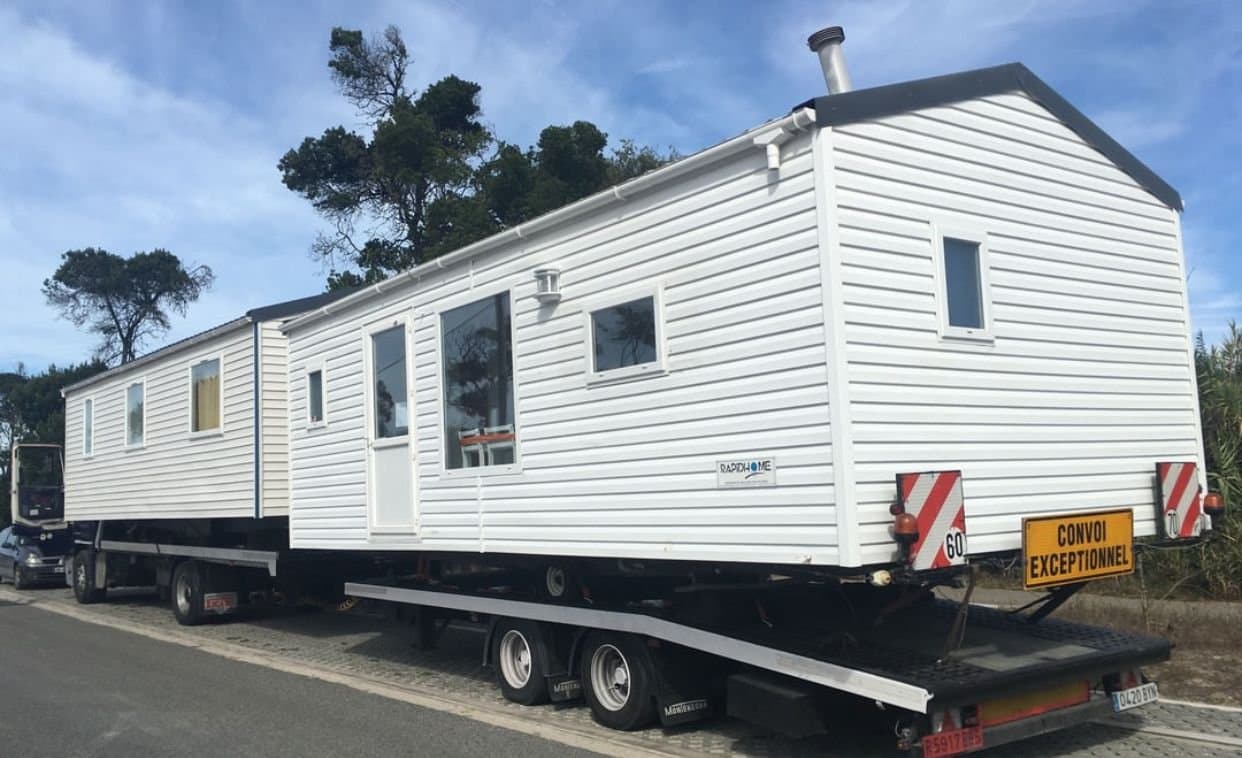
Transporting such a container in France is governed by exceptional transport regulations. Due to its 4-metre width (above the standard 2.55-metre limit), an exceptional convoy is required, with prior authorisations and a validated route. Transport costs may vary depending on distance and local constraints. It is recommended to use a specialist carrier to organise these operations.
This T3 habitable container is offered at €9,500. It represents an economical and fast alternative to traditional construction, with the advantage of being delivered ready to use. For more information on customisation options, delivery times and installation procedures, please contact our teams.
Let us now look in more detail at some practical aspects that are rarely covered but decisive for the success of your project. Installing a 48 m² module requires sufficient ground area and stabilised terrain. Ideally, provide a concrete platform or a compacted gravel bed to avoid differential settlement. The 12-tonne weight must be distributed over the designated support points; a surveyor or mason can validate the soil's load-bearing capacity. If the container is installed permanently, suitable foundations are advisable, such as concrete pads or ground beams. For temporary installation, jacks or hardwood blocks may suffice, provided their stability is checked regularly.
Technical connections deserve particular attention. The electrical supply must be sized according to the installed equipment: induction hob, oven, water heater, heat pump, underfloor heating and towel radiator are energy-intensive appliances. A dedicated consumer unit with residual current breakers is essential. For water, a connection to the public network or a tank is necessary, with a wastewater disposal system compliant with local regulations (mains or individual sewage). The air-to-air heat pump operates with an outdoor unit, which must be positioned so as not to disturb neighbours and to allow good heat exchange.
For routine maintenance, several simple actions extend the container's lifespan. Inspect the roof after each episode of violent winds or heavy snowfall. Clean the gutters if the model is fitted with them. Check the sealing of windows and cable entries. Inside, regularly check that ventilation is working properly, especially in the bathroom, to avoid condensation. Heat pump filters must be cleaned according to the manufacturer's recommendations. Finally, a visual check of electrical and plumbing equipment once a year helps detect any anomaly.
Let us now compare this 48 m² T3 container with other solutions commonly offered on the market. A standard 20-foot shipping container (about 6 m long) offers a floor area of around 14 m², which is insufficient for a family home but suitable for an individual office or storage room. A 40-foot container (12 m long) doubles the surface area, but its standard width of 2.44 m limits the interior layout. This model, with its 4 m width, gains about 1.5 m of usable width, which considerably changes the perception of space and allows bedrooms and a living room to be installed without a feeling of narrowness. A high-cube container (2.89 m high) improves the volume but remains narrower. Modules specially designed for housing, like this one, integrate insulation, utilities and finishes from the outset, avoiding the extra costs and delays of retrofitting.
From a regulatory point of view, installing a habitable container is subject to planning rules. In France, any new construction, even demountable, may require authorisation. For a floor area exceeding 20 m², a building permit is generally required. Below 20 m², a prior declaration is often sufficient, but rules vary by municipality and zone (housing estate, protected area, etc.). It is essential to check with the local planning department before any installation. Furthermore, if the container is intended for habitation, it must meet the safety and sanitation standards applicable to dwellings (ventilation, guardrails, etc.).
Exceptional transport is an aspect not to be overlooked. In France, an exceptional convoy of category 2 (width between 3 m and 4.5 m) is subject to prior authorisation. The route must be validated, and pilot vehicles may be required depending on width and length. The cost of transport depends on distance, tolls and administrative fees. It is common to use a specialist carrier who handles all the formalities. Also provide suitable lifting equipment (mobile crane or telescopic handler) for unloading and positioning. These operations must be carried out by qualified professionals.
In terms of energy, this container already includes high-performance equipment: air-to-air heat pump, electric underfloor heating, 100-litre water heater. Consumption will depend on insulation (rock wool 10 and 15 cm) and occupants' habits. Good airtightness and controlled ventilation limit heat loss. To improve the energy balance further, photovoltaic solar panels or a rainwater harvesting system could be added, subject to compatibility with the existing installation.
Sector-specific use cases are varied. In the construction sector, this container serves as a site base for teams: changing rooms, canteen, works management office. In events, it can become a reception area, control room or accommodation for artists. Local authorities see it as a solution for emergency housing or temporary leisure centres. Businesses can use it as a hot-desking office, off-site meeting room or training space. Individuals can use it as an extension to their main home, a guest house or a second home. In all cases, modularity and speed of implementation are major assets.
Finally, note that this container is offered at €9,500, which includes the complete interior fit-out and equipment. This pricing makes it competitive against equivalent solutions. For any questions about customisation, available options or delivery arrangements, our team remains at your disposal.
Let us now address the durability and longevity of this type of module. A properly maintained habitable container can last several decades. The Corten steel structure is designed to withstand the weather, provided the finish paint is kept in good condition. Rock wool insulation retains its performance as long as it stays dry; it is therefore crucial to avoid any water infiltration. Electrical appliances and plumbing have a variable lifespan depending on use, but brands like Bosch are generally renowned for their reliability. Regular maintenance, documented in a logbook, can facilitate resale or rental of the module.
For real estate professionals or investors, this container can represent a short- or long-term rental opportunity. Its mobility allows it to be moved from one site to another, which is an advantage for temporary projects. However, transport costs and compliance costs for each move must be taken into account. A profitability study is essential.
Finally, let us not forget the aesthetic aspect. The habitable container can be customised: choice of colours, addition of terraces, sunshades or landscaping. These modifications must comply with local rules and not compromise structural integrity. An architect can help you integrate the module harmoniously into its environment.
In summary, the 48 m² T3 habitable container is a turnkey, robust and scalable solution that meets many residential and professional needs. Its price of €9,500 includes complete equipment and careful insulation. We invite you to contact us for a personalised quote, check availability and schedule delivery to your site.