Description
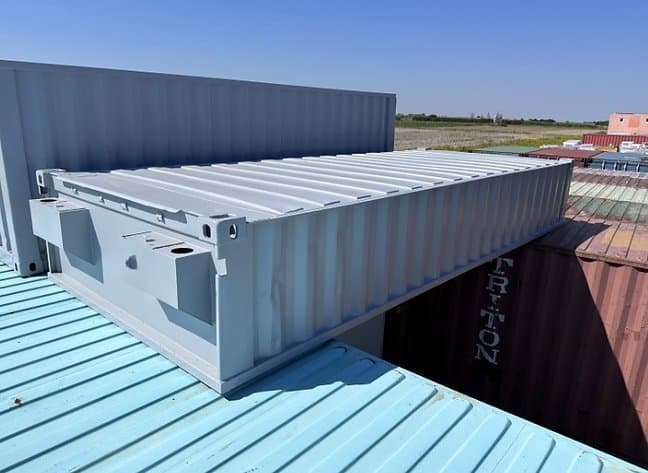
The 2.5 × 6 m septic tank container with a height of 90 cm is a wastewater storage and treatment solution designed for medium-capacity domestic and professional installations. It comes in the form of a large rectangular tank, intended to be buried, and manufactured from a material resistant to corrosion and chemical attack. This product is aimed at homeowners, craftsmen, construction companies and managers of isolated sites looking for a reliable alternative to traditional concrete or masonry septic tanks.
Let's start with the dimensional characteristics. The tank measures 2.5 metres in width and 6 metres in length, with a height of 90 centimetres. These generous dimensions provide a large storage volume, suited to medium-sized households or small commercial complexes. The length-to-width ratio allows for a rectangular layout that is easy to integrate into a plot, whether in a residential area or on the outskirts of a business zone. The 90 cm height allows for burial compatible with most site configurations, while leaving sufficient access for pumping and maintenance operations. It is important to note that this container is not a standard shipping container: it is specific equipment dedicated to wastewater treatment, not a transport or habitation container. The stated dimensions should therefore be considered as external or internal dimensions depending on the exact configuration provided by the manufacturer, and these points should be checked before ordering.
The constituent material is high-density polyethylene (HDPE). This thermoplastic is known for its resistance to impact, chemicals and UV. Unlike concrete, which can crack over time or under the effect of frost, HDPE remains flexible and watertight, which limits the risk of leaks and infiltration. It is also corrosion-resistant, a major advantage in the presence of aggressive soils or heavily loaded wastewater. The relative lightness of the material facilitates transport and handling on site, even though the tank remains bulky. HDPE is a common material in the manufacture of water storage and treatment tanks, which guarantees the availability of parts and accessories on the market.
Watertightness is a critical point for a septic tank. This container is equipped with a reinforced seal that ensures the hermeticity of the assembly. Once buried, it must prevent any leakage of effluent into the soil and any infiltration of parasitic water. The proper functioning of the system depends largely on the quality of the installation and the connection to the inlet and outlet pipes. It is therefore recommended to entrust the installation to a qualified professional, who will check the flatness of the excavation bottom, the installation of a bed of sand or gravel, and the correct positioning of the tank. The integrated lifting points facilitate lowering the tank into the excavation and prevent it from being deformed during handling.
Let's now talk about concrete uses. A septic tank of this type is intended to receive domestic wastewater (blackwater and greywater) from a dwelling not connected to the public sewer system. It provides a first treatment stage: settling of solids and anaerobic digestion. The clarified effluent is then discharged to a secondary treatment system (underground dispersal, sand filter, etc.) in accordance with current regulations. In the case of a storage container, it can also serve as a retention tank for rainwater or temporary storage before pumping. For commercial activities, it can be used for small catering establishments, guesthouses, campsites or isolated offices. The capacity stated as ideal for medium-sized residential or commercial properties corresponds to a volume that can treat the effluent of several households or an activity generating moderate discharges.
Buried installation requires some precautions. The excavation must be sized to accommodate the tank with sufficient space for backfill. A stabilised sand bed is generally recommended to avoid puncturing. The tank must be positioned level, with a slight slope to facilitate flow. The inlet and outlet connections must be watertight and comply with standardised diameters. Once in place, the tank is filled with water before backfilling to balance pressures and prevent deformation. Backfilling must be carried out with a fine material, free of stones or large rocks, and compacted in successive layers. Finally, an inspection manhole must be left accessible to allow checking and pumping.
Maintenance of a septic tank is relatively simple but regular. A professional should be called for emptying when the sludge layer reaches a critical level, generally every 2 to 4 years depending on use and the number of users. The easy access mentioned in the characteristics facilitates this operation. It is also recommended not to introduce aggressive chemicals (concentrated bleach, non-biodegradable detergents) that could disrupt anaerobic digestion. Wipes, fats and oils should be avoided to prevent blockages. Regular visual checks of the level and condition of the equipment allow any anomaly to be detected quickly.
Let's now address the points to watch when purchasing. The first question to ask is that of regulatory compliance. In France, the installation of an on-site wastewater treatment system is subject to precise rules, in particular the Departmental Sanitary Regulations and ministerial decrees. Before any installation, it is necessary to consult the Public Service for On-Site Wastewater Treatment (SPANC) of your municipality. The SPANC checks the design, location and proper functioning of the installation. A septic tank container must comply with current standards, particularly in terms of watertightness and mechanical resistance. It is therefore essential to ask the supplier for certificates and technical data sheets attesting to the product's compliance. Without these documents, the installation could be refused or non-compliant, resulting in additional costs.
Sizing is another crucial point. The capacity of the tank must be adapted to the number of main rooms in the dwelling and the number of users. An undersized tank will result in excessive emptying frequency and incomplete treatment. Conversely, an oversized tank may be more expensive and unnecessary. Sizing rules are generally based on a minimum volume per bedroom or per equivalent inhabitant. For a medium-sized residential property, this 2.5 × 6 m container with a height of 90 cm offers a storage volume that can suit several households, but it is imperative to verify the calculations with a professional.
The nature of the soil and the depth of the water table are also decisive. Soil that is too clayey or a high water table can complicate installation and require adaptations (draining sand bed, ballasting, etc.). The container must be anchored to resist buoyancy in the event of wet ground. The lifting points facilitate installation, but they do not dispense with a ballasting calculation if necessary.
The regulations relating to the transport and handling of this type of container also deserve mention. Although it is not a shipping container, its imposing size (2.5 m wide, 6 m long) classifies it in the category of heavy and bulky packages. Its transport on the road is subject to the rules of the Highway Code concerning vehicle weights and dimensions. In France, a vehicle over 3.5 tonnes or whose load exceeds 3 metres in width or 4.5 metres in height may require a traffic authorisation and an exceptional convoy. The width of 2.5 m remains within the limits authorised for standard transport, but the length of 6 m requires a suitable vehicle (container carrier, flatbed truck). The empty and loaded weight must be taken into account when choosing the vehicle and calculating axles. It is recommended to use a specialised carrier for delivery to the site.
In terms of long-term maintenance, high-density polyethylene is a durable material, but it can be sensitive to UV rays if left exposed to the sun before burial. It is therefore advisable to store the tank in the shade or cover it with a tarpaulin until installation. Once buried, it is protected from light and weather. The chemical resistance of HDPE does not mean that it is insensitive to all solvents or hydrocarbons; any discharge of non-domestic substances must be avoided.
Finally, purchasing a new septic tank container represents an investment. The price of €3,600 excluding VAT is given as an indication and may vary depending on options, accessories and delivery costs. It should be compared with other solutions (concrete, polypropylene) taking into account lifespan, installation and maintenance costs. An HDPE container is generally lighter and easier to install than a concrete tank, but it may be less resistant to crushing if the backfill is poorly done. A good compromise is to choose a certified product, installed by a professional, and to scrupulously follow the manufacturer's recommendations.
To summarise, this 2.5 × 6 m septic tank container with a height of 90 cm is a wastewater storage and treatment equipment suited to medium-sized residential or commercial properties. Its manufacture in high-density polyethylene gives it good chemical and climatic resistance. Its reinforced sealing and lifting points facilitate installation and maintenance. Before purchase, it is essential to check regulatory compliance, sizing in relation to needs, and transport conditions. Careful installation and regular maintenance will guarantee a long service life and optimal operation.
Let's now look in more detail at routine maintenance and good practices to extend the life of your septic tank container. A septic tank works thanks to the activity of anaerobic bacteria that gradually degrade organic matter. For this process to run correctly, it is essential to maintain a biological balance. This involves reasoned use of water and household products. Overly concentrated detergents, powerful disinfectants and chlorine-containing products can destroy the bacterial flora and reduce treatment efficiency. It is preferable to use biodegradable products and to limit the discharge of fats, oils and food residues. Installing a grease trap upstream of the tank is often recommended for kitchens, as solidified fats can block pipes and disrupt settling.
Emptying must be carried out by an approved professional, who will dispose of the sludge to an appropriate treatment channel. The frequency depends on use: for a main residence occupied all year round, emptying every two to four years is common. For a second home, it can be less frequent. It is advisable to keep a maintenance log indicating emptying dates, interventions and any incidents. This facilitates monitoring and may be requested during a property sale or a SPANC inspection. In addition, a visual check of the sludge level and surface crust can be carried out once or twice a year. If unusual odours or water backups occur, a specialist should be called to diagnose the problem.
Sector-specific use cases are varied. In the residential sector, this container is suitable for isolated detached houses, farms, rural guesthouses and second homes not connected to the main sewer. In the commercial sector, it can equip restaurants, hotels, campsites, holiday centres or construction site offices. For construction activities, a septic tank is often necessary for site living quarters, changing rooms and temporary sanitary facilities. The 2.5 × 6 m container can also be used in humanitarian or rural development projects, where on-site sanitation is essential. In industry, it can serve as a storage tank for non-hazardous effluents or for the retention of washing water, subject to checking chemical compatibility with HDPE.
Let's now compare this container with other sizes and types of septic tanks available on the market. Concrete tanks are traditional, robust and resistant to crushing, but they are heavy, difficult to transport and install, and can crack over time. Polypropylene or polyester tanks are lighter and watertight, but they are generally smaller and more expensive. HDPE offers a good compromise: it is light, resistant to impact and chemicals, and does not rust. In terms of dimensions, a 2.5 × 6 m tank with 90 cm height represents a large volume, suited to the needs of several households or a small community. For a household of 3 to 5 people, a 2,000 to 3,000 litre tank is often sufficient, but this container offers a much higher capacity, which can be an advantage for second homes or seasonal rentals where occupancy varies. There are also all-water tanks, which include a pre-filter and are more efficient, but they are often more expensive. The container described here can be considered a storage and pre-treatment solution, to be supplemented by a suitable secondary treatment system.
Finally, let's not forget the environmental aspects. A well-designed and well-maintained septic tank helps protect water resources and soils. By avoiding direct discharges of wastewater into the environment, it reduces the risk of pollution of groundwater and watercourses. High-density polyethylene is recyclable, but it is important to use an appropriate recycling channel at end of life. During installation, regulatory distances from dwellings, wells and property boundaries must be respected. These distances vary by department and local rules; it is therefore essential to consult the SPANC and the municipality's urban planning department before starting work.
In conclusion, the 2.5 × 6 m septic tank container with a height of 90 cm is a versatile and durable piece of equipment for on-site sanitation. Its material, HDPE, gives it interesting resistance and sealing properties. Its installation requires a prior study and compliance with current standards. Its maintenance, although simple, must be regular to guarantee proper operation. Whether for a detached house, a small business or a construction site, it represents a solution to consider, provided its compatibility with the project and local regulations is verified.