Description
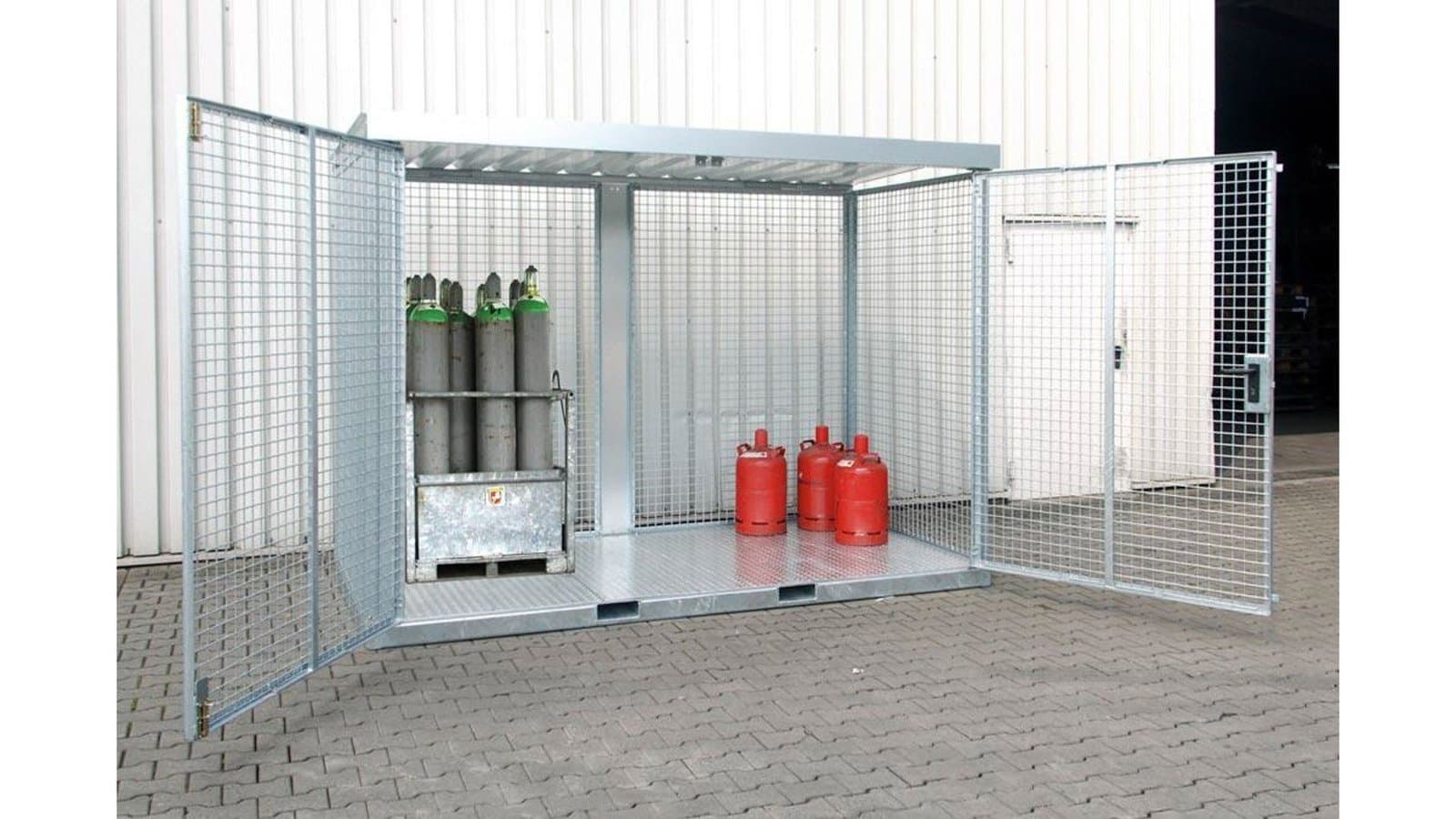
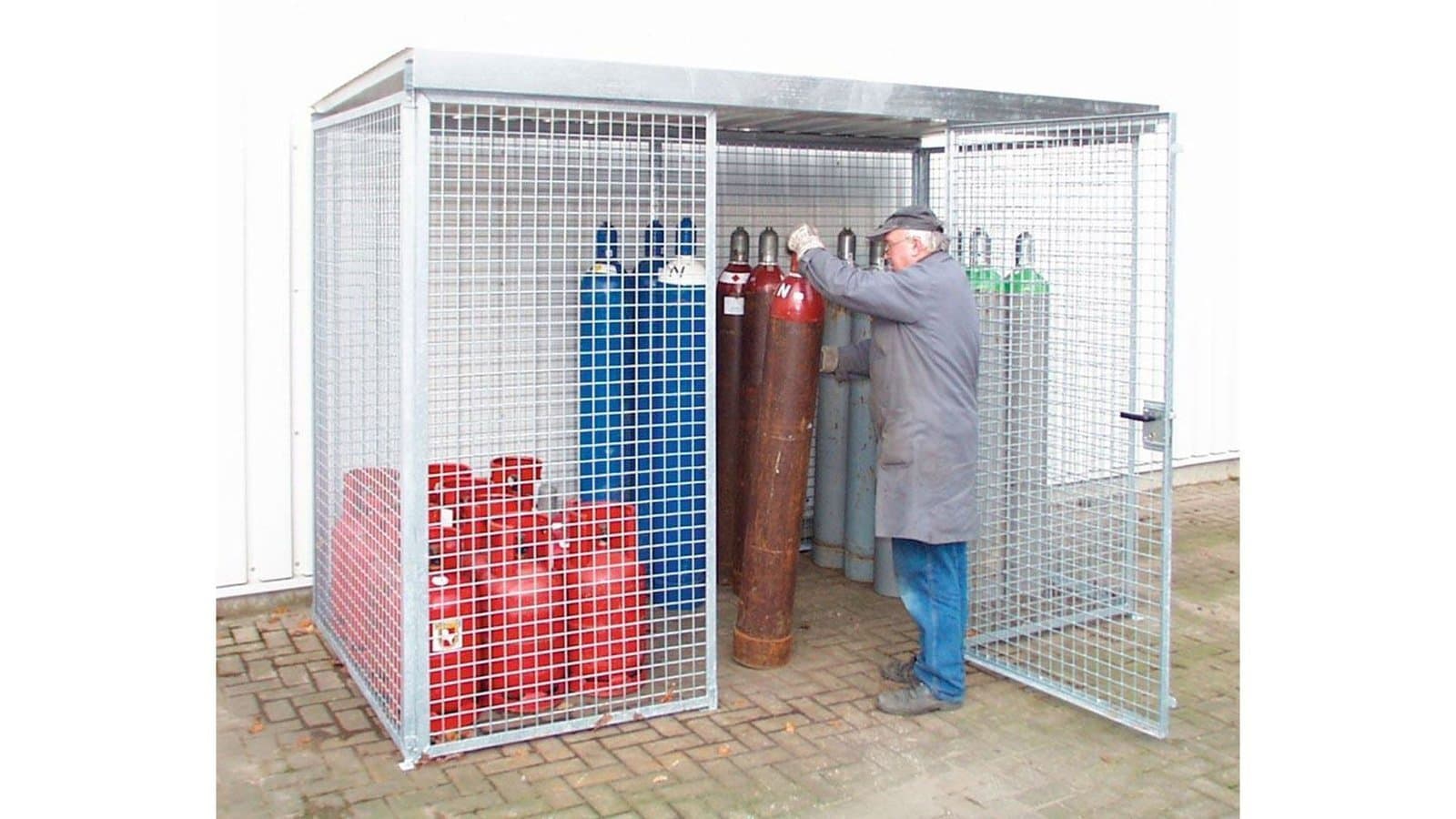
The gas cylinder container with roof is an outdoor storage solution designed to hold and protect compressed or liquefied gas cylinders. Its overall dimensions are 318 cm long, 157.5 cm deep and 226 cm high. It can store up to 78 cylinders of 23 cm diameter, arranged on a sheet metal floor. This configuration meets the needs of professionals who must store gas cylinders in a dedicated, secure space compliant with regulatory requirements, in particular the TRGS 510 technical rules applicable in Germany and often used as a reference in Europe for handling hazardous materials. The structure is fully hot-dip galvanized, ensuring durable corrosion protection, including outdoors. The roof and floor are made of sheet metal, providing a physical barrier against weather and splashes. The double door is lockable, allowing access to the contents to be controlled and reducing the risk of theft or unauthorized use. The container is delivered assembled, ready to be installed on stabilized ground. Forklift entry pockets are integrated into the base, facilitating handling and moving operations without the need for slings. This product is classified in the insulated container category, although it is not a standard shipping container: it is a storage cabinet specifically designed for gas cylinders. It is used in depots, construction sites, industries, laboratories or service stations. Before purchasing, it is essential to check compatibility with local regulations in force regarding the storage of flammable or toxic gases, as well as the safety distances to be observed from buildings and property boundaries. Installation must be carried out on a flat, stable surface capable of supporting the total weight once loaded. Ground anchoring is recommended to withstand strong winds, as the container can present a significant wind area. Routine maintenance consists of regularly inspecting the condition of the galvanization, cleaning the surfaces and checking that the lock works properly. Any deterioration of the anti-corrosion protection must be treated quickly to prevent rust. Cylinders must be stored upright, properly secured, and valves protected. Smoking or producing flames nearby is prohibited. Natural or forced ventilation may be necessary depending on the gases stored. This container is not a workspace: it is intended for storage only. Assembly is carried out at the factory, but it is advisable to check bolt tightness and door alignment after transport. Delivery is by crane truck or flatbed, and suitable access should be provided. For any questions about use or compliance, it is recommended to consult a specialist. In summary, this container offers a robust, mobile and secure solution for outdoor storage of gas cylinders, with a hot-dip galvanized finish and a design compliant with recognized technical rules.
To properly understand this product, a distinction must be made between two families of containers that are often confused. On the one hand, standardized shipping containers under ISO 668 and ISO 1496, available in 10, 20, 40 and 45 feet, in dry, high cube, reefer, open top or flat rack versions, made of Corten steel and intended for intermodal transport. On the other hand, technical containers such as this one, which are not designed to be stacked or to travel on a ship, but to remain on a site and fulfill a specialized storage function. This model belongs to the second category: its dimensions (318 x 157.5 x 226 cm) do not correspond to any standard ISO format, and its purpose is to hold gas cylinders of 23 cm diameter, up to 78 units. This capacity positions it as a large storage cabinet, intermediate between small mesh cages for 10 to 20 cylinders and fitted shipping containers that can hold more than 100 cylinders. The choice between these solutions depends on available space, the volume to be stored, the rotation frequency of the cylinders and local regulatory requirements.
In terms of design, hot-dip galvanizing is a process that involves immersing the steel part in a bath of molten zinc, creating a metallurgical bond between the zinc and the steel. This protection is recognized for its durability outdoors, including in humid or saline environments. It differs from cold galvanizing, which only provides surface protection. The sheet metal roof and floor complete the protection against weather and prevent the accumulation of water or debris. The double door allows wide access for handling cylinders, and the locking system ensures secure closure. The forklift entry pockets are sized to receive the forks of standard handling equipment, allowing the container to be moved without a crane, provided the ground is suitable and the container is empty or properly balanced. It is important never to move a container loaded with cylinders using a forklift, as the weight and load distribution could compromise the stability of the assembly.
Installation must be planned in advance. The container must be placed on a flat, stable surface strong enough to support the total weight once filled. The empty weight is not provided, but it is advisable to plan for a concrete slab or compacted ground. Ground anchoring is recommended, especially in wind-exposed regions. Orientation can also play a role: placing the door sheltered from prevailing winds facilitates handling and limits water infiltration. If the container is installed in an area accessible to the public, appropriate signage must be put in place to indicate the presence of gas and safety instructions. It is also advisable to mark out a safety zone around the container, depending on the quantities stored and applicable regulations.
Regular maintenance extends the product's service life. An annual visual inspection helps identify any scratches or areas of corrosion. If the galvanization is damaged, a zinc-rich paint or suitable anti-corrosion product should be applied. Hinges and the lock must be lubricated periodically to prevent jamming. The sheet metal floor must be kept clean, without accumulation of grease or chemicals, and cylinders must be inspected before storage: any damaged or leaking cylinder must be set aside. Adequate ventilation is essential to prevent gas accumulation in the event of a leak. Depending on the nature of the gases, natural ventilation through high and low openings may be sufficient, but mechanical ventilation may be required by certain regulations. It is recommended to consult a specialist to determine exact needs.
The regulations applicable to gas cylinder storage vary by country and type of gas. In France, the storage of flammable gases is governed by the Environmental Code, in particular item 1414 of the nomenclature of installations classified for environmental protection (ICPE), which concerns flammable gas storage facilities. Depending on the volumes stored, a declaration, registration or authorization may be required. The TRGS 510 technical rules mentioned for this product are of German origin but constitute a useful reference for the design of storage cabinets. They notably impose safety distances, fire-resistant materials, ventilation and signage. In France, the requirements of INRS and departmental fire and rescue services (SDIS) for siting must also be respected. The transport of gas cylinders is governed by ADR (European Agreement concerning the International Carriage of Dangerous Goods by Road). The container itself is not intended to be transported loaded on public roads, but it can be moved empty or with empty cylinders, subject to compliance with dangerous goods transport rules. For road transport, it is imperative to check the total weight, securing and signage of the vehicle. The container must not be shipped as a shipping container, as it does not have the necessary ISO certifications.
Sector-specific use cases are numerous. In manufacturing, it allows storage of oxygen, acetylene, argon or CO2 cylinders used for welding, cutting or manufacturing processes. On building and public works sites, it is used to store propane, butane or oxygen cylinders for heating, welding or powering equipment. Service stations and filling centers see it as a way to store LPG cylinders awaiting distribution. Laboratories and hospitals can place medical or laboratory gas cylinders in it, provided specific regulations are respected. Local authorities and municipal technical services use it to store gas cylinders intended for lighting, heating temporary premises or emergency operations. Finally, equipment rental companies can offer this container to their customers for a set period, providing a turnkey solution.
Compared with other solutions, this container offers several advantages. A simple mesh cage is cheaper but does not offer the same weather protection or the same security against theft. A fitted shipping container can offer greater capacity, but it is heavier, more bulky and often requires fitting work (ventilation, insulation, shelving). A plastic or composite storage cabinet is lighter but less resistant to fire and impacts. This model stands out for its hot-dip galvanization, delivery assembled and compliance with TRGS 510 rules, making it a relevant choice for sites subject to strict requirements. Variants in different sizes exist: smaller models, for example for 20 or 40 cylinders, and larger models that can hold more than 100 cylinders. The choice depends on the number of cylinders to be stored simultaneously, available space and rotation frequency. Storage that is too large can lead to tied-up capital and unnecessary use of space, while storage that is too small forces frequent back-and-forth movements.
When purchasing, several points of vigilance should be examined. Check that the dimensions match your space and that access for the delivery truck is possible. Make sure the container is delivered with forklift pockets and that the door is lockable. Request technical documents (product data sheet, certificate of conformity) to justify compliance with applicable rules. Allow a budget for anchoring, signage and possibly additional ventilation. Finally, find out about local obligations regarding gas storage before purchase, as non-compliance can lead to penalties.
In conclusion, this gas cylinder container with roof is a specialized piece of equipment that meets a specific need: storing outdoors, securely and in an organized manner, a large volume of gas cylinders. Its hot-dip galvanized steel design, sheet metal roof and floor, lockable double door and handling pockets make it a durable and practical solution. It is aimed at professionals concerned with compliance and safety. Before acquiring it, it is essential to validate its suitability for the site, regulations and operational needs. Support from a specialist can be useful to guarantee a compliant and long-lasting installation.
To complete this presentation, it is useful to detail aspects related to fire safety and risk management. Storing gas cylinders involves respecting safety distances from buildings, traffic routes and other hazardous materials storage. These distances vary depending on quantities and types of gas. For example, acetylene and propane have specific requirements due to their flammability. The container must be kept away from any heat source, open flame or spark. It is also recommended to install suitable fire extinguishers nearby and to train personnel in handling cylinders. A risk prevention plan must be established, and safety instructions must be displayed. In the event of a leak, the area must be evacuated, ventilated and emergency services alerted. The container must not be used to store materials other than gas cylinders, as this could create dangerous reactions or hinder access.
Another important point concerns traceability and stock management. It is advisable to keep a register of stored cylinders, with their nature, quantity and date of entry. This facilitates inventories, makes it possible to track periodic requalification dates of cylinders and organize their rotation. Gas cylinders must be requalified periodically according to regulations in force; organized storage helps meet these deadlines. In addition, good organization makes it possible to separate full cylinders from empty ones and to distinguish different gases. It is recommended to use labels or indicator signs. The container, with its double door, provides easy access for these operations.
Finally, the question of preventive maintenance and wear parts should be addressed. Hinges, the lock and any seals are the main elements likely to wear. Annual greasing and checking door clearance help avoid opening problems. If the container is equipped with ventilation, it is necessary to regularly check that the grilles are not obstructed. Hot-dip galvanizing offers durable protection, but it can be altered by mechanical impacts. In that case, a localized touch-up with zinc paint is necessary. These simple operations extend the equipment's service life and guarantee storage safety.