Description
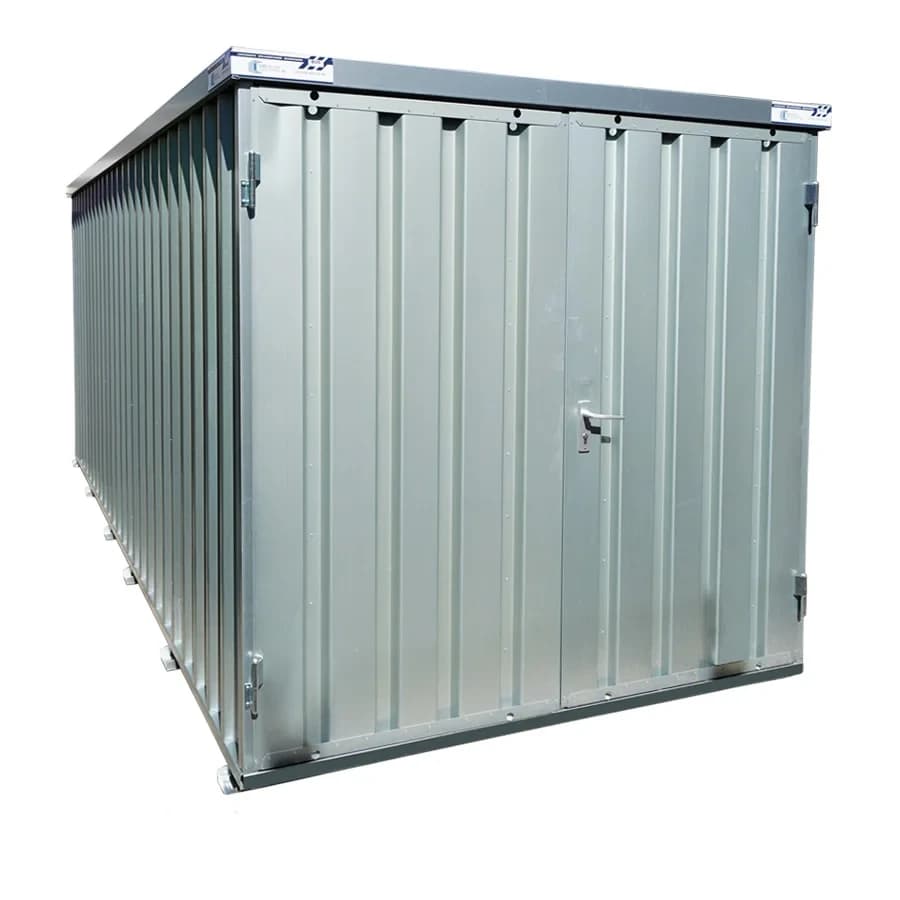
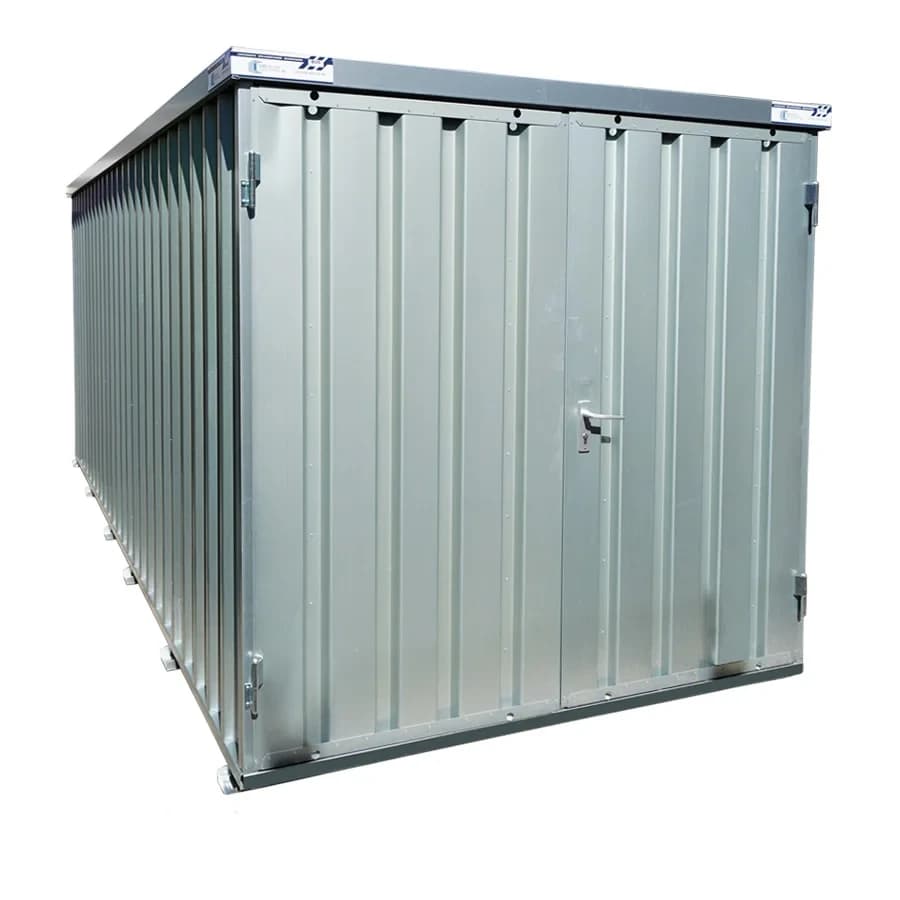
The 5×2 demountable container is a modular steel solution designed to be assembled and disassembled quickly without complex tooling. This type of container differs from standard shipping containers in its bolted or latchable structure, which allows it to be transported flat or as a kit and then assembled on site. It meets the need for temporary storage, technical rooms, site offices or equipment shelters where a one-piece container would be difficult to deliver or install.
This model has external dimensions of 5100 mm length, 2100 mm width and 2100 mm height. Internal dimensions are 4975 mm length, 1975 mm width and 1935 mm height. These measurements give an internal volume of around 19 m³, suitable for storing pallets, materials or equipment. The empty weight is 600 kg, which remains compatible with transport by crane truck or forklift equipped with forks, thanks to the metal supports provided under the base. Four lifting rings are mounted on top to facilitate crane operations.
The structure is made of steel. The walls are made of profiled steel sheet, 0.8 mm thick, and the whole benefits from hot-dip galvanisation. This finish protects the steel against corrosion, an important point for outdoor use, by the sea or in damp areas. The floor is wooden, generally OSB (oriented strand board), and can support a load of up to 500 kg per square metre. This capacity allows the storage of heavy, distributed loads such as pallets of materials, machines or metal parts. Wind and snow resistance is also dimensioned: the structure can withstand a snow load of up to 210 kg per square metre and gusts of up to 160 km/h, according to the manufacturer's indications. These values are indicative and depend on installation conditions and anchoring to the ground.
The assembly system is based on a latching mechanism. The wall panels, roof and floor are designed to fit together or lock quickly. This assembly method reduces installation time and does not require on-site welding. It also allows the container to be disassembled for moving or flat storage, which saves space and simplifies logistics. The number of doors is configurable: two doors can be installed at the ends, providing through access. This configuration is useful for loading long objects or organising one-way goods flow.
The standard colour is grey, but other shades may be considered depending on supplies. The 5×2 demountable container can be used as a storage room on a construction site, as a shelter for tools and materials, as a basic site office or as a temporary sales space. It can also serve as extra storage for a business, farm or individual needing secure outdoor space. Its modularity also allows several modules to be assembled side by side or stacked, subject to compliance with applicable construction and safety rules.
When purchasing, several points should be checked. First, ground compatibility: the container must be placed on a flat, stable surface such as a concrete slab, concrete blocks or compacted ground. An uneven surface can cause deformation and compromise watertightness. Second, anchoring: even though the container is wind-resistant, it is recommended to anchor it to the ground, especially in exposed areas. The lifting rings and forklift supports facilitate handling but require equipment suited to the weight and dimensions. A 600 kg empty container can be lifted by a forklift of sufficient capacity, provided the forks are correctly positioned.
Maintenance is simple. The walls and roof should be inspected regularly for any scratches or early signs of corrosion. Hot-dip galvanisation provides long-lasting protection for the steel, but damaged areas can be touched up with a suitable anti-rust paint. The wooden floor must be kept dry; if humidity persists, ventilation can be added. Joints and assembly points should be checked after each assembly or disassembly to ensure the watertightness and strength of the whole. Periodic cleaning with clean water and mild soap is sufficient for the exterior; avoid overly powerful pressure washers that could damage the galvanisation.
In terms of regulations, installing a demountable container may be subject to planning rules. In France, a container used as a storage room or office may be considered a construction and require a prior works declaration, or even a building permit depending on its surface area, height and duration of installation. It is advisable to check with the town hall's planning department before any installation. For transport, a demountable container is generally transported flat or as a kit, which reduces its bulk. Road transport must comply with current size and weight rules; an exceptional convoy may be necessary if dimensions exceed authorised limits. The 5×2 demountable container, once assembled, measures 5.1 m long, which remains within common limits for standard transport, but the 2.1 m height and 2.1 m width must be taken into account.
Compared to a standard 20-foot shipping container (about 6.06 m long), the 5×2 demountable container is shorter and lighter. It is not designed for long-distance maritime cargo transport, but for storage and fitting out. Its structure is generally less rigid than a one-piece container, but it offers the advantage of being demountable and therefore more flexible. ISO 668 defines the dimensions and loads of shipping containers, but demountable containers are not necessarily certified to this standard. It is therefore important to check the technical specifications provided by the manufacturer and ensure the product meets the intended needs.
For interior fitting, the demountable container can be equipped with shelves, racking, lighting or even insulation if required. The wooden floor allows loads to be fixed and coverings to be laid. The steel walls can receive insulating panels or plasterboard for office use. Electrical installation must be carried out by a professional and comply with current standards. Likewise, any structural modification must be validated so as not to compromise the strength of the whole.
In summary, the 5×2 demountable container is a practical solution for storage and temporary shelter. Its dimensions, weight and load capacity make it a versatile product. Its hot-dip galvanisation and latch system facilitate assembly and maintenance. Before purchase, it is recommended to check installation conditions, planning rules and transport requirements. This container is aimed at building professionals, industrialists, farmers and individuals looking for modular, durable space.
To go further into maintenance, it is useful to distinguish routine operations from heavier interventions. On a daily basis, a visual check of the walls, roof and floor allows anomalies to be spotted quickly: rust marks, impacts, deformation, water ingress. Hinges and latch points should be lightly lubricated to prevent jamming, especially after several assembly and disassembly cycles. If damp products or materials giving off vapour are stored, natural ventilation can be installed by drilling ventilation grilles protected against rain. If the container is used as an office, it is advisable to add thermal insulation and a moisture barrier to prevent condensation, which is common when the outside temperature drops. The OSB wooden floor is sensitive to standing water: immediate cleaning after an accidental spill prevents the panels from swelling. For coastal areas, rinsing with fresh water once or twice a year limits salt accumulation, which is particularly aggressive for steel, even galvanised. Finally, if the container remains in place for several years, it is prudent to check the condition of anchors and fixings, and to repaint the base areas, which are the first exposed to ground moisture.
Regarding transport regulations in France, several rules govern the movement of a demountable container. When transported assembled, it becomes an indivisible load whose dimensions and weight determine the type of convoy. At 5.1 m long, 2.1 m wide and 2.1 m high, it generally remains within standard road gauge limits (2.55 m width and 4 m total height with the vehicle), but the gross vehicle weight and axle distribution must be respected. Transport can be done on a flatbed truck, a plant trailer or a suitable trailer. If the container is transported disassembled, the panels are stacked and strapped; the volume is then reduced, which may allow the use of a van or a lower-tonnage truck. In all cases, load securing must comply with road safety rules: straps, chocks, checking anchor points. The Highway Code requires that the load does not exceed gauge limits without authorisation; beyond that, a movement permit is required, possibly with an escort vehicle. For a construction site, it is common to use a specialist carrier who handles these formalities. Finally, if the container is imported, customs rules and duties applicable to goods must be checked, but an empty demountable container is not subject to the same constraints as a loaded container.
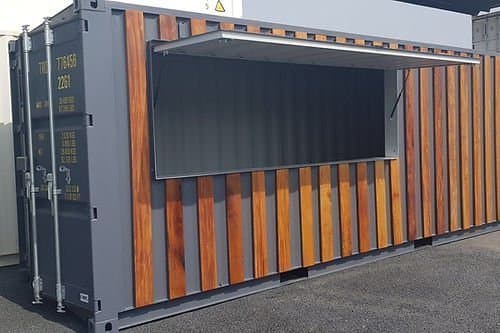
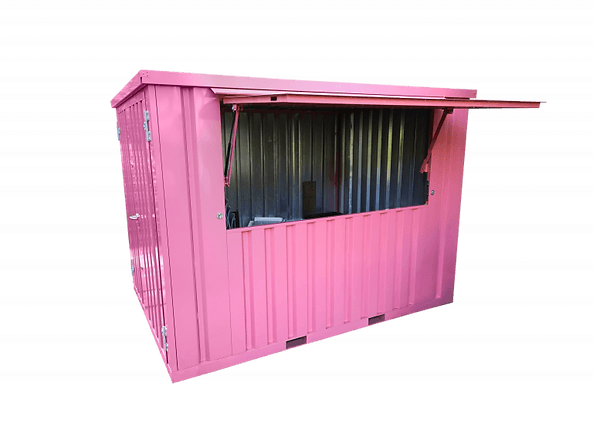
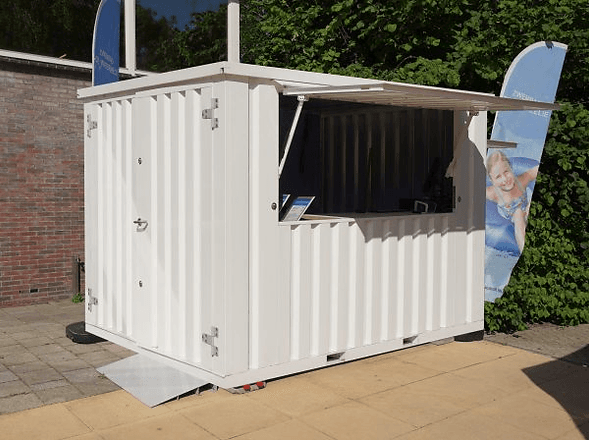
Sector-specific use cases are varied. In the building and public works sector, the 5×2 demountable container serves as a storage room for tools, PPE, sensitive materials or spare parts. It can also serve as a site changing room, basic canteen or works management office. Its ability to be moved as the site phases progress is an asset, as it can be disassembled and reassembled on another site. In industry, it finds its place as a buffer storage area, a room for chemicals (with appropriate ventilation and containment precautions) or a shelter for generators and compressors. In agriculture, it can store seeds, fertilisers, small equipment or serve as shelter for small animals, provided sufficient ventilation is installed. Winegrowers or market gardeners sometimes use it as a temporary sales or packing room. In retail and events, it can become a pop-up sales point, a trade fair stand or a storage room for equipment. Finally, for individuals, it is a storage solution for the garden, tools, bicycles or furniture during a move or renovation work. Its 5 m length remains compatible with most private plots, without excessive footprint.
Comparing the 5×2 demountable container with other sizes and types helps in choosing. Against a standard 20-foot shipping container (6.06 m × 2.44 m × 2.59 m), the 5×2 is shorter, narrower and lower. It therefore offers less volume, but it is lighter (600 kg versus around 2,200 to 2,400 kg for a 20-foot), which simplifies handling and reduces transport costs. A 20-foot container is more robust and stackable, designed for maritime transport and stacking, while the demountable is intended for static or semi-static use. Against a 10-foot container (about 3 m long), the 5×2 offers almost double the length, allowing longer loads to be stored or a more comfortable workspace to be fitted out. Against a 40-foot container, the 5×2 is much smaller, but it can be assembled and disassembled, which is impossible for a 40-foot without heavy equipment. Against a high cube container, which gains about 30 cm in height, the standard 5×2 remains lower, but it may be sufficient for standard storage use. Against a reefer container, which is insulated and equipped with a refrigeration unit, the 5×2 has no temperature-controlled function; it is not suitable for long-distance transport of perishable goods. Against an open top or flat rack container, which are designed for out-of-gauge loads, the 5×2 is closed and standard, more suited to general storage. Finally, against a container fitted out as an office or dwelling, the 5×2 can be fitted out in the same way, but with more compact dimensions; insulation, electricity and ventilation will then need particular attention for prolonged use.
The choice of the 5×2 demountable container therefore depends on the actual need: available space, type of load, frequency of movement, budget and regulatory constraints. For occasional storage or a construction site, its lightness and modularity are advantages. For intensive industrial use or maritime transport, an ISO-certified one-piece container will be more appropriate. In all cases, it is recommended to request detailed technical data sheets, check warranty conditions and ensure the product complies with the safety standards applicable to the intended use.