Description
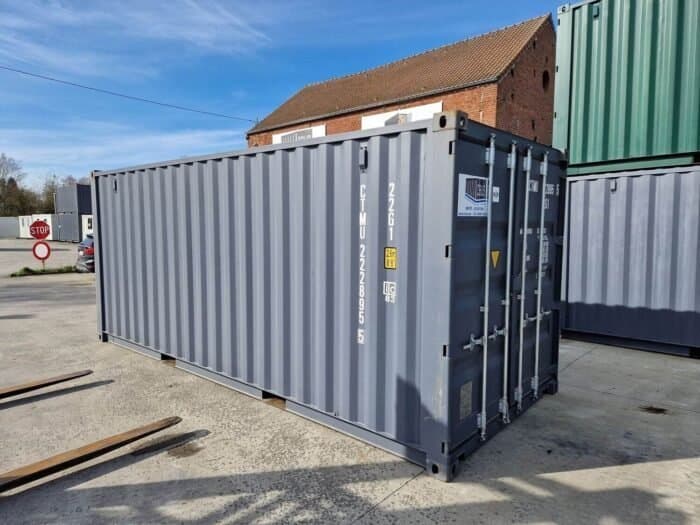
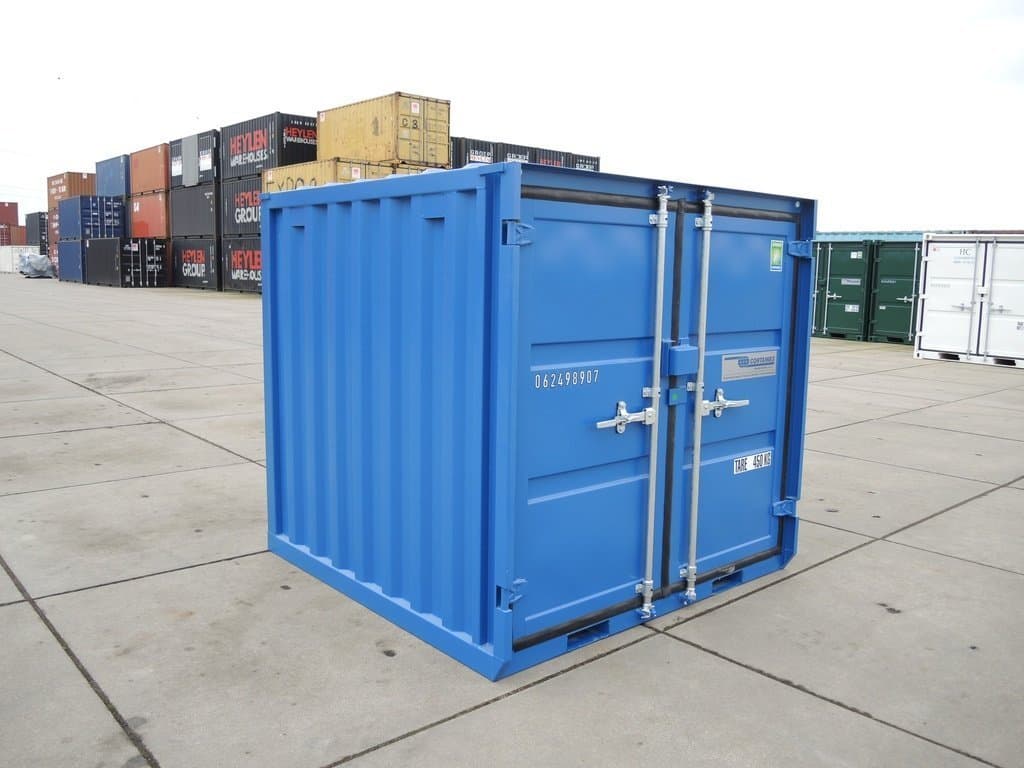
The new 20ft "first trip" shipping container in RAL 7015 (grey) is a robust transport and storage unit, built to current ISO standards. This model has made a single loaded voyage from its country of origin, giving it an almost-new condition while reducing its cost compared with a factory-fresh container. It may show slight dents or scratches, with no impact on its structure or watertightness. Its external dimensions are 6050 mm long, 2438 mm wide and 2591 mm high. It offers an internal volume of around 33 m³ and a payload capacity generally between 28,000 and 28,500 kg, depending on the exact configuration. Its structure is made of Corten steel, treated to resist corrosion, with a hardwood floor and corrugated walls. The RAL 7015 colour, an anthracite grey, blends discreetly into most environments and offers good resistance to soiling.
This 20ft dry container is the most widely used standard format in global shipping. It is suitable for transporting dry, palletised or bulk goods, as well as for storage on industrial, commercial or private sites. Its stackable design and standard lifting points (four corner castings) allow easy handling by crane, reach stacker or suitable forklift. It can be placed on stabilised ground, concrete blocks or beams to avoid direct contact with the ground and limit corrosion. For static use, it is advisable to check the flatness of the ground and provide ventilation if storing moisture-sensitive products.
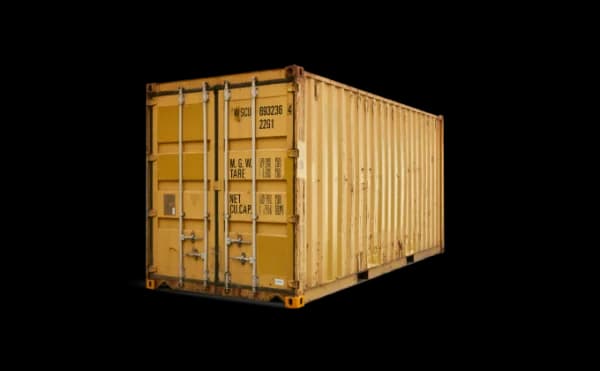
The 20ft dry container has standard technical characteristics. Its usual internal dimensions are approximately 5898 mm long, 2352 mm wide and 2393 mm high, with a door whose usable opening is about 2340 mm wide by 2280 mm high. The tare weight is generally around 2,200 to 2,400 kg. The maximum gross weight is 30,480 kg according to ISO 668, leaving a substantial payload. The floor, made of 28 mm thick hardwood plywood, is treated to resist moisture and rolling loads. The side walls and roof are made of 1.6 to 2 mm thick corrugated steel, and the structure is reinforced at the corners with posts and beams. The doors are fitted with rubber seals and four-point cam locks, ensuring secure closure. Ventilation grilles are sometimes present at the top to limit condensation.
The uses of a new 20ft "first trip" container are many. In transport, it can be used for exporting various goods, whether by sea, rail or road. Its CSC (Convention for Safe Containers) certification is generally valid and allows its use in international transport. For storage, it offers a secure, weather-resistant solution for materials, tools, equipment or archives. Businesses see it as an economical alternative to traditional warehouses, with the option of moving it as needed. For conversion, it can be transformed into a site office, technical room, workshop or sales space, after some adaptations (insulation, electricity, joinery). The RAL 7015 colour, a dark grey, is often chosen for its neutral, professional look.
Maintaining a shipping container is simple but regular. It is advisable to inspect the door seals, locks and lifting corners annually. Cleaning with clear water and mild soap removes dirt without damaging the paint. In case of deep scratches, a rust-proof paint touch-up is recommended to prevent corrosion. If the container is stored on grassy or damp ground, it is best to raise it to prevent moisture rising through the floor. Periodic ventilation (opening the doors in dry weather) limits internal condensation, especially if sensitive materials are stored inside. When converting it, it is important to follow good practice: reinforce openings, treat cut edges against rust and ensure thermal insulation.
Buying a new "first trip" container offers several advantages. It is generally cheaper than a factory-fresh container, while offering very similar quality. It is important to check the actual condition of the container before purchase: examine the walls, roof, floor, doors and seals. Make sure the CSC plate is present and up to date, and that the container has not undergone major repairs. A "first trip" container may have slight impacts, but these must not compromise watertightness or structure. It is also advisable to request recent photos or an on-site visit. The listed price is EUR 1,200.00, which is competitive for a 20ft container in good condition. VAT may apply depending on the buyer's status and intended use.
Transporting a 20ft container in France is subject to certain regulations. On the road, a 20ft container can be carried on a suitable container truck, generally a chassis with twist-locks. The authorised gross train weight must not exceed 44 tonnes for a standard road combination, and the container must be properly secured. For deliveries, it is often necessary to arrange a truck with a crane or a forklift on site to unload. The container can also be delivered by train or ship if the buyer is near a port or railway. It is important to check local restrictions on placing a container on private land: in some municipalities, a prior works declaration may be required if the container is used as living space or alters the exterior appearance. For temporary storage use, a simple planning permission may suffice. It is recommended to check with the town hall's planning department.
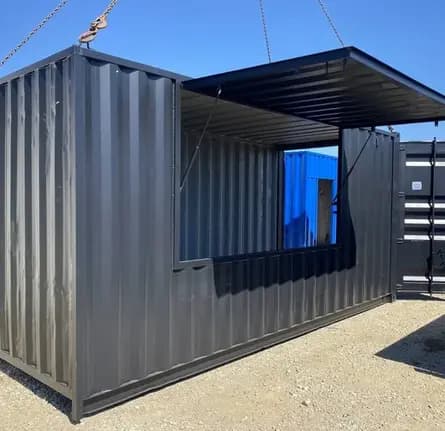
Converting a 20ft container is common practice. For a site office, insulation with mineral wool or polyurethane foam is generally provided, along with interior cladding, electrical installation compliant with NF C 15-100 standards, and sometimes air conditioning or heating. For a storage unit, natural or mechanical ventilation can be added. For residential use, construction standards (DTU) must be met and the necessary planning permissions obtained. The container can be modified to include windows, additional doors, partitions, etc. It is essential not to weaken the load-bearing structure: cut-outs must be reinforced with metal frames. A 20ft container offers a floor area of around 14 m², allowing for a living room, a small studio or a functional workspace.
In summary, the new 20ft "first trip" RAL 7015 shipping container is a versatile, robust and economical solution for transport, storage or conversion. Its standard dimensions, Corten steel structure and ISO standard make it reliable and durable equipment. Before purchase, its condition, certification and any necessary authorisations for installation should be checked. With minimal maintenance, it can serve for many years. Whether for professional or personal use, it represents an attractive investment, especially in the current context where modular and sustainable solutions are sought. For any technical question or transport quote, it is advisable to contact a shipping container professional.
To usefully complete this presentation, it is worth covering in more detail sector-specific use cases, particular maintenance precautions, the regulatory framework for transport and installation, and a comparison with other container formats and types. These elements help you make an informed choice and get the most out of a 20ft dry container.
In the construction and public works sector, the 20ft container is frequently used as a site welfare unit. It can serve as a changing room, canteen, site management office or tool storage. Its robustness and watertightness protect equipment from bad weather and opportunistic theft, especially if a high-security padlock is added to the locking bars. For daily use by teams, it is common to install a raised floor, LED lighting powered by a generator or mains connection, and mechanical ventilation. The 20ft format is popular on urban sites because it fits into tight spaces and can be moved by a crane truck without an abnormal load permit in most cases, as long as the dimensions remain within regulatory limits.
In industry and logistics, the 20ft dry container is used to store raw materials, spare parts, finished products or consumables. It can be placed on a concrete platform, close to production lines, and fitted with metal shelving to optimise ceiling height. Its high payload allows heavy loads to be stored, provided the weight is distributed over the entire floor surface and excessive point loads are avoided. For moisture-sensitive products, adding a dehumidifier or desiccant bags is recommended, as condensation can appear when a metal container undergoes significant temperature variations between day and night.
In trade and distribution, the 20ft container can be converted into a seasonal sales unit, order collection point or left-luggage facility. Its RAL 7015 anthracite grey colour provides a neutral base that easily accepts adhesive or painted signage. Full-width door opening makes loading and unloading easier with a manual pallet truck or forklift, provided a suitable ramp or dock is available. For daily use, it is advisable to provide an awning above the doors to protect the interior from rain during handling.
In agriculture and rural areas, the 20ft container provides many services: storage of grain, seeds, animal feed, small equipment or plant protection products (in compliance with local regulations on chemical storage). It can also serve as a repair workshop or packing facility. Its placement must, however, take into account the risk of condensation and the need to ventilate if storing organic products likely to ferment or release moisture.
For individuals, the 20ft container is an economical storage solution for a move, renovation project or storing bulky items. It can be placed on private land, subject to local planning rules. Before installing it, it is wise to check the ground conditions, provide blocks or beams to isolate it from moisture, and ensure access allows a delivery truck to pass. A 20ft container measures about 6 metres long: sufficient clear space is therefore needed for vehicle manoeuvring and ground placement.
Maintaining a 20ft shipping container deserves particular attention to the doors, which are the main weak point. Rubber seals must remain supple and clean: regular cleaning and application of a rubber care product extend their life. Cam locks must be lubricated with suitable grease to prevent them from jamming. Hinges and pins must also be greased. If a locking bar becomes deformed, it is better to replace it than to force it, at the risk of damaging the mechanisms. The roof must be inspected after every storm or falling branch: a small perforation can let water in and cause internal damage. The corner castings must be checked: they must show no cracks or deformation, as they bear the lifting and stacking loads.
The hardwood plywood floor can be treated with paint or resin to improve its moisture resistance and make cleaning easier. If oil or chemical stains appear, they should be cleaned quickly to prevent them soaking in. If a board needs replacing, use treated wood of equivalent quality and respect the original thickness to avoid creating a raised surface.
The regulations applicable to transporting a 20ft container in France depend on the mode of transport and use. For road transport, the container must be loaded on a suitable vehicle, with twist-locks in good condition. The total weight of the combination must not exceed the limits of the highway code. The driver must hold the necessary authorisations if the convoy exceeds regulatory dimensions or weight. For rail transport, the container must meet UIC standards and have a valid CSC plate. For sea transport, CSC certification is mandatory, and the container must be kept in seaworthy condition according to the periodic inspections provided for by the convention.
Regarding planning, installing a container on private land may be subject to authorisation depending on its nature and duration. A container used as a storage unit may be considered a light structure and require a prior declaration. If intended for habitation, the rules are stricter: building permit, compliance with construction standards, connection to utilities, etc. It is therefore essential to check with the town hall before any installation. In certain protected areas (listed sites, near historic monuments), additional constraints may apply.
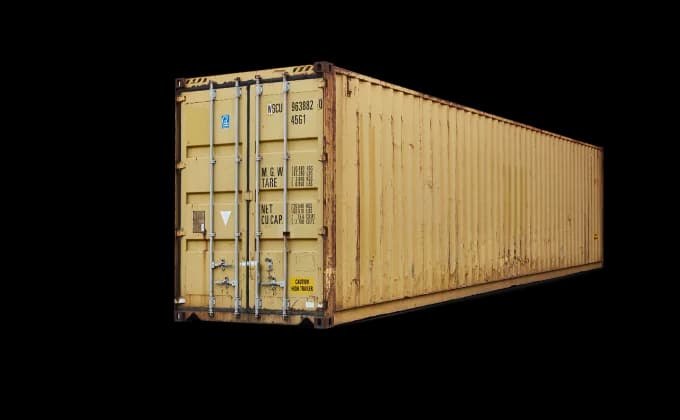
Let us now compare the 20ft container with other formats and types. The 40ft container offers double the length (about 12,192 mm) and a volume of around 67 m³, but it is heavier when empty (about 3,800 kg) and requires a suitable truck. It is more economical per cubic metre for sea transport, but less practical for static use on a cramped site. The 40ft high cube (9 ft 6 in high, about 2,896 mm) offers an additional volume of around 76 m³, useful for bulky but light loads. The 20ft high cube also exists, with an internal height of about 2,693 mm. The 10ft is a shorter format, often used for storage on urban sites or for occasional needs. The 45ft high cube is reserved for certain markets and requires suitable infrastructure.
Among container types, the dry (or standard) is the most common and suitable for dry goods. The reefer (refrigerated) is fitted with a cooling unit and allows transport of perishable foodstuffs, but it is more expensive and requires a power supply. The open top has an opening or removable roof to load out-of-gauge goods from above. The flat rack has no side walls or roof, allowing wide or heavy loads to be transported. The tank container is designed for liquids. The 20ft dry container remains the most versatile and economical for most uses.
Finally, it is useful to specify the points to watch when buying a "first trip" container. Check the CSC plate and its validity date. Check the condition of the door seals, locks and hinges. Inspect the floor for signs of moisture, mould or deformation. Look at the roof and walls for possible dents or repairs. Make sure the container is light-tight: close the doors and look for light rays. Ask whether the container has been treated against insects or rodents. Finally, compare prices and delivery costs, as the total cost can vary depending on distance and the handling equipment required.
With this information, you have a complete view of the new 20ft "first trip" RAL 7015 shipping container. Whether for transport, storage or conversion, it is a reliable, durable and economical solution, provided safety and maintenance rules are followed.