Description
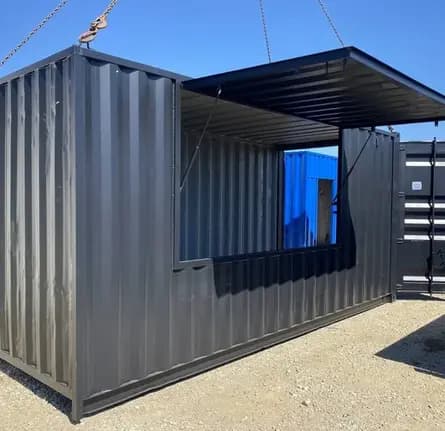
The 20ft High Cube shipping container with upward-opening hatch that we offer here is a unit modified to meet the specific needs of mobile catering and food sales. It is a used container in good general condition, retaining the robust structure and original security of a shipping container while having been adapted to serve as a sales point or kitchen. This model stands out for its openable side window and upward-opening hatch, two features that facilitate both customer service and natural ventilation of the interior space.
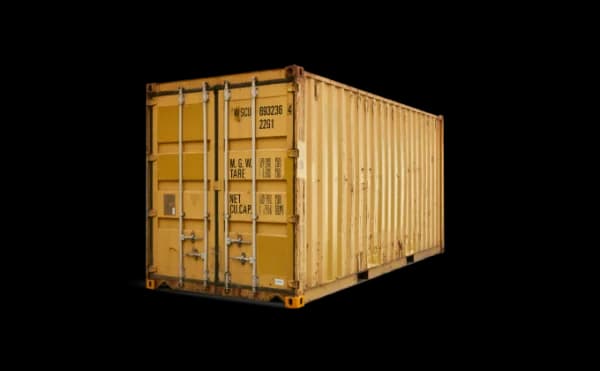
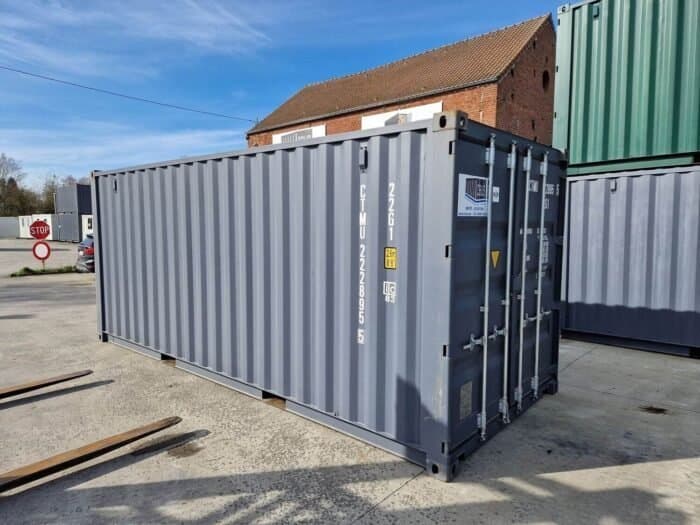
To fully understand the value of this container, we should first recall what a 20ft High Cube shipping container is. A 20ft container, often called a TEU (Twenty-foot Equivalent Unit), is the basic unit of maritime transport. Its standard external dimensions are approximately 6.06 m long, 2.44 m wide and 2.59 m high for a standard model. The High Cube (HC) version is characterized by a greater height: instead of 2.59 m, it reaches approximately 2.89 m to 2.90 m. This thirty-centimetre difference may seem modest, but it considerably changes the interior volume and layout comfort. In a standard container, the ceiling height is often just enough to stand upright; in a High Cube, there is additional vertical space that allows for suspended equipment, light mezzanines, technical ducts or simply more comfortable working. This is particularly valuable in a kitchen or sales area where utensils and products are handled and where many hours are spent standing.
The container described here has external dimensions of approximately 6.04 m long, 2.43 m wide and 2.90 m high. The floor area is approximately 14.68 m². These dimensions comply with ISO 668 and ISO 1496-1 standards governing series 1 shipping containers. The usable interior volume depends on the thickness of the walls, floor and any modifications already made. As an indication, an unmodified 20ft High Cube container offers an interior volume of approximately 37 m³. Here, part of this volume may be occupied by the modifications (window, hatch, reinforcements), but the space remains largely sufficient to install a worktop, cooking equipment, a sales point and storage space.
The structure of a shipping container is designed to withstand extreme conditions at sea. The walls, roof and floor are generally made of Corten steel, a low-alloy steel that offers good resistance to atmospheric corrosion. The floor is traditionally made of 28 mm thick marine plywood, treated to resist moisture and heavy loads. Containers are stackable up to nine units high and can support significant loads. This robustness is a major asset for land use: a well-maintained container can last for decades. In this case, the container is used and shows signs of wear, but it is in good general condition, meaning its structure is not compromised and it can serve as a reliable base for a catering project.
The main modification of this container is the addition of a window on the long wall. This window is designed to be opened, which not only brings natural light inside but also creates direct interaction with customers. In a food truck or kiosk, this opening is essential: it serves as a service counter, allows orders to be taken and dishes to be handed over. The window is positioned on the longitudinal side, offering a large service area. There is only one window on this model, but it is large enough to ensure good visibility and appreciable natural light.
The other notable modification is the upward-opening hatch. This hatch, sometimes called a flap or awning, is a typical feature of containers fitted out for catering. It deploys upwards and can serve as protection against sun or rain when open, while increasing the exchange surface with the outside. It can also improve natural ventilation by creating an air current. In some layouts, the hatch is equipped with rams or support arms to stay open. It is important to check that this mechanism works properly when purchasing.
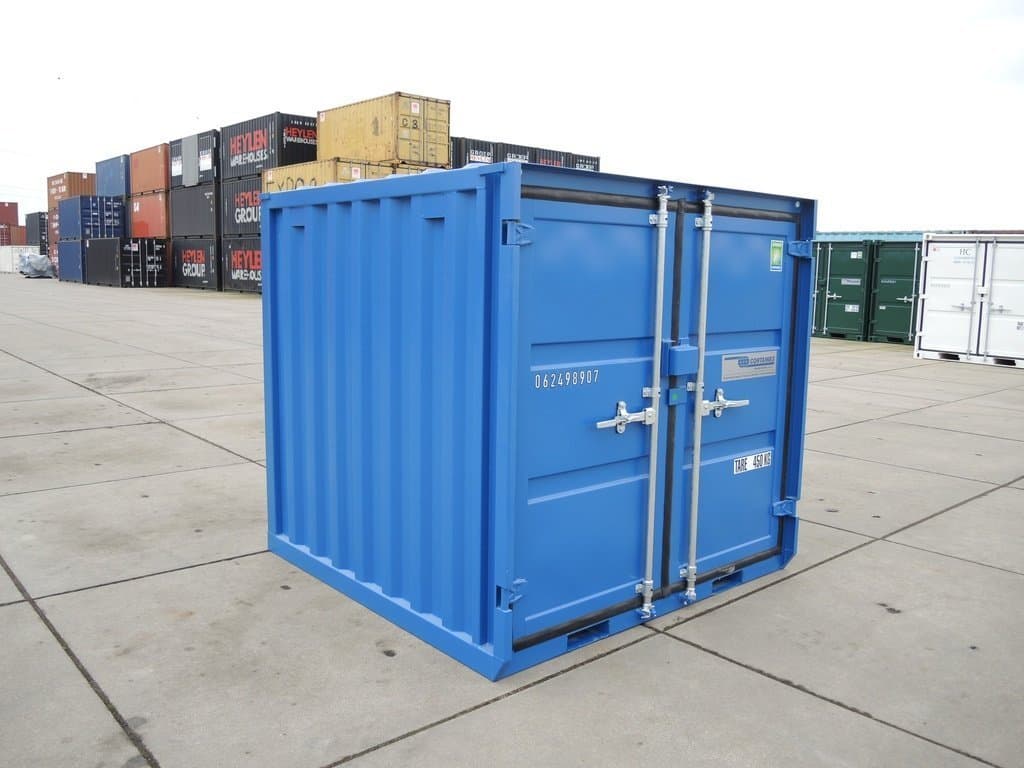
The container retains its original shipping door at one end. This door, made of two leaves, is designed to be watertight and secure. It provides wide access for loading and unloading equipment. In a catering use, it can serve as a service entrance or emergency exit. Its robustness guarantees effective protection against intrusion and bad weather.
The container's colour is black. This shade is obtained with paint generally applied at the factory or during modification. Black can be an aesthetic advantage for some projects, but it should be kept in mind that a dark surface absorbs more heat. In a catering context, this can influence the interior temperature, especially in summer. It may be wise to provide thermal insulation or suitable ventilation if the container is to be used in hot regions.
Regarding condition, the container is sold used, in good general condition. This means it has already been used, probably for maritime transport or a first land use. It may show scratches, traces of surface rust or slight deformations, but nothing that affects its solidity or watertightness. When purchasing, it is advisable to carefully inspect sensitive points: corners, welds, floor, door seals and the fixings of the window and hatch. A used container can be an excellent deal, but you must ensure it has no perforating corrosion or structural damage.
The main use of this container is mobile or semi-mobile catering. It can serve as a stationary food truck, food sales kiosk, temporary commercial kitchen, stand for markets or festivals, or sales point for a catering business. Its modified design makes it quickly operational: simply install it on a suitable site, connect utilities (water, electricity, drainage) and fit out the interior as needed. Compared with building a traditional premises, a fitted-out container offers a faster solution to implement, often less costly and more flexible in terms of location, subject to compliance with local regulations.
Speaking of regulations, in France the installation of a container for professional use, particularly for catering, is subject to several rules. First, urban planning rules must be checked: a container is considered a construction and generally requires a planning permission (prior declaration or building permit) depending on its area, duration of installation and local rules. Then, for a catering activity, food hygiene and safety standards must be met (Regulation EC No. 852/2004 and French decrees). This implies easily cleanable surfaces, a supply of drinking water, a wastewater drainage system, compliant refrigeration equipment, etc. Finally, the electrical installation must comply with NF C 15-100 for professional premises. It is advisable to contact the town hall and chamber of commerce to obtain the necessary authorisations.
Another important aspect is transport and handling. A 20ft container weighs approximately 2.2 to 2.4 tonnes empty for a standard model, and slightly more for a High Cube (approximately 2.3 to 2.5 tonnes). Once fitted out, its weight can increase considerably. To move it, a crane truck or suitable forklift is required. The container's corners are equipped with corner castings that allow it to be lifted and secured. If you plan to move it often, it may be useful to install wheels or place it on a trailer, but that is beyond the scope of this product.
Maintaining a shipping container is relatively simple. Signs of rust should be monitored and treated quickly with a suitable anti-rust paint. Door seals must be checked and replaced if necessary to maintain watertightness. The floor must be cleaned and protected from moisture. If the container is used for catering, surfaces in contact with food must be cleaned regularly and adequate ventilation maintained to avoid condensation. An annual structural inspection is recommended.
There are many points to watch when buying a modified used container. Check the quality of the modifications: are the window and hatch properly watertight? Are the welds clean and solid? Are there traces of water infiltration? Is the floor sound? Do the doors close properly? If the container has been used to transport dangerous goods, it must have been cleaned and decontaminated according to standards. Always ask for the container's history if possible. Finally, make sure the price matches the condition and modifications. Here, the price is 2700 euros, which can be considered competitive for a modified 20ft High Cube container with window and hatch, in good condition. For comparison, a used standard 20ft container is often between 1500 and 2500 euros, and modifications add value.
To summarise, this 20ft High Cube container with upward-opening hatch is a turnkey solution for a mobile catering project. It combines the solidity of a shipping container, the extra space of a High Cube, and specific features (window, hatch) that facilitate operation. Its used condition in good general condition makes it an economical choice. It is important to carefully check regulatory compliance and the actual condition before purchase, but once installed and fitted out, it can serve for a long time.
If you would like more information about this container or the layout possibilities, do not hesitate to contact us. We can advise you on the steps to follow for your project.
To go further, let us now examine the sector-specific use cases that can benefit from this type of container. The first sector is obviously street food, with food trucks and kiosks. A 20ft High Cube container offers a work area of approximately 14.68 m², allowing a compact professional kitchen to be installed: stainless steel worktop, fryer, griddle, refrigerator, dry storage space and a service counter. The openable side window serves as a sales point and passage for orders. The upward-opening hatch can act as an awning and protect customers from sun or rain. This type of configuration is particularly suited to food markets, festivals, business parks or beaches. The second sector is events: weddings, trade shows, fairs, sports competitions. A fitted-out container can be delivered on site and become a cocktail bar, crepe stand, cold drinks sales point or fast-food area. Its relative mobility allows it to be positioned as close as possible to the public. The third sector is temporary or mobile central kitchens for construction sites, life bases or camps. Workers need hot meals; a kitchen container can be installed on a site for the duration of the works. The fourth sector is non-food retail: pop-up shop, craft products stand, tourist information point. The window and hatch provide an attractive display. Finally, the fifth sector is private events: a container can serve as a mobile bar for a birthday, wedding or corporate party.
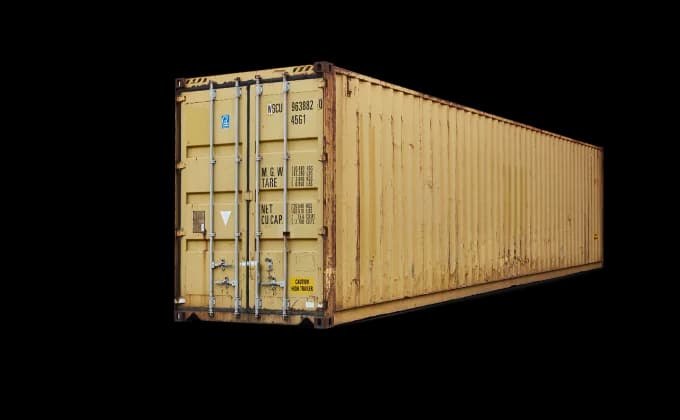
Let us now compare this 20ft High Cube container with other sizes and types of containers. The 10ft container, rarer, measures approximately 3 m long. It is very compact and suitable for a small kiosk or sales stand, but it offers little space for a complete kitchen. The standard 40ft container measures approximately 12 m long and offers an area of approximately 28 m². It is more spacious but also heavier and more difficult to move. The 40ft High Cube container adds the extra height and can suit a larger restaurant or reception area. The standard 20ft container, without High Cube, has a lower interior height (approximately 2.39 m), which may be sufficient for a simple kiosk but less comfortable for a kitchen. The reefer container is equipped with a refrigeration unit and reinforced insulation; it is more expensive and heavier, but it can be useful if you need to keep perishable goods at controlled temperature. The open top container has an opening roof, which facilitates loading tall goods, but it is less watertight. The flat rack container has no side walls; it is used for out-of-gauge loads. Finally, the high cube container with opening roof can be interesting for certain applications, but it is less common. For a catering activity, the 20ft High Cube is often a good compromise between area, height and ease of transport.
Let us now address the regulations specific to container transport in France. A shipping container is designed to be transported by ship, train and truck. In France, road transport of containers is subject to heavy goods vehicle regulations: a truck + container combination must not exceed 44 tonnes for combined transport, and the maximum length is 16.50 m for an articulated combination. The 20ft container is often transported on a container chassis. To load or unload it, suitable lifting equipment is required (auxiliary crane, forklift, reach stacker). If you buy this container, you will need to organise its transport from our depot to your site. We can put you in touch with specialist carriers. It is important to check that the destination site is accessible to trucks and that the ground is stable enough to support the weight of the container and the lifting equipment. An empty 20ft High Cube container weighs approximately 2.3 to 2.5 tonnes; once fitted out, it can weigh 4 to 6 tonnes or more. The ground must be prepared accordingly (concrete slab, compacted gravel, etc.).
Another regulatory point concerns fire safety. A container fitted out for catering must comply with safety rules applicable to premises receiving the public (ERP) or workplaces. This may include installing fire extinguishers, smoke detectors, emergency lighting, and complying with safety distances from other constructions. If the container is installed in a campsite or tourist area, specific rules may apply. Check with the local safety commission.
Finally, let us talk about long-term maintenance. A shipping container is subject to corrosion, especially if exposed to sea air or a humid environment. It is recommended to regularly wash the exterior surface with fresh water and touch up any scratches with anti-rust paint. The seals of the window and hatch must be checked and lubricated (with a suitable lubricant, for example silicone-based) to prevent them from drying out and cracking. The hatch mechanism (hinges, rams) must be inspected and greased. The marine plywood floor can be protected with a coating (linoleum, epoxy resin) suitable for food use. Permanent ventilation is advisable to avoid condensation, especially if the container is heated in winter. Installing an extractor fan or ventilation system may be wise. Finally, it is advisable to call a professional for an annual inspection of the structure and watertightness.
With this additional information, you have a complete view of this 20ft High Cube container modified for catering. Whether you are a restaurateur, event organiser, entrepreneur or individual, this container can be a solid base for your project. Do not hesitate to contact us for any technical question or to arrange a visit.