Description
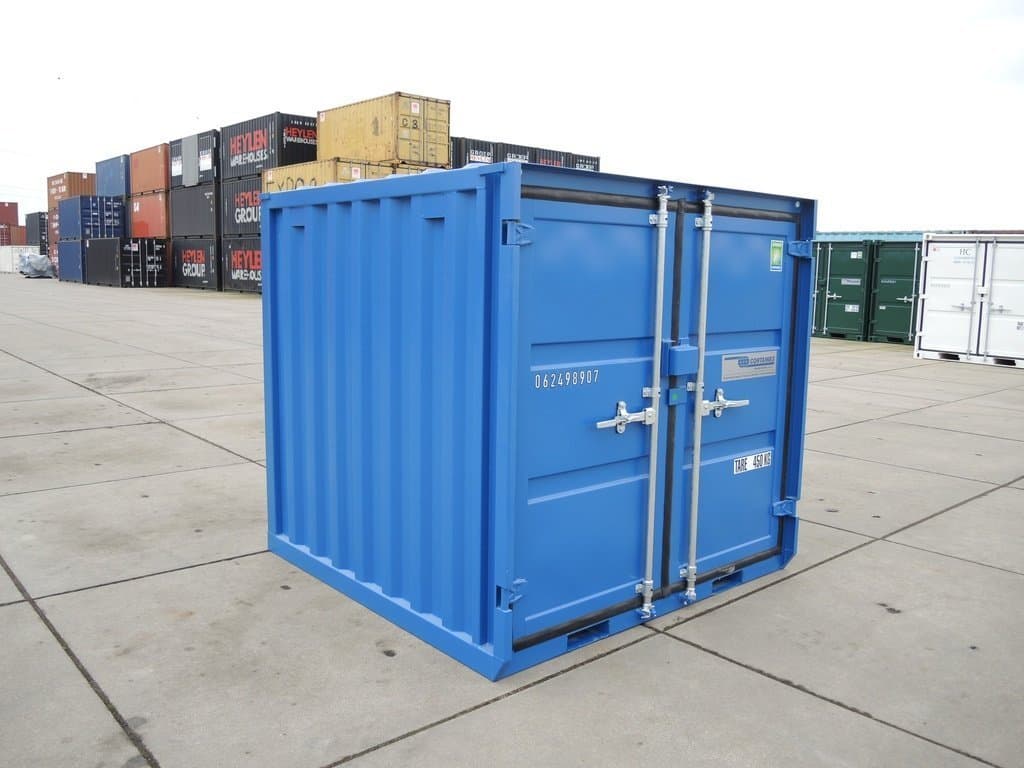
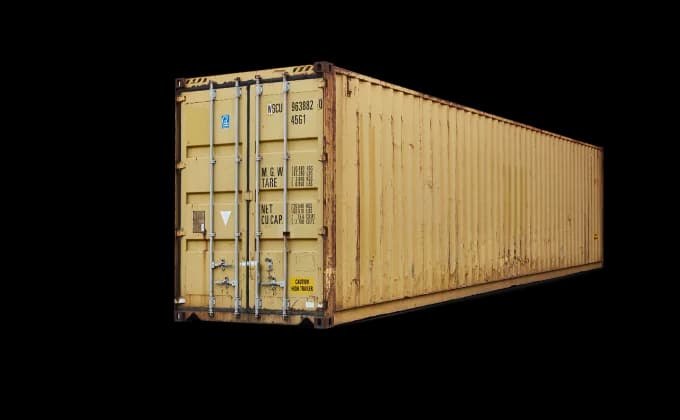
The 6ft shipping container is a compact, sturdy storage solution designed for specific needs where available space is limited. Unlike standard 20ft or 40ft containers, this reduced format offers a practical alternative for individuals and professionals wanting to secure goods without using a large footprint. Its Corten steel construction, also known as weathering steel, gives it natural corrosion resistance through the formation of a protective surface layer. This material is commonly used in shipping container manufacturing for its durability against bad weather and marine environments. The KTL (Kationische Tauchlackierung) cataphoretic coating applied to this model further enhances rust protection. This electrodeposition process ensures uniform coverage of all metal surfaces, including hard-to-reach areas, providing an effective barrier against moisture and chemical attack. The blue colour, obtained by this method, is durable and UV-resistant, limiting fading over time. Note that the exact shade may vary between production batches, but remains within a standard blue range used for this type of container.
Regarding dimensions, this 6ft container has precise specifications. External dimensions are 1.98 metres long, 1.97 metres wide and 1.91 metres high. These measurements include the walls and frame, and comply with the usual manufacturing tolerances for this type of container. Internal dimensions provide a usable space of 1.80 metres long, 1.86 metres wide and 1.73 metres high. This difference between inside and outside is due to the thickness of the walls, floor and roof, as well as the reinforcing ribs. The door opening, 1.85 metres wide and 1.69 metres high, allows easy access for loading and unloading bulky items. The tare weight of 450 kilograms indicates a light but solid structure, while the maximum permitted payload of 2,000 kilograms offers substantial storage capacity for various goods. It is essential to respect this limit to ensure the safety and longevity of the container, particularly when lifting or transporting it.
This container is manufactured to international standards, notably ISO 668, which defines the dimensions and classifications of series 1 containers, and ISO 1496, which specifies performance and testing requirements. Although this 6ft format is not standardised in the same way as 20ft and 40ft, it is generally built on similar principles to ensure partial compatibility with handling equipment. The container is fitted with four lifting rings at the upper and lower corners, known as corner castings, which allow it to be lifted with a spreader or slings. These corner castings comply with ISO dimensions and can be used to secure the container on a trailer or platform. The structure comprises a welded steel frame, corrugated steel side and front walls, a marine plywood or treated hardwood floor, and a galvanised steel or sheet metal roof. Sealing is ensured by rubber gaskets around the door, which can be replaced if worn.
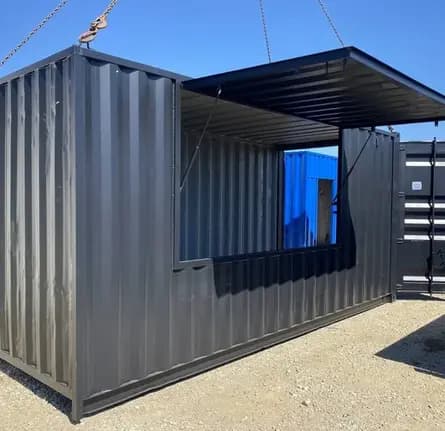
The uses of this 6ft container are varied. For businesses, it provides secure storage for tools, spare parts, building materials or archives. Its compact size allows it to be installed on a building site, in a yard, or even in a car park, without requiring special authorisation in most cases, although local planning rules may apply. For individuals, it can serve as a garden shed, workshop, or utility room for DIY equipment. It can also be fitted out as a site office, security cabin, or temporary sales point, after some adaptations such as adding insulation, a window and a power supply. In the events sector, it can be used as a stand, control room, or mobile storage space. Finally, it can be converted into a storage room for non-perishable goods, provided hygiene and ventilation standards are met.
Maintenance of this container is relatively simple but regular. It is recommended to visually inspect the exterior at least once a year to detect any signs of rust, paint chipping or deformation. Small scratches can be treated with anti-rust paint of a similar colour to prevent the spread of corrosion. Door gaskets should be cleaned and checked to ensure they remain flexible and watertight; replacement is advised every five to ten years depending on exposure. The floor should be kept clean and dry; if damp, ventilation can be added to prevent mould. Hinges and door latches should be lubricated periodically with suitable grease to ensure smooth operation. If the container is exposed to a saline environment, such as by the sea, rinsing with fresh water can help remove salt and prevent corrosion. It is also advisable to check the lifting corner castings and welds for any cracks.
When buying a new container like this one, several points require attention. First, check that the container is indeed new and not reconditioned; a new container has uniform paint with no visible repairs, flexible gaskets and a floor with no signs of wear. Next, ensure the dimensions match your needs, particularly the internal height, which can be limiting for certain equipment. The maximum payload of 2,000 kg must be strictly observed; overloading could damage the structure and pose a risk when lifting. For transport, this container can be loaded onto a flatbed truck or trailer, but it is important to secure it properly using straps or chains attached to the corner castings. In France, container transport is subject to regulations on vehicle weights and dimensions; a 6ft container fits within standard gauges, but it is advisable to check local rules and use a specialist carrier. If the container is to be placed on the ground, it is recommended to set it on a flat, stabilised surface, such as concrete blocks or wooden beams, to prevent it from sinking and to allow ventilation under the floor. Finally, if you plan to fit it out, find out about the necessary planning permissions, as a container may be considered a structure and require a building permit depending on its use and how long it is installed.
To go further with maintenance, a preventive schedule should be established. A quarterly inspection of sensitive points — door threshold, lower walls, corners — allows early detection of corrosion. Cleaning with clear water, without aggressive detergent, preserves the KTL layer. If storing moisture-sensitive materials, adding a dehumidifier or absorbent sachets is wise, as condensation can form through temperature variation. For prolonged outdoor use, raising the container 5 to 10 cm off the ground limits contact with standing water. If the container is intended for regular use, greasing the hinges and locking bars every six months is recommended. Finally, in the event of impact, a local touch-up with paint suitable for Corten steel is preferable to a delayed repair.
French regulations govern the installation and transport of this type of container. For road transport, a 6ft container can be loaded onto a van or truck; the vehicle's gross train weight (PTRA) and payload must be respected. The container must be secured in accordance with the Highway Code, with straps suited to the load. If transport is carried out by a professional, they must hold a transport licence. For a permanent installation, a container placed on the ground may be subject to a prior works declaration if its floor area exceeds 5 m² and its height is over 1.80 m, under the French planning code. In some cases, a building permit is required if the container is considered a structure. It is therefore advisable to check with the town hall's planning department before any installation. Moreover, if the container is used as a workplace, it must comply with health and safety rules (ventilation, lighting, emergency exits). For residential use, construction standards are stricter and require extensive conversion.
Sector-specific use cases are numerous. In construction, this container serves as a tool store on sites, a changing room for teams, or a break room. Its small size makes it easy to move from one site to another with a crane truck. In agriculture, it can store seeds, fertilisers or small equipment, provided it is ventilated to avoid damp. For retailers, it becomes a temporary sales kiosk, storage room for terraces, or order collection point. In events, it is used as a technical control room, artist dressing room, or modular stand. Local authorities see it as a utility room for green space maintenance equipment, or a shelter for waste containers. Finally, individuals use it as a DIY workshop, garden shed, or storage space for leisure equipment (bikes, tools, garden furniture).
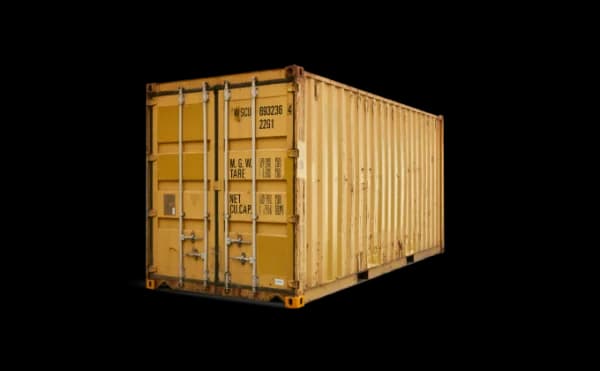
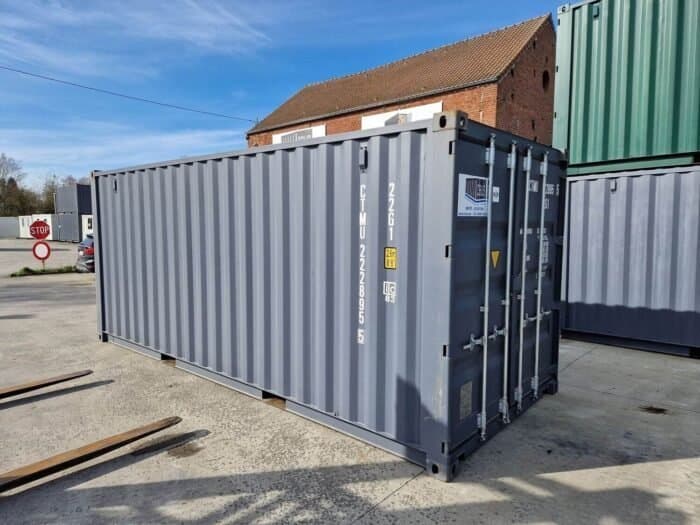
Compared with other sizes, the 6ft stands out for its minimal footprint. A 10ft container offers greater internal volume but requires more floor space. The standard 20ft offers around 33 m³, ideal for a house move or large storage, but its weight and dimensions make it less manoeuvrable without lifting equipment. The 40ft, with around 67 m³, is intended for sea transport or industrial storage. The 6ft, with its volume of around 5.8 m³, is perfect for domestic use or a small business. In terms of types, the dry (like this one) is the most common for dry storage. The reefer is refrigerated, for perishable goods. The open top has a removable roof for loading tall items. The flat rack has no side walls, for out-of-gauge loads. The high cube is 30 cm taller, offering extra volume. The choice depends on the nature of the goods and space constraints.
To complete the comparative analysis, the useful volumes and floor areas should be specified. The 6ft offers a floor area of around 3.35 m² and a volume of around 5.8 m³. The 10ft, with a length of 3.05 m, offers around 15 m³. The 20ft, with 5.90 m long, offers around 33 m³. The 40ft, with 12.03 m long, offers around 67 m³. The 40ft high cube adds 30 cm in height, giving around 76 m³. These figures help in choosing according to the volume to be stored. In addition, tare weight varies: a 6ft weighs around 450 kg, a 10ft around 1,300 kg, a 20ft around 2,200 kg, a 40ft around 3,800 kg. These weights influence the mode of transport and the lifting equipment required. The 6ft can be moved with a standard-capacity forklift, while larger ones require more powerful machinery.
Another aspect to consider is structural strength. The 6ft container, although compact, is designed to withstand stackable loads. According to ISO 1496, it must withstand a load of 1.8 times its maximum payload in vertical compression, and lifting and securing tests. This means it can be stacked on several levels, but it is prudent not to exceed two units for this format, as its height and small base can limit stability. In practice, stacking is rarely used for this type of container, but it remains possible for temporary storage. Wind resistance is also tested: the container must withstand winds of up to 100 km/h without moving, provided it is properly secured to the ground. For a permanent installation, anchors are recommended.
Finally, it is useful to cover fitting-out options. This container can be fitted with thermal insulation by adding mineral wool or polyurethane foam panels, covered with plywood or PVC. A window can be installed on a side wall, with a reinforced frame. An additional door can be added for direct access. Electricity can be supplied via an external conduit, with a distribution board and sockets. Ventilation can be natural (grilles) or mechanical (extractor). For sanitary use, a toilet corner can be fitted, but requires drainage. All these modifications must comply with safety rules and not compromise structural integrity. It is advisable to use a professional for heavy work.
In summary, the new blue 6ft shipping container is a sturdy, compact and durable storage solution, suitable for many uses. Its Corten steel construction with KTL finish ensures corrosion protection, while its dimensions and capacity meet common storage needs. Whether for professional or personal use, it offers a secure and practical alternative to traditional shelters. With minimal maintenance, it can serve for many years. For any questions about this product, please contact D.S. Globe Conteneur, based in Marseille, who can advise you on purchase, delivery and fitting-out options.