Description
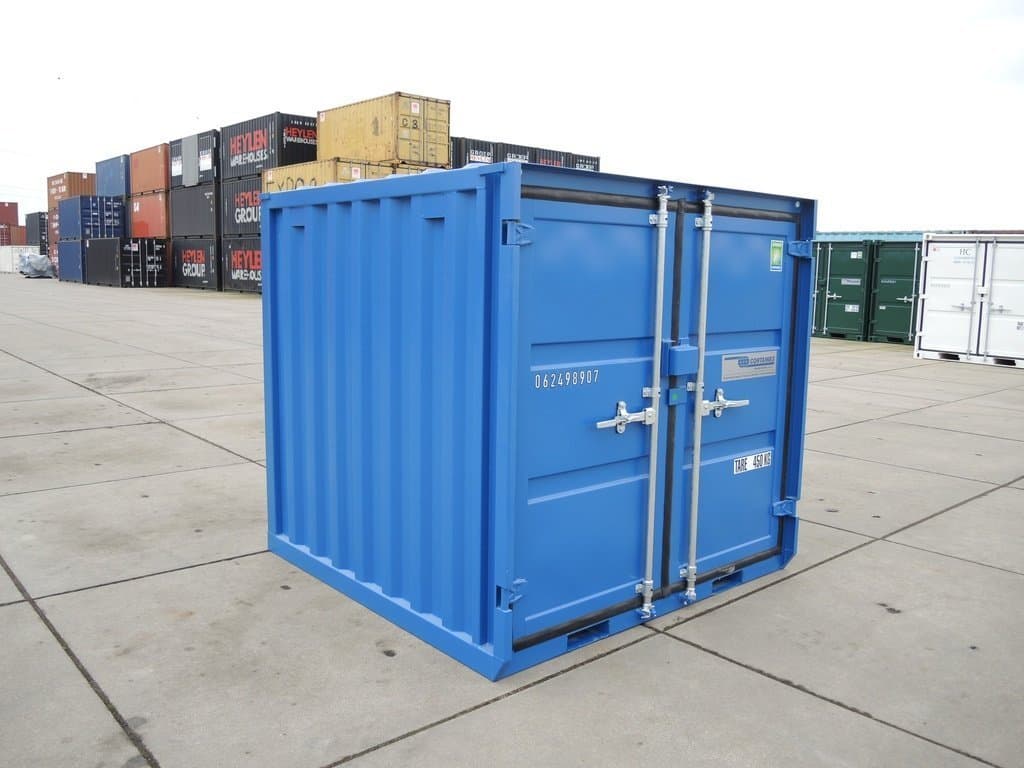
The used 20ft standard shipping container is a versatile model, widely used in intermodal transport and storage. Its standardized external dimensions (approximately 6.06 m long, 2.44 m wide and 2.59 m high) and Corten steel structure make it a robust and durable solution. This container is ISO and CSC certified, guaranteeing compliance with international standards for sea and land transport. In addition, it is classified Wind & Water Tight, ensuring air and water tightness, and Cargo Worthy, making it suitable for transporting goods. Its solid wood floor provides a resistant surface for storing various goods.
This used container has already been used, but retains all its structural and functional qualities. It may show superficial signs of wear (scratches, minor dents) without affecting its integrity. It is important to note that the exact condition may vary from one unit to another; we invite you to contact us to obtain photos and precise details about the available container.
The 20ft standard container is the most common in the world. Its modular design allows stacking up to nine units high, optimizing storage space. It is also stackable, facilitating transport and storage. Its side walls, roof and floor are built with corrugated steel sheets, offering high mechanical resistance. The double rear doors are equipped with seals and locking bars, ensuring secure closure.
This container can be used for many applications: storage of equipment, goods, vehicles, or as a base for conversion into an office, workshop, technical room, or even modular housing. Its modularity allows it to be transformed according to your needs. For example, it can be insulated, fitted with windows, doors, air conditioning, etc. However, any modification must be carried out in compliance with local construction and planning rules.
In terms of maintenance, a used container requires minimal care to extend its lifespan. It is recommended to regularly check the paint condition and touch up any scratches to prevent corrosion. Door seals should be checked and replaced if necessary to maintain tightness. The wooden floor can be treated against moisture and insects. Periodic cleaning with soapy water is generally sufficient.
When buying a used container, several points require attention. Check the structural condition: no holes, deep cracks, or major deformations. Check tightness: inspect seals, welds, and test with a water jet if possible. Ensure that ISO and CSC certifications are valid (they can be provided on request). Also check for rust, especially on the roof and floor. Finally, ensure the container is Cargo Worthy if you plan to use it for transport.
Transporting a 20ft container in France is subject to certain regulations. By road, a 20ft container can be transported on a container truck or a suitable trailer. The total weight (container + goods) must not exceed the legal limits of 44 tonnes for a road combination. For an empty container, the weight is approximately 2.2 tonnes. The total height must not exceed 4 metres. It is advisable to use a specialized carrier to avoid any problems. For sea transport, the container must be CSC certified and meet safety standards. For rail transport, it must be compatible with container wagons.
In summary, the used 20ft standard container is an economical and ecological solution for many projects. It combines robustness, modularity and compliance with international standards. Whether for professional or personal use, it will meet your storage, transport or conversion needs. Do not hesitate to contact us for more information on our available containers, their conditions and our delivery options.
To deepen maintenance, several levels of intervention should be distinguished. Routine maintenance, which can be done by the user, consists of sweeping or washing the floor, removing debris accumulated on the roof (leaves, branches) that retain moisture and promote rust, and checking the proper functioning of the door locking bars. Preventive maintenance, to be carried out once or twice a year, involves inspecting welds, corner castings, and sensitive areas such as the bottom of walls and around doors. Any flaking paint should be scraped, treated with rust remover and then covered with a suitable paint (usually epoxy or polyurethane paint). EPDM rubber seals can be cleaned with a mild product and lightly talced to prevent them from sticking. If a seal is cracked or missing, its replacement is inexpensive and preserves overall tightness. The wooden floor, often marine plywood or treated hardwood, can be protected with a wood stain or linseed oil, especially if exposed to weather. If storing moisture-sensitive products, adding a dehumidifier or desiccant bags is recommended. Finally, if the container is placed on the ground, ensure it rests on supports (concrete blocks, beams) to avoid direct contact with ground moisture and allow air circulation under the floor.
Transport regulations in France deserve detail. The 20ft container is an intermodal transport unit (ITU) under ISO 668. To circulate on public roads, it must be loaded on an approved vehicle, generally a rigid truck or a container semi-trailer. The gross vehicle weight (GVW) of the combination must not exceed 44 tonnes for standard road transport, but exemptions exist for certain exceptional convoys. The overall width must not exceed 2.55 metres, which is the case for the container (2.44 m). The length of the combination must not exceed 16.5 metres for an articulated combination. The total height must not exceed 4 metres; a standard 2.59 m container on a low-bed chassis remains within limits, but a high cube container (2.89 m) may cause problems on some chassis. Transport must be accompanied by regulatory documents: consignment note, valid CSC certificate, and possibly a special permit for exceptional convoys. For sea transport, the container must have a valid CSC plate and have passed periodic inspections (every 30 months for new containers, then according to rules). In France, rail transport of containers is possible via full trains or intermodal services; the container must be compatible with container wagons and comply with the rail gauge. Finally, for inland waterway transport, the container can be loaded on barges, particularly on the Seine, Rhône and Rhine routes. It is essential to verify compliance with ADR regulations for the transport of dangerous goods, if applicable.
Sector-specific use cases are numerous. In the construction sector, the 20ft container serves as a site office, tool and material storage. It can be equipped with lighting, power outlets, heating or air conditioning. In industry, it is used to store spare parts, chemicals (with necessary precautions), or as a technical room. In retail, it can become a mobile point of sale, a stand for fairs and markets, or storage space for unsold items. In events, it is often converted into a control room, ticket office, or VIP area. In agriculture, it is used to store grain, animal feed, or equipment. In humanitarian aid, it is used as a logistics warehouse or mobile medical unit. Finally, for individuals, it offers an outdoor storage solution, a DIY workshop, or a base for an alternative housing project (tiny house, container home).
Let us now compare the 20ft standard container with other sizes and types. The 40ft standard container (12.19 m long) offers double the volume (about 67 m³) but is less manoeuvrable and heavier (3.8 tonnes empty). It is ideal for transporting large volumes, but requires more manoeuvring space. The 40ft high cube container (2.89 m high) adds about 9 m³ of additional volume, useful for bulky but light loads. The 10ft container (3.05 m long) is more compact, suitable for small spaces, but less common and often more expensive per cubic metre. The 20ft high cube container also exists, with an internal height of 2.69 m, offering about 37 m³. The reefer container is designed for transporting perishable goods, with a refrigeration unit; it is heavier and more expensive, and requires a power supply. The open top container allows loading from above, ideal for out-of-gauge loads. The flat rack container has no side walls or roof, for heavy or bulky loads. The tank container is intended for liquids. Finally, the foldable container can be folded to save space during storage or repositioning. The choice depends on use: for versatile storage, the 20ft standard is often the best compromise between capacity, price and ease of transport.
Another important aspect is the lifespan of a used container. Well maintained, a Corten steel container can last several decades. Shipping containers are designed to withstand corrosive marine environments, but their lifespan depends on storage and use conditions. A container stored indoors or under cover will last longer than one exposed at the seaside. Rust is the main enemy; it appears first on welds, edges and friction areas. Early rust treatment limits its progression. Used containers are generally sold in several conditions: "as is" (may have holes or perforating rust), "wind and water tight" (air and water tight, no holes), "cargo worthy" (suitable for transport, compliant with standards), and "one trip" (used only once, almost new). The container offered here is classified Cargo Worthy and Wind & Water Tight, guaranteeing a good level of quality.
Finally, the environmental impact of buying a used container is positive. Reusing an existing container avoids the production of a new one, which requires a lot of energy and raw materials (steel, paint, wood). Moreover, converting a container into housing or premises valorises an object destined for scrap. However, care must be taken that old paints do not contain heavy metals (such as lead chromate); tests can be carried out. For food or sensitive use, thorough cleaning and possibly sandblasting are recommended.
To usefully complete this guide, let us address some frequently asked practical questions. The first concerns ground preparation before placing a container. A loaded 20ft container can weigh more than 30 tonnes; it is therefore essential to provide a stable and level base. A reinforced concrete slab or concrete pads at the four corners are recommended. A simply stabilised ground (compacted gravel) may suffice for an empty or lightly loaded container, but beware of differential settlement that can distort the structure. Also provide manoeuvring space for the delivery truck, which must be able to access the site and deposit the container using a hydraulic arm or crane. A standard container truck requires an access route at least 3 metres wide and an unloading space 10 to 15 metres long. If access is difficult, a mobile crane may be necessary, increasing the cost.
The second question concerns ventilation and condensation. An uninsulated metal container is subject to condensation: the temperature difference between inside and outside can cause moisture on walls and ceiling, especially at night. To limit this phenomenon, it is advisable to install ventilation grilles (passive ventilation) or a solar air extractor. For storing sensitive equipment, an electric dehumidifier or silica gel bags are effective. If the container is intended for habitation or work, internal insulation (rock wool, polyurethane foam) with a vapour barrier is essential to avoid thermal bridges and condensation.
The third question concerns security. A standard container is not a safe; doors can be forced with cutting tools. To improve security, one can add a high-security padlock (armoured type), an additional door lock, or an alarm system. It is also possible to weld reinforcement bars. For professional use, a perimeter fence and lighting are recommended. Finally, if the container is used to store valuable goods, specific insurance can be taken out.
The fourth question concerns administrative procedures for installing a container on private land. In France, installing a container may be subject to planning permission depending on its surface area and duration. A 20ft container has a footprint of about 14.8 m². In general, a prior declaration of works is required for a footprint greater than 5 m² and less than 20 m², and a building permit for a footprint greater than 20 m². However, rules vary by municipality and zone (urban, agricultural, protected). It is imperative to inquire with the local planning department before any installation. For temporary use (less than three months), authorisation may not be necessary, but this depends on the case.
The fifth question addresses the conversion of a container into living or working space. Typical works include cutting windows and doors, insulation, electricity, plumbing, air conditioning, and interior cladding. It is crucial to comply with safety rules (especially for emergency exits) and to use qualified professionals. The container structure must be reinforced if large openings are made. The cost of conversion can vary considerably depending on the level of finish. For a simple site office, a few fittings are enough; for permanent housing, a larger budget is required and compliance with construction standards (including RE2020 for new buildings, but converted containers may be subject to specific rules).
Finally, let us not forget the importance of choosing the supplier. A used container should be inspected before purchase. If you buy remotely, ask for recent and detailed photos, as well as the container's history (year of manufacture, number of trips, etc.). Check the CSC plate and its validity date. Ensure the seller offers a warranty or a return option in case of hidden defects. At D.S. Globe Conteneur, we are at your disposal to advise you and provide all necessary information on our used 20ft standard containers.