Description
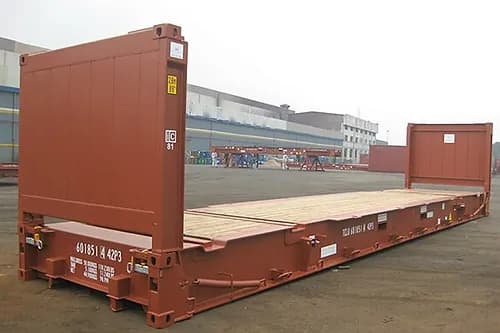
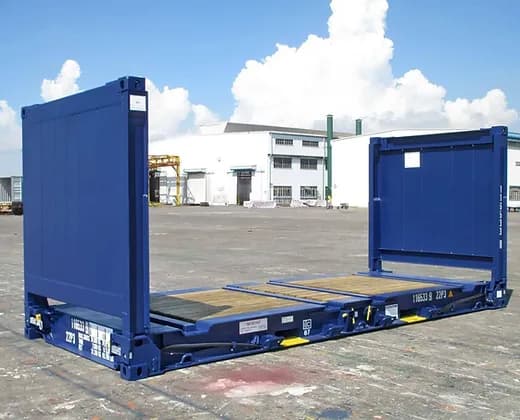
The used 40ft Flat Rack Cargo Worthy container we offer is specialised equipment designed to meet transport and storage needs that standard dry containers cannot cover. Unlike a container with fixed walls, the Flat Rack has no side walls or roof: it consists of a reinforced platform, two fixed end walls and collapsible or removable side walls. This unique configuration provides full access from the sides and top, making it easier to handle oversized loads. The model presented here is a 40ft, the longest standard length in the range, allowing long objects or several bulky units to be loaded on a single platform.
This container is classified as Cargo Worthy (CW). This designation, common in the maritime sector, means that an approved inspector has checked the structure and deemed the container fit for transporting goods by sea, road and rail. In practice, this means that the anchor points, locks, end posts and floor are in a condition to perform their function safely. It is a used container, meaning it has already been in service, but has been inspected and maintained in a condition compliant with commercial transport requirements. The CW designation does not reflect aesthetics: signs of wear, surface rust or handling marks are normal and do not affect load capacity. Buyers should therefore expect a non-new appearance, but reliable structural performance.
Dimensionally, the 40ft Flat Rack complies with ISO 668 and ISO 1496-1 standards applicable to series 1 containers. External dimensions are as follows: length 12,192 mm, width 2,438 mm, height approximately 2,591 mm depending on the model. These overall dimensions match those of a standard 40ft container, allowing easy integration on ships, road chassis and suitable rail wagons. The internal platform offers a usable length of approximately 12,032 mm and a width of approximately 2,352 mm between the end posts. Loading height is variable: it depends on the height of the goods and any securing accessories. Tare weight is generally between 5,000 and 6,000 kg depending on finish and equipment. Maximum gross weight is approximately 45,000 kg, leaving a payload capacity of around 39,000 to 40,000 kg. These values are indicative and may vary slightly between models; refer to the CSC (Convention for Safe Containers) plate on the container for exact data.
Construction uses Corten steel, a low-alloy steel that resists atmospheric corrosion through the formation of a protective oxide layer. This characteristic is essential for equipment exposed to sea spray, humidity and climatic variations. The floor is generally made of hardwood (often marine plywood or tropical wood planks) treated to withstand high concentrated loads. The end posts, fixed and robust, incorporate lashing rings and attachment points for straps or chains. The side walls are collapsible or removable: they can be lowered to facilitate side loading, then raised and locked to secure the goods during transport. This movable wall system is a major asset for handling, as it allows a forklift, crane or gantry to place the load directly on the platform.
Using a Flat Rack is particularly relevant for transporting heavy, bulky or irregularly shaped goods. Think of industrial machinery, medium-sized construction equipment, vehicles, metal beams, large-diameter tubes, precast concrete elements, boats or aircraft parts. In construction, it allows oversized materials to be delivered to remote sites. For industrial projects, it offers a flexible solution when specialised equipment rental lead times are too long or too costly. Finally, for storage, a used Flat Rack can serve as a storage platform for bulky items, provided protection against the weather is arranged if the goods are sensitive to humidity.
When considering the purchase of a used Flat Rack, several points require attention. First, the structural condition: check for deformation on the end posts, corner castings, floor rails and hinges of the collapsible walls. Cracks or cracked welds can compromise safety. Next, the floor: ensure it is not rotten, has no missing planks or soft spots. A degraded floor can cause accidents during loading. Attachment points and lashing rings must be in good condition, without excessive wear. The CSC plate must be legible and up to date: it certifies that the container has been inspected according to current safety standards. Finally, the Cargo Worthy designation must be confirmed by a certificate or recent inspection. A container sold as CW without documentary proof should be examined with caution.
Maintenance of a Flat Rack is relatively simple but regular. It is advisable to clean the platform after each use to remove debris, salt or chemicals. Rinsing with fresh water is usually sufficient. Metal parts may be affected by surface rust; brushing and applying anti-rust paint to affected areas can extend service life. Moving parts (hinges, locks) should be lubricated periodically to prevent seizing. The wooden floor can be treated with suitable oil or stain to limit water absorption. For prolonged outdoor storage, it is recommended to place the container on blocks to avoid direct contact with the ground and to regularly check for water accumulation in corners.
Regarding transport regulations in France and Europe, a loaded Flat Rack container is subject to road vehicle dimension and weight rules. The maximum length of a road train is 16.50 m, leaving little margin beyond the 12.192 m container. The maximum width is 2.55 m, and the Flat Rack is 2.438 m overall, but goods may exceed this width, requiring an exceptional transport permit. The maximum authorised gross vehicle weight must not exceed 44 tonnes for a standard articulated combination, limiting payload depending on the weight of the chassis and tractor. For exceptional transports, specific signage and sometimes escorting are required. In maritime transport, the Flat Rack is often used with overpacks or special securing to meet shipping line safety standards. It is therefore essential to prepare the load properly and consult a freight forwarder for regulatory aspects.
This used 40ft Flat Rack Cargo Worthy container is offered at €2,699.00. It is aimed at professionals in transport, logistics, construction and industry, as well as individuals with a one-off need to move or store bulky items. Due to its versatility, it can be used for a single job or integrated into a container fleet. Before purchase, it is recommended to visit the container or request detailed photos of sensitive areas (corners, posts, floor, walls). Testing the operation of the collapsible walls verifies their proper functioning. Finally, ensure the container meets expectations regarding cleanliness and absence of residues that could damage goods.
To go further in the analysis, the Flat Rack should be placed within the family of special containers and compared with other available types. A standard 40ft dry container offers an internal volume of approximately 67 m³ and a payload of approximately 28,000 to 30,000 kg. It is perfectly suited to palletised or dry bulk goods, but totally unsuitable for loads exceeding its opening dimensions (approximately 2.34 m wide and 2.28 m high). The open top container has a removable or flexible roof: it allows top loading, but retains fixed side walls, limiting the width of objects. The Flat Rack, by removing the side walls, allows loading of objects wider than the opening of a dry or open top. The flat rack container also differs from the simple flatbed, which has no end posts and therefore offers fewer vertical lashing options. Finally, the reefer container is designed for temperature-controlled transport and is not suitable for heavy out-of-gauge loads. The choice of a Flat Rack is therefore justified as soon as the goods exceed the limits of a standard container, whether in width, height or due to impossibility of loading through the doors.
The 40ft Flat Rack also differs from the 20ft Flat Rack. The 20ft model (6,058 mm long) is more compact and lighter (approximately 2,500 to 3,000 kg tare), which can be advantageous for shorter loads or simpler road transport. However, the 40ft offers twice the loading length, allowing long objects (beams, tubes, profiles) to be transported without excessive overhang, or several machines to be loaded side by side. The 40ft is also more stable at sea and better suited to large-capacity container ships. On the other hand, its higher tare weight reduces payload compared to the 20ft if maximum gross weight is reached. The choice between the two therefore depends on the nature of the load and the dominant mode of transport.
In practice, using a Flat Rack requires careful preparation. Securing and lashing are critical steps: the goods must be firmly fixed to the platform using straps, chains or cables, using the rings and anchor points provided for this purpose. Wooden chocks can be nailed or bolted to the floor to block lateral movement. For very heavy loads, it is recommended to distribute weight evenly over the entire surface and avoid point concentrations that could damage the floor. A stowage plan is often required by shipping lines for international transport. It is also advisable to photograph the load before shipment to have evidence in case of dispute.
Sector-specific use cases are varied. In construction, the Flat Rack allows steel frame elements, beams, precast panels, generators or compressors to be delivered to isolated sites. In the oil and gas industry, it is used to transport valves, pipes, skids or heavy equipment. The agricultural sector uses it for machines such as tractors, trailers or combine harvester parts. Event professionals can load stage structures, grandstands or set elements. Finally, individuals can use it to move bulky items (boat, classic vehicle, oversized furniture) or for long-term storage. In all cases, it is essential to check compatibility between the dimensions of the goods and the container's capacity, as well as applicable safety rules.
Another important aspect concerns handling. The Flat Rack is equipped with standard corner castings that allow it to be lifted with a spreader or a forklift equipped with suitable forks. These corner castings are also used for locking onto ships, chassis and wagons. It is imperative to check their integrity before any lifting operation. During loading, ensure the container is placed on a flat, stable surface. If the side walls are folded down, they must be properly locked in the lowered position so as not to hinder handling. Once the goods are loaded, the walls are raised and locked; additional straps can be passed over the load to secure it. Unloading follows the reverse procedure. All these operations must be carried out by trained personnel equipped with PPE.
For preventive maintenance, a simple schedule can be implemented. Once a year, a full visual inspection is recommended: looking for perforating rust, checking welds, checking bolt and lock tightness, examining the floor. Every two years, anti-rust treatment can be applied to exposed areas. If the container is used in a marine environment, rinsing with fresh water after each voyage is advisable to remove salt. Hinges and locking mechanisms should be greased at least once a year. The wooden floor can be protected with linseed oil or a water repellent. In case of damage (impact, deformation), an approved repairer should be called to assess the need for structural repair. Never attempt to straighten corner castings or posts yourself, as this could compromise safety.
Regarding regulations applicable to maritime transport, the Flat Rack is subject to the rules of the SOLAS (Safety of Life at Sea) convention and the requirements of the International Maritime Organization (IMO). The IMDG Code (International Maritime Dangerous Goods) applies if the goods are classified as dangerous. Shipping lines generally require a loading declaration specifying the dimensions, weight and nature of the goods. For out-of-gauge cargo, prior agreement is required. In France, road transport of containers is governed by the Highway Code and decrees relating to exceptional transports. Exceeding width, length or weight requires authorisation issued by the prefecture. The carrier must ensure the load is properly secured and marked. Non-compliance can result in fines and immobilisation. It is therefore strongly recommended to use a transport professional to organise the journey.
Finally, buying a used container involves checking its origin and history. A Flat Rack that has been used in the chemical industry or for dangerous goods may have been contaminated; thorough cleaning is then necessary. Requesting the cleaning certificate or cargo history can be useful. Likewise, ensure the container has not been involved in a major accident. An independent expert examination is an additional safety guarantee. The price of €2,699.00 for this used 40ft Flat Rack Cargo Worthy is in the lower range of the market for this type of equipment, which may represent an opportunity, but justifies even more careful inspection before purchase.
In summary, the used 40ft Flat Rack Cargo Worthy is a robust and flexible solution for transporting and storing out-of-gauge loads. Its Corten steel design, reinforced floor and removable walls make it a valuable tool for professionals. Although it is a used product, the Cargo Worthy certification guarantees its reliability for commercial use. Careful inspection before purchase and regular maintenance allow it to be fully utilised for many years.