Description
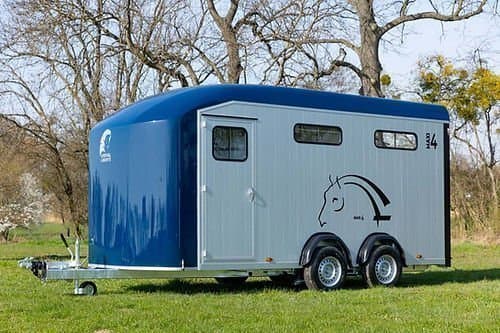
The LIDER Granada livestock trailer is a trailer designed for transporting live animals. It is aimed at farmers, private individuals and professionals who need to move small and medium-sized farm animals in suitable safety and comfort conditions. This model features internal dimensions of 2.50 m long, 1.25 m wide and 1.10 m high, offering an internal volume of around 3.4 m³. With a GVW of 500 kg or 750 kg, it can be hitched to many vehicles without requiring an E licence, making everyday use easier. The payload is 250 kg or 500 kg depending on the version chosen. Sold by D.S. Globe Conteneur, a company based in Marseille, this trailer is manufactured by LIDER, a recognised manufacturer in agricultural and utility trailers.
First, let's look at the technical specifications of the Granada. The chassis is galvanised steel, giving it good corrosion resistance. The internal dimensions are 2.50 m long, 1.25 m wide and 1.10 m high. The GVW is offered in two versions: 500 kg or 750 kg. The associated payload is 250 kg or 500 kg respectively. The unladen weight of the trailer is therefore 250 kg in both cases. The unbraked axle complies with regulations for trailers with a GVW not exceeding 750 kg. In France, trailers with a GVW of 750 kg or less do not require an E licence, provided the gross train weight (GTW) of the towing vehicle is not exceeded. The trailer is equipped with regulatory lights, a ball coupling and a Ø48 jockey wheel for manoeuvring. The T drawbar provides rigidity and simplicity. The non-slip plywood floor is treated to withstand weather and animal trampling. It is advisable to check its condition regularly and replace it if excessively worn. The rear ramp-door system allows easy loading and unloading of livestock, offering a dual function as ramp and door. The front right side door provides access to the interior for cleaning, inspection or animal care. As an option, a flat tarpaulin can be added to protect animals from bad weather and sun.
Let's move on to the practical uses of this livestock trailer. It is suitable for transporting small and medium-sized farm animals: sheep, goats, pigs, calves, donkeys, ponies, etc. It can also be used to transport hunting dogs or large pets, although its primary use is agricultural. Farmers use it to take their animals to market, to the vet or for short-distance transhumance. Private individuals can use it to transport an animal to a holiday destination or for equestrian activities. Entertainment or zoo professionals can also use it for animal movements. The trailer can be towed by a car, van or 4x4, depending on the GVW chosen. With a GVW of 500 kg, it is very light and can be pulled by a small car. With a GVW of 750 kg, it requires a slightly more powerful vehicle but remains accessible without an E licence. The payload of 250 kg or 500 kg allows one or two medium-sized animals to be transported. It is important not to exceed the payload for safety and compliance reasons. The trailer can also be used to transport agricultural equipment or tools, but its interior layout is optimised for animals.
Now let's look at trailer maintenance. To ensure its longevity, regular maintenance is necessary. The floor should be cleaned after each use, especially if soiled by animal droppings. Washing with clean water and a mild detergent is recommended. Avoid high-pressure jets on bearings and electrical parts. Regularly check tyre pressure and light condition. Grease pivot points (jockey wheel, door hinges) at least once a year. Check the condition of the plywood floor: if it shows signs of rot or delamination, replace it. Also check the strength of the drawbar and coupling. For prolonged storage, it is advisable to put the trailer on blocks to relieve the tyres and protect it with a tarpaulin.
It is essential to know the points of caution before buying. First, make sure the chosen GVW is compatible with your towing vehicle. Check your vehicle's GTW and load transfer. Then examine build quality: welds, galvanisation, floor, locking system. For a used trailer, check the chassis condition, corrosion, tyre and brake wear (if present). Make sure the documents are in order: certificate of conformity, registration document (if GVW > 500 kg, a registration document is mandatory). In France, trailers with a GVW of 500 kg or less have no registration document, but those over 500 kg do. Since the Granada is offered in 500 kg and 750 kg, the 750 kg version will have a registration document. Also check the presence of mandatory equipment: lights, reflectors, number plate. Finally, compare prices and options. The flat tarpaulin is a plus for animal comfort.
Regulations on the transport of live animals in France and Europe must be respected. For transports under 50 km, the rules are relaxed. Beyond that, rest times, watering, etc. must be respected. The trailer must be fitted out to prevent injuries and allow proper ventilation. The Granada has solid sides, which ensures good protection but limited ventilation; it is therefore advisable not to overload and to plan regular stops. Animal transport must take place in acceptable temperature conditions. In summer, prefer cooler hours. The flat tarpaulin can be used for shade. Make sure animals are tied or contained so as not to hinder driving. In France, the transport of slaughter animals is subject to specific rules. For private individuals, pet transport is less regulated but must comply with road safety rules.
In the sheep farming sector, the Granada is often used to transport small flocks at fairs or agricultural shows. Its compact size allows manoeuvring in tight spaces, such as sheepfold aisles or market car parks. For goat farmers, it offers a practical solution for taking goats to distant pastures or to the vet. Pig farmers appreciate the ease of cleaning the non-slip floor, essential for hygiene. In the equestrian field, it can transport a pony or donkey, but it is not sized for a large horse. Riding centres use it to transport ponies to leisure centres or shows. Zoos and animal parks can use it to transfer small animals between enclosures or for veterinary procedures. Animal shelters use it to transport dogs or cats during rescues or adoptions. Finally, farmers can use it to transport injured or sick animals to a veterinary clinic, ensuring the floor is disinfected before and after.
Let's compare the Granada with other trailer sizes and types. The Granada livestock trailer sits in the range of small single-axle trailers. Compared to a larger trailer, such as a 3.50 m long double-axle, it is more manoeuvrable and lighter, but offers less capacity. It is ideal for small farms or private individuals. An unbraked trailer like the Granada is simpler to maintain than a braked trailer, but its load capacity is limited to 750 kg GVW. For heavier loads, you would need to move to a braked trailer and probably an E licence. Compared to a forage trailer, the Granada is specifically fitted out for animals, with solid sides and a suitable loading system. It differs from a standard flatbed trailer by its livestock function. In terms of price, it sits in the entry-level agricultural trailer range, with good value for money. The choice between 500 kg and 750 kg GVW depends on use: 500 kg is sufficient for an animal under 250 kg, while 750 kg allows a heavier animal or two lighter animals to be transported. It is important to note that the actual payload depends on the weight of the animals and equipment. To go further in the comparison, let's examine possible alternatives. A double-axle livestock trailer, often longer (3 m to 4 m) and wider (1.50 m to 1.80 m), offers greater capacity and better stability on motorways, but it is heavier, more expensive and often requires an E licence if its GVW exceeds 750 kg. A flatbed trailer with sides can be used for animal transport if barriers are added, but it does not offer the same protection or ease of loading. A forage trailer is designed for transporting forage, not animals, so it lacks specific fittings. Finally, a van or livestock truck is more comfortable for long journeys and large animals, but represents a much greater investment and requires an appropriate licence. The Granada therefore positions itself as an intermediate, accessible and versatile solution for small animal transport needs.
To use the Granada safely, it is essential to follow a few rules. Before each departure, check the coupling, tyre pressure, light operation and door closure. Make sure animals are properly tied or contained and cannot injure themselves on protruding elements. Do not overload the trailer: respect the stated payload. Distribute weight evenly on the floor. Drive smoothly, anticipating braking and corners, as an unbraked trailer may behave differently. Avoid excessive speeds and rough roads. When transporting live animals, plan regular breaks to check their condition and water them if necessary. In summer, ensure the trailer does not overheat: park in the shade and avoid the hottest hours. In winter, protect animals from the cold with a tarpaulin or straw. Finally, remember to disinfect the trailer between two different animal transports to avoid the spread of disease.
Let's look in more detail at routine maintenance and preventive work to schedule over time. Beyond cleaning after each use, it is useful to establish a simple schedule: visual check of coupling and lights before each trip, tyre pressure check once a month and before any long journey, wheel bolt tightening check after the first hundred kilometres of use and then periodically, inspection of the plywood floor each season, and greasing of the jockey wheel axles and rear ramp-door hinges at least once a year. The galvanised chassis protects the steel, but it does not exempt you from checking areas exposed to impacts, where the zinc layer may be scratched; local touch-up with a suitable anti-rust paint limits the progression of corrosion. Wheel bearings, which are not visible, deserve particular attention: excessive play, abnormal noise or hub heating after a journey indicate wear to be addressed without delay. The electrical wiring, exposed to water spray and impacts, must be inspected to identify oxidised connectors or cracked sheathing. Finally, if the trailer remains parked for several months, protecting it from sun and humidity extends the life of the plywood and tyres.
From a regulatory point of view, the transport of live animals in France falls within the framework of the European regulation on the protection of animals during transport, supplemented by national provisions. This framework imposes general conditions: animals must be fit for transport, have sufficient space, be protected from bad weather and not be exposed to extreme temperatures. Means of transport must be designed and maintained so as to avoid injury and allow suitable ventilation. For short journeys, obligations are relaxed, but beyond a certain distance, additional requirements apply, particularly regarding breaks, watering and, for certain categories of animals, transporter authorisation. The driver must also ensure road safety: correct securing of the live load, compliance with weight limits, trailer signalling and adapted driving. For regular professional use, it is prudent to find out about the obligations applicable to the species transported and the distance travelled, as they vary depending on the case.
From the point of view of sector-specific use cases, the Granada has its place in several distinct contexts. On small cattle farms, it is used to transfer calves between buildings or to the vet, without mobilising a heavy vehicle. For sheep and goat farmers, it supports trips to markets, sorting centres or distant pastures, with the advantage of a size that slips into narrow paths. In the pig sector, it is used for occasional movements of small-format animals, ensuring rigorous disinfection between two batches to limit health risks. For leisure equestrian activities, it is suitable for transporting a pony or donkey over short distances, but it does not replace a van for an adult horse. Animal protection associations and shelters see it as a practical tool for rescues and adoptions, thanks to the side door that facilitates access to stressed animals. Finally, in a broader context, it can be used to transport equipment or small livestock for agricultural events, fairs or educational activities.
To choose between the two GVWs offered, you need to think in terms of actual load and towing vehicle. The 500 kg version is suitable for occasional use with one or two light animals, towed by a city car or saloon with a towbar. The 750 kg version offers greater load margin and better versatility, but it requires checking the vehicle's GTW and, in France, it is subject to registration with a registration document. In both cases, the unladen weight of 250 kg must be taken into account when calculating payload: what matters is the weight of the animals and equipment on board, not the GVW alone. An animal heavier than the available payload cannot be transported safely, even if the trailer seems large enough.
In conclusion, the LIDER Granada livestock trailer is a reliable and functional trailer for animal transport. Its compact dimensions, modular GVW and practical equipment make it a suitable tool for farmers and private individuals. Available from D.S. Globe Conteneur, it benefits from recoverable VAT for professionals. Do not hesitate to contact us for more information on options and availability.