Description
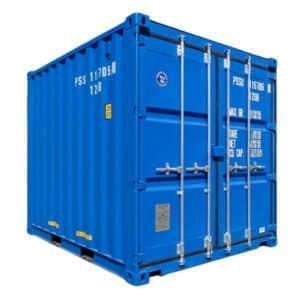
The used 10-foot double-door shipping container is a compact and versatile solution for storage, transport or modular space conversion. Its specific two-door design provides particularly convenient access from both ends, making loading and unloading easier, especially when space around the container is limited. This model is commonly used on construction sites, in industrial areas or by individuals needing a secure and mobile space.
Let's start with the essential technical characteristics. This container complies with ISO standards applicable to shipping containers, notably ISO 668 which defines dimensions and maximum masses, and ISO 1496 which specifies design specifications and testing. It is a "dry" container (also called "standard" or "closed"), meaning designed for transporting dry goods that do not require temperature control. Its nominal length is 10 feet, approximately 3.05 metres. Standard external dimensions for a 10-foot container are generally around 3.05 m long, 2.44 m wide and 2.59 m high. Internal dimensions offer a useful volume of approximately 15 to 16 cubic metres, with an internal length close to 2.83 m, a width of 2.35 m and a height of 2.39 m. The tare weight is generally around 1,200 to 1,400 kg, and the maximum payload can reach approximately 10,000 to 12,000 kg, depending on the manufacturer's exact specifications. These values are indicative and may vary slightly from one container to another.
The construction uses Corten steel, also known as weathering steel. This steel contains alloying elements such as copper, chromium and nickel, which give it superior resistance to atmospheric corrosion. By forming a protective oxide layer on the surface, Corten steel considerably slows degradation due to weather, which extends the container's lifespan, even when exposed to sea spray or high humidity. This is a significant advantage for outdoor use, whether on a construction site, in a port or in a garden.
The floor is made of 19-ply marine-grade plywood, 28 mm thick (approximately 1.1 inches). This plywood is designed to withstand moisture and heavy loads. It is generally treated to support the passage of handling equipment and the storage of various goods. Its resistance to abrasion and impact is an asset for intensive applications.
Ventilation is provided by four weatherproof vents distributed on the walls. These vents allow minimal air circulation inside the container, which helps prevent condensation and maintain a relatively dry environment. They are designed to prevent rain or splash water from entering while allowing air to circulate. This is an important point for storing moisture-sensitive materials such as wood, paper or certain electronic equipment.
The doors are equipped with 36-inch (approximately 91 cm) locking bars. These bars, generally four per door (two vertical and two horizontal), ensure effective locking and good sealing. Their height makes them easy to grip and open, even with gloves. The mechanism is designed to withstand significant forces and keep the doors firmly closed. A secure lockbox is integrated, offering the possibility of installing a padlock or additional locking system to enhance security against intrusion.
Forklift pockets, located at the base of the container, are openings specially designed to allow the forks of a forklift to pass through. They facilitate handling and moving the container, whether loading it onto a truck, positioning it on a site or moving it in a yard. These pockets are reinforced to withstand the stresses of repeated handling.
The double door is a distinctive feature of this model. It allows full access from both ends, which is particularly useful when the container is placed in a space where access from only one side is difficult, or when storage needs to be divided into two separate zones. For example, on a construction site, one door can be opened to access equipment and the other to remove waste, or the container can be used as a walk-through workshop. This configuration offers appreciable flexibility of use.
In terms of concrete uses, this 10-foot double-door container can serve as a secure storage place for tools, construction materials, goods, archives, or even light vehicles such as scooters or quad bikes. It can be converted into a site office, technical room, changing room, or temporary sales space. Its compact size makes it suitable for small plots, urban yards or areas where space is limited. It can also be stacked with other containers if necessary, thanks to its standardised lifting corners.
For conversion, it is possible to add insulation, additional ventilation, openings (windows, doors), electrical installations, air conditioning or heating, depending on the intended use. However, any structural modification must be carried out properly to avoid compromising the container's integrity. It is recommended to use professionals for major transformations.
Maintaining a used container is relatively simple but regular. The paint condition should be inspected periodically and any scratches or rust areas touched up with suitable paint (generally epoxy or polyurethane based) to prevent corrosion. Door seals must be checked and replaced if worn or damaged, to guarantee water and air tightness. The locking mechanism must be lubricated regularly for smooth operation. The floor must be cleaned and inspected for any rot or delamination; a protective treatment can be applied. Finally, it is advisable to check the vents and clear them if obstructed.
When buying a used container, several points of vigilance should be considered. First, the general condition: look for signs of perforating rust, structural deformation, cracks in welds or damage to doors. A used container may show normal wear, but it must not have defects compromising its integrity. Check watertightness: request a water test if possible or inspect the seals. Ensure the container complies with ISO standards and has a valid CSC (Convention for Safe Containers) plate, which certifies its compliance for maritime transport. This plate is mandatory for containers used in international transport. For land use, it is not always required, but it remains a quality guarantee. Also check for the identification plate and serial number.
Regarding transport regulations in France, if you plan to move the container on public roads, road transport rules must be taken into account. A 10-foot container can be transported on a container truck or a suitable trailer. The total weight (container + load) must not exceed the limits authorised for the vehicle and the road. In France, the authorised gross vehicle weight (GVW) for a road train is generally 40 tonnes, but restrictions may apply on certain roads or structures. It is advisable to check with local authorities or a professional carrier. Moreover, if the container is used as a permanent structure (dwelling, office), it may be subject to planning rules: a prior declaration of works or a building permit may be required depending on the installation duration and surface area. Check with your local town hall.
For maritime transport, a 10-foot container is less common than 20 or 40 feet, but it can be shipped. It must be CSC certified and meet safety standards. Shipping lines generally accept 10-foot containers, but conditions and costs must be checked, as they may be considered special units.
Let's now look in more detail at preventive and corrective maintenance, as this is a determining aspect for the longevity of your used container. A shipping container is designed to withstand aggressive marine environments, but once placed on the ground, it is subject to other stresses: stagnant humidity, impacts during handling, UV exposure, temperature variations. A simple annual maintenance programme helps avoid premature degradation. Start with cleaning with clear water, with a mild detergent if necessary, to remove salt, dust or organic residues. Avoid overly powerful pressure washers that could damage seals or paint. Then inspect the roof: it is the area most exposed to corrosion, as water can stagnate in the folds of the corrugated sheet. Look for paint blisters, superficial rust spots or perforations. Treat any emerging rust immediately: brush down to bare metal, apply a rust-inhibiting primer then a finishing paint suitable for exposed metal surfaces. Side walls and corner posts should also be examined, particularly at welds and fastenings. The lower parts of the frame, often in contact with the ground, are vulnerable to rising damp; ensure they are not in direct contact with wet soil. If possible, place the container on crossbeams or concrete blocks to create an air gap.
The doors and their mechanisms deserve particular attention. Rubber or EPDM seals wear over time and lose their elasticity. Check that they are not cracked, torn or compressed. A defective seal lets in water and air, which can cause water damage inside. Replacing a door seal is a simple and inexpensive operation, to be done yourself with a suitable kit. The locking bars must pivot without forcing; lubricate the axes and mechanisms with a water-resistant grease (marine grease type) at least once a year. Check that the handles and latches engage correctly. If a bar is bent, it is better to replace it rather than straighten it, as its structural strength would be compromised. The secure lockbox must be kept clean and functional; a quality, corrosion-resistant padlock is recommended.
The marine plywood floor can be cleaned with a broom or a damp mop. Avoid letting water stagnate on it. If oil or chemical stains appear, clean quickly with a suitable detergent. To protect the wood, you can apply linseed oil or marine varnish, but be careful: some treatments can make the floor slippery. Inspect the edges and areas near the doors, where wear is faster. If a plywood panel delaminates, it must be replaced before moisture spreads to the rest of the panel. A sound floor is essential to support heavy loads and avoid accidents.
The vents must be checked regularly: they can be obstructed by insects, leaves or dust. A blocked vent prevents ventilation and encourages condensation. Clean them with a soft brush or a compressed air jet. If you notice persistent condensation inside, consider adding a dehumidifier or additional ventilation, especially if you store sensitive materials.
Finally, if the container is intended for intensive use or conversion (insulation, electricity, plumbing), it is advisable to treat all interior surfaces with an anti-corrosion paint and a suitable finishing paint. This protects the steel and facilitates cleaning. For conversions, use container professionals or qualified craftsmen, as design errors can lead to problems with watertightness, structure or compliance.
Let's move on to transport regulations in France in more detail, as they can impact your project. Transporting a 10-foot container on public roads is subject to the Highway Code and regulations on exceptional transport if dimensions or weight exceed standard limits. A 10-foot container is about 3 metres long, which remains within gauge limits for a light vehicle with trailer, but the weight may require an appropriate licence (BE licence for a trailer over 750 kg). For professional transport, use a carrier with a container truck or a flatbed with approved straps and fastenings. The container must be secured in accordance with safety rules (straps, chains, chocks). The driver must ensure that the load does not exceed the vehicle's GVW and that the mass distribution is correct. In case of exceeding width (over 2.55 m), length (over 12 m for a combination) or weight (over 40 tonnes), an exceptional transport authorisation is required, issued by the prefecture. This is generally not the case for a 10-foot container, but it must be checked depending on the vehicle used.
If the container is used as a technical room, site office or dwelling, it may be subject to planning rules. In France, a construction is considered permanent if it is fixed to the ground and intended to remain in place. A container placed on blocks and not attached may be considered a temporary installation, but case law varies. To avoid any problems, it is recommended to check with the town hall's planning department. A prior declaration of works is often required for a floor area between 5 and 20 m², and a building permit for more than 20 m². A 10-foot container has a floor area of approximately 7.4 m², which places it within the prior declaration range in many municipalities, but local rules may be stricter (protected areas, housing estates, etc.). If the container is used as a main or secondary dwelling, health, insulation and safety standards must be met. It is advisable to consult an architect or a design office for a dwelling project.
For international maritime transport, a 10-foot container must be CSC certified and have a valid safety plate. CSC certification is issued after a technical examination and must be renewed periodically (every 30 months for new containers, then according to the rules). If you ship the container, check that the plate is up to date and that the container has no structural damage. Shipping lines may refuse a non-compliant container. In addition, the maximum gross weight (MGW) is indicated on the CSC plate and must not be exceeded. For a 10-foot container, the MGW is often around 10,000 to 12,000 kg, but this can vary.
Let's now examine sector-specific use cases to help you better understand the potential of this container. In the construction sector, a 10-foot double-door container can serve as a tool store on a site. Its double door allows quick access from two areas, reducing workers' movements. It can be fitted with shelves, racks, a workbench and lighting. It is also possible to install a generator or compressor, with suitable ventilation. In the events sector, this container can be converted into a sales stand, ticket office, technical booth or fast-food space. The double door offers a large opening for service. In agriculture, it can store seeds, fertilisers, small equipment, or serve as a packing room. In retail, it can be used as a storage reserve for a shop, or as a pop-up shop in a car park. In the services sector, it can become a teleworking space, repair workshop, creative studio, or coworking space. In the maritime and port sector, it can serve as a storage room for handling equipment or a changing room for dockers. In the energy sector, it can house electrical equipment, transformers, generators, or spare parts for wind turbines. In the humanitarian field, it can be used as a mobile warehouse or first aid post. In the recycling sector, it can store sorted materials. Finally, for individuals, it can serve as a garage for a scooter, quad bike, jet ski, or as a secure storage room, DIY workshop, wine cellar (with insulation and air conditioning), or chicken coop (with fittings).
Let's now compare this 10-foot double-door container with other sizes and types of containers to help you make an informed choice. The most common containers are 20 feet and 40 feet. A 20-foot container (approximately 6.06 m long) offers an internal volume of approximately 33 m³, more than double the 10-foot. It is more suitable for transporting bulky goods or intensive storage. Its tare weight is approximately 2,200 to 2,400 kg, and its payload approximately 28,000 kg. A 40-foot container (approximately 12.19 m long) offers approximately 67 m³, with a tare weight of approximately 3,800 to 4,200 kg and a payload of approximately 26,000 to 28,000 kg. The 40-foot high cube (9'6" high) adds approximately 30 cm in height, giving a volume of approximately 76 m³. 10-foot containers are rarer, but they have the advantage of being compact, easy to move and install in restricted spaces. They are also lighter, which reduces transport and handling costs. The double door is a less common option than the single door, but it provides appreciable access flexibility. Open top containers are designed for loading out-of-gauge goods from above; they have a removable roof or a tarpaulin. Flat racks (platforms without walls) are used for heavy or bulky loads. Reefer containers (refrigerated) are insulated and equipped with a refrigeration unit for transporting perishable goods; they are more expensive and require a power supply. High cube containers are taller than standard ones. Finally, used containers can be classified into several categories: "one trip" (almost new), "like new", "good condition", "standard condition" or "for conversion". The container offered here is a used container, whose exact condition must be verified. It is important to note that 10-foot containers are often used for specific purposes (storage, conversion) rather than for international maritime transport, as their reduced size makes them less economical to transport compared to 20 or 40 feet. However, they remain very useful for small shipments or projects requiring a compact unit.
In conclusion, the used 10-foot double-door container is a robust and functional piece of equipment, suitable for many applications. Its Corten steel construction, marine plywood floor and equipment (vents, locking bars, forklift pockets) make it a durable solution. The double door provides appreciable access flexibility. Like any used product, it must be carefully inspected before purchase to ensure it meets your needs and is in good condition. Regular maintenance will extend its lifespan. Whether for professional or personal use, this container offers an economical and ecological alternative to traditional construction, while being mobile and reusable.