Description
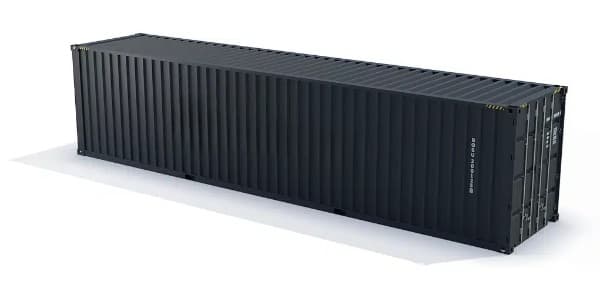
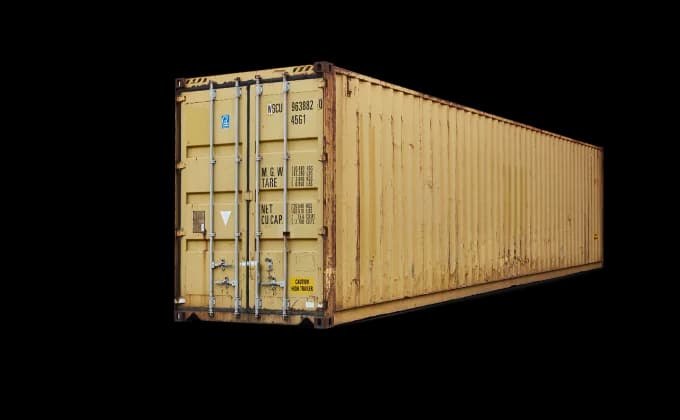
The 40-foot High Cube shipping container is a steel transport and storage unit built to ISO series 1 standard dimensions. It differs from the standard 40-foot by an external height about 30 cm greater, which noticeably increases usable volume without changing the footprint. This makes it a relevant solution whenever loading height or storage volume becomes a deciding factor.
Let us start with dimensions and volumes, since these data determine most uses. A 40-foot High Cube measures about 12.19 m external length, 2.44 m width and 2.89 m height. Inside, usable length is around 12.03 m, width 2.35 m and ceiling height about 2.69 m, versus about 2.39 m for a standard 40-foot. Internal volume thus reaches around 76 m³. Tare weight is about 3.6 to 3.9 tonnes depending on design and reinforcements, and maximum permitted payload is generally around 26 to 28 tonnes, to be checked on the CSC plate and the certificate of the specific container.
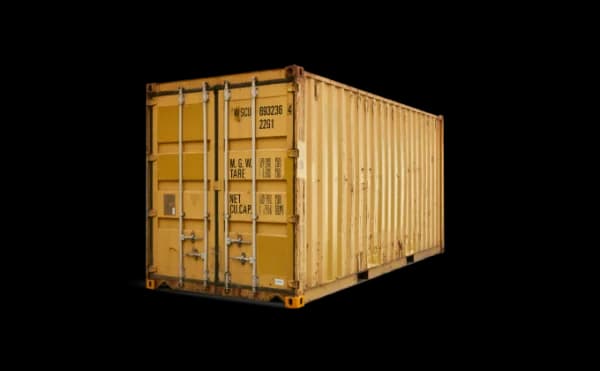
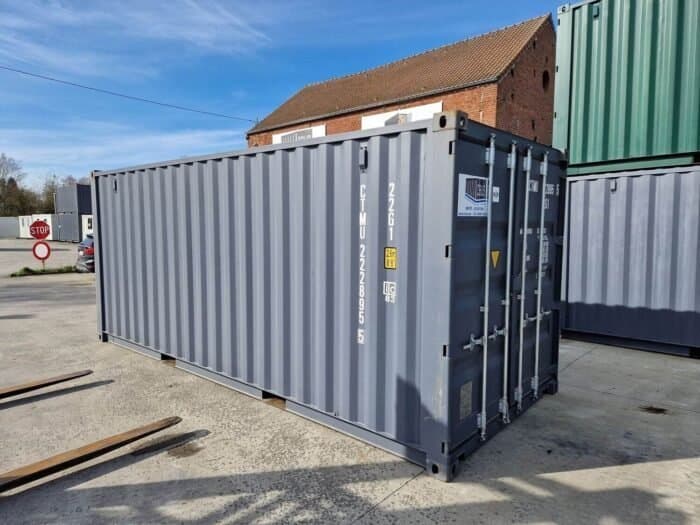
The structure is based on a corten steel frame, also called weathering steel. This alloy contains copper, chromium and nickel, which promote a protective oxide layer on the surface and slow corrosion. Side walls are corrugated panels, the roof a corrugated sheet, and floor crossmembers support a 28 mm marine plywood floor, a glued wood panel resistant to moisture and mechanical stress. The rear face has two doors with seals, locking bars and sealing devices. Depending on the model, ventilation grilles may be present on the walls, and the corners are fitted with ISO standard corner fittings for slinging, lifting and stacking.
ISO standardisation governs the dimensions, tolerances and corner fittings of freight containers. ISO 668 and ISO 1496 define the series and mechanical requirements, while the CSC (Convention for Safe Containers) requires a safety plate certifying that the container meets strength requirements for sea and land transport. A container intended for export must have a valid CSC plate, plus a four-letter, six-digit identification number followed by a check digit. These elements must be checked before any purchase, especially for international transport use.
The 40-foot High Cube suits many uses. In sea and land transport, it allows pallets to be loaded on two levels in some cases, as well as light bulky goods, tall equipment, machinery, furniture, insulating materials or products in big bags. The extra height reduces the number of containers needed for the same cargo volume, which can lower freight costs and handling operations. In stationary storage, it provides a sheltered, ventilated and securable space for site materials, tools, archives, seasonal stock or humidity-sensitive equipment, provided suitable ventilation is arranged. For fit-out, its internal height allows higher ceilings, insulated partitions, technical installations in a false ceiling, site offices, changing rooms, washrooms or modular living spaces, subject to applicable planning and construction rules.
Routine maintenance of a corten steel container is simple but regular. It involves visually inspecting walls, roof and floor for deep scratches, paint chips, rust spots or deformation. Dirt and salt deposits, common near the sea, are removed with clean water and a pressure washer at moderate pressure, avoiding damage to seals. Superficial rust spots can be brushed and treated with a rust-inhibiting paint suitable for metal surfaces. Door seals, locking bars and hinges are lubricated periodically to keep smooth operation and good sealing. The wooden floor must be kept dry; when storing sensitive products, using pallets, floor mats or dehumidifiers limits moisture rise.
Before purchase, several points deserve careful checking. First, distinguish a new container, generally recently manufactured and little used, from a used container graded by condition. For international transport use, the container must be CSC certified and structurally sound. For storage or fit-out use, paint condition, absence of perforations, floor flatness and roof sealing are decisive. It is also advisable to check actual internal dimensions, the presence of the four corner fittings, door seal condition, the manufacturer's plate and the absence of major unreported repairs. Finally, a container's price depends on its condition, availability, storage location and delivery costs; a detailed quote including transport to the place of use should be requested.
Transport and delivery of a 40-foot High Cube in France require specific organisation. Such a container is generally carried on a container truck or suitable trailer, with a gross weight that can exceed 30 tonnes once loaded. French regulations govern permitted dimensions, weights and gauges on public roads, as well as special permits for abnormal loads. Delivery to private land requires drivable access, sufficient manoeuvring space and, for ground placement, a lifting machine or a truck with a hydraulic arm. It is prudent to check street width, overhead cables, ground bearing capacity and any local restrictions before planning delivery. The container must then be placed on a stable support, such as concrete blocks or sleepers, to avoid direct contact with the ground and limit corrosion from below.
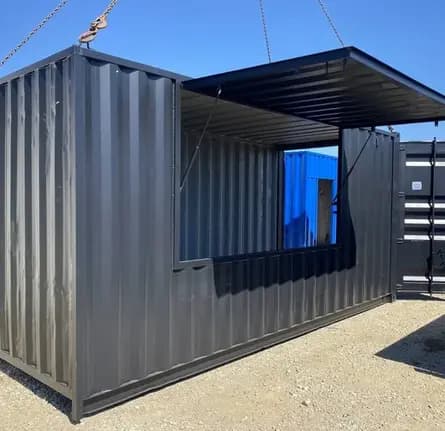
For fit-out use, converting a shipping container requires compliance with construction and planning rules. Depending on the intended use, a prior declaration or a building permit may be required. Thermal and acoustic insulation, ventilation, electricity, plumbing and fire resistance are points to be handled by professionals. Cutting corten steel walls alters the structure and must be studied so as not to compromise overall stability. Adding windows and doors requires reinforcements and careful sealing. These projects are feasible, but they demand rigorous technical design and compliance with applicable standards.
Let us now look in more detail at preventive maintenance, since this determines a container's real service life. A shipping container is not a disposable product: properly maintained, it can remain structurally sound for decades in stationary use, whereas its service life in sea rotation is shorter due to repeated handling, stacking and salt exposure. The first maintenance step is to establish a seasonal inspection routine. In spring and autumn, check the roof, often forgotten, as it is the surface most exposed to rain and fallen leaves. An accumulation of organic debris on the roof retains moisture and accelerates rust. Sweeping or hosing, followed by drying, is usually enough. On the walls, look for scratches reaching bare metal: a superficial paint scratch is harmless, but a deep scratch exposing steel must be treated quickly with a rust-inhibiting primer then a topcoat.
The marine plywood floor deserves specific attention. It bears loads but dislikes prolonged moisture. If the container is used to store damp products or is exposed to leaks, the wood can swell, warp or develop mould. It is therefore advisable never to leave standing water inside, to ventilate regularly and to use pallets to raise goods. In case of stains or odours, cleaning with a wood-suitable product and complete drying are recommended. If a floorboard is damaged, it can be replaced by a professional, which remains cheaper than replacing the whole container.
Door seals are wearing parts. They ensure water and air tightness, and their degradation is one of the most frequent causes of leaks. A cracked, hardened or detached seal must be replaced. Replacement is generally done with a seal of suitable profile, glued or clipped depending on the model. Locking bars, handles and hinges must be lubricated with water-resistant grease to prevent seizing, especially in salty environments. A stiff lock is a sign of lack of maintenance or door deformation, which must be corrected before sealing is compromised.
Ventilation is often underestimated. A closed container exposed to the sun can experience significant temperature and humidity variations between day and night. This alternation promotes condensation on metal walls, a phenomenon known as internal rain. For storing sensitive equipment, it is useful to install ventilation grilles, a solar extractor or a dehumidifier. For goods sensitive to moisture, desiccant bags can complement the system. These solutions are simple and inexpensive, but they considerably change the preservation quality of stored goods.
Now let us turn to transport regulations in France, which concern both empty and loaded containers. On the road, a vehicle combination carrying a 40-foot High Cube must comply with the highway code and regulations on weights and dimensions. The maximum length of an articulated combination is regulated, and transporting a 40-foot container is generally done with a suitable vehicle. The authorised gross combination weight must not be exceeded, which means knowing the container tare weight, the cargo weight and the vehicle weight. If regulatory thresholds are exceeded, a movement permit may be required. Transporting dangerous goods is subject to the ADR agreement, which imposes specific classification, packaging and marking: a standard container must never be used for dangerous substances without prior verification of applicable rules.
At sea, the container must meet the requirements of the CSC convention and International Maritime Organization rules. The CSC plate, affixed to the door or wall, indicates the manufacturing date, country of approval, maximum weight, payload and test pressure. It must be kept legible. For export, the container must also have a unique identification number and, depending on the case, a customs compliance plate. Failure to meet these requirements can lead to refusal of loading or additional port charges.
Sector-specific use cases are numerous and worth detailing. In construction and public works, the 40-foot High Cube serves as a site base, site store, changing room, canteen or workshop. Its height allows tall shelving, raised workbenches or vertical storage systems. In industry, it is used to store spare parts, consumables, moulds or bulky equipment. In logistics and e-commerce, it serves as a buffer zone for order picking or seasonal storage. In agriculture, it can house seeds, fertilisers, small equipment or harvests, provided humidity and ventilation are controlled. In the cultural or events sector, it is used as a technical room, control room, tour logistics or storage space for stage equipment. Finally, in residential and office settings, it forms the basis of modular housing, garden office, studio or commercial unit projects, subject to planning permissions.
Let us now compare the 40-foot High Cube with other formats to inform the choice. The standard 20-foot offers about 33 m³ and a usable length of about 5.90 m. It is more manoeuvrable, easier to move and place, and often cheaper to buy and transport. It suits small stocks, compact workshops or sites with limited access. The standard 40-foot offers about 67 m³, with the same length as the High Cube but an internal height about 30 cm lower. It remains suited to conventional sea transport and ordinary storage. The 40-foot High Cube, with its 76 m³, brings a volume gain of about 9 m³ over the standard 40-foot, which may seem modest in percentage terms but becomes decisive when loading height is a limiting factor. The 45-foot High Cube, less common, offers slightly greater length and even more volume, but its availability and handling are more restrictive. Specialised containers, such as the reefer for temperature-controlled transport, the open top for out-of-gauge loads loaded from above, or the flat rack for very wide or very heavy loads, meet specific needs and do not replace a dry High Cube for general use.
The choice between these formats therefore depends on several criteria: the volume to store or transport, the height of objects, site access, budget, frequency of movement and the nature of the goods. A 40-foot High Cube container is particularly relevant when seeking maximum usable floor volume, having suitable access and wanting to limit the number of units. Conversely, for a small urban plot or occasional use, a 20-foot may be more rational.
Finally, let us note a few common mistakes to avoid. Not checking CSC certification before sea use exposes you to refusal of loading. Not checking floor condition can lead to damage to stored goods. Neglecting ventilation promotes condensation and mould. Placing the container directly on the ground accelerates corrosion at the base. Overloading the container beyond the payload shown on the plate can deform the structure and pose a safety risk. Finally, undertaking a conversion without technical study or planning permission can lead to administrative difficulties and sealing or structural defects.
In summary, the 40-foot High Cube container is a versatile, robust and standardised piece of equipment that combines a large internal volume, a usable height greater than a standard container and a wide variety of uses: sea and road transport, secure storage, workshop, site office or modular fit-out base. Its corten steel and 28 mm marine plywood floor give it resistance suited to demanding outdoor environments, provided regular maintenance is carried out and its condition and certification are checked before purchase. For any availability, price or delivery request, it is advisable to specify the intended use, delivery location and access constraints, in order to obtain a suitable solution.