Description
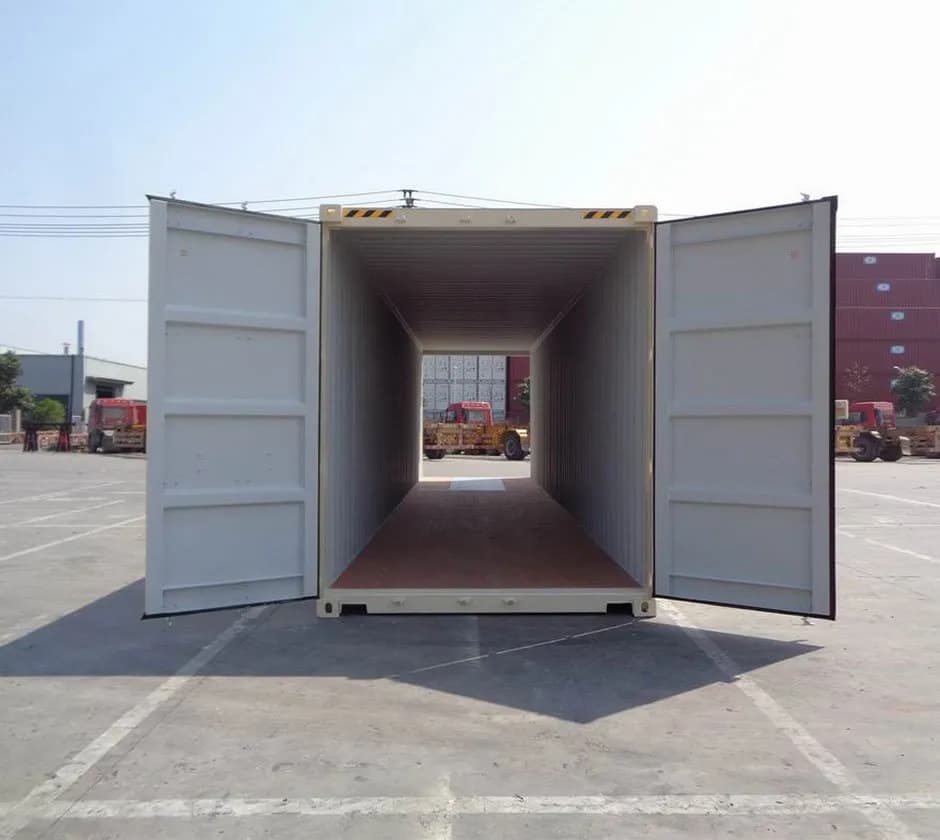
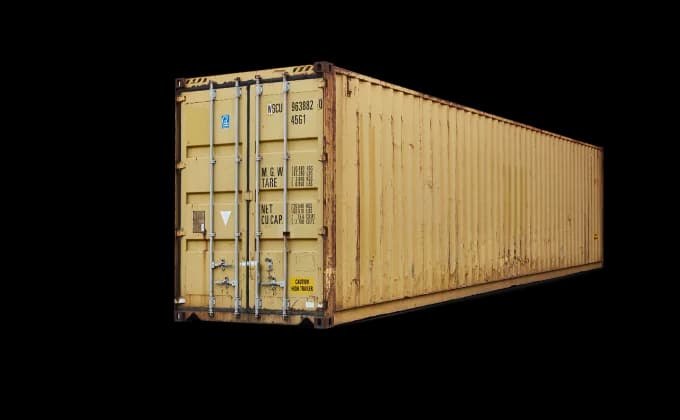
The 40ft High Cube double door container is a shipping container designed for transporting and storing bulky goods. Its special feature is its two doors at each end, making loading and unloading from both sides easy. This configuration is particularly popular in logistics environments where access must be fast and flexible.
This model also stands out for its interior height, which is greater than that of a standard container. While a standard 40ft container offers an interior height of around 2.39 m, the High Cube provides an additional height of around 30 cm, bringing the interior height to nearly 2.69 m. This extra volume is an asset for transporting tall loads or for creating optimized storage spaces.
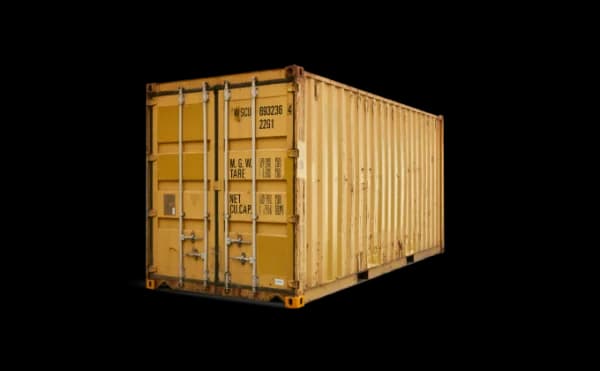
The construction is based on Corten steel, a low-alloy steel that resists atmospheric corrosion through the formation of a protective oxide layer. This property extends the container's service life, even when exposed to bad weather or sea air. The walls, roof and uprights are assembled by welding, ensuring structural rigidity in accordance with ISO 668 and ISO 1496-1 standards.
The floor is made of 19-ply marine-grade plywood, 28 mm thick. This material, often based on Keruing or Apitong wood, is known for its resistance to moisture, impact and wear. It supports rolling loads and heavy stacking, making it suitable for intensive use. The forklift pockets integrated into the chassis allow handling by forklift, while the four weatherproof vents provide minimal ventilation to limit condensation.
The doors are fitted with 36-inch (approx. 91 cm) high locking bars, offering a solid grip and secure closure. Each end has two leaves, with a secure locking system. This double door is particularly useful for storage activities where step-in access is desired without having to move goods from one end to the other.
In terms of uses, this versatile container is suitable for many applications. In sea and land transport, it allows faster loading and unloading, reducing downtime. For on-site storage, it offers a secure and modular space, whether for building materials, equipment, archives or various goods. Its double door facilitates flow management, especially when the container is placed against a wall or in a tight space.
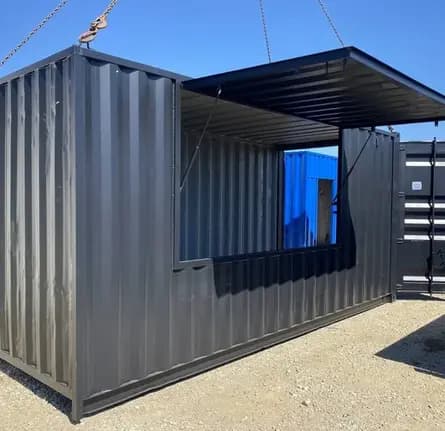
Conversion into a site office, workshop, changing room or technical room is also possible. The High Cube height makes it possible to install insulation, a suspended ceiling, air conditioning or ventilation without losing too much space. For residential or commercial use, it can be transformed into a sales outlet, a modular extension or a storage space for a business. The double door provides additional light if glazed, and convenient access for customers or staff.
Maintaining a Corten steel shipping container is relatively simple. It is advisable to regularly check the condition of the paint and touch up scratches to prevent corrosion. Door seals should be inspected and replaced if necessary to maintain water and air tightness. The marine plywood floor can be cleaned with non-abrasive products and treated against insects if the container is used for long-term storage. The vents must be kept clear to allow natural ventilation.
When buying a used container, it is important to check several points. First, the structural condition: look for perforating rust, deformation of the uprights or roof, and cracks in the welds. Next, examine the floor: soft or delaminated areas may indicate water infiltration. Check that the doors and locking bars work: they must open and close without forcing, and the seals must be supple and intact. Finally, make sure the container complies with current ISO standards, particularly regarding CSC (Convention for Safe Containers) markings and approval plates.
In France, the transport of shipping containers is subject to regulations on vehicle weights and dimensions. A 40ft High Cube container has an external length of about 12.19 m, a width of 2.44 m and a height of 2.89 m. Its tare weight is generally around 3,900 kg, and its maximum payload can reach around 26,500 kg, for a maximum gross weight (MGW) of 30,480 kg according to ISO 668. Road transport must comply with height limits (4 m in France for standard vehicles) and width limits (2.55 m), which is compatible with these dimensions. For exceptional convoys, permits may be required.
Handling requires suitable equipment: high-capacity forklifts, reach stackers or mobile cranes. The integrated forklift pockets make lifting easier, but it is essential to respect the indicated lifting points. Ground storage must be on a flat, stabilized surface, with chocks to prevent movement. If the container is stacked, the ground strength must be checked and twist-locks used to secure the assembly.
In terms of regulations, shipping containers must be CSC-certified to be used in international transport. This certification is valid for five years and must be renewed after inspection. For static use (storage, fit-out), certification is not mandatory, but it guarantees structural compliance. It is also recommended to check for the identification plate and the unique serial number.
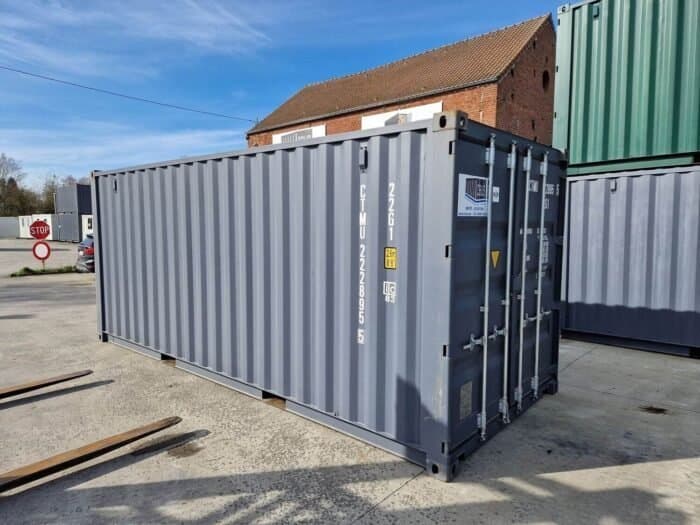
The 40ft High Cube double door container is available in several colors, including blue, green and white. This variety allows it to blend aesthetically into different environments. D.S. Globe Conteneur, based in Marseille, offers this model for sale. Whether for a logistics project, a fit-out or long-term storage, this container offers a robust and functional solution.
To summarize, this container combines the capacity of a 40ft High Cube with the convenience of a double door. Its Corten steel construction and marine plywood floor make it resistant and durable. Its applications are many, from transport to fit-out and storage. Regular maintenance and careful checking at the time of purchase help guarantee its longevity. ISO and CSC standards govern its manufacture and use, ensuring safety and interchangeability. In France, transport and handling must comply with current rules, particularly in terms of dimensions and weight. D.S. Globe Conteneur, with its base in Marseille, can assist you in choosing and acquiring this container.
To go further, let us examine in more detail the technical characteristics and practical implications of this model. The structure of a High Cube container is based on a Corten steel frame made up of corner posts, top and bottom rails, and corrugated side panels. These corrugations, generally several per panel, increase rigidity and allow the container to withstand lifting, stacking and sea transport stresses. The roof is also corrugated and welded, ensuring water tightness. The marine plywood floor is fixed to steel cross members, often 18 to 20 for a 40ft container, which distributes loads. The doors, at each end, are mounted on robust hinges and fitted with EPDM or neoprene rubber seals for tightness. The locking bars, four per leaf (two vertical, two horizontal), keep the doors closed and compress the seals.
The double door system adds further complexity: two sets of doors are required, i.e. four leaves in total, with their own locking mechanisms. This means increased maintenance, particularly for the hinges and seals. In return, access is multiplied. In a warehouse, a double door container can be placed in the middle of an aisle, serving two separate storage areas. On a construction site, it can serve as a store with one entrance for deliveries and another for outgoing items, reducing crossing flows.
The High Cube height also has constraints. The container measures 2.89 m in external height, which can be a problem in road transport if the carrying vehicle has a raised chassis. In France, the maximum authorized height for vehicles is 4 metres. A High Cube container on a standard truck chassis (platform height of about 1.10 m to 1.20 m) reaches about 4.00 m to 4.10 m, which may require a traffic permit if the height exceeds 4 m. It is therefore advisable to check the total height of the convoy before any transport. For static use, this height can also be a drawback if the container is to be installed under a canopy or in an existing building.
Weight is another factor. With a tare weight of around 3,900 kg, the 40ft High Cube container is heavier than a 20ft (around 2,200 kg) but offers a much greater volume capacity. The payload of 26,500 kg allows heavy goods to be transported, but the weight of the chassis and tractor must be taken into account to comply with the 44 tonnes maximum authorized in France for a road train. In practice, a 40ft High Cube container loaded to its maximum payload requires a suitable vehicle and may be subject to traffic restrictions.
Let us now compare this model with other types of containers. The standard 40ft container (dry) has an external height of 2.59 m and an internal height of 2.39 m. The High Cube therefore gains 30 cm in height. The standard 20ft container, shorter (6.06 m), is more maneuverable and lighter, but offers an internal volume of around 33 m³ compared with 76 m³ for the 40ft High Cube. The 20ft is often preferred for heavy, compact loads, while the 40ft High Cube is ideal for light, bulky volumes.
The open top container, without a rigid roof (replaced by a tarpaulin), allows objects to be loaded from above, but it is less watertight and more exposed to bad weather. The flat rack, without side walls, is designed for out-of-gauge loads, but it offers no protection. The reefer container, insulated and fitted with a refrigeration unit, is intended for perishable goods; it is heavier and more expensive. The High Cube double door container therefore sits as an intermediate solution: it offers full protection, a generous internal height and double access, without the constraints of a reefer or an open top.
In terms of sector-specific use cases, the 40ft High Cube double door container has its place in many fields. In manufacturing, it can serve as a buffer storage area between two production lines, with direct access from each side. In construction, it becomes a tool or materials store, with one door for deliveries and another for the teams. In events, it can be fitted out as a control room, dressing room or equipment storage space, with quick access from the stage and from outside. In agriculture, it serves as a shed for seeds, fertilizers or small equipment, protected from moisture. In retail, it can be transformed into a pop-up shop or a sales area extension, with a double entrance to improve flow.
For interior fit-out, the double door offers interesting possibilities. Two separate rooms can be created by installing a partition in the middle, each with its own entrance. This makes it possible to separate an office and a workshop, or a storage area and a work area. The High Cube height allows a light mezzanine to be installed to gain floor space, or shelving to be suspended overhead. Insulation can be achieved with mineral wool or polyurethane foam panels, covered with plywood or plasterboard. Ventilation must be carefully designed to avoid condensation, especially if the container is occupied. A single-flow or dual-flow mechanical ventilation system can be installed, with ducts running through the existing vents or through openings drilled in the walls.
Electricity must be installed in accordance with current standards (NF C 15-100 for domestic installations). It is recommended to use a qualified electrician for connection to the grid, earthing and residual current protection. Running water can be supplied by a buried or surface pipe, with a water point inside. Drainage must be provided if the container includes sanitary facilities. All these installations must comply with local planning rules, especially if the container is installed permanently. In some cases, a building permit may be required.
French regulations also govern the installation of containers for residential or business use. A container placed on the ground without foundations may be considered a light construction, but if it is fixed to the ground or exceeds a certain surface area, it may be subject to authorization. It is advisable to check with the local planning department before any installation. For temporary use (construction site), a prior declaration may be sufficient. For permanent use, a building permit is often required. Fire safety rules must also be respected, particularly regarding exits, lining materials and firefighting equipment.
Regarding preventive maintenance, a simple schedule can be followed. Every six months, inspect the door seals, hinges and locking bars. Clean and grease the mechanisms. Check the condition of the paint and touch up scratches with a suitable anti-rust paint. Once a year, check the floor: look for signs of moisture, deformation or protruding nails. If the container is exposed to sea air, washing with fresh water can help remove salt. If storing food or sensitive products, thorough cleaning and disinfection may be necessary.
Repairing a container is possible, but it must be carried out by professionals. Common damage includes dents in the walls, rust perforations, worn door seals, bent locking bars or rotten floorboards. Structural repairs must comply with ISO standards so as not to compromise strength. Replacing a side panel or a door is a delicate operation that requires a specialized workshop. It is often more economical to replace a badly damaged container than to repair it, especially if it has lost its CSC certification.
The choice between a new and a used container depends on the use and the budget. A new container, known as "one trip", has been used only once for sea transport. It is in excellent condition, without rust or dents, and retains its CSC certification for several years. Its price is higher. A used container, known as "cargo worthy" or "wind and water tight", has already sailed. It may show signs of wear, but remains watertight and structurally sound. It is cheaper. For static use (storage, fit-out), a used container may be sufficient, provided its condition is checked. For transport use, a CSC-certified container is mandatory.
The 40ft High Cube double door container is often offered in a "one trip" version or a refurbished version. In both cases, it is advisable to ask for recent photos, an inspection report and, if possible, to visit the container before purchase. D.S. Globe Conteneur, in Marseille, can provide this information and assist the buyer in their choice. Delivery can be provided by container truck, with unloading by crane or hydraulic arm. It is important to check access at the delivery site: street width, presence of overhead cables, ground slope. A 40ft container requires sufficient maneuvering space for the truck and crane.
In conclusion, the 40ft High Cube double door container is a versatile, robust and durable piece of equipment. Its double door facilitates flows, its High Cube height offers optimized internal volume, and its Corten steel and marine plywood construction guarantees a long service life. It is aimed at a wide variety of sectors, from transport to fit-out, including storage and events. Its regular maintenance and compliance with standards ensure safety and performance. In France, transport and installation must take current regulations into account. D.S. Globe Conteneur, with its experience in Marseille, offers this model for sale and can advise customers on choice, delivery and fit-out.