Description
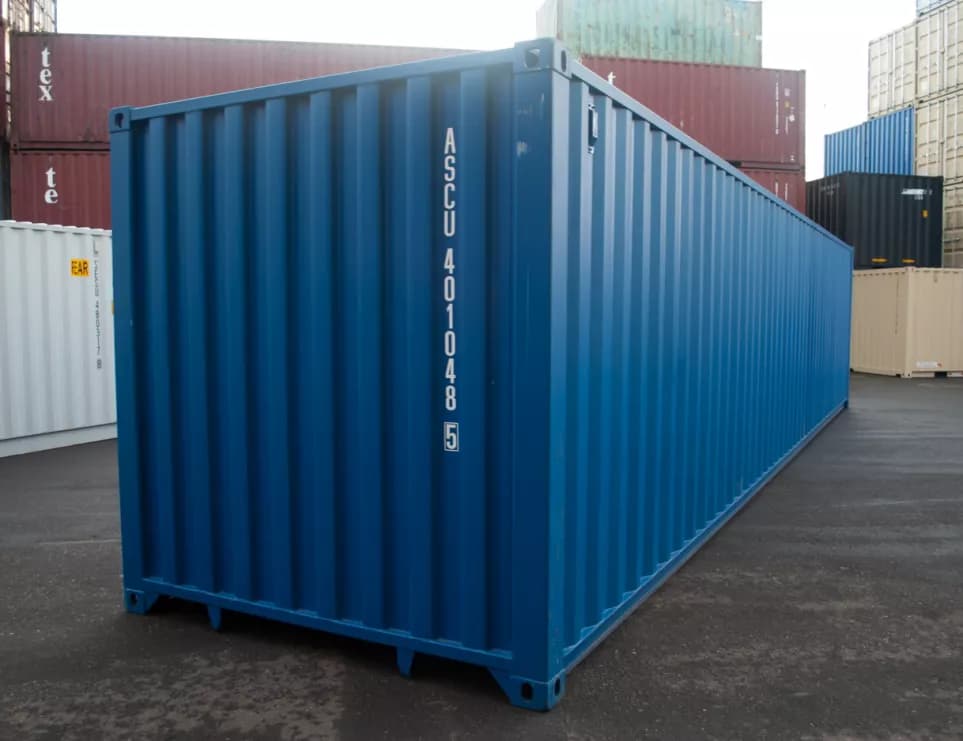
The used 40-foot shipping container is a proven storage and transport solution, offering excellent value for money. This type of container, also known as a dry container, is designed to withstand the harshest conditions while effectively protecting goods. With its generous internal dimensions, it offers a large loading volume, making it a wise choice for professionals and individuals alike.
Technical specifications and dimensions. A 40-foot container complies with ISO 668 and ISO 1496 standards, ensuring universal compatibility for intermodal transport. Its standard external dimensions are approximately 12.19 meters long, 2.44 meters wide and 2.59 meters high. Typical internal dimensions are approximately 12.03 meters long, 2.35 meters wide and 2.39 meters high, offering an internal volume of approximately 67.5 cubic meters. The tare weight is approximately 3,470 kilograms, and the maximum payload can reach approximately 26,500 kilograms, depending on exact specifications. The structure is made of Corten steel, a low-alloy steel that offers excellent resistance to atmospheric corrosion thanks to its self-forming protective layer. The floor is generally made of 28 mm marine plywood, treated to resist moisture and heavy loads. The side walls and roof are made of corrugated sheet, providing rigidity and resistance to deformation. The double rear doors are equipped with locking bars and rubber seals, ensuring secure closure and protection against bad weather.
Common uses and applications. This used container is versatile and can be used in many fields. In the logistics sector, it is used for transporting goods by sea, rail or road. On construction sites, it is often used as a site office, changing room or storage room for tools and materials. In agriculture, it allows crops, seeds or farm equipment to be stored away from moisture and rodents. For individuals, it is a durable storage solution for bulky items, vehicles or leisure equipment. Finally, it can be converted into living space or commercial premises after fitting out, an increasingly common practice in modular housing or tiny houses. Its modularity and robustness make it a durable investment.
Condition and durability. As a used container, it shows normal signs of wear such as scratches, minor dents or superficial rust, without affecting its structural integrity or watertightness. Each unit is visually inspected before sale to ensure it is suitable for its intended use. It is important to note that condition may vary from one container to another, and it is recommended to carry out a thorough inspection or request detailed photos before purchase. The durability of Corten steel and the quality of manufacture allow a long service life, even outdoors, provided minimal maintenance.
Maintenance and upkeep. To extend the life of your container, regular maintenance is advisable. It is recommended to clean the exterior surface with clean water and mild soap to remove dirt and debris. Periodically check the door seals and replace them if worn or damaged. Inspect the locks and hinges, and lubricate them if necessary. If deep scratches expose bare steel, apply anti-rust paint to prevent corrosion. Make sure the container is placed on a flat, stable surface, such as wooden beams or concrete blocks, to avoid floor deformation and promote air circulation under the structure. If the container is used for long-term storage, it is advisable to regularly check for water infiltration and ventilate the interior to avoid condensation.
Points to watch when buying. Before buying a used container, several points deserve your attention. Check the general condition of the structure: look for signs of perforating rust, major deformations or unprofessional repairs. Check watertightness by inspecting the door seals and verifying there are no holes or cracks. Make sure the doors open and close properly and that the locks work. Ask for the ISO certificate or inspection report if available (although for used containers, this may not be provided). Also check the origin of the container: some have transported chemicals or foodstuffs, which can leave persistent odors. A container that has been used to transport dry goods is generally more suitable for versatile storage use. Finally, compare prices and make sure the container meets your needs in terms of dimensions and features.
Regulations and transport in France. In France, the use of a shipping container for storage or housing is subject to certain regulations. For temporary use on a construction site, a prior declaration may be required from the town hall. For permanent installation, a building permit may be required if the container is considered a construction. It is advisable to check with local authorities. Regarding transport, a 40-foot container can be transported by truck, but it requires a suitable vehicle and compliance with size and weight rules. The total weight (container + load) must not exceed the legal limits authorized on French roads, generally 44 tonnes for a road train. Exceptional transport may be required if dimensions exceed standards. It is recommended to use a specialized carrier for delivery.
Preparing the container before use. Once the container is delivered, a few simple steps will make it immediately operational. Start with a thorough cleaning of the interior: sweep the floor, remove debris and dust, and wash if necessary with a mild detergent. Let it dry by airing with the doors open. Check the condition of the marine plywood floor: if it has soft or rotten areas, consider partial or total replacement. Inspect the interior walls for any signs of rust, and treat them with an anti-rust product before painting. If you plan to store moisture-sensitive products, adding a moisture absorber or a passive ventilation system may be wise. For secure use, consider installing a sturdy padlock on the door locks, or even an additional locking system. Finally, if the container is to be placed on soft ground, provide stable foundations (concrete blocks, beams) to prevent it from sinking and deforming.
Comparison with other container sizes and types. The 40-foot container stands out for its large capacity, but it is not always the most suitable. The 20-foot container (6.06 m x 2.44 m x 2.59 m) offers a volume of approximately 33 m³ and a similar payload; it is more maneuverable and suitable for small spaces or heavy, compact loads. The 40-foot high cube (2.89 m high) offers an additional volume of approximately 76 m³, ideal for bulky but light goods. The open top container (open roof) is designed to load oversized objects from above, while the flat rack (without side walls) is used for very wide or heavy loads. The reefer container (refrigerated) is equipped with a cooling unit for transporting perishable goods. Finally, the tank container is intended for liquids. The choice therefore depends on the nature of the goods, transport constraints and final use. For versatile storage, the 40-foot dry remains a very widespread standard.
Detailed sector-specific use cases. In the construction sector, the 40-foot container is often fitted out as a site office with partitions, electricity and air conditioning; it can also serve as a store for tools and materials, with shelves and a storage system. In the events sector, it is used as a technical room, changing room or mobile sales point. In agriculture, it allows cereals, fodder or fertilizers to be stored away from moisture; some farmers convert it into a mobile chicken coop or packing room. For individuals, it becomes a garage for a collector's car, a DIY workshop or a storage space for furniture and memories. In the humanitarian field, it serves as a logistics warehouse for NGOs. Finally, in retail, it can be fitted out as a pop-up shop or drive-through. These examples illustrate the flexibility of use of the 40-foot container.
Security and protection of goods. The Corten steel structure and lockable doors provide a first barrier against theft and intrusion. To enhance security, it is possible to add a high-security padlock, a bar locking system or an alarm device. The absence of windows and the solidity of the walls make break-in difficult without heavy tools. However, an isolated container can attract attention; it is advisable to install it in a monitored or fenced area. For high-value goods, specific insurance can be taken out. If storing sensitive products, check that the container is properly watertight and that ventilation is sufficient to avoid condensation, which could damage the goods.
Environmental impact and circular economy. Choosing a used container is part of a circular economy approach: rather than manufacturing a new one, an existing product is reused, which reduces raw material consumption and carbon footprint. Corten steel is fully recyclable at end of life. In addition, converting a container into living space or commercial premises is often less energy-intensive than traditional construction. By choosing used, you contribute to preserving resources and reducing waste. It is therefore both an economical and ecological solution.
Transport and handling: practical aspects. Moving a 40-foot container requires suitable equipment due to its weight and dimensions. On a construction site or in a yard, a high-capacity forklift (at least 8 to 10 tonnes) equipped with long forks or a spreader can handle it. For road transport, a container truck with a flatbed and twist-locks is essential. Handling must be carried out by trained professionals to avoid any accident. It is also possible to rent a mobile crane for precise lifting. During delivery, make sure access to the site is clear (sufficient width, no overhead cables) and that the ground can support the weight of the whole. Allow maneuvering space for the truck and lifting equipment. If the container is to be placed on sloping ground, wedges are needed to stabilize it.
Insulation and interior fitting. For prolonged use, especially as an office or living space, thermal insulation is a key point. Steel being an excellent thermal conductor, an uninsulated container can become very hot in summer and cold in winter. To improve comfort, interior insulation can be added: rock wool panels, polyurethane foam or wood fiber, covered with a facing (plywood, paneling, plasterboard). It is essential to provide a vapor barrier to avoid condensation between the insulation and the metal wall. Electricity can be installed by recessing conduits in the insulation, with a suitable panel and sockets. For plumbing, if you create a shower room, you need to drill openings for drains and provide a water supply. Ventilation is also important: a single-flow VMC or ventilation grilles allow air renewal and prevent humidity. Finally, the floor covering can be kept (wooden floor) or covered with laminate or tiles depending on use.
Accessories and available options. To adapt the container to your needs, various accessories can be added. Metal racks and shelves help optimize vertical storage. Additional locking systems (padlocks, bars) enhance security. Ventilation or air conditioning kits can be installed to regulate temperature. Access ramps or loading docks facilitate operations. Specific paints (anti-rust, fire-retardant) can be applied. Finally, solar panels can be fixed on the roof to power lighting or equipment. These options are generally available from specialized suppliers and can be installed by yourself or by a professional.
Conclusion. The used 40-foot container is an economical and ecological solution, as it gives a second life to a durable industrial product. Whether for storage, transport or a conversion project, it offers great flexibility of use. With proper maintenance, it can serve for many years. Do not hesitate to contact us for more information on availability and delivery options.