Description
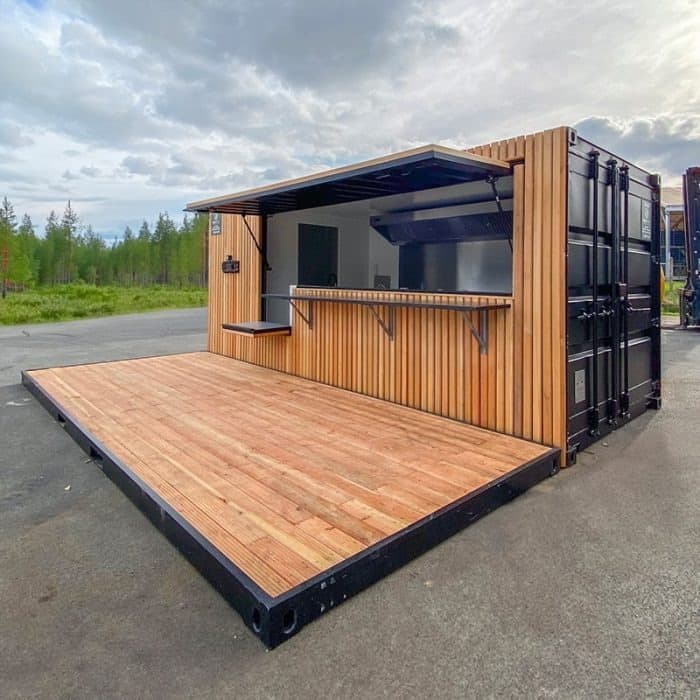
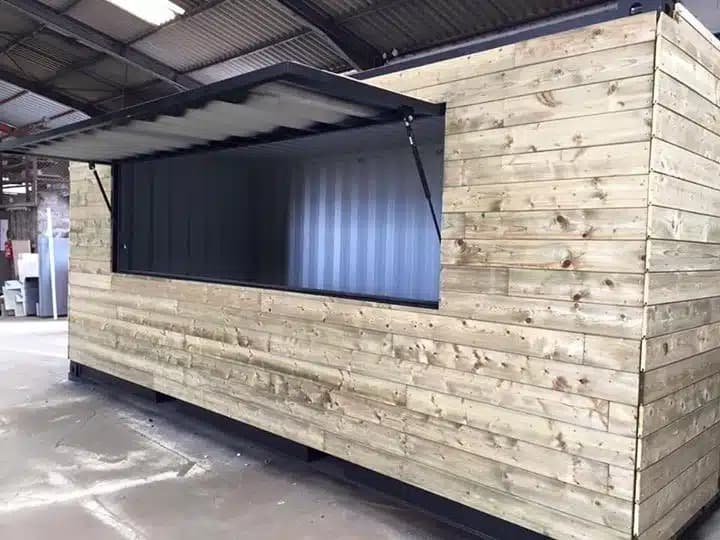
The container bar is a converted shipping container designed to be used as a bar, refreshment stand, snack bar or mobile sales point. It is aimed both at professionals in events, catering or tourism and at individuals wanting an original and functional reception space. This type of container is delivered ready to use: simply connect it to the mains to start using it. It can be installed on private land, an event site, a campsite, a construction site or a public space, subject to local planning permission.
Structure and materials. The container bar is built from a standard Corten steel shipping container, a low-alloy steel that resists atmospheric corrosion thanks to the formation of a protective oxide layer on the surface. This characteristic is essential for equipment intended to remain outdoors, exposed to rain, humidity and sea spray. The structure retains the mechanical characteristics of an ISO container: steel profile frame, corrugated walls, 28 mm marine plywood floor, standardised lifting corners allowing handling by spreader or forklift. The external dimensions and fixing points comply with ISO 668 and ISO 1496 standards, guaranteeing compatibility with standard lifting and transport equipment. ISO certification confirms this compliance and simplifies procedures during multimodal transport or installation requiring technical documentation.
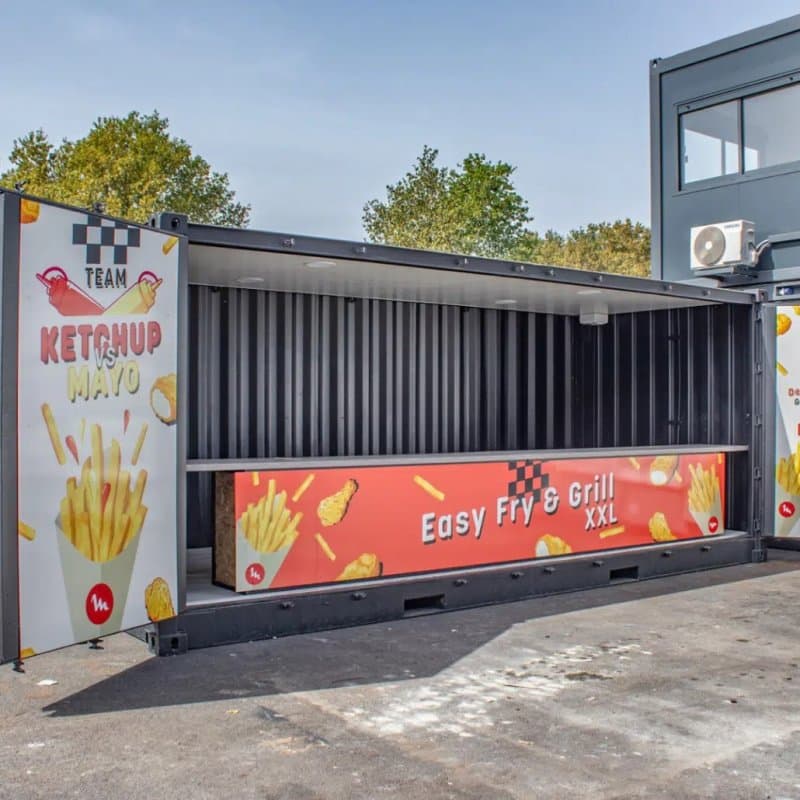
Interior and exterior fit-out. The bar-specific fit-out includes several elements designed for public reception and service ergonomics. A 4-metre awning, mounted on gas struts, protects the counter and customers from bad weather. It unfolds and folds easily, allowing the covered area to be adapted to weather conditions or available space. Access is via an entrance door and a double door, offering a wide opening for service and circulation. The counter is designed with accessible access, to comply with accessibility requirements for establishments receiving the public. The floor is anti-slip chequered aluminium, with a floor drain for liquid evacuation, making cleaning easier and limiting the risk of falls. The ceiling is insulated and equipped with six LED spotlights, providing sufficient and energy-efficient lighting. The electrical pack includes a connection socket, an electrical panel and four 220V sockets, allowing the usual bar equipment to be powered: coffee machine, refrigerator, draught beer tap, cash register, additional lighting. It is important to check the available power at the installation site and to entrust the connection to a qualified electrician, in accordance with NF C 15-100 for low-voltage installations.
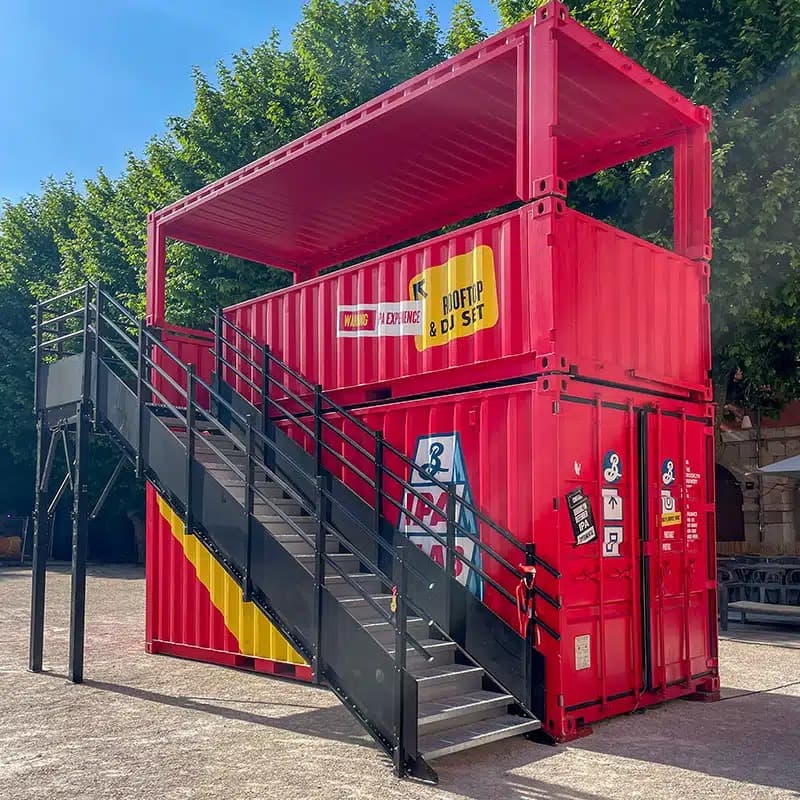
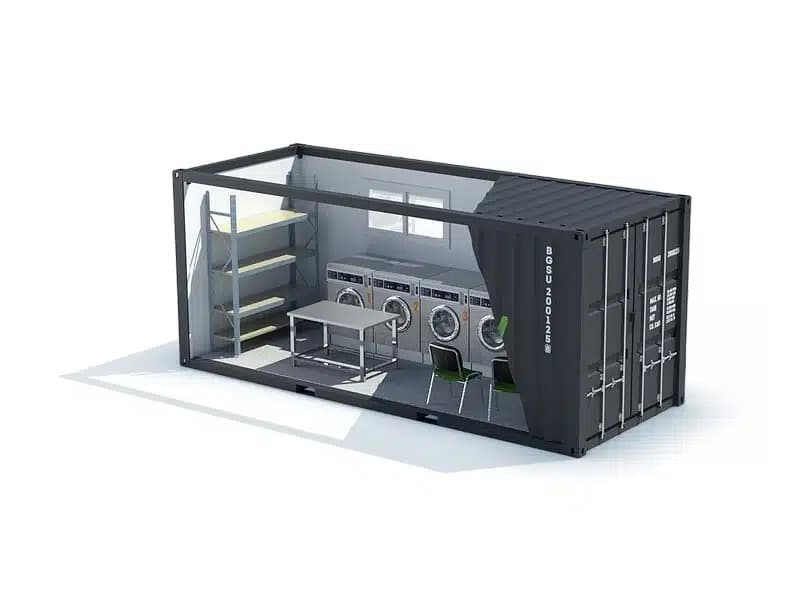
Concrete uses. This container bar can be used in many situations. At private or public events, it provides a quick-to-install and easy-to-move sales or service point. For a food truck or snack bar, it offers a covered and secure workspace, with an accessible counter and an awning for customers. It can also be used as a ticket office, guard post, site reception, changing room or storage room for event equipment. As part of a modular housing or site office project, it can be fitted out differently, but its current configuration is optimised for catering and reception. Its mobility is an asset: it can be moved from one site to another using a crane truck or container carrier, making it easy to rent or resell.
Points to check when buying. Before purchasing a container bar, several checks are recommended. First, ensure the condition of the structure: no perforating rust, intact walls, proper operation of doors and locks. For a new container, these points are normally guaranteed, but a visual check remains prudent. Then check that the electrical installation complies with French standards, in particular the presence of an electrical panel with residual current devices and earthing. Accessibility must be effective: sufficient passage width, suitable threshold, counter at the right height. The awning must be properly secured and the gas struts in good condition. Finally, it is advisable to find out about the required planning permissions: depending on the municipality and the duration of installation, a building permit or prior declaration may be required. For temporary installation, a public domain occupation permit may be required if the container is placed on the public highway.
Maintenance. Maintaining a Corten steel container bar is relatively simple. Regular cleaning with clear water and mild soap removes dirt and preserves the protective layer. Abrasive or acidic products that could damage the paint or steel should be avoided. Moving parts (hinges, struts, locks) should be lubricated periodically. The marine plywood floor and chequered aluminium floor can be cleaned with a broom or water jet, taking care not to let water stagnate. LED spotlights and the electrical panel should be checked by a professional at least once a year. During prolonged storage, it is recommended to close the awning and seal the openings to limit humidity.
Transport regulations in France. Transporting a shipping container by road is subject to regulations on heavy goods vehicles and abnormal loads. A standard 20-foot container weighs around 2.2 tonnes empty and can reach 24 tonnes at maximum load (according to ISO). Transport must be carried out by a suitable vehicle, with compliant lashing. For a fitted-out container, the empty weight is higher than that of a standard dry container due to the interior equipment. It is therefore important to check the total weight and ensure that the vehicle and permits match. In France, abnormal transport is governed by Decree No. 2011-368 and requires prior authorisation for convoys exceeding regulatory limits. For a container of standard dimensions, transport remains conventional, but it is advisable to use a specialist carrier.
Rental or purchase. This container bar is offered for sale at €5,000 excluding VAT. It may also be available for rent depending on needs. Rental is an attractive option for a one-off event or a summer season, while purchase is justified for regular use or a permanent activity. In both cases, it is advisable to check insurance, transport and installation conditions. Second-hand models may be available at the end of the season, reducing the acquisition cost, but the condition of the fit-out and equipment should then be carefully examined.
Customisation. Depending on needs, the container bar can be customised: choice of colours, addition of signage, modification of the counter, installation of additional equipment (deep fryer, griddle, refrigerator, etc.). Any modification must comply with fire safety and food hygiene rules if the container is used for catering. It is recommended to use professionals for electrical and plumbing installations. The Corten steel structure can be painted to improve aesthetics or integration into the environment.
Sector-specific use cases. In the events sector, the container bar is at home at festivals, trade fairs, weddings, corporate seminars and Christmas markets. Its modularity allows it to be positioned as close as possible to the public and removed quickly after the event. For local authorities, it can serve as a seasonal kiosk on beaches, leisure parks or municipal parks, with the advantage of being dismantlable and storable out of season. In tourism, campsites, holiday villages and wine estates can use it as a tasting or reception point. Construction companies often assign it to guard post, changing room or break room functions for teams. Finally, individuals can install it in their garden to create a reception bar, a pool house or a convivial space independent of the house. Each use involves specific constraints: for catering, a water point, wastewater drainage and strict compliance with hygiene standards (Regulation EC No. 852/2004) must be provided. For office or reception use, thermal insulation and heating may be necessary. For seasonal use, protection against humidity and UV is recommended.
Comparison with other container sizes and types. The container bar is generally fitted out in a 20-foot container (about 6 m long), which offers a good compromise between usable area and ease of transport. A 10-foot container (about 3 m) is more compact and easier to move, but offers less space for the counter and storage. A 40-foot container (about 12 m) allows a more spacious bar to be fitted out, with several service areas, but it is heavier and requires a larger site. High cube (HC) containers offer additional interior height of about 30 cm, which can improve comfort and allow overhead storage. Reefer containers are insulated and have a refrigeration unit, but fitting them out as a bar is more complex and more expensive. Open top and flat rack containers are not suitable for a closed fit-out. Finally, standard dry containers remain the most common base for bar-type fit-outs, as they are widely available and easy to modify. The choice will depend on available space, budget, transport constraints and desired features.
Preventive maintenance and risk management. To guarantee the longevity of the container bar, preventive maintenance is essential. It is advisable to inspect the structure at least twice a year, especially after the winter season. Points to check include: the condition of the paint or anti-corrosion protection, the presence of rust on walls and welds, the waterproofing of the roof and openings, the proper operation of doors and locks, the condition of seals, the fixing of the awning and struts, the tightness of electrical connections, and the cleanliness of LED spotlights. If damage occurs, act quickly to prevent it from worsening. Surface rust can be treated with a rust converter and suitable paint. Worn seals must be replaced. Gas struts must be replaced if they lose pressure. Electrical installations must be checked by a qualified professional. Finally, it is recommended to keep a maintenance log to track interventions and anticipate replacements.
Safety and compliance. Using a container bar as a public-access building requires compliance with fire safety rules. Depending on the category and permitted capacity, requirements may concern exits, fire extinguishers, emergency lighting, smoke extraction and lining materials. It is essential to contact the municipality's prevention service or the inspection body to find out the applicable obligations. For temporary installation, an opinion may be requested from the safety commission. Regarding food hygiene, if the container is used for preparing or selling food, it must comply with European hygiene rules and have a food safety management plan. Access must be maintained at all times, without obstacles. Finally, if the container is connected to the mains, the installation must comply with NF C 15-100 and be certified if necessary.
Conclusion. The container bar is a modular, mobile and functional solution for creating a bar, snack or sales point. Its Corten steel construction, complete fit-out and ISO compliance make it durable and adaptable equipment. Whether for private or professional use, it offers an economical alternative to traditional constructions, with the advantage of being movable and reusable. Before purchase, it is essential to check the technical, regulatory and logistical aspects to ensure a successful and compliant installation. Regular maintenance and compliance with safety rules allow this equipment to be enjoyed for many years.