Description
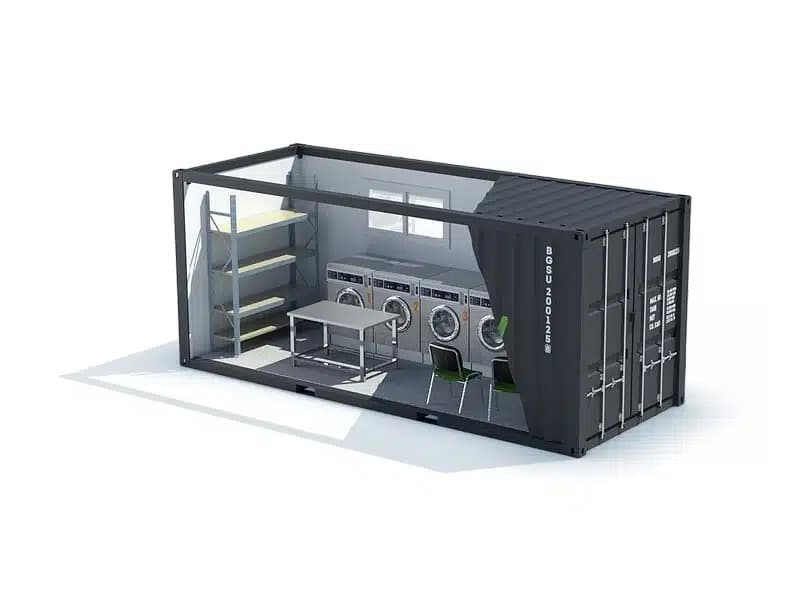
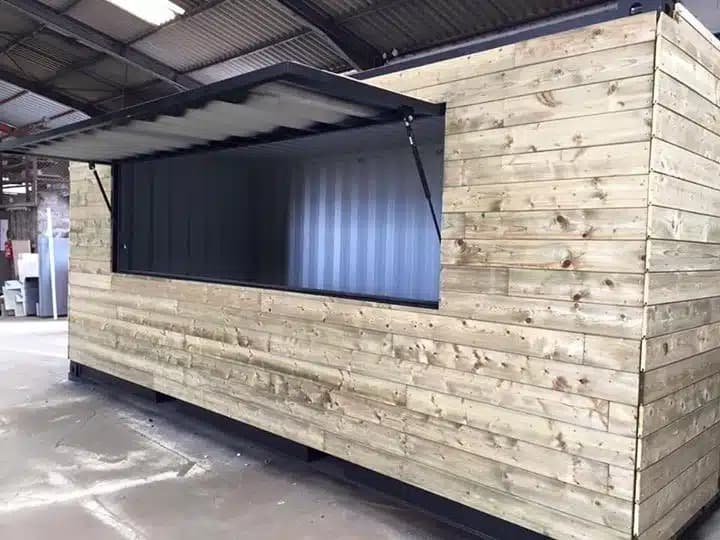
The laundry container is a mobile unit fitted out to provide a professional laundry service wherever needed, without heavy construction or complex works. It is based on a standard Corten steel shipping container, modified and equipped to accommodate washing machines, dryers, an ironing table and storage shelves. This mobile base allows a functional laundry to be installed quickly at a campsite, construction site, event venue or any temporary area lacking dedicated infrastructure.
The shipping container is a rectangular steel box, originally designed for intermodal transport. Its most common dimensions are 20 feet (approximately 6.06 m long, 2.44 m wide and 2.59 m high) and 40 feet (approximately 12.19 m long, 2.44 m wide and 2.59 m high). There are also high cube versions, about 30 cm taller, which offer additional interior volume. The laundry container can be fitted out from one of these bases, depending on the surface area and the number of equipment items desired. The structure is made of Corten steel, a low-alloy steel that resists atmospheric corrosion thanks to a protective oxide layer that forms on the surface. The floor is generally made of 28 mm marine plywood, a moisture-resistant wood panel, often treated to withstand rolling loads and intensive use. The side walls and roof are made of corrugated sheet metal, and the double rear doors are equipped with container locks, ensuring secure closure and compatibility with port handling.
The interior fit-out of a laundry container involves several technical adaptations. Thermal and acoustic insulation is often added to make the space usable in all seasons and to limit the spread of machine noise. An easy-to-clean wall covering, such as laminated panels or lacquered sheet metal, is frequently installed to meet the hygiene requirements of a laundry. The electrical system must be sized to power several appliances simultaneously: washing machines, dryers, lighting, sockets, and possibly a water heater. An electrical installation compliant with current standards, with a distribution board, residual current circuit breakers and grounding, is essential. Plumbing includes the water supply, drainage, and sometimes a system for recovering or treating wastewater. Ventilation is essential to remove the humidity produced by the machines and prevent condensation, which could degrade the walls and promote corrosion. A mechanical extraction system or ventilation grilles are commonly integrated.
Typical equipment in a laundry container includes professional or semi-professional washing machines, condensing or vented dryers, an ironing table with steam generator, and storage shelves for detergents and linen. The number of machines depends on the desired production capacity and available space. In a 20-foot container, two to four washing machines and one or two dryers can generally be installed, along with an ironing and storage area. A 40-foot container allows for more equipment and distinct areas for washing, drying and folding. All appliances are secured to the floor or walls to withstand vibrations and allow the container to be moved without disassembly. This rigid fastening is a key point for ensuring safety during transport and use.
One of the major advantages of this type of container is that it does not require a building permit in many cases. In France, the container is often considered a light construction or temporary installation, which simplifies administrative procedures. However, it is advisable to check local planning rules, as they can vary depending on the municipality and the duration of installation. For a permanent installation, a prior declaration or building permit may be required. For temporary use, particularly on a construction site or at an event, the constraints are generally relaxed. It is therefore advisable to inquire with the planning department of the relevant town hall before any installation.
CSC (Convention for Safe Containers) certification is an important element. It certifies that the container meets safety standards for sea and land transport. A container fitted out as a laundry can retain this certification if it has not undergone major structural modifications and if the equipment is properly secured. This allows it to be transported by truck or ship without additional formalities related to container safety. ISO 668 defines the dimensions and masses of series 1 containers, while ISO 1496-1 specifies design and testing requirements for dry freight containers. These standards guarantee interchangeability and compatibility with existing transport infrastructure.
The use of a laundry container is particularly relevant in several contexts. At a campsite, it provides a laundry service for campers without building a permanent structure. On a construction site, it gives workers access to washing machines and dryers, improving their working conditions and reducing travel. At sporting or cultural events, it can be installed temporarily to meet the needs of participants and staff. In isolated areas or base camps, it is a self-contained and mobile solution. Finally, for equipment rental companies, it represents a high-value rental unit.
Maintaining a laundry container requires regular attention. The Corten steel structure should be inspected periodically for any signs of rust or paint degradation. Cleaning and touching up the paint on exposed areas helps extend the container's lifespan. Door and opening seals should be checked and replaced if necessary to prevent water infiltration. Inside, machines should be maintained according to manufacturers' recommendations: descaling, filter cleaning, checking hoses and connections. Ventilation must be kept in good working order to prevent moisture buildup. Water drainage must be checked to prevent leaks and blockages. A preventive maintenance plan is recommended to ensure the reliability and safety of the installation.
When purchasing a laundry container, several points deserve attention. It is important to check the structural condition of the original container: no major perforations, no major deformations, and a valid CSC plate. The interior fit-out must comply with current electrical and plumbing standards. The quality of insulation and covering materials affects comfort and durability. The electrical installation must be sized to match the power of the machines and future needs. Compliance of equipment with safety standards (CE marking for electrical appliances) is essential. Finally, it is advisable to request a detailed layout plan and a precise quote including delivery and commissioning.
Transporting a laundry container in France is subject to abnormal load regulations if its dimensions or weight exceed authorized limits. A 20-foot container is about 6.06 m long, which remains within standard limits for a container truck. A 40-foot container may require special authorization depending on the route. The total laden weight depends on the installed equipment and must be taken into account when choosing the vehicle and permits. It is recommended to use a specialized carrier for delivery and on-site installation, especially if the ground is sloping or difficult to access.
In terms of regulations, installing a laundry container must comply with local planning rules, electrical standards (NF C 15-100 for low-voltage installations), hygiene and safety rules applicable to public-access buildings (ERP) if the public has access, and wastewater management rules. A connection to the drinking water and sewerage networks is often necessary, or a self-contained solution (tank, septic tank) must be put in place. It is advisable to consult local authorities and an engineering firm to validate the project's compliance.
To expand on routine maintenance, several levels of intervention should be distinguished. Daily, the user should check that the machines are working properly, clean the lint filters of the dryers, wipe surfaces and check for visible leaks. Weekly, a more thorough cleaning of floors, walls and equipment is recommended, along with checking detergent and consumable levels. Monthly, it is useful to inspect machine door seals, check supply and drain hoses, and test electrical safety devices. Quarterly, a professional can carry out in-depth machine maintenance (descaling, greasing, belt checks) and an inspection of the container structure. Annually, a full check of the electrical and plumbing installation is recommended, along with an examination of the paint and welds. This preventive schedule helps avoid costly breakdowns and maintain continuous service.
Transport regulations deserve detail. In France, road transport of containers is governed by the Highway Code and decrees relating to abnormal loads. A 20-foot container loaded on a container truck generally complies with size limits (width 2.55 m, height 4 m, length 16.50 m for a road train). A 40-foot container may exceed the standard length of some vehicles and require an abnormal load permit, especially if the convoy exceeds 16.50 m or if the total laden weight exceeds 44 tonnes. Permits are issued by the prefecture and may impose a specific route, escorts or time restrictions. For sea transport, the container must be stackable and comply with ISO standards, which is the case if it retains its original structure. Rail transport is also possible via container terminals, which can reduce the carbon footprint for long distances. It is essential to check the CSC plate, which must be valid and up to date, as it determines acceptance of the container by shipping lines and terminals.
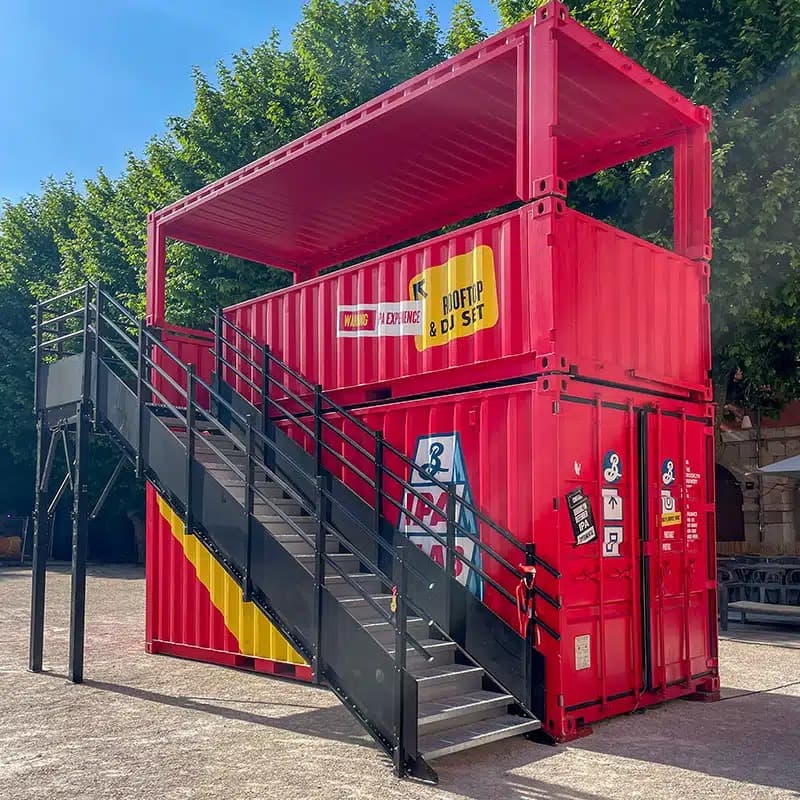
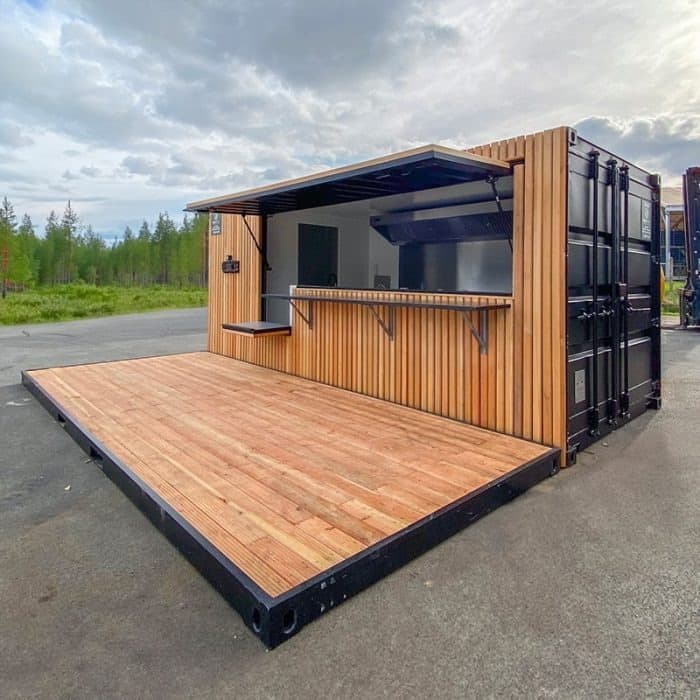
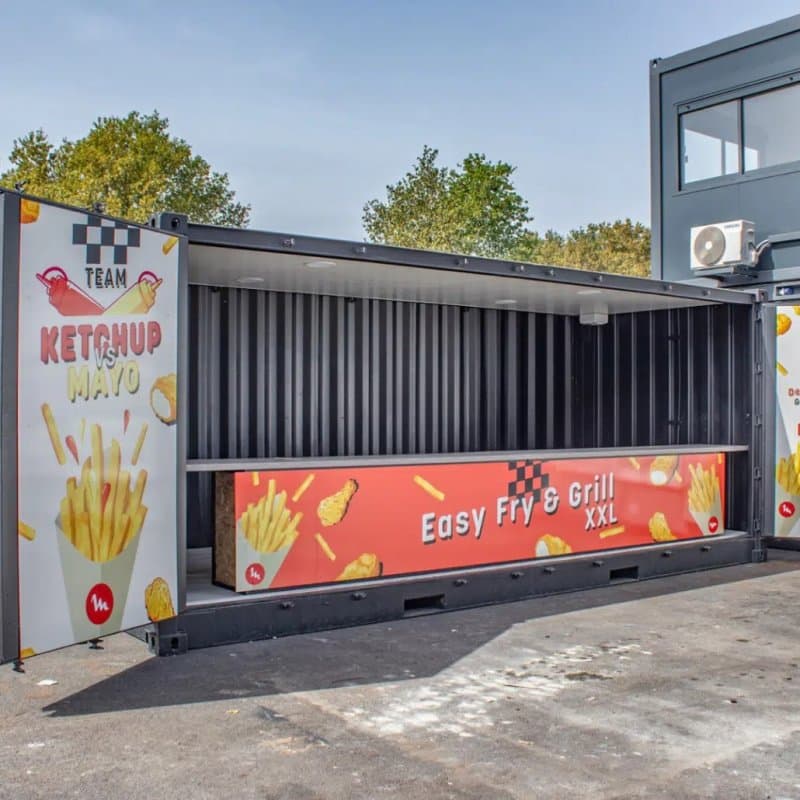
Sector-specific use cases are varied. In tourism, campsites, holiday villages and unusual accommodations use laundry containers to offer a laundry service to holidaymakers, without building a dedicated facility. In construction, site base camps often include a laundry for teams, improving hygiene and worker comfort. In events, festivals, sports competitions and outdoor trade shows install mobile units to meet a temporary influx of visitors. In the humanitarian sector, organizations deploy laundry containers in refugee camps or disaster areas, where infrastructure is lacking. In industry, isolated sites (mines, quarries, logistics platforms) can equip their teams with a self-contained laundry. Finally, equipment rental companies offer these containers by the day, week or month, allowing their customers to test the solution before investing.
Comparing container sizes and types helps choose the right base. The 20-foot dry container is the most common and easiest to transport; it offers about 14 m² of floor space and a volume of about 33 m³. The 40-foot dry container doubles the surface area (about 28 m²) and volume (about 67 m³), but it is heavier and less maneuverable on small sites. The 40-foot high cube container adds about 30 cm in height, improving interior comfort and allowing equipment to be installed at height, such as stacked dryers or ventilation ducts. The open top container has a removable roof, useful for loading tall machines, but it is less watertight and less suitable for permanent use. The flat rack container has no side walls or roof, making it unsuitable for an enclosed laundry. The reefer container is equipped with a refrigeration unit and reinforced insulation; it can be repurposed for laundry use, but its cost and complexity are higher. Finally, the folding container can be folded for empty transport, but it is rarely used for interior fit-outs. For a laundry, the choice generally falls on a standard dry or high cube, new or in good condition, with suitable insulation.
The choice between a new and a used container deserves consideration. A new container, often of the "one-trip" type (used only once for transport), has a sound structure, intact paint and optimal watertightness. It is more expensive to purchase, but it reduces the risk of corrosion and repairs. A used container, less expensive, can be suitable if its condition is verified: no holes, no perforating rust, no deformations, and a valid CSC plate. In both cases, the interior fit-out is custom-made, with materials suited to moisture and detergents. It is advisable to request an inspection report or an on-site visit before purchase.
The environmental impact of a laundry container can be optimized. Using high energy-class appliances reduces electricity and water consumption. Installing low-flow showerheads and water-efficient machines limits consumption. Heat recovery from grey water or dryers can reduce energy needs. Effective insulation reduces heat loss. Finally, reusing an existing shipping container is part of a circular economy approach, as it avoids the production of a new building and repurposes transport equipment at the end of its life. These choices can also reduce operating costs over the long term.
User safety is paramount. Floors must be non-slip, especially in wet areas. Machines must be equipped with safety devices (door lock, emergency stop). The electrical installation must include residual current protection suitable for wet rooms. Ventilation must prevent the accumulation of combustion gases if a gas water heater is used. A fire extinguisher suitable for electrical fires must be present. Exits must be clear and properly marked. If the laundry container receives the public, it may be subject to ERP rules, which implies additional requirements for accessibility, fire safety and hygiene. It is recommended to consult a control office before opening to the public.
Finally, the total cost of a laundry container depends on several factors: the price of the base container, the cost of the fit-out (insulation, electricity, plumbing, coverings), the price of equipment (washing machines, dryers, ironing table, storage), and transport and commissioning costs. A detailed quote allows offers to be compared and expenses anticipated. It is also possible to consider rental or leasing to spread the investment. In all cases, a needs analysis (number of users, frequency of use, site constraints) helps correctly size the installation and avoid oversizing or undersizing.
In summary, the laundry container is a modular, mobile and functional solution for providing a professional laundry service in temporary or isolated environments. Its design based on a standard shipping container guarantees robustness, transportability and compatibility with logistics infrastructure. Its custom interior fit-out allows the integration of the necessary equipment for washing, drying and ironing. Its installation does not systematically require a building permit, which facilitates rapid deployment. With proper maintenance and attention to standards, it offers a durable and scalable solution for many uses.