Description
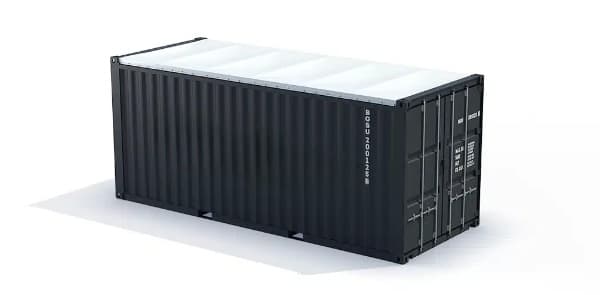
The 20-foot dry open top shipping container is a transport and storage solution specifically designed for goods that cannot be loaded through standard rear doors. Whether you are dealing with construction machinery, tall industrial parts, steel framework components or bulky equipment, this type of container offers a practical and robust alternative. Unlike a standard dry container, its roof is removable or openable, allowing vertical loading with a crane or forklift. This feature makes it indispensable in many sectors: construction, industry, events, heavy logistics and modular buildings.
The 20-foot open top container is built on a corten steel structure, an alloy known for its resistance to atmospheric corrosion. Corten steel naturally develops a protective surface layer that slows oxidation, extending the container's lifespan even when exposed to the weather. The side walls and uprights are made of corrugated steel, providing significant rigidity while remaining relatively lightweight. The floor consists of 28 mm thick marine plywood, a dense material treated to withstand moisture and heavy loads. This floor is fixed to metal cross members that distribute the weight across the entire surface. The double rear doors are fitted with standard container locks (four locking bars per leaf) and rubber seals, ensuring secure closure and good protection against water and dust ingress.
The open roof is the distinctive feature of this model. It can be equipped with either a reinforced PVC tarp, stretched over metal arches, or a rigid steel cap. The tarp is lightweight, easy to handle and provides good sealing once properly secured. The steel cap, being heavier, offers superior protection against impacts and allows walking on the roof under certain conditions. The choice between tarp and cap depends on the intended use: for frequent transport with crane loading, the tarp is often preferred for its speed of installation; for long-term storage or exposed use, the steel cap may be more suitable. In both cases, the roof opens along the entire length of the container, providing optimal vertical loading space.
The external dimensions of this 20-foot container comply with ISO standards: approximately 6.06 m long, 2.44 m wide and 2.59 m high. These dimensions are standardized to allow stacking, lifting and transport on all types of ships, trains and container trucks. The useful internal volume is approximately 33 m³, offering significant loading capacity. The tare weight is around 2,184 kg, and the maximum payload is generally around 28,000 kg for a standard 20-foot container, although this value may vary depending on exact specifications and any reinforcements. It is essential to respect the maximum allowed load, indicated on the CSC plate (Convention for Safe Containers) affixed to the door or front upright.
Using an open top container is particularly relevant for transporting out-of-gauge cargo. For example, in the construction sector, steel beams, roof trusses, scaffolding or precast concrete elements are loaded. In industry, it can accommodate machine tools, generators, compressors or large parts. The events industry uses it to transport stage structures, grandstands, lighting or sound systems. Finally, for storage, the open top container allows storing bulky items protected from the weather, while facilitating handling from above.
When purchasing an open top container, several points must be examined. First, the general condition of the structure: check for perforating rust, significant deformations on uprights or cross members, and the condition of welds. A used container may show superficial corrosion, which is normal with age, but holes or deep cracks compromise sealing and strength. Then, check the roof opening system: the tarp must be flexible, without tears, and the fastenings (hooks, straps, eyelets) must be complete and in good condition. If the roof is rigid, ensure hinges and locks work properly. The floor must be inspected: look for soft spots, major splinters or persistent moisture traces. A marine plywood floor can be replaced, but this represents an additional cost. Finally, check the CSC plate and ISO marking: they attest to the container's compliance with international safety and transport standards.
Maintaining an open top container is relatively simple but regular. It is recommended to clean the exterior surface once or twice a year with clear water, avoiding high-pressure jets that could damage the paint. If paint chips appear, touching up with a rust-proof paint suitable for corten steel helps prevent corrosion. The tarp should be cleaned with a mild detergent and dried before being folded or put back in place. Regularly check the condition of door seals and roof fastenings. When storing moisture-sensitive goods, adding a dehumidifier or desiccant bags can be useful, as condensation remains possible in any metal container, even well sealed.
Regarding transport regulations in France, a shipping container is considered an intermodal transport unit (ITU). To travel on roads, it must be loaded on an approved container chassis, and the total gross vehicle weight must not exceed legal limits (44 tonnes for a 5-axle road train, unless exemptions apply). Exceptional transport may be necessary if dimensions exceed authorized limits. For rail transport, the container must meet UIC standards. Finally, for sea transport, ISO compliance and the presence of the CSC plate are mandatory. It is advisable to check with the carrier the required documents (bill of lading, dangerous goods declaration if applicable) and ensure the container is properly locked and sealed before shipment.
In summary, the 20-foot dry open top shipping container is a versatile and robust tool, suitable for many situations where top loading is necessary. Its corten steel design, marine plywood floor and ISO compliance make it a reliable solution for transport and storage. Whether you are a construction company, an industrial firm, an event organizer or an individual needing to store bulky items, this container meets specific needs that standard dry models cannot cover. However, it is important to precisely assess your needs in terms of dimensions, weight and frequency of use to choose between a tarp and a cap, and between a new or used container. Careful examination at purchase and regular maintenance will ensure a long lifespan for your equipment.
To go further, it is useful to compare the 20-foot open top container with other types of shipping containers. The standard 20-foot dry container, for example, has a fixed roof and only allows loading through the rear doors. It is generally cheaper to buy and more common, but it is not suitable for loads whose height exceeds the door opening (about 2.28 m). The 20-foot high cube container offers greater internal height (about 2.69 m instead of 2.39 m), but its roof remains fixed. The 40-foot open top container offers double the length (about 12.03 m) and an internal volume of about 66 m³, which can be advantageous for very long loads, but it is heavier and requires more powerful lifting equipment. The flat rack container, finally, has no side walls or roof: it is even more open, but offers no protection against the weather. The choice between these different types therefore depends on the nature of the goods, their height, weight and frequency of use.
In construction, the 20-foot open top container is often used for transporting structural materials: IPN beams, steel tubes, aluminum profiles, as well as precast reinforced concrete elements. It can also transport complete scaffolding, props, formwork or wall panels. On a construction site, it can serve as a mobile logistics base for storing large tools or spare parts, while remaining protected from the weather. In industry, machine tools (lathes, milling machines, presses), electric motors, pumps, heat exchangers or complete skids are loaded. Top loading avoids dismantling equipment or tilting it, reducing the risk of damage.
The agricultural sector also uses this type of container for transporting tall agricultural machinery, such as compact tractors, trailers, plows or harrows. Cooperatives can store seeds in big bags, fertilizers or plant protection products, provided safety and ventilation rules are followed. In the maritime and port sector, the open top container is frequently used for transshipping heavy or bulky goods between ships and trucks. Ports have suitable cranes and dedicated storage areas.
For events and entertainment, the 20-foot open top container allows transporting stage structures, platforms, grandstands, sound towers, projectors, cables and generators. Its opening roof facilitates loading the tallest elements, such as masts or gantries. Some professionals even use it as a technical base on site, integrating electrical installations and control systems. For storage, it can be used to store boats, jet skis, motorcycles, quads, bulky furniture or large works of art. It offers protection against rain, snow and wind, provided the tarp or cap are correctly installed.
When considering the purchase of a 20-foot open top container, handling must also be considered. An empty container weighs about 2,184 kg, requiring a forklift with sufficient capacity or a crane to move it. The four corners are equipped with standardized corner castings, allowing lifting with slings or spreaders. If the container is to be placed on the ground, it is recommended to provide concrete blocks or wooden beams to avoid direct contact with ground moisture. For frequent use, a container chassis can be used to make it mobile, but this involves traffic and parking constraints.
The 20-foot open top container can also be fitted out as a specific workspace or storage area. For example, it can be transformed into a mobile workshop, site office or technical room. In this case, it is necessary to add insulation, interior lining, electrical supply and ventilation. The opening roof can be retained to release heat or install an extraction chimney. However, these transformations must comply with fire safety and urban planning rules. In France, installing a container as a fixed construction may require a planning permission (prior declaration or building permit) depending on its surface area and use. It is advisable to check with the town hall before any permanent installation.
Regarding customs regulations, a container used for international transport must be declared and may be subject to customs duties if imported. The CSC plate must be valid and updated according to periodic inspections. At European level, containers must meet EN 12079 standards for air cargo containers, but for maritime, ISO standards prevail. For transporting dangerous goods (ADR), the container must be certified and equipped with appropriate placards. It is important to check the compatibility of transported materials with corten steel and marine plywood, especially for chemical or corrosive products.
Finally, the purchase of a 20-foot open top container can be new or used. A new container offers the advantage of a flawless structure, optimal sealing and a longer lifespan. A used container, often cheaper, may be suitable for less intensive use or static storage. In all cases, it is recommended to request detailed photos, an inspection report and, if possible, to visit the container before purchase. At D.S. Globe Conteneur in Marseille, we can advise you on the model best suited to your needs and assist you with delivery logistics. Do not hesitate to contact us for a personalized quote.