Description
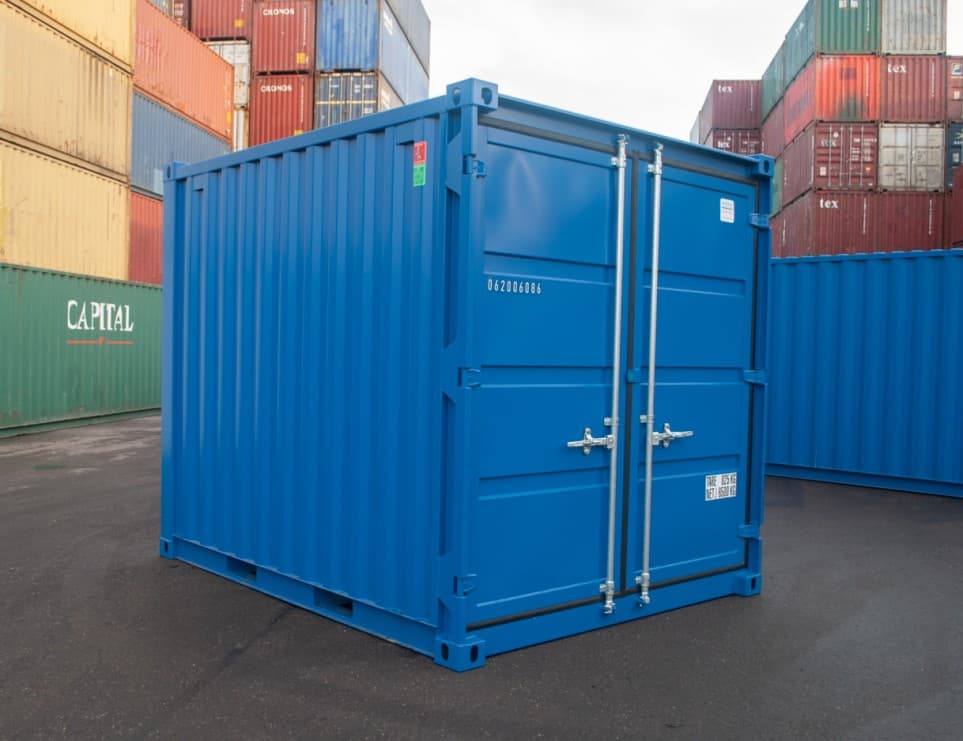
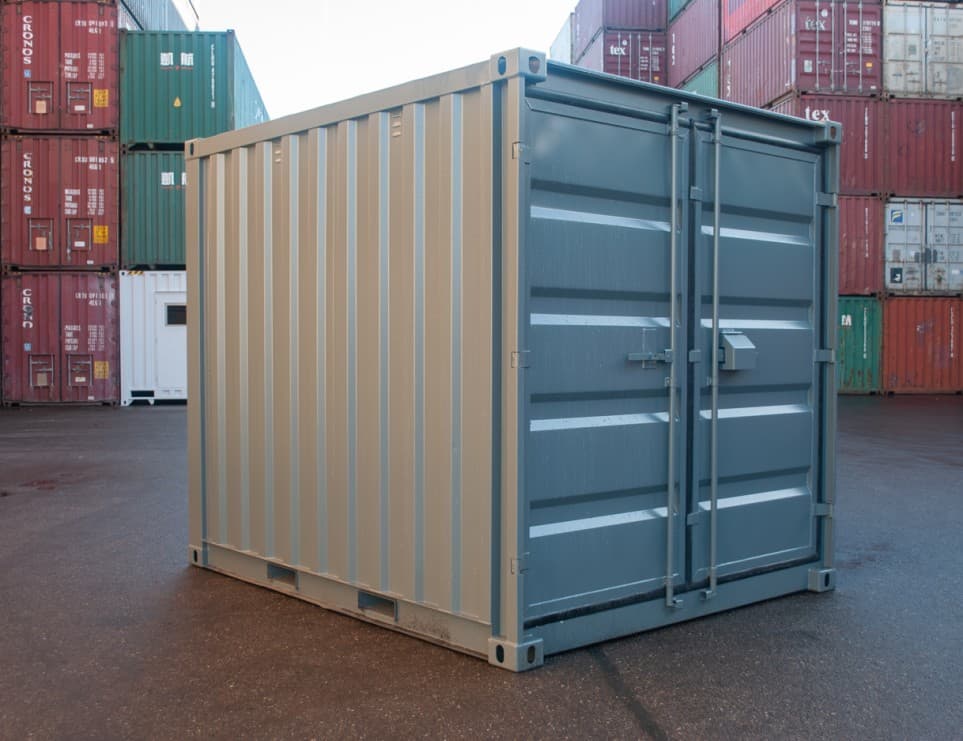
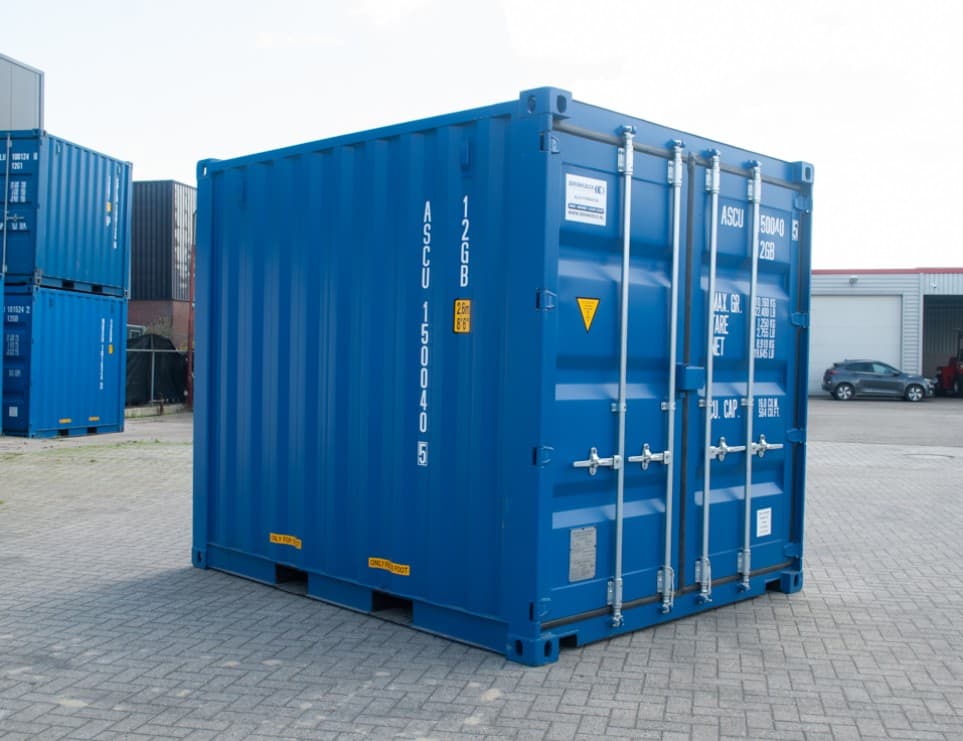
The new 10ft container, also called a 3-metre container, is a compact storage and transport module built to current ISO standards. It is a dry container, meaning it has no refrigeration unit, intended for transporting dry goods and for many static uses. Its small size makes it a relevant solution when available space is limited, whether on an urban job site, in a yard, a garden or a cramped storage area. This model is offered in new condition, known as "first trip": it has not yet been used for sea transport and therefore shows no wear from operation. This feature matters to buyers looking for a container that is both functional and visually clean, especially for visible use in a residential area or for later fit-out.
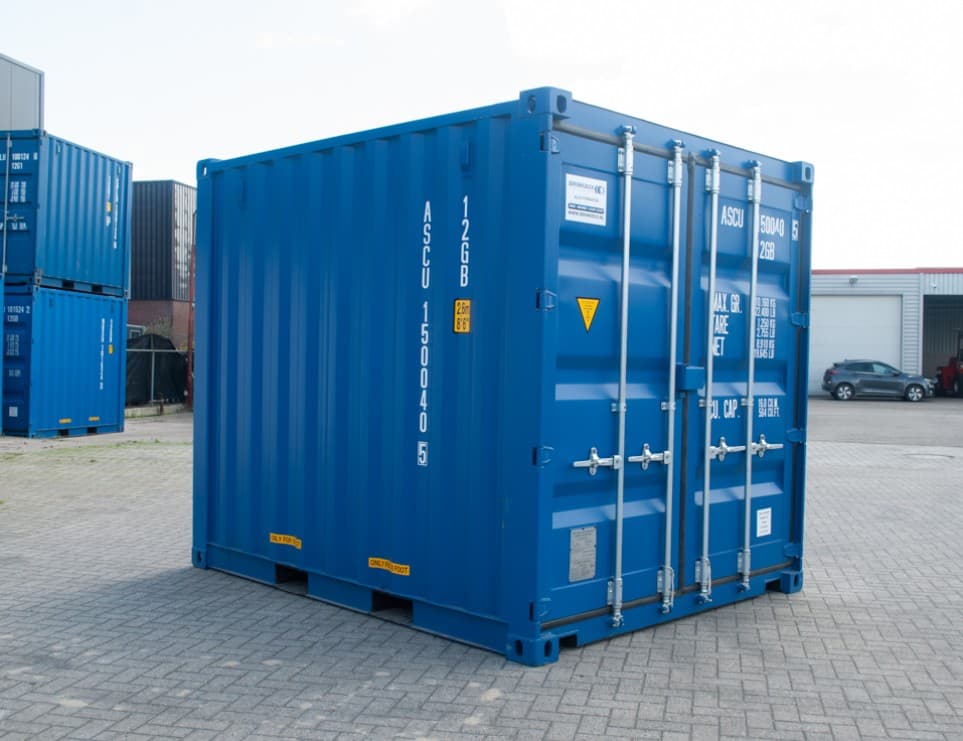
Technically, this container is made of Corten steel, a low-alloy steel whose chemical composition gives it better resistance to atmospheric corrosion than ordinary carbon steel. The walls, roof and posts are formed by profiling, which stiffens the assembly without excessively weighing down the structure. The floor is made of 28 mm marine plywood, a panel with phenolic adhesives that resists moisture and is suited to moderate rolling loads. The rear face is fitted with double doors with container locks, a standard mechanism made up of vertical locking bars, handles and cams that engage in the posts. A factory Lockbox is mounted on the door: this metal housing protects the padlock or lock against cutting attempts and damage, a security point appreciated for storing equipment on site.
The dimensions of the 10ft container derive from ISO 668, which defines the series of maritime containers. A standard 10ft container measures about 2.99 m in external length, 2.44 m in width and 2.59 m in external height. Typical internal dimensions are about 2.83 m long, 2.35 m wide and 2.39 m high, giving an internal volume of about 15.9 cubic metres. Tare weight is generally around 1,300 to 1,500 kg depending on the manufacturer, and the maximum permitted payload is often between 8,000 and 10,000 kg for a standard 10ft. These values are indicative: they may vary by manufacturer and by the CSC (Convention for Safe Containers) certificate on the container plate. It is advisable to refer to the certification plate for the exact masses of the delivered unit.
The 10ft container stands out from the 20ft and 40ft by its manoeuvrability. It can be moved by forklift, truck-mounted crane or auxiliary crane, and its short length allows it to be positioned in spaces where a 20ft would not fit. On a renovation site in a city centre, for example, it can serve as a tool store, changing room or basic site office. In a residential setting, it becomes a garden shed, a storage room for garden machinery, a workshop or a store for seasonal equipment. Its standard height of 2.59 m lets an adult stand upright inside without difficulty, allowing fit-out with shelving, workbenches or wall storage.
One of the advantages of this format is its modularity. Several 10ft containers can be placed side by side or stacked, subject to the applicable safety and civil engineering rules. The corner casting, those standardised corner pieces at the eight corners of the container, allows lifting, securing and assembly. These blocks are drilled with oval holes that accept twist-locks, the locks used on trailers, wagons and ships. This standardisation ensures international compatibility and facilitates handling operations. For static use on the ground, the container must be placed on a flat, stable surface, such as concrete blocks, wooden beams or slabs. Correct shimming prevents deformation of the structure and protects the floor from rising damp.
Maintaining a new Corten steel container remains simple. The paint should be checked regularly, especially on edges, welds and friction areas. If it chips, touching up with a suitable anti-rust paint preserves the protection. Door locks should be greased periodically to keep them easy to operate. The marine plywood floor can be swept and cleaned with water; it must not remain in prolonged contact with standing water. Ventilation can be added if the container is used to store materials sensitive to condensation, because the temperature variation between day and night can cause condensation on the metal walls. Vent grilles or a moisture absorber can limit this phenomenon.
When buying a new container, several points deserve attention. First, the term "first trip" should be understood as a container that has not yet completed a commercial rotation, but it may have been handled in a depot or factory. Second, it is useful to check the CSC plate, which attests compliance with international safety rules, as well as any ISO conformity certificate. The factory Lockbox is original equipment: it is welded to the door and protects the locking point. This detail is valuable for outdoor use. Finally, it is advisable to check the condition of the door seals, the alignment of the locks and the absence of impact on the walls. A new container must show satisfactory water and air tightness, an essential condition for protecting stored goods.
Transporting a 10ft container in France falls under exceptional transport regulations in some cases. A 10ft container is 2.44 m wide, which remains within the standard authorised gauge of 2.55 m for a single vehicle. The length of the tractor plus trailer plus container may however exceed road traffic limits depending on the vehicle used. Transport is generally provided by a container truck or a crane truck. It is advisable to check the necessary permits with the carrier, especially for crossing built-up areas or using narrow roads. Delivery can be made to the ground, by crane, or by hydraulic arm truck, depending on site accessibility.
For residential or office use, the 10ft container can be fitted out, but local planning rules must be respected. In France, installing a container as a construction may require a prior works declaration or a building permit depending on its surface area, height and duration of installation. A 10ft container covers about 7 square metres of ground, which often places it below the prior declaration threshold for garden sheds, but rules vary by municipality and zone (protected sector, coastal zone, etc.). It is therefore prudent to check with the planning department before any permanent installation. For temporary use on a job site, specific rules may apply.
The 10ft container can also be fitted with options: side door, window, insulation, lighting, power sockets, additional ventilation. These modifications must be carried out properly so as not to compromise the structure. Drilling into the walls must be limited and treated against corrosion. Adding internal insulation improves thermal comfort and reduces condensation, but it reduces usable volume. For simple storage use, insulation is not essential.
In summary, the new 10ft Corten steel container with 28 mm marine floor and factory Lockbox is a compact, sturdy and versatile module. It suits building professionals, tradespeople, individuals and public authorities looking for a small-surface storage or technical room solution. Its ISO standardisation ensures compatibility with common handling equipment. Its new condition ensures optimal longevity and watertightness when put into service. Before purchase, it is advisable to check the exact dimensions, payload, presence of certificates and delivery conditions at the installation site.
To go further into maintenance, it is useful to distinguish regular checks from occasional interventions. A visual inspection twice a year helps identify sensitive points: lower walls, door frames, floor crossmembers, corner welds. Atmospheric soiling, such as dust deposits or pollution marks, can be removed with clean water and a cloth; a pressure washer can still be used but sparingly so as not to damage the seals or lift the paint on the edges. If the container is installed under trees, plant debris must be removed from the roof, because its accumulation retains moisture and encourages corrosion under the layer of leaves. The natural gutters formed by the roof ribs must remain clear. Finally, checking the flatness of the support is recommended once a year: ground settlement can unbalance the structure and strain the doors.
Regarding transport regulations, several texts govern moving a container on public roads in France. The Highway Code sets dimension and weight limits for vehicles: overall width of 2.55 m, length of 16.50 m for an articulated combination, authorised gross train weight of 44 tonnes for combined transport under certain conditions. A 10ft container, shorter than a 20ft, fits more easily within these gauges, but the trailer used and the truck configuration determine final compliance. When these limits are exceeded, the carrier must apply for an exceptional transport permit from the prefecture, with route constraints and possibly escort requirements. The container must also be secured properly, with twist-locks or suitable straps, to prevent any movement during the journey. The total laden weight, including contents, must never exceed the payload shown on the CSC plate. For a container delivered filled, the load must be balanced and respect the floor limits.
Sector by sector, the 10ft container has varied uses. In building and public works, it serves as a secure tool store, site changing room, consumables store or guard post. Its size allows it to be placed in building courtyards or narrow streets, where a 20ft would be difficult to manoeuvre. In events, it can become a storage point for sound and lighting equipment, a technical room or a mobile ticket office. In retail and crafts, it provides storage for seasonal products, a repair workshop or an order preparation room. In agriculture and the equestrian world, it holds animal feed, small equipment or tools, provided suitable ventilation is included. In residential settings, it meets storage needs for gardening, DIY, bicycles, motorbikes or leisure equipment. Finally, in the public or voluntary sector, it can be used as a storage room for maintenance equipment or as a temporary reception point.
Comparing the 10ft with other formats helps choose with full knowledge. The standard 20ft offers about 33 cubic metres and a floor area of about 14 square metres; it suits larger storage and fit-outs such as a studio or commercial unit. The standard 40ft almost doubles this area, with about 67 cubic metres, and the 40ft high cube adds about 30 cm of internal height, which is valuable for tall volumes or fit-outs with a suspended ceiling. The 10ft, with its 15.9 cubic metres, sits below the 20ft but remains clearly more capacious than a classic garden shed. Compared with a used container, a new first-trip one has the advantage of intact watertightness and paint, a floor with no wear marks and generally better resale value. Compared with a reefer container, the dry one has no refrigeration unit and cannot regulate temperature, but it costs less to buy and maintain. Compared with an open top or flat rack, the dry offers full protection from the weather, making it more suitable for ordinary storage. The choice therefore depends on the volume to be stored, frequency of access, installation constraints and budget.
An often overlooked point concerns ground preparation and anchoring. A 10ft container can be placed on concrete blocks, hardwood beams or cellular slabs. What matters is that the four corners rest on stable, level supports, because the structure bears on its corners. Soft or sloping ground can cause deformation and difficulty opening the doors. In wind-exposed areas, additional anchoring may be necessary, for example with suitable straps or stakes. In flood-prone areas, raising the container by a few tens of centimetres limits the risk of water entering from below. These precautions extend the container's service life and secure its contents.
In terms of security, access to the container must be thought through. The factory Lockbox protects the padlock, but it is advisable to use a quality padlock, resistant to cutting and corrosion. For professional use, an additional locking system can be added. Interior lighting, if installed, must be done properly, with materials suited to the outdoor environment. Ventilation, if added, must prevent the entry of water and insects. Finally, container signage, especially if installed on public roads or in a place receiving the public, may be subject to local obligations. It is therefore recommended to contact the competent authorities before any visible installation.
The new 10ft Corten steel container with 28 mm marine floor and factory Lockbox is therefore a balanced solution between compactness, sturdiness and functionality. It is aimed at those who need a small storage space or technical room, easy to transport and install, while benefiting from the standardisation and durability of a maritime container. Before purchase, it is advisable to check the exact dimensions, payload, presence of certificates and delivery conditions at the installation site.