Description
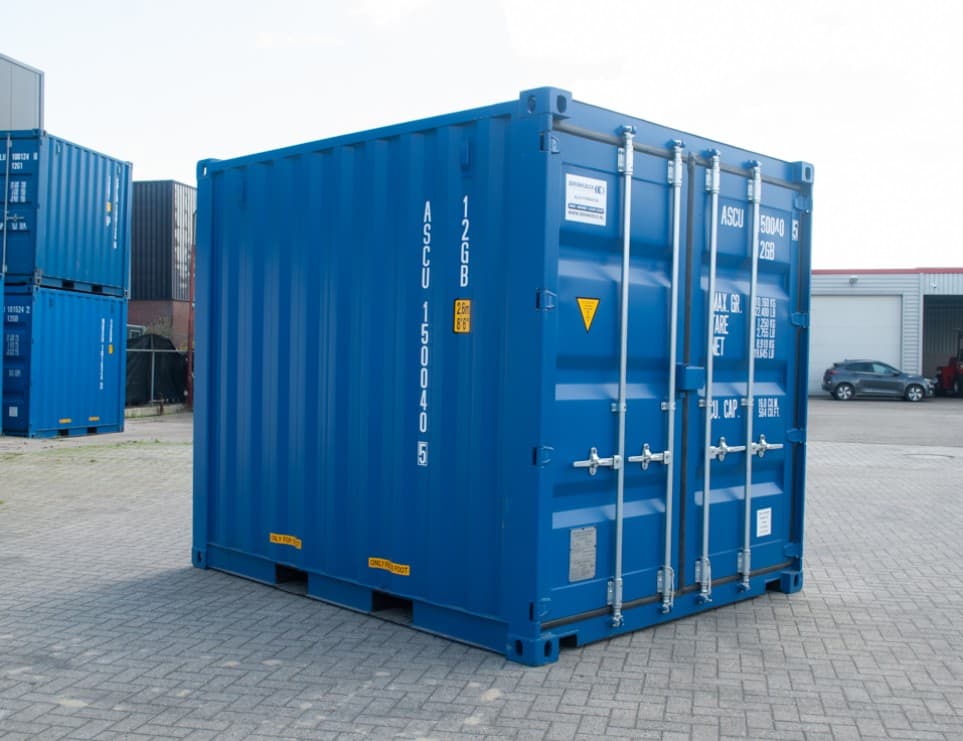
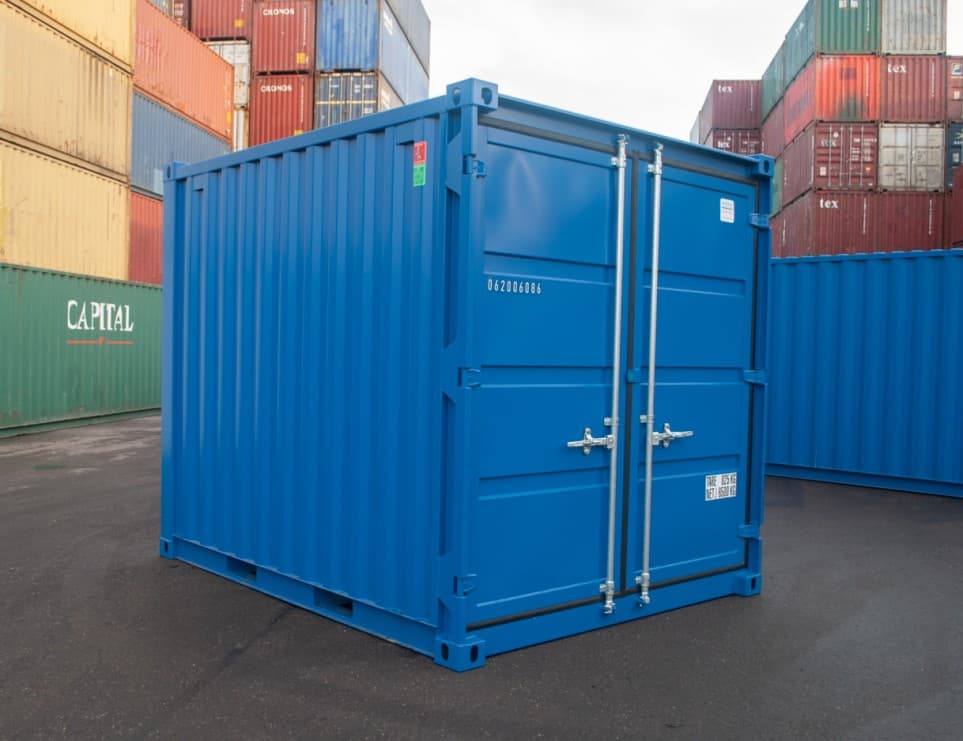
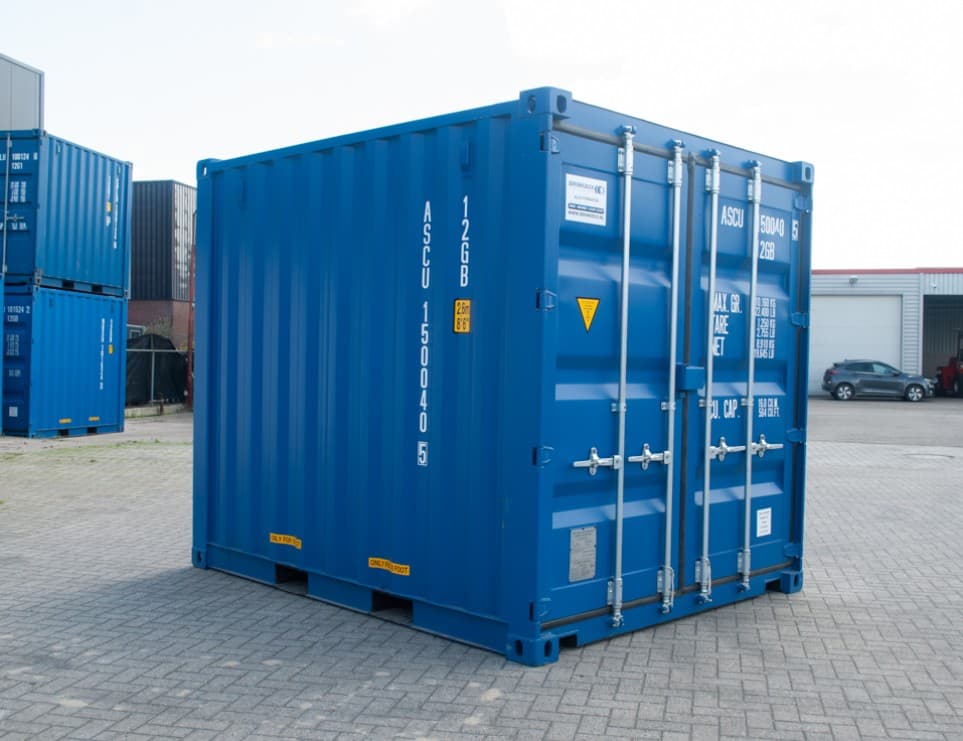
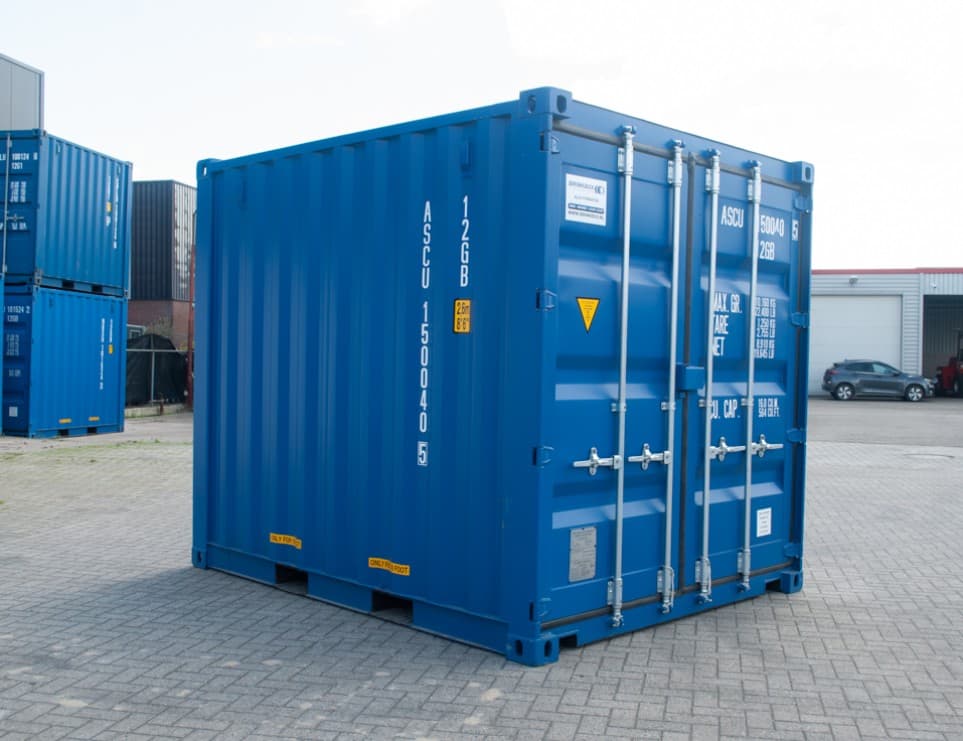
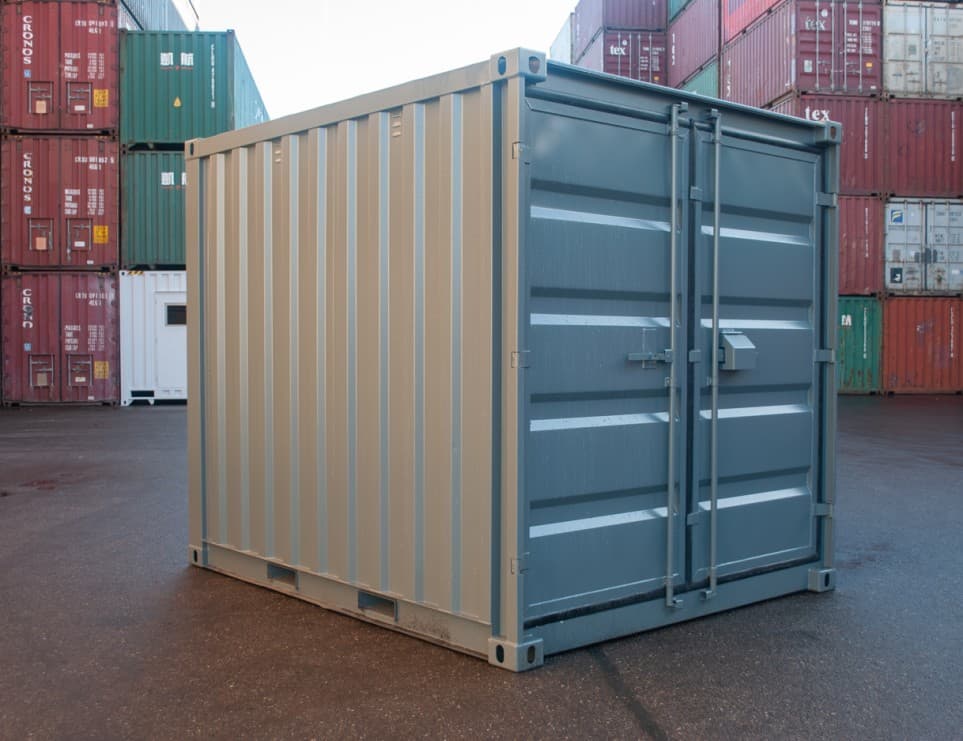
The used 10ft container we offer is a compact and robust storage module, originally designed for sea transport and commonly reused as a technical room, equipment depot or permanent storage space. Its design follows the principles of standardized shipping containers, guaranteeing excellent durability and compatibility with usual handling equipment (forklifts, side loaders, cranes).
This container is made of Corten steel, a low-alloy steel that develops a stable protective oxide layer on its surface. This feature allows it to resist atmospheric corrosion without sacrificial paint, which explains its universal use in sea transport and outdoor storage. The structure consists of welded steel profiles, forming a rigid frame with corrugated walls that provide both relative lightness and mechanical strength. The floor is made of 28 mm marine plywood, a dense wood panel treated to resist moisture and heavy loads. The double rear doors are equipped with standard container locks (vertical locking bars and handles), offering secure closure and full access to the width of the module.
In terms of dimensions, a 10ft container is shorter than a standard 20ft: its overall length is about 3.05 m, width 2.44 m and height 2.59 m. These values comply with ISO 668 and ISO 1496-1 standards governing series 1 containers. The useful internal volume is around 15 to 16 cubic meters, allowing storage of a large quantity of boxes, tools, spare parts or furniture, while maintaining a small footprint. The tare weight of such a container is generally between 1,100 and 1,400 kg depending on the manufacturer and any reinforcements. The maximum payload is often between 8,000 and 10,000 kg, but it depends on the exact design and must never be exceeded. It is essential to refer to the CSC (Convention for Safe Containers) plate fixed on the door to know the authorized masses specific to the unit.
This used container has been refurbished and leak-tested. This means that the door seals have been checked, any perforations have been treated and the structure has been inspected to verify the absence of major deformations. A used container may show signs of superficial wear: scratches, small dents, surface rust on the walls or roof. These marks do not affect its strength or watertightness, but they are part of its history and justify a more affordable price than a new container. However, we recommend checking the condition of the floor (no rot or delamination), the proper functioning of the door seals and the presence of all locks.
The use of a 10ft container is particularly suitable for restricted spaces: backyard, narrow alley, company parking, urban storage area. Thanks to its reduced length, it is easier to maneuver than a 20ft and can be moved with lighter lifting equipment. It is commonly used as a site office to store tools, materials or sensitive electronic equipment. It can also serve as a site office after fitting out (insulation, electricity, ventilation), or as a technical room to house generators, compressors or servers. In agriculture, it is used to store seeds, fertilizers or fodder, provided appropriate ventilation is provided to avoid condensation. Individuals often see it as an economical storage solution for garden equipment, bicycles, tools or seasonal items.
Maintenance of a used Corten steel container is simple. It is advisable to regularly clean the roof and walls to prevent accumulation of dead leaves or debris that retain moisture. An annual visual inspection helps identify any areas of perforating rust, especially around hinges and door bottoms. If necessary, localized rust treatment and finishing paint can extend the lifespan. The marine plywood floor must be kept dry; when storing damp products, the use of pallets is recommended to allow air circulation. For outdoor use, the orientation of the doors should be chosen to limit direct exposure to prevailing rain, and it is possible to add an awning or a small additional roof.
Before buying a used container, several points of vigilance must be examined. Check the CSC plate and its validity date: all shipping containers must be periodically inspected to be authorized for transport. If the container is no longer intended for sea transport, this plate remains an indicator of structural compliance. Check the condition of the door seals: they must be flexible, without cracks or tears. Inspect the floor: it must not have soft areas, holes or delamination. Examine the welds and corner reinforcements: cracks could indicate past overloading. Finally, ensure that the doors open and close without forcing and that the locks engage correctly.
Transporting a 10ft container in France is subject to some rules. On the road, a container of this size can be transported on a container truck or a suitable trailer. The width of 2.44 m remains within the standard road gauge limits (2.55 m), which generally avoids the need for a special permit. The total length of the vehicle and the weight must comply with the Highway Code and axle load limits. For final positioning, it is necessary to provide a stable and leveled ground, possibly concrete blocks or crossbeams to raise the container and prevent it from resting directly on the ground. This elevation limits moisture rise and facilitates the passage of a cart or pallet truck. If the container is to be placed on private land, local urban planning rules should be checked: in some municipalities, a container may be considered a construction and require prior declaration, especially if it is fitted out as a living space or remains permanently. For strictly temporary use (construction site), formalities are often simplified, but it is prudent to inquire with the urban planning department.
In terms of security, a locked container is a space difficult to penetrate without heavy tools. Standard door locks offer proven mechanical resistance. To enhance protection, it is possible to add a high-security padlock or an additional locking system (anti-burglary bar). Interior lighting can be installed if the container is used as a work space: a simple battery LED lamp or an electrical connection with cable passage through a waterproof conduit is sufficient. Ventilation is a key point to avoid condensation: low and high ventilation grilles, protected against rain, allow natural air circulation. If the container is to accommodate people, it is imperative to provide thermal insulation and ventilation compliant with safety and hygiene rules.
This used 10ft container is offered at the price of 1,950 euros. This price reflects its refurbished condition and immediate availability. It is important to note that used containers can go quickly; we invite you to contact us to check availability and arrange a visit if you wish. We are located in Marseille and can assist you in choosing the container suited to your needs, whether for simple storage, office conversion or more specific use. Do not hesitate to consult us for delivery options and available accessories (padlock, ventilation grilles, finishing paint).
In summary, this used 10ft Corten steel container is a reliable, compact and durable storage solution. It is suitable for both professionals and individuals seeking a secure and movable space. Its reduced size allows it to fit into environments where a 20ft container would be too bulky. With minimal maintenance, it offers many years of service. We remain at your disposal to answer your technical questions and help you make the best choice.
To further explore the question of choice, it is useful to compare the 10ft to other common formats. The 20ft container (about 6.06 m long) offers an internal volume of about 33 m³, double that of the 10ft. It remains the most widespread format and often the most economical to buy or rent, but it requires a larger floor area and a more powerful lifting device. The 40ft (about 12.19 m long) offers about 67 m³, ideal for massive storage or international transport, but it is difficult to maneuver in dense urban space and its tare weight often exceeds 3.5 tonnes. The 40ft high cube adds about 30 cm of internal height, increasing volume without lengthening the footprint; it is popular for office or housing conversion. The 10ft, on the other hand, stands out for its compactness: it can be placed in a garden, courtyard, parking lot or even on a professional terrace, and it can be moved with a medium-capacity forklift. Its volume/footprint ratio is interesting for small stocks, and its purchase price is lower than that of a 20ft, making it an accessible entry point into the world of shipping containers.
There are also other types of specialized containers. The dry (or standard) container is the most common: it is fully enclosed, with no opening other than the rear doors, and is suitable for storing dry goods. The reefer (refrigerated) container is equipped with a refrigeration unit and reinforced insulation; it is used for transporting perishable goods and can also serve as a mobile cold room, but its cost and maintenance are higher. The open top container has an open roof (tarpaulin) that allows loading tall or bulky objects from above, such as machines or beams. The flat rack container has no side walls or roof: it is limited to a platform and two collapsible front walls, ideal for heavy and wide loads (machinery, tubes, panels). The high cube container is a height variant of the dry, often chosen for interior fitting. Finally, there are so-called "fitted" or "habitable" containers, which are modified dry containers with insulation, electricity, windows and sometimes sanitary facilities; they are used as site offices, changing rooms, temporary housing or meeting rooms. The used 10ft container we offer belongs to the dry family: it has no refrigeration unit or open roof, but its closed and watertight structure makes it versatile for most storage needs.
For sector-specific use, the 10ft container finds its place in many contexts. In construction, it serves as a tool depot on urban sites where space is limited; it can be equipped with metal shelves to optimize storage. In events, it is used as a storage room for sound and lighting equipment, or as a mobile technical control room. In retail, it can become a seasonal sales point or a reserve room for a restaurant. In industry, it houses spare parts, consumables or samples. In agriculture and market gardening, it stores tools, seeds or plant protection products (with regulatory precautions related to chemicals). In the maritime and port sector, it can serve as temporary storage for handling equipment. Finally, for individuals, it advantageously replaces a wooden or resin garden shed, with a much longer lifespan and increased security.
The interior fitting of a 10ft container is an accessible project. For simple storage use, adding shelves, racks or wall hooks is sufficient. For office use, it is necessary to provide insulation (rock wool, polyurethane panels or cork), wall covering (plywood, OSB, paneling), compliant electrical installation (panel, sockets, lighting) and mechanical or natural ventilation. A window can be added by cutting, but this operation must be carried out by a professional to avoid compromising the rigidity of the structure. Heating can be provided by an electric radiator, a wood stove (with suitable flue) or a compact heat pump. Running water requires a connection or a tank with pump. All these fittings must comply with fire safety and hygiene rules if the premises are intended to accommodate the public or workers.
From a regulatory standpoint, placing a container on private land may be subject to authorization depending on the municipality's PLU (Local Urban Plan). As a general rule, an unfitted container used for temporary storage is considered a precarious installation and does not require a building permit, but a prior declaration may be required. If it is fitted out as a living space or permanently fixed to the ground, it may be assimilated to a construction and require a building permit. It is therefore essential to inquire with the urban planning department before any installation. Furthermore, if the container is intended to receive workers, it must comply with the obligations of the Labor Code regarding work premises (ventilation, lighting, safety, sanitary facilities). For transport, a 10ft container loaded on a truck must comply with the limits of gross vehicle weight rating (GVWR) and axle load. Exceptional transport is generally not necessary for an empty 10ft, but it may be if the container is loaded beyond standard limits or transported on an unsuitable vehicle.
Finally, buying a used container should be accompanied by reflection on the overall budget. In addition to the purchase price, it is necessary to provide for the cost of transport to the destination, the cost of handling (crane or forklift rental), possible fitting (insulation, electricity, painting) and routine maintenance. A refurbished used container like this one represents a good compromise between new, more expensive, and non-refurbished used, more risky. It is recommended to request recent photos, check the CSC plate and ask specific questions about the condition of the seals, floor and structure before finalizing the purchase. We are at your disposal to provide this information and assist you in your project.