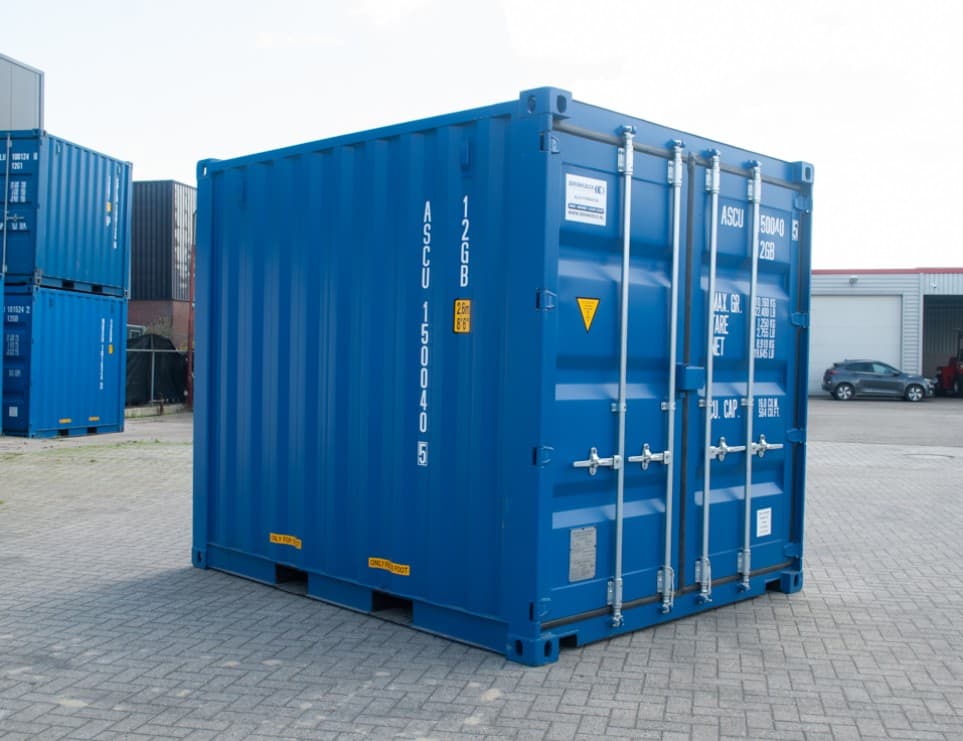
Description
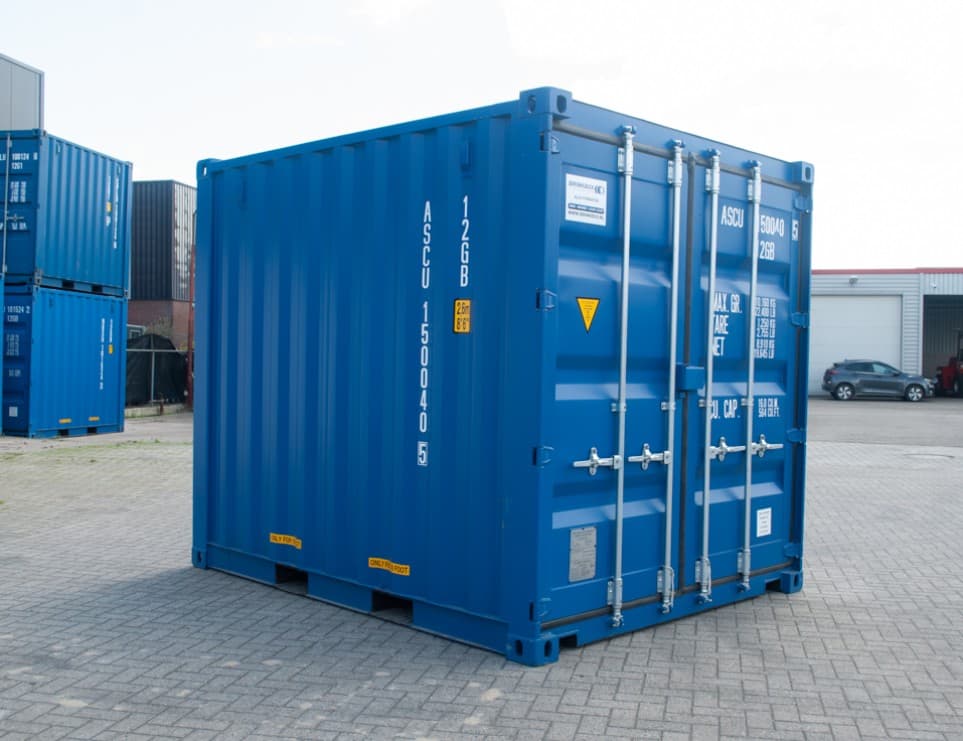
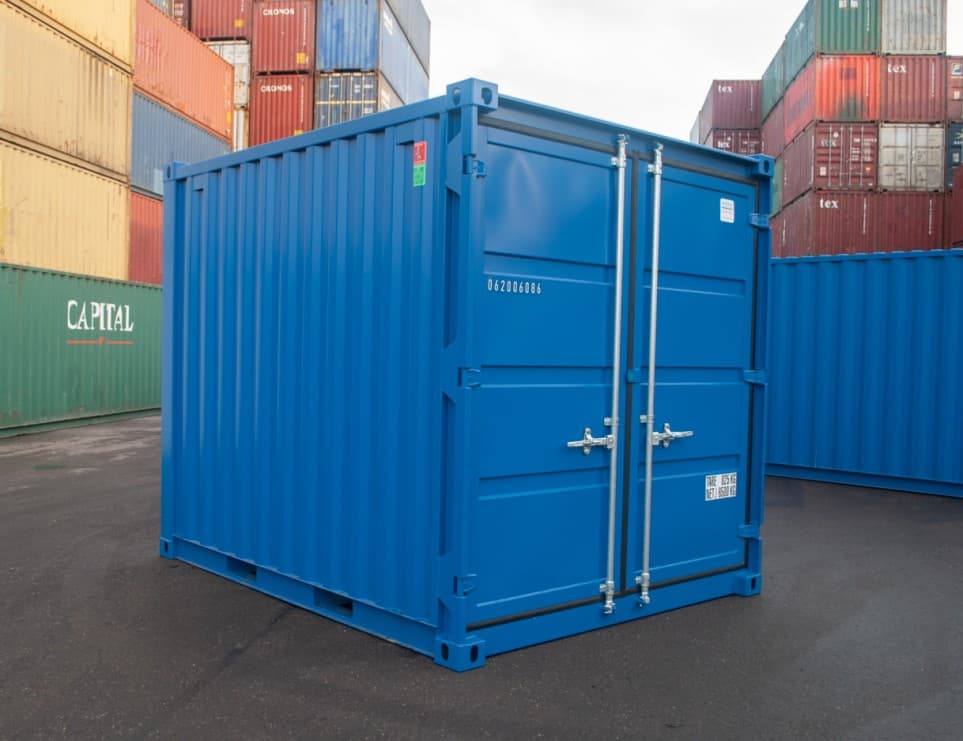
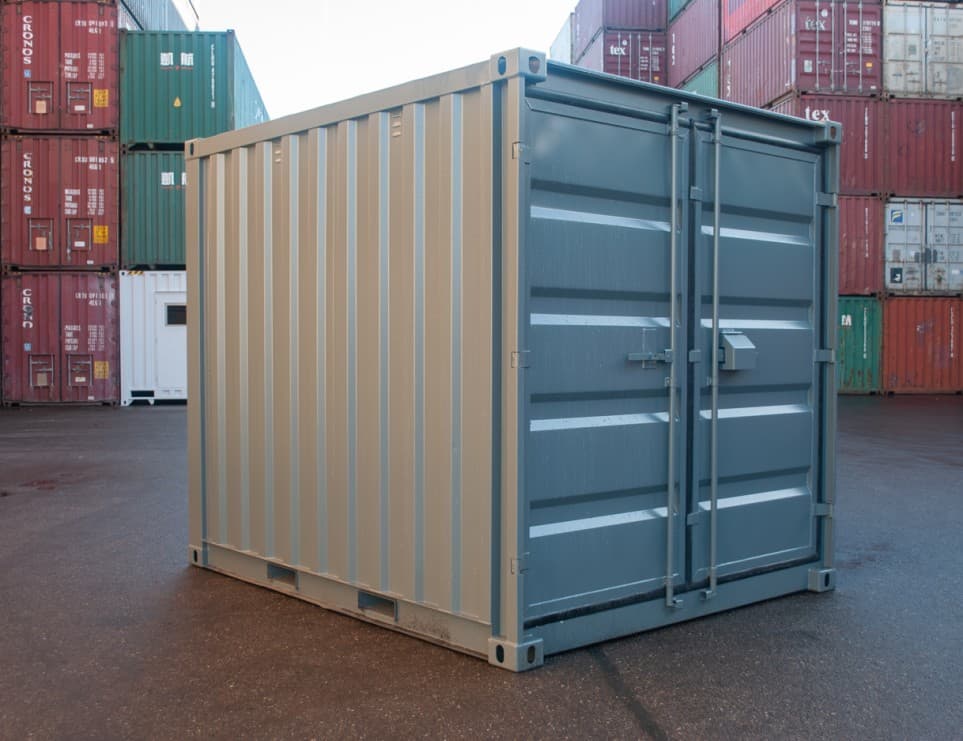
The new 10ft container, also called a 3-meter container, is a compact model from the ISO shipping container family. Its reduced length makes it particularly suited to restricted spaces where a standard 20ft container would not fit. This format is often chosen for storing equipment on an urban job site, for residential use at the back of a garden, or as a base for light conversion. In this text, we detail its technical characteristics, practical uses, points to watch when buying, and the regulatory aspects related to its transport and installation in France.
Let's start with dimensions and structure. A 10ft container complies with ISO 668 and ISO 1496 standards, which define the dimensions and performance of series 1 containers. Its standard external dimensions are approximately 2,991 mm long, 2,438 mm wide, and 2,591 mm high (or 2,896 mm for a high cube version, rarer in this format). Typical internal dimensions are approximately 2,830 mm long, 2,352 mm wide, and 2,393 mm high, offering an internal volume of about 15.9 m³. The usable floor area is about 6.6 m². These values may vary slightly by manufacturer, but they remain in these ranges. The tare weight of a 10ft container is generally between 1,100 kg and 1,400 kg, and its maximum payload is often between 8,000 kg and 10,000 kg, depending on design and reinforcements. The maximum gross weight (MGW) is commonly 10,000 kg to 12,000 kg. It is important to note that these containers are not designed to be stacked on multiple levels in standard configuration, as their structure is optimized for single use or limited stacking. Indeed, 10ft containers are often made from sections of 20ft containers or specific production lines, and their stacking strength is lower than that of 20 or 40ft units. They should therefore not be stacked without prior verification with the manufacturer or a structural engineer.
The structure is made of Corten steel, a low-alloy steel that resists atmospheric corrosion through the formation of a protective oxide layer. This material is the industry standard for shipping containers. The side and front walls consist of corrugated sheets, which provide rigidity and resistance to deformation. The roof is also corrugated and designed to drain rainwater. The floor is made of 28 mm marine plywood, a hot-bonded wood panel with phenolic resins, resistant to moisture and heavy loads. This floor is treated to withstand climatic aggression and can support moderate rolling loads. The rear doors are double doors equipped with container locks (four vertical locking bars, with handles and cam mechanisms). These doors have EPDM rubber seals that protect against water and dust infiltration. The container is also equipped with a factory Lockbox, i.e., a metal box welded to the door, which protects the padlock or lock against cutting attempts. This Lockbox is original equipment installed at the factory, ensuring better resistance and a neat finish compared to a retrofit.
In terms of certification, this container complies with the ISO standard, attesting to its conformity with international requirements for dimensions, strength, and safety. It also has a valid CSC (Convention for Safe Containers) plate, mandatory for any container used in international maritime transport. This plate indicates the maximum gross weight, payload, tare weight, and the date of the next periodic examination. For a new container, the first examination date is generally set at five years after the manufacturing date. The container is delivered with a certificate of conformity and an identification plate. Note that this container is new, meaning it has never been used to transport goods. It can therefore be considered as being on its "first voyage," meaning it is in perfect condition, without rust, without dents, and with intact original paint. This characteristic is important for buyers looking for a container intended for aesthetic use or interior conversion, as it shows no signs of wear or repair.
Now let's look at the practical uses of this 10ft container. Thanks to its compactness, it is particularly suited to urban job sites where storage space is limited. It allows tools, sensitive materials, or expensive equipment to be secured on site without requiring a large footprint. It can be easily moved with a forklift or crane truck, making it easy to reuse on different sites. For residential use, it is an additional storage solution in a garden, for storing bikes, gardening tools, garden furniture, or seasonal equipment. It can also serve as a DIY workshop, utility room, or garden shed, with some modifications (insulation, electricity, ventilation). As part of a modular housing project, the 10ft container can be used as a single module for a garden office, guest room, or small summer kitchen. It is also possible to combine several 10ft containers to create a larger space, but this requires cutting and assembly work that must be done by professionals. Finally, this container can be used as a sales unit, kiosk, or temporary reception point, after appropriate conversion.
When buying a new 10ft container, several points require attention. First, it is essential to verify the container's compliance with ISO and CSC standards, and to ensure that the CSC plate is present and up to date. Next, check the general condition: no rust, dents, cracks, and proper operation of doors and locks. The Lockbox must be securely welded and free of defects. The floor must be free of holes, delamination, or rot. The door seals must be flexible and well attached. It is also recommended to check the flatness of the roof and the absence of deformation. A new container should be delivered with uniform paint and no chips. Finally, it is advisable to request a certificate of conformity and a detailed invoice.
Another important aspect is transport and handling. A 10ft container can be transported on a container truck, but its reduced length may require specific securing. It is recommended to use a specialized carrier with adequate equipment (forklift, crane truck). Delivery can be done by truck with a lifting arm, allowing the container to be placed directly on site, provided access is sufficient. It is important to check the width of access routes, the presence of overhead cables, and the load-bearing capacity of the ground. The container must be placed on a flat, stable surface, preferably on concrete blocks or wooden beams to avoid direct contact with the ground and limit corrosion. If the container must be moved regularly, it can be fitted with casters or skids, but this reduces its stability.
Regarding French regulations, installing a container on private land may be subject to urban planning rules. In general, a container is considered a light construction and may require a prior declaration of works if its floor area exceeds 5 m² and its height exceeds 1.80 m. For a 10ft container, the floor area is about 6.6 m², which exceeds the 5 m² threshold. It is therefore prudent to check with the town hall for local formalities. Moreover, if the container is used as housing, it must comply with construction standards (insulation, ventilation, electricity) and may be subject to a building permit. For transport, the container must be accompanied by a transport document and the CSC plate must be valid. For professional use, it is recommended to check fire safety and accessibility rules.
Maintaining a new Corten steel container is relatively simple. It is advisable to regularly clean the surface with a damp cloth and mild detergent to remove dirt and salt deposits (especially near the sea). Avoid abrasive or acidic products that could damage the paint. An annual visual inspection helps detect any scratches or early corrosion. If a scratch exposes the steel, it should be treated with a suitable anti-rust paint. Door seals should be checked and lubricated with silicone grease to prevent them from drying out. Locks and hinges should be greased regularly. The marine plywood floor can be cleaned with a broom and a damp cloth; it is not advisable to leave it in prolonged contact with water. If the container is used to store chemicals or hazardous materials, ensure material compatibility and follow storage rules.
To summarize, the new 10ft container is a compact, sturdy, and durable storage solution. Its Corten steel design and marine floor make it a weather-resistant product suitable for many uses. Its reduced size makes it easy to install on tight plots and to move. However, installation and transport conditions should be checked, as well as any urban planning authorizations. By choosing a new container, you get a product without wear, ready to use, with an original Lockbox and ISO certification. Whether for a job site, a garden, or a conversion project, this container offers a reliable and secure base.
Let's now take a closer look at preventive maintenance and corrective interventions, because a new container deserves rigorous monitoring to preserve its qualities over time. Corten steel naturally develops a protective patina, but this can be altered by chemical aggression (salt, fertilizers, harsh cleaning products). It is therefore recommended to carry out a visual check twice a year: in spring and autumn. During this check, inspect the roof (dead leaves, standing water), corners, welds, lower wall areas, and around the doors. The most sensitive areas are the corner posts, door sills, and bottom rails, where water can accumulate. Cleaning with clear water and neutral soap, followed by rinsing and drying, is usually sufficient. If stubborn dirt is present, a non-abrasive sponge can be used. Never use a high-pressure washer with a direct jet on the seals, as this could damage them and strip grease from the mechanisms. For locking mechanisms, a PTFE- or silicone-based lubricant is preferable to conventional oil, which attracts dust. Door hinges should be greased at least once a year. If the container is stored in a marine environment, rinsing with fresh water after salty wind episodes is advisable. If superficial rust appears (white or brown rust spots), lightly sand, apply a rust converter, then a suitable finish paint for steel. For a deep scratch, it is important to treat it quickly to prevent corrosion from spreading under the paint. The marine plywood floor can be protected with a wood stain or special wood paint, but this is not mandatory. Avoid dragging heavy or sharp objects that could scratch the surface. Finally, if the container is to remain closed for a long time, it is prudent to install a dehumidifier or absorbent packs to limit internal condensation, especially in humid regions.
Let's now address the regulations for road transport in France, because moving a 10ft container is not trivial. On the road, a container is considered goods. If transported on a truck, it must be securely lashed according to the Highway Code and the recommendations of standard NF EN 12195-1 on load securing. The carrier must hold a transport license, and the driver must have appropriate training. For a 10ft container, the total weight (tare + load) can reach about 10 to 12 tonnes, which remains within the limits of conventional rigid trucks (19 tonnes GVW) and semi-trailers. However, the container's reduced length can cause load imbalance if placed at the rear of the bed; it is therefore recommended to position it centrally or distribute the masses. In addition, the container must have its valid CSC plate, and the driver must be able to present accompanying documents (consignment note, certificate of conformity). If the container is transported as goods, it is not subject to TIR Convention rules, but it may be if used in international transport. For exceptional transport (if the container exceeds regulatory dimensions), a prefectural authorization may be necessary, but this is not the case for a standard 10ft. On the other hand, if the container is loaded onto a train or ship, the rules differ: it must be stackable and comply with ISO standards, which it does. Finally, for a fixed installation, local urban planning rules must be checked, as indicated above, and authorization may be required if the container is visible from the public highway or if it changes the external appearance of the building.
Let's now examine more specific sector use cases to better understand the versatility of this format. In the construction sector, the 10ft container is often used as a compact site facility: changing room, canteen, or site office. Its size allows it to be installed on sites where space is limited, such as city-center renovations. It can be equipped with auxiliary heating, ventilation, and battery or generator-powered lighting. In the events sector, it serves as a technical room, control room, or temporary sales point (ticketing, bar). Its mobility and robustness make it an asset for festivals and outdoor trade shows. In agriculture, it can store seeds, fertilizers, or small equipment, provided it is protected from moisture. In retail, it becomes a sales kiosk or pop-up shop, after interior conversion (insulation, flooring, signage). In logistics, it can serve as a transit area for parcels or spare parts, thanks to its ease of movement. Finally, in the residential sector, it is increasingly used as an auxiliary housing module: garden studio, guest room, or teleworking space. These uses, however, require insulation, electrical, and plumbing work, and must comply with current construction standards.
To finish, let's compare this 10ft container with other sizes and types to clarify your choice. Compared with a 20ft container (6 m), the 10ft offers about half the floor area (6.6 m² versus 13.8 m²) and half the volume (15.9 m³ versus 33.2 m³). It is therefore more maneuverable and less bulky, but also less capacious. Its purchase price is generally lower, but the cost per square meter may be higher. The 20ft is more common and often easier to resell. Compared with a 40ft container, the 10ft is much more compact and can be transported more easily, but it cannot store long loads. Compared with a high cube container (9'6"), the standard 10ft has a lower internal height (about 2.39 m versus 2.69 m), which limits vertical fit-out. The 10ft high cube exists but is rarer and more expensive. Finally, compared with an open top or flat rack container, the 10ft dry is more versatile for general storage, but it does not allow loading oversized objects in height or width. The choice will therefore depend on your specific needs in terms of surface, volume, and access constraints. If you have little space and are looking for a secure and mobile storage solution, the new 10ft container is a relevant choice. If you need more volume, a 20ft will probably be more economical per square meter. In all cases, it is advisable to check availability and lead times with your supplier, as well as delivery conditions.