Description
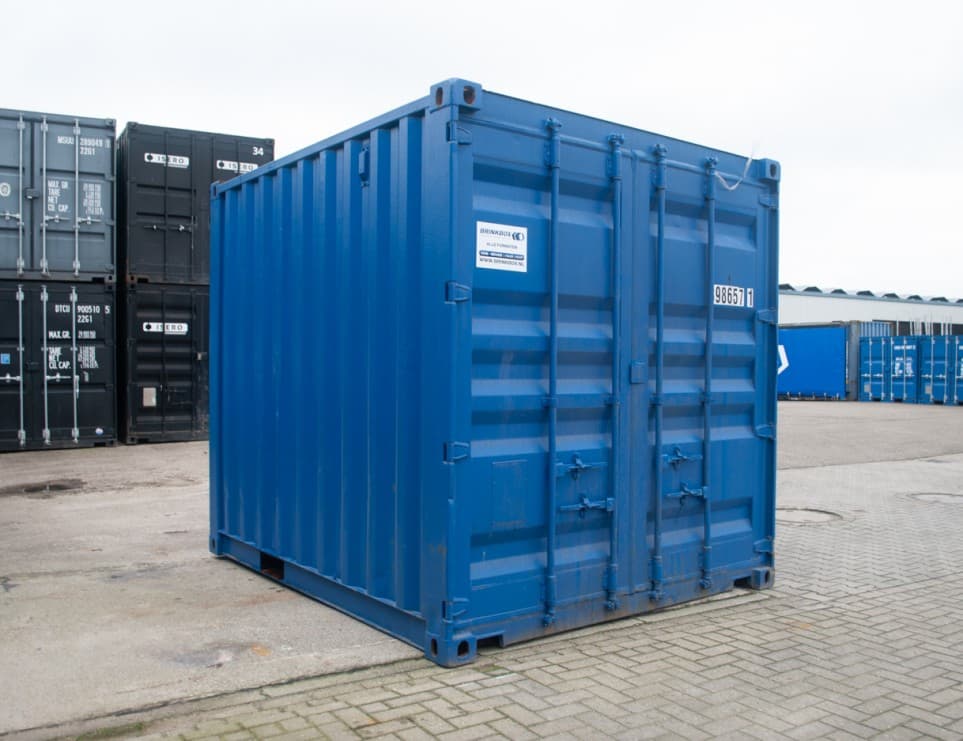
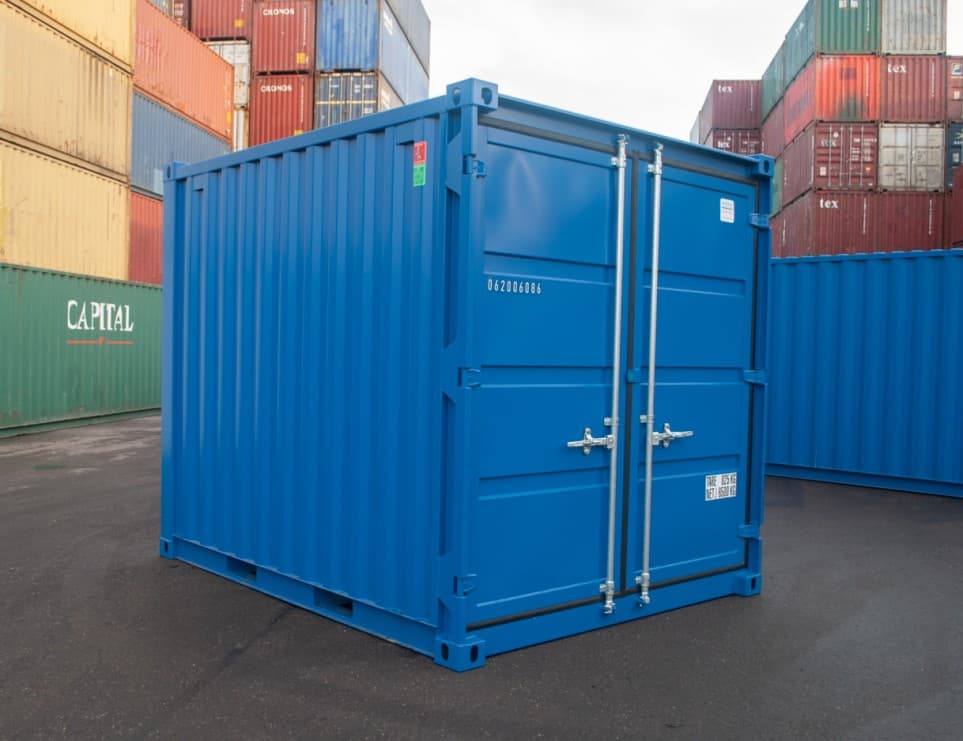
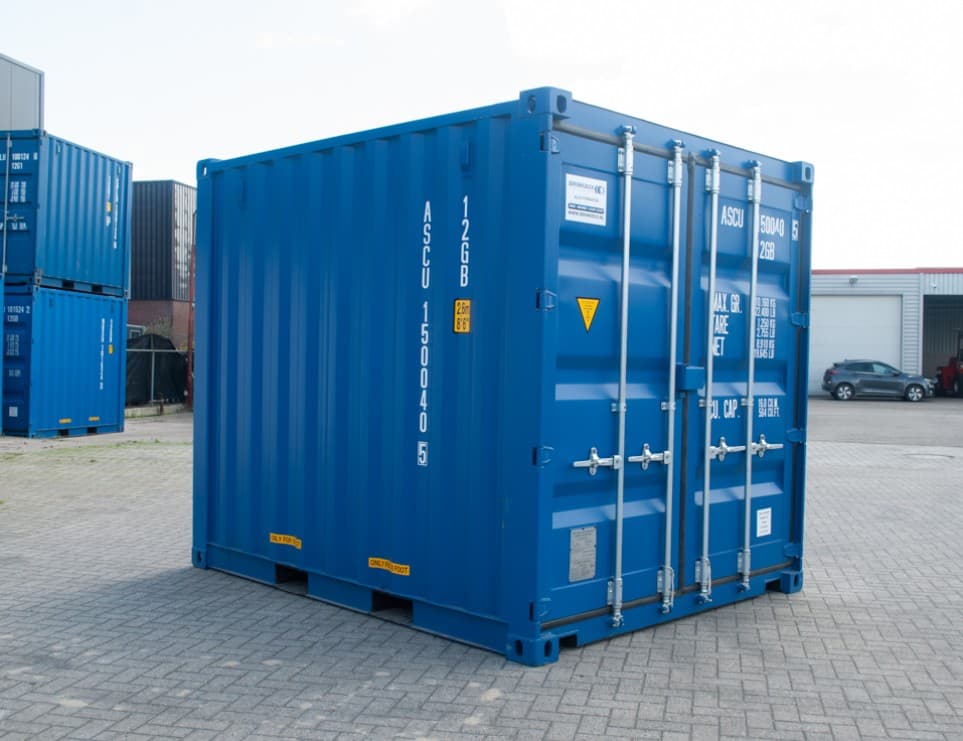
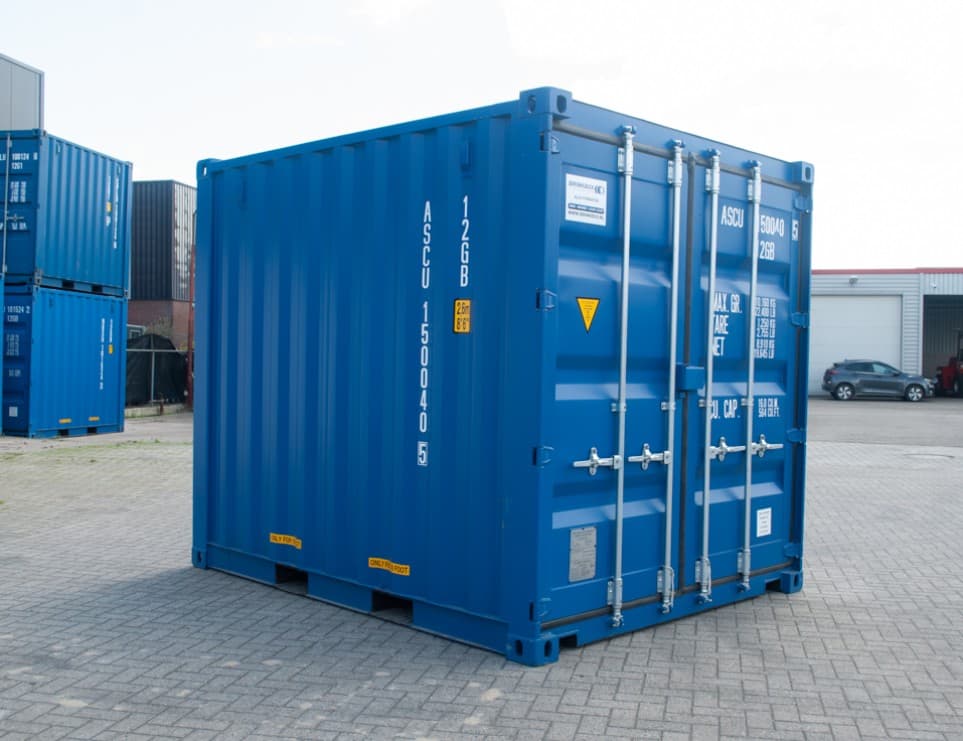
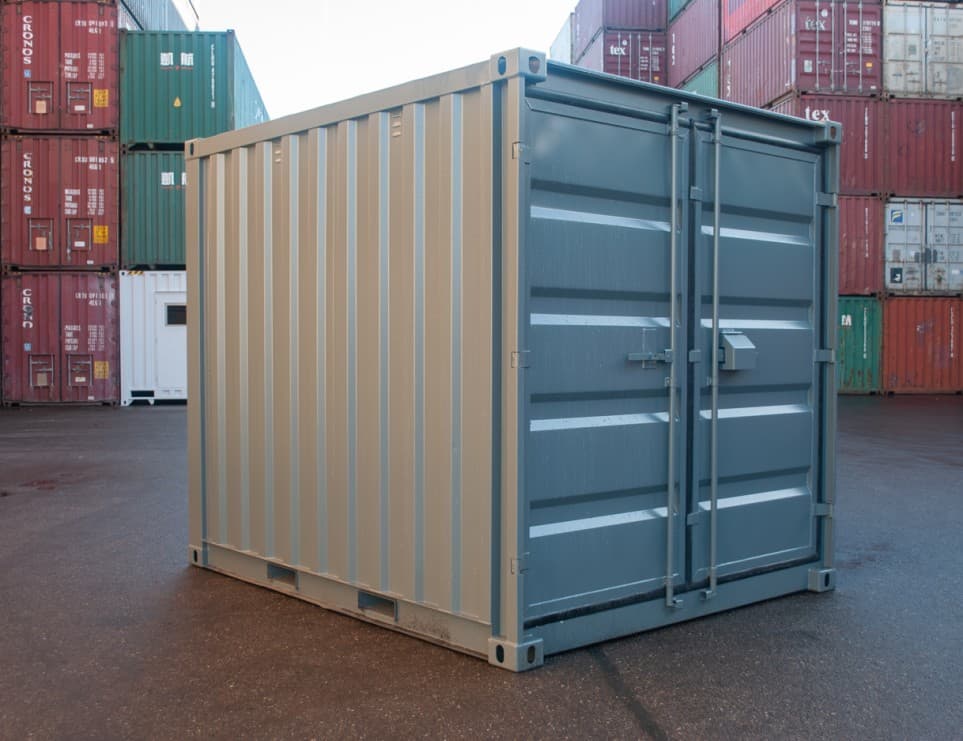
The 10-foot shipping container is a compact and robust format, often chosen when available space is limited or the volume to be stored does not justify a 20-foot container. This used model, reference LEGACY-86, is offered by D.S. Globe Conteneur, based in Marseille. It is a dry container, meaning without a temperature control system, designed for the transport and storage of dry goods. Its Corten steel structure gives it excellent resistance to corrosion and impacts, making it a durable solution for many uses.
Let's start with the essential technical characteristics. A 10-foot container complies with ISO 668 and ISO 1496 standards, which define the dimensions and performance of shipping containers. Its standard external dimensions are approximately 2,991 mm in length, 2,438 mm in width, and 2,591 mm in height. The internal dimensions are approximately 2,831 mm in length, 2,352 mm in width, and 2,393 mm in height. The floor area is approximately 6.6 m² and the internal volume approximately 15.9 m³. The tare weight is generally around 1,300 kg, and the maximum payload can reach approximately 10,000 kg, depending on the exact design. These values are indicative and may vary slightly from one manufacturer to another. The container is equipped with a 28 mm marine plywood floor, a material resistant to humidity and heavy loads. The walls, roof, and doors are made of Corten steel, also called weathering steel, which forms a protective layer of oxides on the surface, slowing corrosion. The rear double doors are equipped with standard container locks, ensuring secure closure. Rubber seals are present around the doors to guarantee water and air tightness. This container is ISO certified, attesting to its compliance with international standards for dimensions, strength, and handling.
The used condition is an important point to consider. A used container has already served, generally for maritime transport, and may show signs of wear: scratches, small dents, surface rust. However, it has been refurbished and is advertised as watertight and ready for use. This means that critical points such as door seals, locks, and the absence of holes in the structure have been checked. It is common for used containers to be reconditioned: cleaning, repair of damaged parts, replacement of seals if necessary, and sometimes application of new paint. The price of €1,950 excluding VAT is competitive for a used 10-foot container, especially if it is in good condition and delivered from Marseille.
Let's move on to concrete uses. The 10-foot container is particularly appreciated for storage on construction sites, in company yards, warehouses, or even for individuals. Its compact size allows it to be installed in tight spaces where a 20-foot container would not fit. It can serve as a technical room, site office, changing room, or living base. In the events sector, it can be used as a stand, control room, or temporary storage space. Farmers see it as a shelter for equipment or crops. Craftsmen can store their tools and materials there, protected from bad weather and theft. Finally, it can be converted into a sales outlet, workshop, or small dwelling after works (insulation, electricity, plumbing). However, for residential use, it is necessary to comply with local planning rules and obtain the necessary permits.
Maintaining a shipping container is relatively simple but regular. It is advisable to visually inspect the container at least once a year, paying attention to rust, door seals, and the condition of the floor. Dirt and debris should be removed, especially on the roof, to avoid moisture accumulation. If paint chips or rust spots appear, they should be treated with a wire brush and a suitable anti-rust paint applied. Door seals can be cleaned and possibly lubricated with a silicone-based product to extend their life. Locks should be greased regularly. The marine plywood floor can be cleaned with a mild detergent; it is not advisable to use a high-pressure water jet inside. If storing moisture-sensitive products, it is recommended to use dehumidifiers or moisture absorbers, as condensation can form inside due to temperature variations.
Before buying a used container, several points of vigilance must be checked. First, watertightness: test with a water jet or inspect for perforating rust. Then, the structure: check that the walls are not deformed, the roof does not leak, and the floor is solid. The doors must open and close easily, without excessive play. The locks must work correctly. Check for the CSC plate (Convention for Safe Containers), which attests to compliance with safety standards for transport. If the container is to be transported on the road, this plate is mandatory. Also ensure that the container has not been used for the transport of dangerous or polluting goods, which could leave residues. A container that has transported chemicals may be unsuitable for storing foodstuffs. Do not hesitate to ask for the container's history.
In France, the transport of a shipping container is subject to heavy goods vehicle regulations. A 10-foot container can be transported on a container truck, a flatbed, or a trailer. The total laden weight must not exceed 44 tonnes for a 5-axle road train, and the maximum length is 16.5 metres. The maximum width is 2.55 metres, which ISO containers comply with. The maximum height is 4 metres. For exceptional transports, special permits are required. It is important to check that the truck is equipped with a compliant securing system. The container must be grasped by the corner castings at the four upper or lower corners, using twist-locks. Lifting must be carried out with a spreader or suitable slings. D.S. Globe Conteneur, as a specialist based in Marseille, can probably ensure delivery in the Provence-Alpes-Côte d'Azur region and beyond; it is advisable to contact them for terms and rates.
The 10-foot container is often compared to the 20-foot. The 20-foot offers about 33 m³, double the volume, for a price often barely higher. However, the 10-foot is more manoeuvrable, easier to move, and can be installed in tight spaces. It is also lighter, which reduces transport costs. For an individual, a 10-foot may be enough to store furniture, tools, or archives. For a company, it can serve as an additional storage room. If you need more space, the 20-foot is more economical per cubic metre. But if you are limited in space, the 10-foot is the ideal solution.
Another important aspect is conversion. A container can be transformed into an office, meeting room, workshop, gym, kitchen, etc. The possibilities are vast. For a conversion, you need to provide insulation (rock wool, polyurethane foam), electricity, plumbing, and ventilation. It is recommended to call on professionals to drill the walls without compromising watertightness. Additional windows and doors can be installed. The floor can be covered with flooring. A converted container can be an economical alternative to traditional construction, but construction and planning standards must be respected. For example, for a dwelling, you must comply with the Construction and Housing Code, and obtain a building permit if the surface exceeds 20 m². For temporary use, a prior declaration may suffice.
Let's now delve deeper into aspects related to durability and weather protection. Corten steel, used to manufacture this container, is a low-alloy steel containing copper, chromium, nickel, and phosphorus. When exposed to humid air, it develops a surface patina that protects it from further corrosion. This patina is stable and does not flake, unlike ordinary rust. However, this protection is not infinite: if water stagnates on the roof or in corners, or if the container is exposed to very aggressive marine environments (spray, salt), corrosion can progress. This is why it is essential to ensure good ventilation around the container and avoid placing it directly on constantly wet ground. For long-term storage, it is recommended to place the container on concrete blocks or railway sleepers, to create an air gap under the floor. This limits moisture rise and protects the plywood floor. In addition, a slight slope in the ground or shims can prevent water accumulation around the base.
The watertightness of a shipping container is ensured by several elements. The rubber door seals are the first to wear; they can harden, crack, or deform over time. A defective seal lets water and air through, which can damage stored goods. It is therefore advisable to regularly check their flexibility and replace them if necessary. Hinges and locks must be kept in good working order; a seized lock can prevent proper closure and compromise watertightness. The structure itself, including welds and junctions between walls and roof, may have cracks or rust holes. A careful examination of the interior, in daylight, can detect infiltrations: damp spots or rust marks on internal walls are warning signs. If repairs are necessary, they must be carried out by a professional, as a poorly made weld can weaken the whole.
Ventilation is another crucial point, especially if the container is used to store moisture-sensitive products. Standard dry containers are not equipped with ventilation, but it is possible to install ventilation grilles or extractors. For equipment storage, natural ventilation may suffice. For residential or office use, mechanical ventilation (VMC) is often necessary to renew air and remove humidity. Without ventilation, condensation can form on cold walls, especially in winter, and cause mould. Installing an electric dehumidifier can also be considered, but it consumes energy.
Let's now talk about the different types of containers and their specific uses, to better situate the 10-foot dry container. The dry container, or standard, is the most common. It is designed for transporting dry goods and has no temperature control system. It is available in several sizes: 10, 20, 40, and 45 feet. The high cube (HC) container is a variant of the dry, with an internal height about 30 cm higher, offering additional volume. The reefer container is equipped with a refrigeration unit and is used for transporting perishable goods. It is heavier and more expensive, and requires a power supply. The open top container has a removable roof, allowing loading of tall goods. The flat rack container has folding or absent side walls, ideal for heavy or bulky loads. The tank container is intended for liquids. Finally, there are special containers for transporting livestock, cars, etc. The 10-foot dry container is therefore in the standard container category, but in a reduced format. It is often used as a storage container, because its size allows it to be moved more easily than a 20-foot, while offering sufficient volume for many applications.
Let's compare the 10-foot with the 20-foot and 40-foot in more detail. The 20-foot (about 6.06 m long) offers a volume of about 33 m³, more than double the 10-foot. The 40-foot (about 12.19 m long) offers about 67 m³. The 10-foot is therefore the smallest standard shipping container. Its main advantage is its compactness: it can be installed in a garden, yard, car park, or even on a small construction site. It can be transported by a medium-sized truck, which reduces delivery costs. On the other hand, its cost per cubic metre is higher than that of a 20-foot. For storage use, the choice will depend on available space and the volume to be stored. If you have plenty of space and a large volume, a 20-foot will be more economical. If you are limited in space, the 10-foot is the solution. There are also 8-foot containers, rarer, and 6-foot containers, often used for storing small equipment. But the 10-foot is a good compromise between compactness and capacity.
Let's now address more specific sectoral use cases. In the construction sector, the 10-foot container is frequently used as a living base: changing room, canteen, site office. It can be equipped with tables, chairs, lockers, and auxiliary heating. It can also serve as a storage room for tools and valuable materials, thanks to its secure closure. In industry, it can be used to store spare parts, consumables, or sorted waste. In retail, it can serve as a reserve for a shop, or as a seasonal sales outlet (for example for fruit and vegetables, flowers, or beach items). In agriculture, it can shelter seeds, fertilisers, or small equipment. Winegrowers can store bottles or tools there. In the events sector, it can be used as a technical control room, artist dressing room, or fast-food stand. Associations can convert it into a storage room for their equipment. Finally, individuals can store furniture, bicycles, garden tools, or make it a DIY workshop. The versatility of the 10-foot container is therefore very broad.
Another important point concerns the regulations applicable to installing a container on private land. In France, installing a container may be subject to planning permission depending on its nature and duration. If the container is used as a storage room and is not permanently fixed to the ground, it may be considered a temporary construction and may not require a building permit. However, rules vary by municipality and zone (urban, agricultural, protected). It is prudent to inquire with the town hall's planning department before any installation. If the container is converted for habitation, a building permit is generally required, as it creates living space. In addition, safety rules must be respected, particularly regarding electricity and gas, and the necessary compliance certificates obtained. For professional use, an operating permit may be required. Finally, if the container is placed on a condominium property, the agreement of the condominium may be required.
Transporting the container from the point of sale to the point of use must be carefully organised. A 10-foot container weighs about 1,300 kg empty, and can reach several tonnes once loaded. It cannot be transported by a simple van. A specialised carrier must be used, equipped with a container truck or a crane truck. Unloading can be carried out by a crane truck, which lifts the container and places it at the desired location. It is important to check that the drop-off location is accessible (street width, presence of overhead lines, stable ground). If the container is to be placed on sloping ground, shims must be provided to stabilise it. The cost of transport varies depending on distance and lifting equipment required. D.S. Globe Conteneur, based in Marseille, can organise transport in the region and beyond; it is recommended to request a detailed quote.
Finally, let's not forget the environmental aspect. Reusing a used shipping container is part of a circular economy approach. Rather than manufacturing a new shelter or premises, an existing structure is reused, saving resources and energy. Steel is infinitely recyclable, and an end-of-life container can be sent to a recycling channel. In addition, converting a container can be done with ecological materials (wood fibre insulation, natural paints, etc.). For companies, using a used container can be valued in a CSR approach. It is therefore both an economical and responsible solution.
In summary, the used 10-foot container offered by D.S. Globe Conteneur is a versatile, robust, and economical solution for storage or conversion. Its Corten steel and marine plywood floor ensure good durability. Its compact format makes it suitable for tight spaces. Before purchase, inspect it carefully and ask all necessary questions. For maintenance, regular checks and paint touch-ups are enough to extend its life. Whether for professional or personal use, this container will meet your needs, provided safety and planning rules are respected.