Description
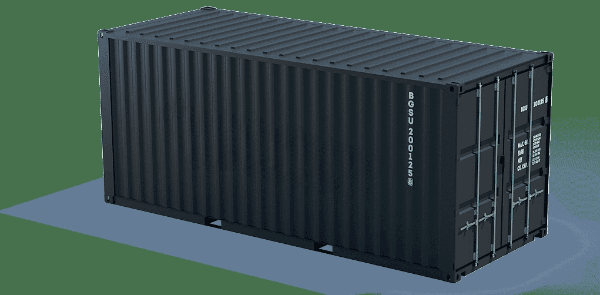
The 20 ft dry container is the most widespread format in the world of maritime transport and logistics. Its standardised design, robustness and modularity make it a reliable solution for many uses, whether storing goods, shipping items or fitting out a temporary workspace. At D.S. Globe Conteneur, in Marseille, we offer this model for sale, with the possibility of also considering rental depending on your needs. This container is a new model, made of Corten steel, an alloy that resists corrosion thanks to its chemical composition and the formation of a protective layer on the surface. It complies with ISO 668 and ISO 1496-1 standards, which guarantees dimensions and mechanical characteristics compatible with international handling and transport equipment.
From a dimensional point of view, the 20 ft dry container has an external length of about 6.06 metres, a width of 2.44 metres and a height of 2.59 metres. These dimensions are standardised and allow it to be stacked and secured on ships, trains or trucks. The empty weight, called tare, is about 2,000 kilograms. The maximum payload is generally around 28,000 kilograms for a standard 20 ft container, but it can vary depending on the manufacturer and the exact design. The usable internal volume is about 33 cubic metres, which offers substantial storage space for dry goods, furniture, professional equipment or personal belongings. The rear opening is provided by two swinging doors equipped with container locks, offering wide access over the full internal height and width.
The container structure is based on a welded steel frame, with side walls and a roof made of corrugated sheet. This corrugation provides significant mechanical rigidity and allows the container to withstand the stresses of maritime transport, including rolling and pitching movements. The floor is made of 28 mm thick marine plywood, a dense material treated to resist humidity and heavy loads. The doors are fitted with rubber seals that limit water and dust infiltration. The container is also equipped with locking and sealing devices, as well as standardised corner fittings at the four upper and lower corners, allowing it to be lifted and secured.
The 20 ft dry container is designed for the transport of dry goods, i.e. goods not subject to temperature regulation. It does not have a refrigeration system, unlike reefer containers, and is not suitable for transporting perishable foodstuffs or products requiring controlled temperature. Likewise, it does not have a roof opening like open tops, nor folding walls like flat racks. Its use is therefore versatile for anything that does not require specific atmospheric conditions.
In the field of storage, the 20 ft dry container is often used as secure storage space on private land, a company car park or an industrial area. It protects goods from bad weather, humidity and pests, thanks to its watertightness and steel construction. It can be placed on the ground, on concrete blocks or wooden sleepers to avoid direct contact with the ground and limit corrosion. For prolonged use, it is recommended to regularly check the condition of the seals, drain standing water on the roof and ventilate the interior to avoid condensation. Adding vents or a dehumidifier can be useful in very humid regions.
On construction sites, the 20 ft dry container frequently serves as a site office, changing room, or storage room for tools or materials. It can be fitted out with internal insulation, wall cladding, electrical installation and a heating or air conditioning system. These transformations must comply with safety rules and applicable standards, particularly regarding electricity and ventilation. For professional use, it is possible to install shelves, racks or partitions to optimise space. The internal height of about 2.39 metres allows you to stand upright without difficulty, which is appreciated for an office or workshop.
For individuals, the 20 ft dry container can serve as a garage, workshop, garden room or base for a modular housing project. Its purchase price remains competitive compared to traditional construction, and its mobility allows it to be moved if necessary. However, fitting it out as a dwelling requires specific work: insulation, plumbing, electricity, carpentry, and sometimes planning permission depending on the destination and location. It is advisable to check with the town hall before any permanent installation.
Transporting a 20 ft dry container requires a container truck equipped with a hook or lifting arm, or a suitable trailer. The total loaded weight can reach several tonnes, so it is essential to check the applicable road regulations, particularly weight and dimension limits. In France, exceptional transport may be subject to authorisation depending on size and weight. The container can also be delivered by crane truck if access allows. It is recommended to provide sufficient manoeuvring space and stable ground for unloading.
Routine maintenance of a 20 ft dry container consists of regularly inspecting the structure to detect any rust spots, cleaning the walls and roof, and checking the condition of the door seals. In case of scratches or incipient corrosion, it is advisable to apply a suitable anti-rust paint. The marine plywood floor can be cleaned with a mild detergent and protected with a wood stain or specific paint. It is also important to grease the hinges and locking mechanisms to ensure proper operation.
When buying a 20 ft dry container, several points of vigilance should be considered. Check the general condition of the structure: absence of major deformations, holes, cracks or perforating corrosion. Check watertightness by closing the doors and observing daylight through the seals. Make sure the floor is sound, without rot or sagging. Ask whether the container has been used for transporting dangerous goods or chemicals, as this could require specific cleaning. Finally, check for the CSC (Convention for Safe Containers) marking, which certifies compliance with international safety standards.
At D.S. Globe Conteneur, we provide our expertise to assist you in choosing your container. Whether you are a professional looking for a durable storage solution or an individual wishing to fit out a space, we advise you on the model suited to your project. We also offer delivery options in France and neighbouring countries, according to terms to be agreed. Do not hesitate to contact us for a personalised quote or additional information on availability and accessories (locks, vents, racks, etc.).
In summary, the 20 ft dry container is a standard, robust and versatile product that meets many storage, transport and fit-out needs. Its ISO compliance, Corten steel construction and generous internal volume make it a relevant choice for companies, construction sites and individuals. With D.S. Globe Conteneur, you benefit from a local contact in Marseille, able to provide technical advice and a service tailored to your project.
To go further, it is useful to compare the 20 ft dry with other formats commonly offered on the market. The 40 ft dry container, for example, offers double the length (about 12.19 m) and an internal volume of about 67 m³, but it is heavier when empty (about 3,750 kg) and requires more manoeuvring space for delivery. The 20 ft remains more manageable, easier to move and to place on a modest-sized plot. The 40 ft high cube, with its internal height about 30 cm greater, is better suited to transporting light but bulky volumes, while the 20 ft dry retains a standard road gauge without exceeding height limits. The 10 ft container, rarer, is suitable for small spaces, but its cost per cubic metre is often higher. Finally, reefer, open top and flat rack containers meet specific needs (controlled temperature, top loading, out-of-gauge goods) and do not replace a standard dry for general use.
In an informed purchasing approach, it is also relevant to look at sector-specific use cases. In agriculture, the 20 ft dry container can store seeds, fertilisers or small equipment, provided it is protected from excessive humidity. In retail, it serves as a mobile reserve or temporary point of sale during events. In the events sector, it is used as a technical room, control room or logistics storage space. In construction, it houses tools, PPE or spare parts. In the maritime and port sector, it remains the basic unit for transporting general cargo. For each use, the interior fit-out should be adapted: shelves, lighting, ventilation, insulation, reinforced locks. These adaptations must comply with fire safety and accessibility rules where they apply.
Regarding transport regulations in France, a loaded 20 ft dry container can be transported by truck if the authorised gross train weight and dimensions remain within the limits of the Highway Code. Beyond that, an exceptional convoy may be necessary, with prior authorisations and a defined route. Maritime transport is governed by the SOLAS convention and IMO rules, while the CSC marking and approval plate certify the container's compliance for stacking and securing. For a permanent ground installation, it is recommended to check local planning rules, particularly if the container is intended for habitation or professional activity. Finally, for use in a protected area or in a co-ownership, authorisation may be required.
In terms of preventive maintenance, a simple schedule can be implemented: a quarterly visual inspection of the walls, roof and floor; a half-yearly check of seals and locks; a complete annual cleaning with possible application of protective paint. In a saline environment, such as near the Mediterranean coast, it is advisable to rinse the container with fresh water to limit salt deposits and to strengthen monitoring of rust spots. When storing sensitive products, adding a moisture absorber or mechanical ventilation can extend the life of stored goods. These simple actions help maintain the container's watertightness and value over several years.
Finally, the 20 ft dry container is part of a circular economy approach: its lifespan is long, it is repairable and can be reconditioned. After several years of use, it can be resold, converted into a technical room or a secondary storage module. This reversibility makes it a reasonable investment for many projects. At D.S. Globe Conteneur, we remain at your disposal to advise you on the model, condition (new or reconditioned depending on availability) and accessories suited to your needs.
To usefully complete this presentation, some practical points that are often overlooked should be addressed. First, preparing the installation site: a 20 ft dry container rests on four corner fittings and transmits most of its load to these points. A flat, stabilised ground, or concrete blocks at the four corners, prevents frame deformation and facilitates door opening. If the ground is sloping, rigid shimming must be provided. Next, the question of ventilation: a closed container can experience condensation when the outside temperature varies greatly. Installing low and high ventilation grilles, or a solar extractor, limits this phenomenon without compromising overall watertightness. For security, a quality padlock or a specific container lock is recommended, as standard doors do not have a built-in lock. It is also possible to add a security bar system or a standalone alarm. Finally, for interior fit-out, insulation kits with sandwich panels, floor coverings or lightweight partitions are available and allow the container to be adapted into an office, workshop or sales room without modifying its load-bearing structure. These accessories should be chosen according to the final use and budget.