Description
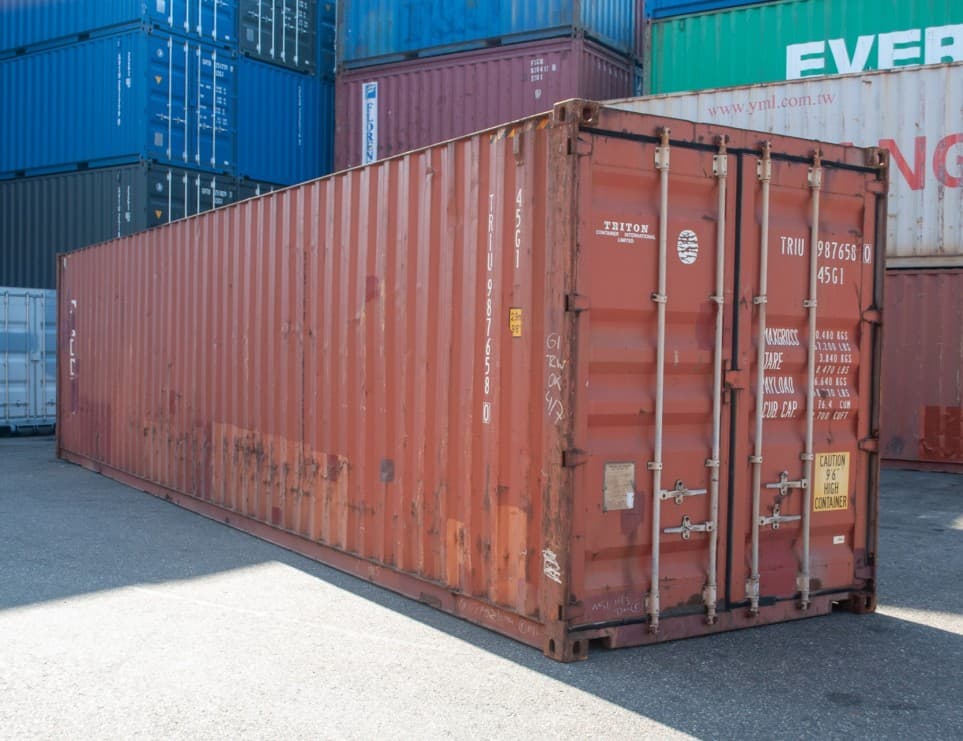
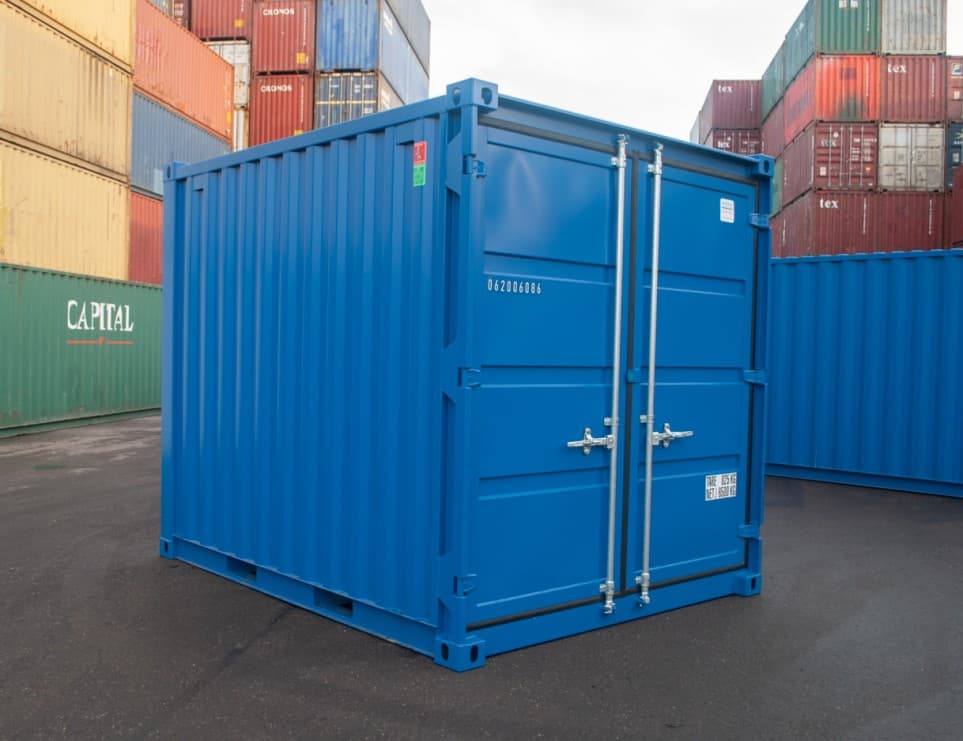
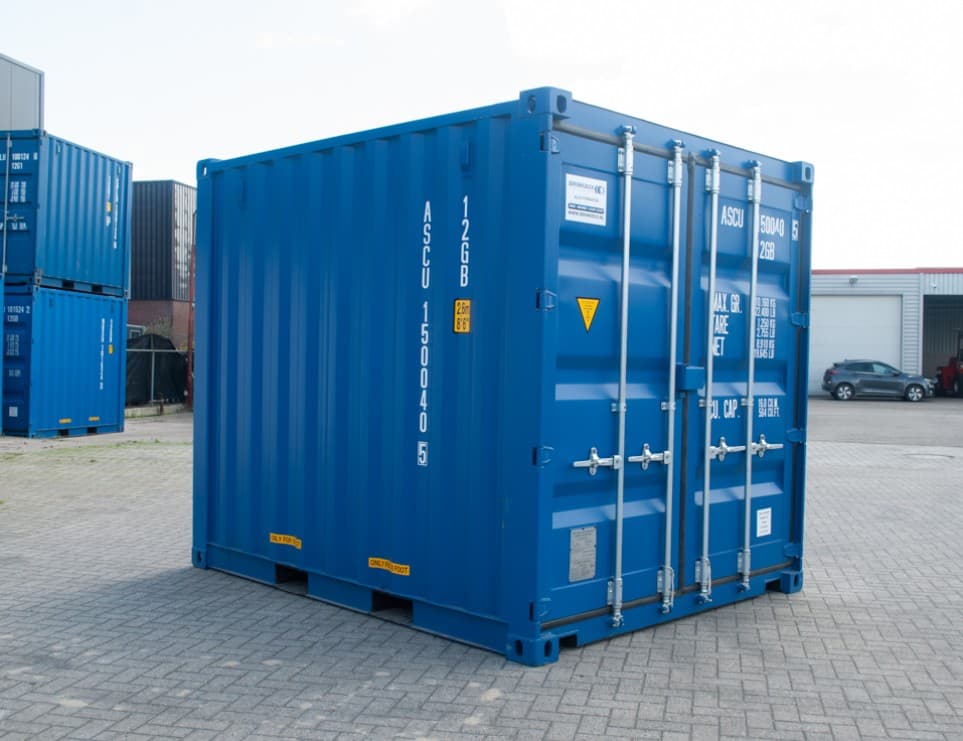
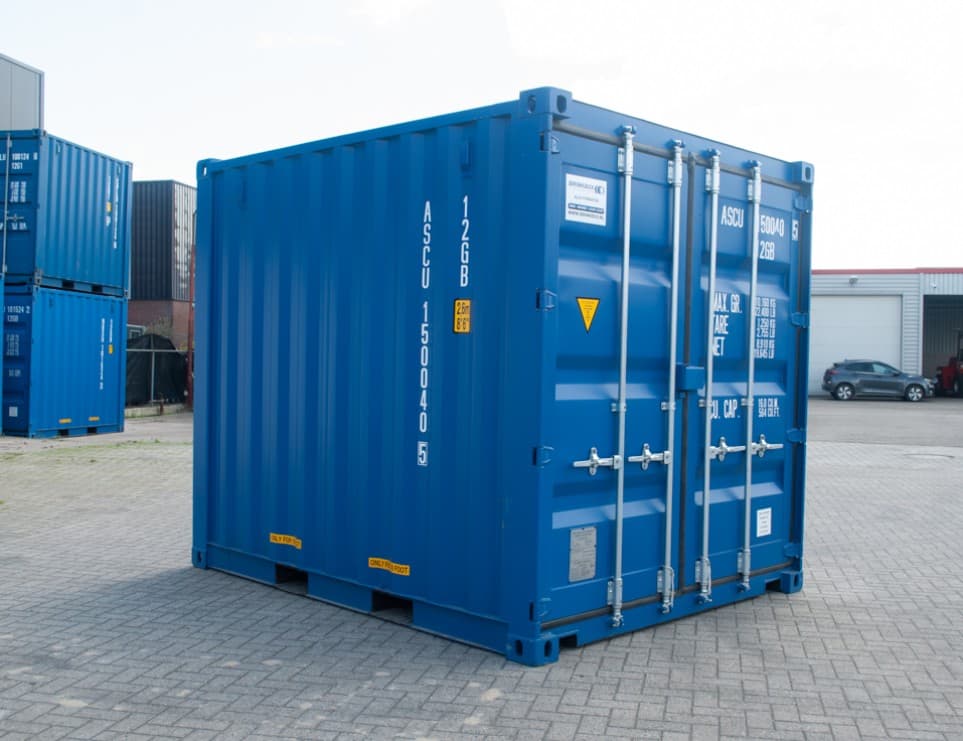
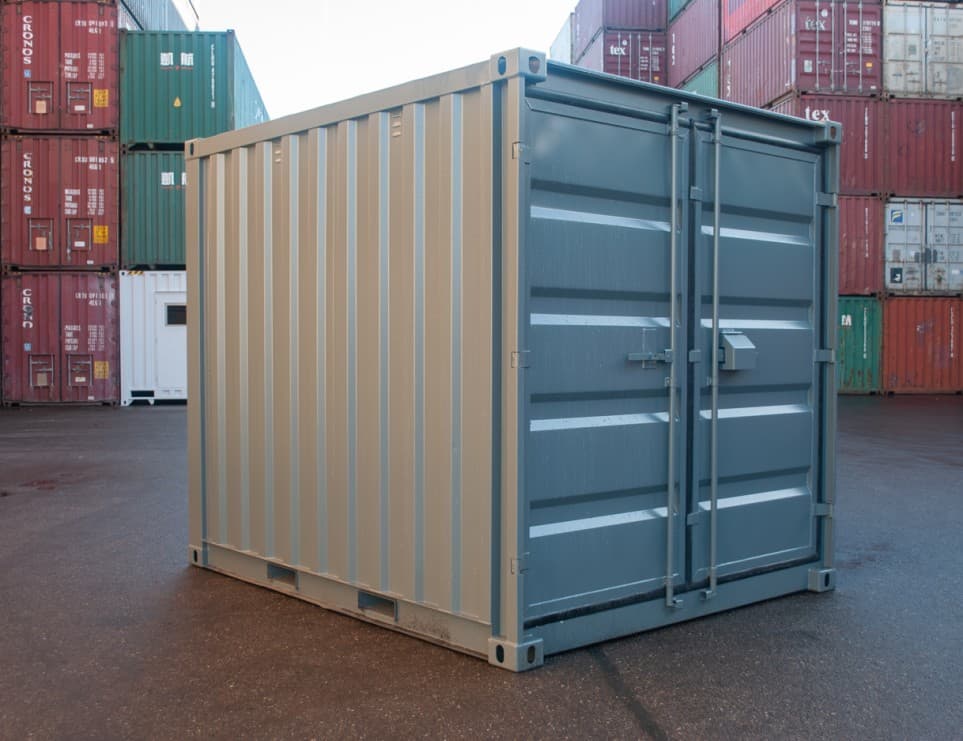
The new 40ft High Cube container is a storage and transport module made of Corten steel, built to current ISO standards. Its interior height, greater than that of a standard container, makes it particularly suitable for large volumes and fit-outs requiring overhead space. This new, inspected and watertight model is delivered ready to use. It can be used as is for storage, or as a base for a more extensive fit-out (site office, technical room, workshop, modular housing).
To begin with, it is useful to recall what distinguishes a High Cube container from a standard dry container. The High Cube (often abbreviated HC) keeps the same length and width as a classic 40ft container, but gains about 30 cm of interior height. This difference may seem minor, but it changes a great deal when it comes to storing vertical volumes, installing interior insulation, running technical ducts or fitting out a living or working space. The interior volume of a 40ft High Cube is around 76 m³, compared with about 67 m³ for a standard 40ft. This extra volume is achieved without increasing the footprint, which is a valuable advantage when available space is limited.
Technically, this container is made of Corten steel, also known as weathering steel. This is a low-alloy steel that, when exposed to air, develops a stable protective oxide layer that slows corrosion. It has been the standard material for container construction for decades, precisely because it withstands marine environments and bad weather well. The structure consists of profiles and corrugated sheets forming the walls, roof and floor. The floor is 28 mm marine plywood, a moisture-resistant bonded wood panel fixed to metal cross members. This type of floor supports rolling loads and heavy distributed loads, allowing pallets, machinery or heavy equipment to be stored without significant deformation.
The rear doors are double doors fitted with container locks, also called locking bars or latches. These locks, four per leaf on a 40ft, ensure firm holding and allow the container to be locked with a padlock or seal. Rubber gaskets, set in the door frames, provide watertightness and limit the entry of air and dust. A new or properly maintained inspected container is watertight against rain and splashes, effectively protecting goods sensitive to moisture. It should be noted, however, that a container is not a perfectly airtight enclosure: natural ventilation exists through the gaskets and small openings, which is generally sufficient to prevent excessive condensation, but may require extra precautions for highly hygroscopic products.
ISO certification is an important point. Maritime containers are designed according to ISO 668 (dimensions and masses) and ISO 1496 (specifications and testing). These standards guarantee the interchangeability of containers between ships, trains and trucks, as well as their suitability for lifting and stacking. An ISO-certified container has a valid CSC (Convention for Safe Containers) plate, which attests to its compliance with international safety rules. This plate is required for sea transport and for stacking at terminals. Even if you intend the container for static use (storage on a plot), the presence of the CSC plate and compliance with ISO standards are guarantees of structural quality and safety.
The external dimensions of a 40ft High Cube container are standardized: approximately 12.19 m long, 2.44 m wide and 2.89 m high. The internal dimensions are approximately 12.03 m long, 2.35 m wide and 2.69 m high. The internal floor area is approximately 28.3 m². The tare weight is generally around 3,900 kg for a new High Cube, with a maximum payload of approximately 28,600 kg and a maximum gross weight (MGW) of 32,500 kg. These values may vary slightly depending on the manufacturer and materials used, but they remain in these orders of magnitude. It is essential to check the container's CSC plate to know the exact permitted masses.
The most common use of this type of container remains storage. On a building site, in an industrial area or for a private individual, it protects materials, tools, furniture or goods from bad weather and theft. Its double rear doors make loading and unloading easier, including with a pallet truck or forklift if the ground is suitable. For static use, it is recommended to place the container on stable, level supports (concrete blocks, wooden beams, metal feet) to avoid deformation and allow air circulation under the floor, which limits corrosion from below.
Another frequent use is the site office or technical room. The interior volume of the High Cube allows a partition, insulation, an additional door, windows, air conditioning or heating to be installed. Many fit-outs are made from 40ft High Cube containers because the extra height provides appreciable comfort once insulation and suspended ceilings are installed. It is also possible to turn one into a workshop, showroom, secure storage room or living base. In all cases, local planning rules must be respected: a container placed on the ground may be considered a construction and require prior authorization (prior declaration or building permit) depending on its duration of installation and use. It is strongly advised to check with the town planning department of the municipality before any installation.
Transporting this container is another point to anticipate. A 40ft High Cube is transported on a container truck fitted with a suitable chassis. The total height of the convoy may exceed 4 metres, which may require a traffic permit and a route planned to avoid bridges, tunnels or overhead lines. In France, exceptional transport is subject to regulations: above 4 m in height, an individual permit is generally required. Likewise, the total weight of the convoy (truck + container + load) must comply with road traffic limits (44 tonnes for a standard road train, unless exempted). For delivery, suitable access and manoeuvring space for the truck must be provided and, if necessary, a crane or forklift for positioning. D.S. Globe Conteneur, based in Marseille, can assist you in organizing delivery and advise you on access constraints.
Maintaining a Corten steel container is relatively simple. Regular visual checks reveal areas of rust, impacts, deformation or sealing problems. Sensitive points are the lower walls, corners, door frames and roof. In the event of a scratch or early corrosion, cleaning followed by a suitable anti-rust paint stops the phenomenon. Door gaskets must be checked and replaced if cracked or crushed. The marine plywood floor must be kept dry; in case of persistent humidity, ventilation or a dehumidifier may be useful, especially for storing sensitive products. It is also recommended to clean the interior regularly to avoid the accumulation of dust and debris that could retain moisture.
When buying a new or inspected container, several points deserve your attention. First check the general condition of the structure: no major deformation, holes or untreated visible welds. Check watertightness by closing the doors and looking for daylight through the gaskets: no gap should be visible. Inspect the floor: it must be dry, with no soft or detached areas. Check the CSC plate and its validity date; for a new container, it should be recent. Ask whether the container has been treated or painted recently, and with which products. Finally, make sure the container really matches the "High Cube" designation: the interior height should be about 2.69 m, not 2.39 m as on a standard.
The price shown for this new 40ft High Cube container is €3,850.00. This rate may vary depending on availability, delivery location and options (fit-out, painting, delivery). It is recommended to request a personalized quote including transport to your site. D.S. Globe Conteneur, located in Marseille, operates in the Provence-Alpes-Côte d'Azur region and beyond. Do not hesitate to contact us to check availability and delivery terms.
In summary, the new 40ft High Cube container in Corten steel is a versatile, robust product compliant with international standards. It is suitable for both storage and fit-out, and its extra height offers appreciable comfort in use. Its purchase should be accompanied by consideration of siting, access and possible permits. Well maintained, it offers a long service life.
To go further into maintenance, it is useful to distinguish preventive maintenance from corrective maintenance. Preventive maintenance consists of inspecting the container at regular intervals, for example once or twice a year, and after each notable weather event (storm, prolonged frost, heavy rain). This involves checking the condition of the paint, the absence of incipient corrosion, the flexibility of the gaskets, the proper operation of the locks and the cleanliness of the floor. Corrective maintenance is carried out when a defect is detected: touching up paint on a scratch, replacing a door gasket, screwing or replacing a floor board, localized treatment of a rusty area. On a Corten steel container, superficial surface rust is not necessarily an alarm signal: this material is designed to form a protective patina. However, flaking rust, which swells and scales, indicates active corrosion that must be treated without delay. Cleaning with clear water and a soft brush is generally enough to remove salt deposits, particularly by the sea where spray accelerates corrosion. It is inadvisable to use overly powerful pressure washers on the gaskets and floor, as they can introduce water into the gaps. For fitted-out containers, maintenance must also cover interior equipment: checking insulation, openings, electrical installations and ventilation. A container intended for food or pharmaceutical use must be cleaned according to suitable protocols, and it is prudent to check the compatibility of stored products with the materials present.
Regarding transport regulations in France, several texts govern the movement of a 40ft High Cube container. The Highway Code sets the limits for dimensions and weights of vehicles and road trains. For a truck + container semi-trailer combination, the maximum length is 16.50 m, width 2.55 m and height 4.00 m. The maximum authorized gross weight (GVW) is 44 tonnes for a combination with five axles or more, subject to compliance with axle limits and any local restrictions. An empty 40ft High Cube container weighs about 3.9 tonnes, leaving a large margin for loading, but the total weight of the convoy must always be checked. If the height of the convoy exceeds 4 metres, which can happen with certain low or high chassis, an exceptional transport permit is required. This permit is issued by government departments and may impose a specific route, travel times and an escort vehicle depending on the category. For first-category exceptional transports, the permit is generally valid for a given route and a defined period. It is therefore essential to prepare delivery in advance by providing D.S. Globe Conteneur with the access dimensions of your site: road width, presence of low branches, roundabouts, slopes, stabilized ground or not. A 40ft container cannot be delivered by a standard truck without suitable lifting equipment: the truck must be fitted with a lifting arm, or a mobile crane or high-capacity forklift must be present on site. Unloading a 40ft requires a machine capable of lifting several tonnes at a significant distance, as the centre of gravity is far away. It is therefore recommended to allow a clear space of at least 20 metres around the installation area and ground capable of supporting the weight of the lifting machine.
In terms of sector use cases, the 40ft High Cube container has varied applications. In the building and public works sector, it serves as a storage room for sensitive materials (cement, power tools, spare parts), a site changing room, a works management office or a break room. Its great length allows several distinct spaces to be fitted out in a single unit. In industry and logistics, it is used as a buffer storage area, a spare parts room or a order preparation base. Its ISO compliance allows it to be loaded onto a train or ship if the company needs to send it. In the agricultural sector, it can store seeds, fertilizers, fodder or equipment, provided ventilation and absence of humidity are ensured. In retail and events, it becomes a pop-up shop, catering stand, technical control room or equipment storage room. In housing and office sectors, it is increasingly used to create modular extensions, studios, garden offices or meeting rooms. The interior height of 2.69 m allows ceiling insulation to be installed while maintaining a comfortable ceiling height, which is a decisive advantage over a standard container. In the maritime and port sector, it remains a standard handling and storage tool, and its ISO certification facilitates its integration into existing flows.
Comparing the 40ft High Cube with other container sizes and types helps make the right choice. The standard 20ft offers about 33 m³ of interior volume and a floor area of about 14 m²; it is more manageable, lighter (about 2.2 tonnes empty) and less bulky, making it suitable for small storage or tight sites. The 20ft High Cube gains height but remains limited in floor area. The standard 40ft offers about 67 m³ and 28.3 m² of floor, but with an interior height of about 2.39 m. The 40ft High Cube, the subject of this sheet, adds about 9 m³ of volume and 30 cm of height, which is often decisive for fit-out. The 45ft High Cube, less common, offers slightly more volume but can pose transport and handling constraints, as it is not accepted everywhere. Open top containers, without a rigid roof, are designed to load out-of-gauge goods from above; flat racks, without side walls, are used for transporting heavy or bulky loads; reefers, insulated and fitted with a refrigeration unit, are intended for perishable goods. These special types meet specific needs and are generally more expensive. For versatile storage or fit-out use, the dry 40ft High Cube remains the best compromise between volume, cost and ease of implementation. It is also possible to compare the container with other storage solutions, such as a masonry room or a metal shed. The container has the advantage of being mobile, robust, quickly installed and often less expensive to purchase. On the other hand, it offers a fixed surface and volume, and its interior fit-out may require specific work. The choice therefore depends on the duration of use, the nature of the goods stored and the constraints of the site.
Finally, a few clarifications on safety and protection. A closed and locked container is a deterrent barrier, but it is not inviolable. To strengthen security, a quality padlock, a recessed lock, an additional locking system or an alarm can be added. Site lighting and camera surveillance are useful complements. If the container is intended to store valuable products, it is advisable not to indicate the nature of the contents and to limit visibility from the public road. In terms of fire, a metal container does not spread fire like a wooden structure, but it can trap heat; it is therefore prudent not to store flammable products without precautions and to provide a suitable fire extinguisher nearby. For interior fit-outs, compliance with electrical safety and ventilation rules is essential. All these precautions allow you to get the most out of this new 40ft High Cube container, whether for professional or private use.