Description
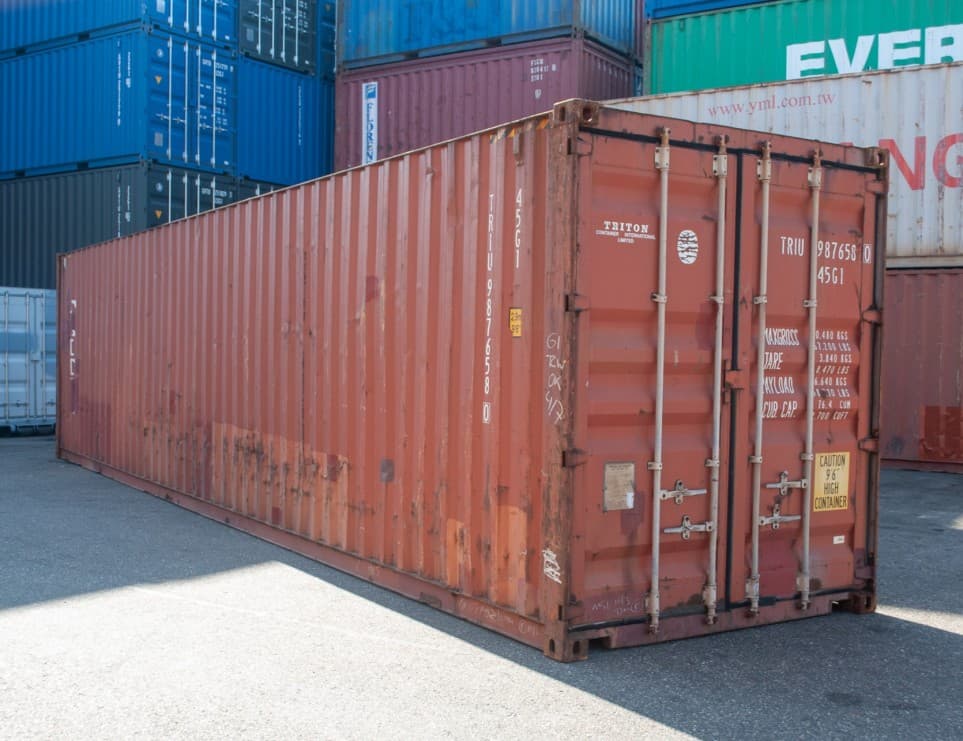
The used 40ft High Cube container we offer at D.S. Globe Conteneur is a smart choice for anyone seeking significant storage volume with above-normal interior height. This model stands out from the standard 40ft container with its 30 centimeters of extra height, bringing the exterior height to about 2.90 meters. This feature makes it particularly suitable for storing bulky goods or for creating living or working spaces that require comfortable ceiling height. In the following pages, we detail its technical specifications, multiple uses, points to watch when buying, as well as maintenance tips and information on regulations applicable in France.
Let's start with the technical specifications. This container is an ISO model type 1AAA, compliant with ISO 668 and ISO 1496-1 standards. Its standard external dimensions are approximately 12.19 meters long, 2.44 meters wide, and 2.90 meters high. Inside, you get a length of about 12.03 meters, a width of 2.35 meters, and a ceiling height of 2.69 meters. The usable internal volume thus reaches about 76 cubic meters, compared to about 67 cubic meters for a standard 40ft. This difference of 9 cubic meters represents a considerable advantage for storing lightweight but bulky goods, or for installing high shelving. The tare weight is generally around 3,900 kilograms, and the maximum payload is about 26,500 kilograms, for a maximum gross weight (MGW) of 30,480 kilograms. These values may vary slightly depending on the manufacturer and year of construction, but they remain in these ranges.
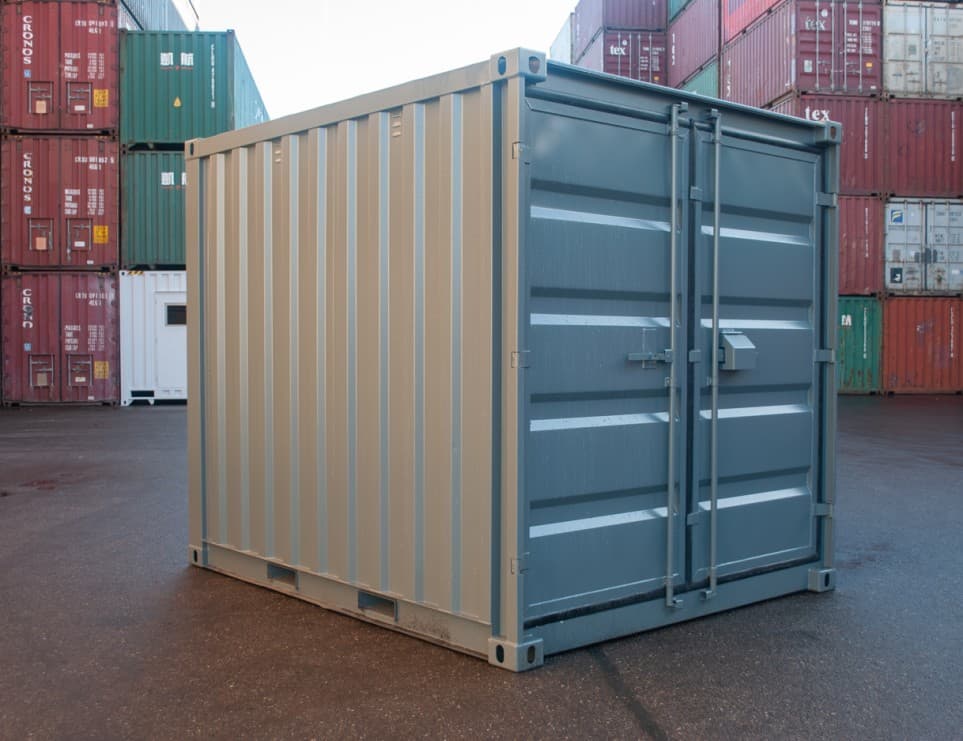
The container structure is made of Corten steel, a low-alloy steel that resists corrosion better than ordinary steel thanks to the presence of copper, chromium, and nickel. This feature is essential for prolonged outdoor use, as it limits the formation of perforating rust. The floor is made of 28-millimeter-thick marine plywood, a dense material treated to resist moisture and heavy loads. The side walls and roof are corrugated steel, giving the whole good structural rigidity. The rear doors are double doors equipped with container locks (four vertical locking bars with handles), ensuring secure closure and proper sealing when well adjusted. Rubber seals are present around the doors. The container is also fitted with corner castings at the eight corners, compliant with ISO 1161, which allow lifting, stacking, and securing on vehicles or ships.
Regarding detailed specifications, here is a summary:
- External dimensions: length 12.19 m, width 2.44 m, height 2.90 m.
- Internal dimensions: length 12.03 m, width 2.35 m, height 2.69 m.
- Internal volume: approximately 76 m³.
- Tare weight: approximately 3,900 kg.
- Maximum payload: approximately 26,500 kg.
- Maximum gross weight: 30,480 kg.
- Material: Corten steel.
- Floor: 28 mm marine plywood.
- Doors: double rear doors with container locks.
- Certification: ISO.
- Type: 40ft High Cube (1AAA).
These characteristics comply with international standards and can be verified on the CSC plate affixed to the door or side of the container. This plate indicates the manufacturing date, serial number, weights, and periodic inspection dates. It is important to note that, as a used container, some values may differ slightly from those of a new container due to normal wear or possible repairs. We invite you to consult our photos and ask for details on the exact condition of the available model.
Now let's look at the practical uses of this used 40ft High Cube container. The first use that comes to mind is storage. Whether for businesses, craftsmen, or individuals, this container offers a sheltered, secure, and easily accessible space to store various goods: pallets, construction materials, tools, site equipment, furniture, archives, etc. The extra height allows storing large objects without tilting them, or installing multi-level shelving, thus optimizing floor space. Moreover, the marine plywood floor supports high point loads, allowing the passage of a forklift or pallet truck (subject to checking floor strength and using appropriate protections).
Another common use is conversion into living or working space. The ceiling height of 2.69 meters offers comfort far superior to that of a standard container (2.39 m), which is particularly appreciated for creating an office, workshop, studio, meeting room, technical room, or even temporary housing. Converting a High Cube container allows installing thermal and sound insulation, wall cladding, floating floor, partitions, and all necessary equipment (electricity, plumbing, air conditioning). The extra height facilitates integrating technical ducts in the ceiling without excessively reducing usable height. Many architects and builders use this type of container for modular projects, as it offers a good compromise between internal volume and ease of transport.
In transport, the 40ft High Cube container is commonly used to ship bulky but light goods, as it allows loading a larger volume without exceeding weight limits. It is accepted on most container ships, trains, and trucks, provided size rules are respected. In France, road transport of this container requires a suitable vehicle (container semi-trailer) and particular attention to total height, which can reach about 4.10 meters when loaded on a standard chassis. This may require special permits to travel on certain roads or in certain tunnels, depending on local regulations. It is therefore essential to check the route and comply with road signs.
The container can also serve as a base for creative projects: mobile kitchen, food truck, pop-up shop, exhibition room, site storage, site locker room, etc. Its modularity and robustness make it an economical and durable solution. Moreover, using recycled shipping containers is part of a circular economy approach, as it extends the life of an industrial product designed to last several decades.
Now let's address the points to watch when buying a used container. The first criterion to examine is the general condition of the structure: look for perforating rust, major dents, cracks in welds, frame deformations. Surface rust (white rust or light oxidation) is normal and can be treated, but deep rust that attacks the steel thickness is a sign of structural weakness. Check especially the lower walls, corners, roof, and floor. The floor must be sound, without rot or delamination; boards must be well fixed and not have holes. Doors must open and close without forcing, with flexible and non-cracked seals. Locks must work properly and keep doors closed. It is also recommended to check the presence and legibility of the CSC plate, which certifies compliance with maritime transport safety standards. If the container was used to transport dangerous goods, a note may appear on the plate; in that case, thorough cleaning or non-contamination certification may be necessary.
Another important point is watertightness. A used container may have worn seals or small cracks that let water in. A simple test is to spray water on the roof and walls and check for no infiltration inside. For storing moisture-sensitive materials, it may be wise to install a ventilation system or dehumidifier. Condensation is common in metal containers subject to large temperature variations; adequate ventilation helps limit this risk.
Finally, it is advisable to inquire about the container's history: was it used to transport food, chemicals, waste? If so, specific cleaning may be required. At D.S. Globe Conteneur, we carefully select our used containers and remain at your disposal to provide additional information on the condition of each available unit.
Regarding maintenance, a Corten steel container requires little care, but a few simple actions prolong its lifespan. It is recommended to regularly clean the exterior surface with clean water and mild soap to remove salt or pollutant deposits, especially near the sea. An annual visual inspection helps detect early rust and treat it with suitable anti-rust paint. Door seals should be lubricated periodically (with silicone grease, for example) to prevent them from drying and cracking. Hinges and locks should also be greased. If the container is placed on the ground, it is advisable to raise it on blocks or beams to avoid direct contact with ground moisture and promote air circulation under the floor. Finally, if the container is intended for regular use, annual maintenance by a professional can be considered.
In France, installing a container on private land may be subject to urban planning rules. Generally, a container is considered a construction if its floor area exceeds certain thresholds or if it is permanently fixed to the ground. It is therefore prudent to check with the town hall for any procedures (prior declaration, building permit). For temporary use (construction site), exemptions may exist. Moreover, transporting a 40ft High Cube container on the road requires an exceptional convoy in some cases, due to its height and length. Specialized transport companies, such as D.S. Globe Conteneur, can assist you with these procedures.
In summary, the used 40ft High Cube container is a versatile and economical solution for storage, conversion, or transport. Its extra height offers appreciable internal volume and increased comfort for housing or work projects. By respecting the points to watch when buying and ensuring minimal maintenance, you will benefit from durable and functional equipment. Do not hesitate to contact us to find out about available models and get a personalized quote.
Let's now delve deeper into sector-specific use cases, as the used 40ft High Cube container meets specific needs depending on the trade. In the construction and public works sector, it is frequently used as a site facility: locker room for teams, site office, break room, or secure storage for tools and sensitive materials. Its height allows installing lockers, workbenches, and overhead storage without hindering movement. For farmers and forest operators, this container is used to store grain, animal feed, seeds, or small equipment, provided sufficient ventilation is planned to avoid condensation. In retail and distribution, it can become a storage reserve for a store, an off-site warehouse, or a fitted-out mobile shop. Building craftsmen find space to store their tools and materials away from the weather. Logistics companies use it as temporary storage extension or cross-docking unit. Finally, individuals can store furniture, light vehicles (motorcycle, scooter, quad) or leisure equipment, provided an access ramp is installed and the opening is secured.
Let's now compare the 40ft High Cube with other container sizes and types to help you make the right choice. The standard 20ft container (1CC) offers a volume of about 33 m³ and an internal height of 2.39 m. It is shorter (6.06 m) and lighter, making handling and transport easier, but it offers less volume. The standard 40ft (1AA) offers about 67 m³, 9 m³ less than the High Cube, with an internal height of 2.39 m. The 40ft High Cube stands out with its ceiling height of 2.69 m, an asset for conversion or high storage. There are also 45ft High Cube containers (1EEE) that offer even more volume (about 86 m³) but are less common and sometimes more expensive. Reefer containers (refrigerated) are designed for transporting perishable goods and have a refrigeration unit; they are heavier and more expensive, and their internal height is generally reduced. Open top (open roof) and flat rack (platform without walls) are suitable for out-of-gauge loads. Dry (standard) remains the most versatile for dry storage. Finally, the High Cube is available in new or used version; used allows significantly reducing acquisition cost while maintaining a solid structure.
Let's address some additional aspects regarding regulations and safety. In France, using a container as a workplace must comply with the Labor Code, particularly regarding ventilation, lighting, fire safety, and accessibility. For residential use, construction rules (DTU) and urban planning must be followed. Road transport is governed by the Highway Code: the authorized total rolling weight (PTRA) must not be exceeded, and total height must remain compatible with structures. A 40ft High Cube container loaded on a low-bed chassis can reach a height of about 4.10 m, requiring particular attention to tunnels and bridges. In some cases, a special convoy circulation permit is required. It is also important to check that the towing vehicle is suitable and that the container is properly secured to ISO fixing points.
Regarding preventive maintenance, here are some additional best practices. Regularly inspect the roof for accumulation of leaves or debris that could retain moisture. Check the condition of welds around corner castings and posts. If you notice paint chips, clean the area and apply anti-rust paint. For the interior, if the container is used to store sensitive products, an additional floor covering (plywood or rubber mat) can protect the original floor. If rodents are present, seal gaps with rock wool or suitable sealant. Finally, if the container is exposed to a marine environment, washing with fresh water after storms is recommended to remove salt.
In conclusion, the used 40ft High Cube container is a wise investment for many projects. Its extra height, robustness, and modularity make it a suitable solution for storage, conversion, and transport. By following the vigilance and maintenance tips, you will enjoy its benefits durably. D.S. Globe Conteneur, based in Marseille, puts its expertise at your service to assist you in choosing, delivering, and installing your container. Contact us to find out availability and get a personalized quote.