Description
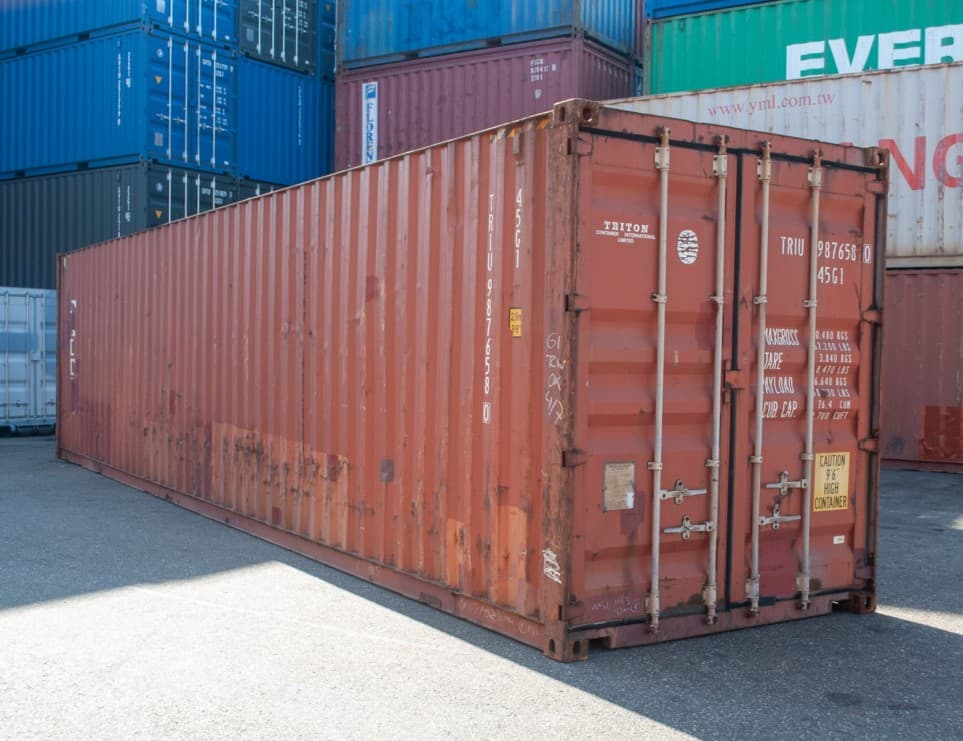
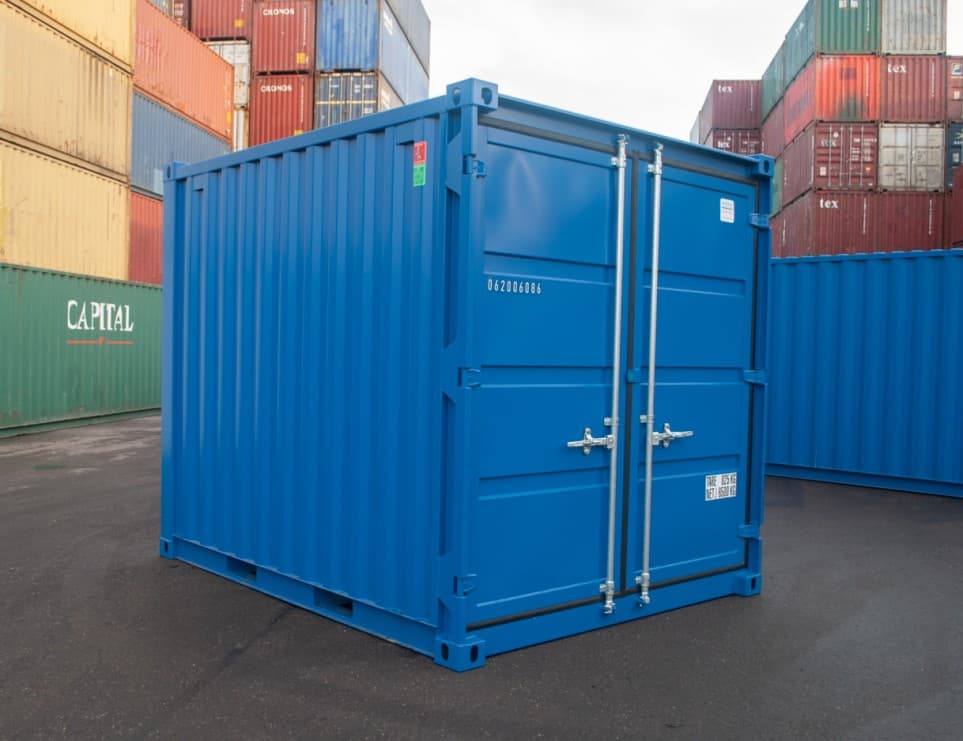
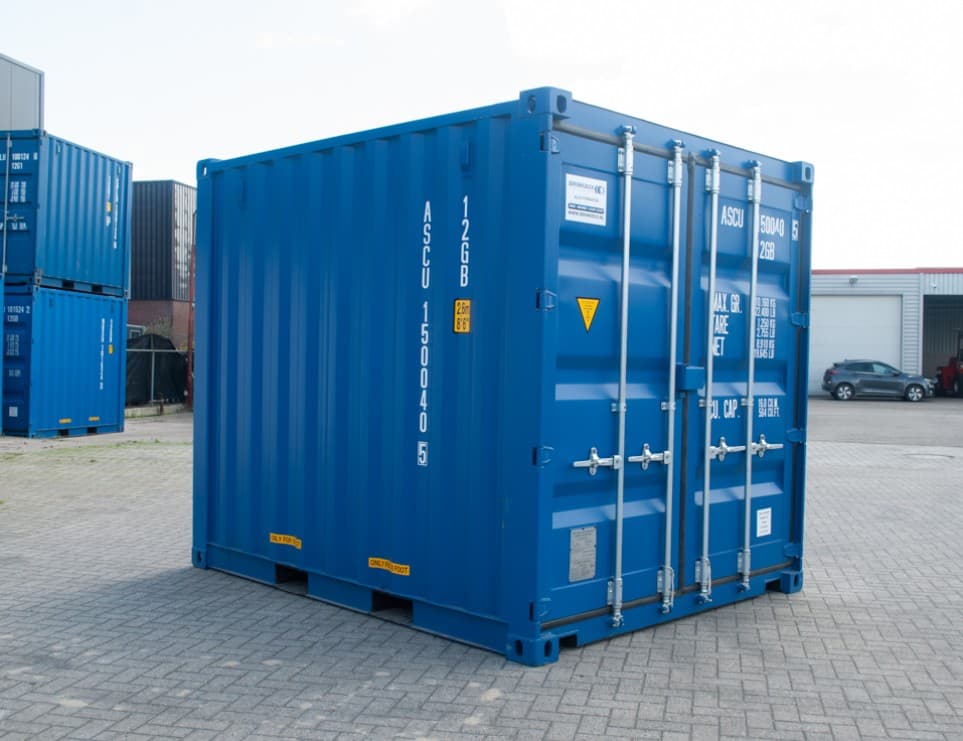
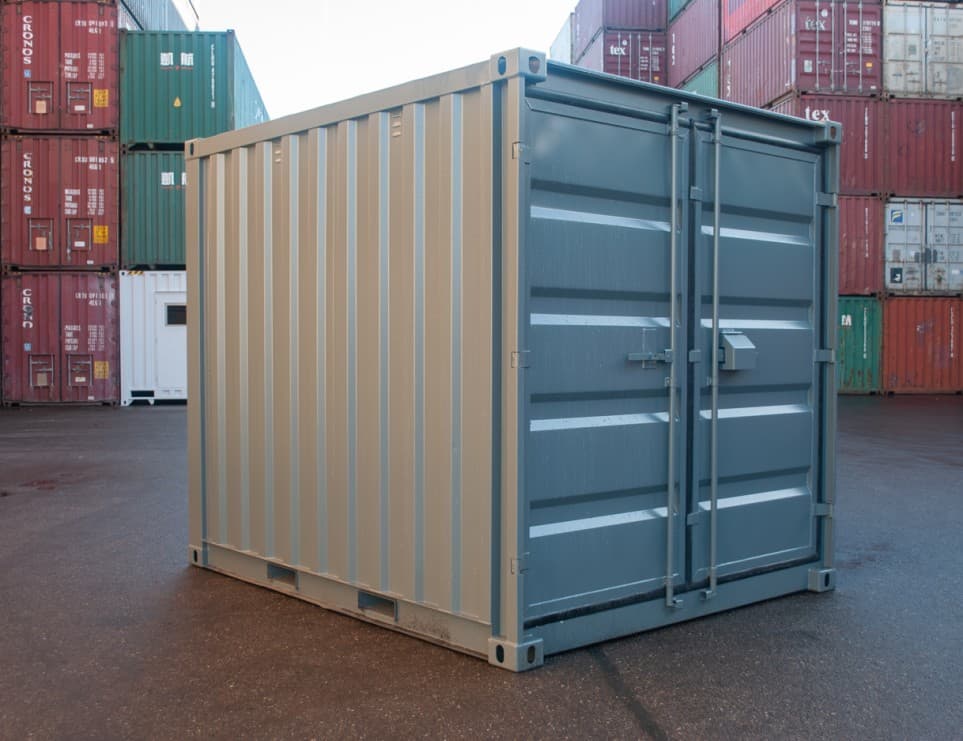
The used 40ft High Cube container we offer is a standardized maritime model, designed for intermodal transport and often repurposed for stationary uses. Its distinguishing feature is its height, 30 cm greater than a standard dry container, bringing the internal height to around 2.69 m (compared with 2.39 m for a standard 40ft). This extra dimension provides an internal volume of around 76 m³, versus 67 m³ for a standard unit, nearly 13% more capacity. This additional volume is particularly valued for storing tall goods (raised Euro pallets, industrial equipment, construction machinery) or for conversion projects requiring comfortable ceiling height.
Like any maritime container, this model is made of Corten steel, a low-alloy steel that resists atmospheric corrosion through the formation of a protective oxide layer. The structure consists of welded steel sections, with corrugated side walls, a roof and a floor. The floor is made of 28 mm marine plywood, treated to resist moisture and heavy loads. The rear doors are double-leaf, fitted with container locks (four vertical locking bars) and rubber sealing gaskets. These features comply with ISO 668 and ISO 1496-1, which define the dimensions and testing of series 1 containers. The 40ft High Cube container also meets ISO specifications for strength and stacking.
In terms of external dimensions, a 40ft High Cube container generally measures 12.19 m long, 2.44 m wide and 2.89 m high. Internal dimensions are approximately 12.03 m long, 2.35 m wide and 2.69 m high. The tare weight is around 3,900 kg, and the maximum payload is approximately 26,500 kg, for a maximum gross weight of 30,480 kg (in accordance with ISO). These values may vary slightly depending on the manufacturer and year of construction. The container can be stacked up to 9 units at sea, but for land use it is generally recommended not to exceed 3 to 4 levels, depending on ground conditions and local safety rules.
This used container has already served in maritime transport. It therefore shows signs of use: scratches, minor dents, surface rust in some areas. However, its structure remains sound and its doors functional. It is important to note that water and air tightness may be slightly reduced compared with a new container, but remains sufficient for most storage uses. A careful visual inspection is recommended before purchase, particularly at the door seals, floor and welds. If the container is to be used for storing moisture-sensitive materials, adding a dehumidifier or extra ventilation may be advisable.
The common uses of this type of container are varied. First, storage: thanks to its large volume, it can hold pallets, machinery, building materials, archives, etc. It can be placed on private land, a company car park or an industrial zone, subject to local planning rules. In France, installing a container as a permanent structure may require planning permission (prior declaration or building permit) depending on its surface area and how long it will be in place. It is advisable to check with the local town hall.
Second, conversion: the High Cube container is highly prized for creating living spaces, offices, meeting rooms, site changing rooms, toilets, etc. The 2.69 m ceiling height allows insulation, a suspended ceiling and flooring to be installed without overly reducing the sense of space. Many architectural projects use maritime containers to build houses, student accommodation, hotels, restaurants or pop-up shops. The container provides a solid, modular structural base that can be easily transported and assembled. However, interior conversion requires specific work: cutting openings for windows and doors, reinforcing the structure, thermal and acoustic insulation, electrical work, plumbing, etc. It is essential to use qualified professionals to ensure compliance with construction and safety standards.
Third, transport: although this container is used, it can still be used for transporting goods, provided it is in good condition and complies with shipping line requirements. However, for regular commercial use, it is often more cost-effective to use new or recent containers, as shipping lines impose strict criteria (no perforating rust, perfect watertightness, etc.).
Maintaining a used container is relatively simple. It is recommended to clean it regularly, remove debris and check the condition of the door seals. In case of surface rust, brushing and applying anti-rust paint can extend its service life. For a permanent installation, it is advisable to raise the container on concrete blocks or wooden sleepers to avoid direct contact with the ground and limit moisture. Adequate ventilation is also important to prevent condensation, especially if the container is used for long-term storage.
When buying a used container, several points should be checked. First, the condition of the structure: look for major deformation, cracks in the welds, holes or perforations caused by rust. Second, the condition of the floor: check that there are no rotten areas, broken or loose boards. The doors must open and close easily, with flexible, non-cracked seals. The locks must work properly. It is also advisable to check for the CSC plate (Convention for Safe Containers), which certifies that the container complies with international safety standards. This plate is mandatory for maritime transport, but may be missing on a container intended for land use. Finally, make sure the container has been properly disinfected and is free of dangerous goods residues, especially if it has carried chemicals or food products.
In France, transporting a 40ft container requires a suitable vehicle and compliance with weight and dimension regulations. An exceptional convoy may be necessary if the dimensions exceed the permitted limits (2.55 m wide, 4 m high, 16.5 m long for an articulated combination). The maximum authorised gross train weight (PTRA) must not be exceeded. It is recommended to use a specialist carrier equipped with container trucks and unloading cranes. Unloading at the destination may require a mobile crane or a high-capacity forklift, depending on site access.
In summary, the used 40ft High Cube container is a versatile and economical solution for many projects. Its generous internal volume, robustness and modularity make it a relevant choice for storage, conversion or even transport. At D.S. Globe Conteneur, we support you in your project and advise you on choosing the container best suited to your needs. Do not hesitate to contact us for more information or to visit our yard in Marseille.
To go further into maintenance, two levels should be distinguished: routine maintenance and structural maintenance. Routine maintenance consists of sweeping or washing the floor, removing leaves and debris accumulated on the roof (which retain moisture and encourage rust), and greasing the hinges and locking mechanisms at least once a year. A visual check of the door seals detects cracks or hardening; a seal that no longer presses properly lets in water and air, which can damage the contents. Replacing a door seal is a simple, low-cost operation that should be done without delay. Structural maintenance concerns rust: on a used container, surface rust is normal and not serious. However, perforating rust, which goes through the sheet metal, must be treated by cutting out and replacing the affected part, or by applying epoxy filler and suitable paint. It is recommended to inspect the bottom of the side walls, the lower corners and the area around the doors, the most exposed zones. Preventive anti-rust treatment every two to three years, with a glycero or epoxy type paint, significantly extends the container's service life, especially by the sea where salty air accelerates corrosion. In Marseille and the Provence-Alpes-Côte d'Azur region, this precaution is particularly relevant.
Regarding French regulations, buying and owning a used maritime container is not subject to any specific authorisation. However, its installation and use may be regulated. For a fixed installation, refer to the French planning code: a container placed on the ground and not dismantlable may be considered a construction and require a prior declaration (for a floor area of 20 m² or less) or a building permit (above 20 m²). A container simply placed on blocks, without foundations, and intended for temporary use may in some cases avoid these formalities, but the decision rests with the local authority. It is therefore essential to consult the local planning department before any installation. Furthermore, if the container is used as a workplace (site office, changing room), it must comply with the health and safety rules applicable to workplaces, particularly regarding ventilation, lighting and emergency exits. For residential use, the requirements are more demanding: insulation, ventilation, electrical compliance, etc., and a building permit is almost always required.
Transporting the container itself is governed by the Highway Code and exceptional transport regulations. A 40ft High Cube container loaded on a container truck reaches a total height of around 4.10 m to 4.20 m, which exceeds the 4 m regulatory limit for ordinary vehicles. It therefore falls into the exceptional convoy category, with specific rules: prior authorisation, signage, possibly escort. The width of 2.44 m remains within the permitted 2.55 m limit, but the length of the articulated combination (tractor + semi-trailer + container) can approach 16.5 m, which is permitted under conditions. The vehicle's maximum authorised gross train weight (PTRA) must be respected: an empty 40ft High Cube container weighs around 3.9 tonnes, and a container semi-trailer weighs between 5 and 7 tonnes, which remains within limits for a standard tractor. When loaded, care must be taken not to exceed the 44 tonnes maximum authorised PTRA in France for a 5-axle articulated combination. Using a specialist carrier is strongly advised, as they understand these constraints and have the appropriate equipment (auxiliary crane, forklift, etc.).
As for sector-specific use cases, the used 40ft High Cube container finds applications in many fields. In construction, it serves as a site welfare unit: changing rooms, canteen, site office, tool storage. Its height allows partitions and insulation to be installed without reducing space. In industry, it is used as a spare parts store, maintenance room or buffer storage area. In agriculture, it houses equipment, seeds or harvests, provided suitable ventilation is arranged. In retail, it becomes a pop-up shop, fair stand or back storage room. In the cultural sector, it is converted into a mobile stage, artist's studio or exhibition room. Finally, in residential use, it is increasingly used to create extensions, guest houses, garden offices or alternative housing. Each use imposes its own technical constraints: enhanced insulation for housing, ventilation for storing sensitive products, floor reinforcement for heavy loads, etc.
It is useful to compare the 40ft High Cube with other container sizes and types to make an informed choice. The 20ft standard (around 6.06 m long, 33 m³) is more compact and easier to handle, suited to small sites and heavy loads (its payload is close to that of a 40ft). The 40ft standard (67 m³) is suitable when extra height is not needed. The 40ft High Cube (76 m³) is the best choice for maximising floor volume, especially for light, bulky goods. The 45ft High Cube (around 86 m³) offers even more volume, but is less common and can be trickier to handle. Reefer containers (refrigerated) are intended for transporting perishable goods and have a refrigeration unit, but their cost and maintenance are higher. Open top (removable roof) and flat rack (no side walls) are designed for out-of-gauge loads. Finally, the High Cube container also differs from the standard container in its external height of 2.89 m, which can cause problems passing under certain bridges or in underground car parks. It is therefore essential to check access constraints before purchase.
Finally, a few practical tips for buying: choose a container whose CSC plate is legible and up to date, ask for recent photos of sensitive areas (corners, bottom of walls, floor, doors), and if possible visit the container before purchase. At D.S. Globe Conteneur, we make our expertise available to guide you in choosing the container suited to your project, whether for single or multiple use. We can also direct you towards transport and unloading solutions suited to your site. Do not hesitate to contact us for a personalised quote or to visit our yard in Marseille.