Description
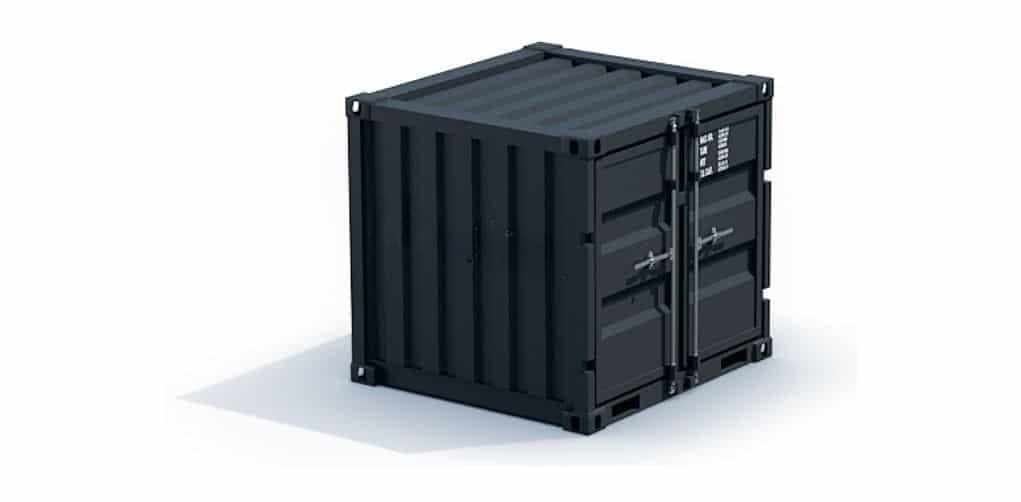
The 6ft dry container is a compact, sturdy storage solution designed for individuals, tradespeople, construction sites and small businesses that are short on space. Measuring approximately 1.83 m long, 2.20 m wide and 2.26 m high, it offers a floor area of about 4.1 m² and a usable volume of 9.1 m³. This reduced format allows it to be installed in a yard, garden, warehouse or on a construction site without taking up a large area. Despite its size, it retains the essential features of a shipping container: Corten steel structure, marine plywood floor, double rear doors with container locks and water and dust tightness.
This container is described as "dry", meaning it has no refrigeration system or forced ventilation. It is intended for storing non-perishable goods that are insensitive to residual moisture, such as tools, equipment, furniture, archives, construction equipment or manufactured products. Its internal volume of 9.1 m³ allows you to store the equivalent of several cubic metres of equipment while keeping a limited footprint. Its tare weight of 550 kg makes it movable with a forklift or crane, provided suitable machinery and sufficient access are available.
The design of the 6ft dry container is based on a Corten steel frame, also known as weathering steel. This steel contains alloying elements (copper, chromium, nickel, phosphorus) that allow it to develop a protective oxide layer on the surface, slowing corrosion. It is commonly used in the manufacture of shipping containers for its resistance to weather and salt air. The walls, roof and floor are assembled by welding, forming a rigid, one-piece structure. The floor is made of 28 mm thick marine plywood, a dense material treated to resist moisture and repeated loads. This floor supports the passage of light rolling loads and the storage of heavy objects, provided the load is distributed.
The double rear doors are equipped with standard container locks (vertical locking bars and handles). They ensure secure closure and a certain water and dust tightness. Rubber or foam seals are generally present around the doors to reinforce this tightness. However, it is advisable to regularly check the condition of these seals and replace them if necessary, as even slight wear can let moisture in. For long-term storage, adding a moisture absorber or passive ventilation can be useful, especially in humid regions.
The main use of this 6ft dry container is secure storage. It can be used as a technical room, garden shed, site storeroom, or as storage space for a business. Its compact size also makes it suitable for rental for temporary events, markets or festivals. Some professionals use it as a makeshift site office after interior fitting (lighting, sockets, light insulation). It is not a habitable container as is: it has no insulation, ventilation or electrical network. Any conversion must comply with local safety and planning rules.
Regarding regulations, installing a container on private land may be subject to planning rules. In France, a container is generally considered a demountable construction or a light installation. Depending on its surface area and how long it is in place, a prior declaration of works or a building permit may be required. It is advisable to check with the town hall's planning department before any installation, especially if the container is visible from the public road or if it is installed for more than three months. For professional use, specific rules may apply (ERP, ICPE, etc.).
Transporting a 6ft dry container requires suitable lifting equipment. A forklift with sufficiently long forks or a mobile crane can lift it by the corners or base. Shipping containers have corner castings at the four upper and lower corners, compliant with ISO 668. These allow securing, lifting and locking onto a chassis or another container. For a 6ft container, there is no specific ISO standard equivalent to that for 20ft or 40ft containers, but manufacturers generally follow the same design principles. Road transport on a flatbed truck or a vehicle carrier is possible, provided securing complies with the Highway Code. The total weight (550 kg empty) remains compatible with most light commercial vehicles, but the volume and dimensions often require specialised transport.
Maintaining a 6ft dry container is simple. It is recommended to regularly inspect the structure: look for rust, impacts, deformations, water infiltration at the roof and doors. Small scratches can be treated with anti-rust paint to prevent corrosion from spreading. The floor should be cleaned and kept dry; if stained, cleaning with a mild detergent is sufficient. Locks and hinges can be lubricated once or twice a year to make them easier to operate. If the container is stored outdoors, it is advisable to place it on blocks or beams to avoid direct contact with the ground and limit moisture by capillary action. A slight slope can help rainwater drain away.
When buying a 6ft dry container, several points deserve attention. Check the general condition of the structure: no perforating rust, holes or cracks. Check door alignment and seal condition. Make sure the floor is sound, without rot or sagging. Ask whether the container is new or used, and if possible examine it in person or request detailed photos. For professional use, it may be useful to check for a CSC plate (Convention for Safe Containers) or ISO certification, although for a 6ft container not intended for international sea transport, these certifications are not always mandatory. Finally, compare prices: a new container of this type generally falls in a higher price range than a used container, due to the amount of steel and manufacturing. The price indicated here is €1,399.00.
This container can be delivered with an ISO certificate if the manufacturer provides one, but this depends on stock. ISO 668 defines the dimensions and loads of series 1 containers, but 6ft containers are not part of it. They are often produced according to internal specifications or equivalent standards. The mention "ISO Certification" in the specifications means that the container was manufactured according to processes compliant with general ISO requirements, but it does not imply CSC certification for sea transport. For land use, this has no impact.
In summary, the 6ft dry container is a practical, durable and secure storage tool. It is aimed at those looking for a compact solution without compromising on sturdiness. Whether for domestic, craft or commercial use, it offers effective protection against weather and intrusions while remaining movable and modular. Before buying, check local installation conditions and transport arrangements. For any technical questions or to find out about availability, contact us at contact@vente-de-conteneur.com.
To go further, it is useful to understand how this format fits into the container family and what sector-specific uses it really allows. The 6ft dry container sits between the storage chest and the standard shipping container. It should not be confused with a 10ft container, which measures about 3 metres long and offers a volume of about 15 to 16 m³, nor with a 20ft container (6.06 m long, about 33 m³). The 6ft is therefore about twice as short as a 10ft and three times shorter than a 20ft. This difference translates into a very small footprint, which is its main advantage. In return, the internal volume is limited: 9.1 m³ corresponds roughly to the capacity of a medium van-type vehicle. It should therefore be reserved for regular, non-bulky stock, or for equipment that must remain protected at all times.
Compared to an open top container, which has an opening roof for loading tall objects, the 6ft dry does not offer this convenience. Compared to a flat rack, which has no side walls or roof, it fully protects the contents. Compared to a reefer container, which is insulated and equipped with a refrigeration unit, it cannot keep perishable goods. Finally, compared to a high cube container, which gains about 30 cm of internal height, the standard 6ft dry keeps an internal height of about 2.13 to 2.18 m, sufficient for an adult to stand in most cases, but with no margin for high shelving. These comparisons help choose the right type according to use: dry storage, protection against theft and weather, or the need to load from above.
On a sector level, the 6ft dry container has concrete applications in several fields. In construction and public works, it serves as a tool room on an urban site where space is limited. It can be placed on a slab or on beams and moved as the site progresses. Landscaping companies use it to store small equipment, consumables, PPE or spare parts. Tradespeople (plumbers, electricians, carpenters) store their sensitive tools and parts stocks in it, protected from moisture and prying eyes. Retailers store archives, seasonal decorations, buffer stock or handling equipment. Local authorities can install technical equipment (pumps, valves, meters) or supply reserves. Finally, individuals see it as a reinforced garden shed, safer than a wooden or resin shed and more durable than a light metal shelter.
Another emerging use is conversion into a small mobile workshop or temporary counter. With battery lighting or a generator, a workbench and some storage, the 6ft container can become a self-contained workstation for on-site operations. It does not replace a 10ft or 20ft site office, but it can serve as a charging room, break room or checkpoint. For these uses, openings should be drilled for ventilation and minimal insulation against heat and cold should be provided, as steel is a good thermal conductor. Without insulation, the internal temperature can become high in summer and low in winter. A light-coloured exterior paint limits solar heating.
For preventive maintenance, a simple schedule can be followed. Once a quarter, inspect the roof (leaves, debris, standing water), any gutters, door seals and rust spots. Once a year, check the tightness of hinge and lock bolts, lubricate the mechanisms, check the floor (lifted boards, mould) and touch up scratches with suitable paint. If the container is exposed to the sea, the frequency should be increased, as salt air accelerates corrosion. In this case, rinsing with fresh water and a careful examination of the welds are recommended. When storing sensitive equipment, place desiccant bags and raise objects off the ground with pallets or grating.
Regarding transport and handling, a distinction must be made between transporting the container itself and transporting its contents. For the container, lifting must be done by the four corners or the base, with suitable slings. A forklift of sufficient capacity (generally 2.5 to 3.5 tonnes) can lift it if the forks are long enough and the container is accessible from the side. A mobile crane is often more practical for placing it in the exact spot. Road transport must comply with loading rules: securing with straps or chains, signage if necessary, and checking the total weight. The empty container weighs 550 kg, but once loaded, the weight can increase quickly; the vehicle limits must not be exceeded and the load must be distributed. For moving a few metres, a sturdy pallet truck or pallet jack may suffice if the ground is hard and flat, but this remains exceptional.
Regulatory aspects related to sea transport do not apply to land use, but they may interest those considering shipping. A 6ft container is not a series 1 ISO container, so it cannot be stacked or secured like a 20ft or 40ft on a ship. It can be transported in groupage or on a flatbed, but this is outside the standard framework. For local use, the main issue remains planning and safety. If the container is installed on private land, it must be stable, not create a risk of falling, and not encroach on public land. If it is intended to receive the public, accessibility and fire safety rules may apply. In case of doubt, consulting the town hall and a design office is recommended.
Finally, the choice between buying new and used deserves clarification. A new container offers optimal watertightness, intact paint, an unworn floor and a long service life. A used container may be more economical, but it may show rust, impacts, worn seals or a marked floor. For non-critical storage use, used may suffice. For intensive professional use or conversion, new is preferable. In all cases, a detailed visual inspection and, if possible, a watertightness test (light watering) can validate the condition. The new 6ft dry container presented here is offered at €1,399.00, a positioning consistent with its Corten steel construction and 28 mm marine plywood floor.
To summarise the key points, remember that this container is compact (1.83 m x 2.20 m x 2.26 m), light when empty (550 kg), protected against corrosion by Corten steel, fitted with a marine plywood floor and secure doors. It is suitable for dry storage, tools, archives, small equipment and temporary uses. It is not suitable for perishable goods, very heavy concentrated loads, or habitation without conversion. Before installing it, check local planning rules and provide suitable lifting and transport means. Regular maintenance, even minimal, extends its service life. For any questions about availability, options or delivery, our team remains reachable at contact@vente-de-conteneur.com.