Description
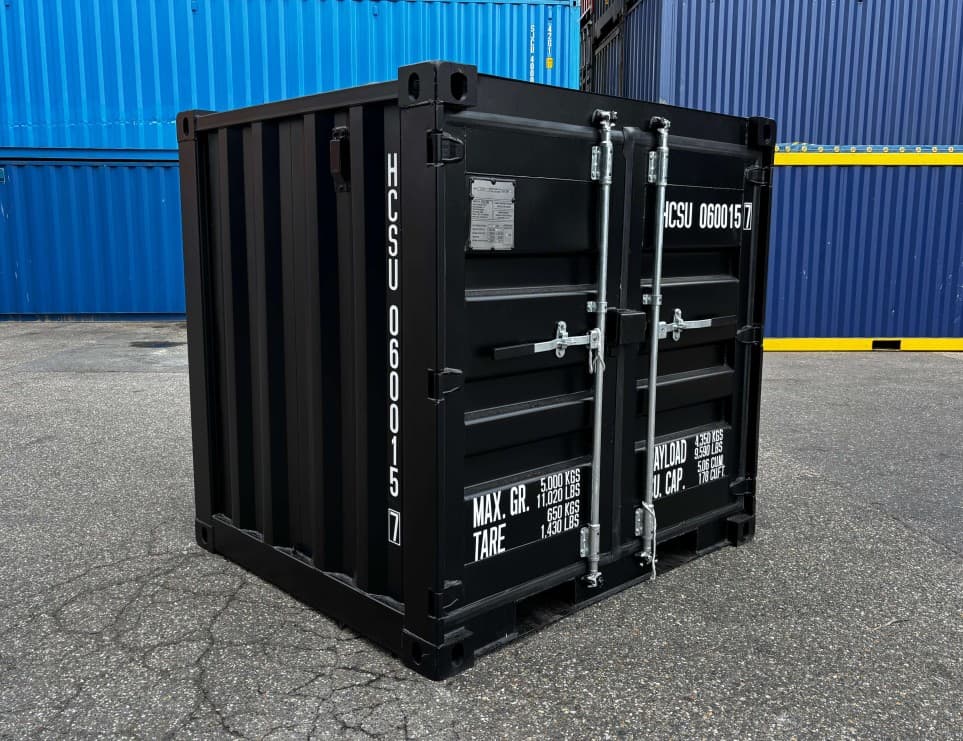
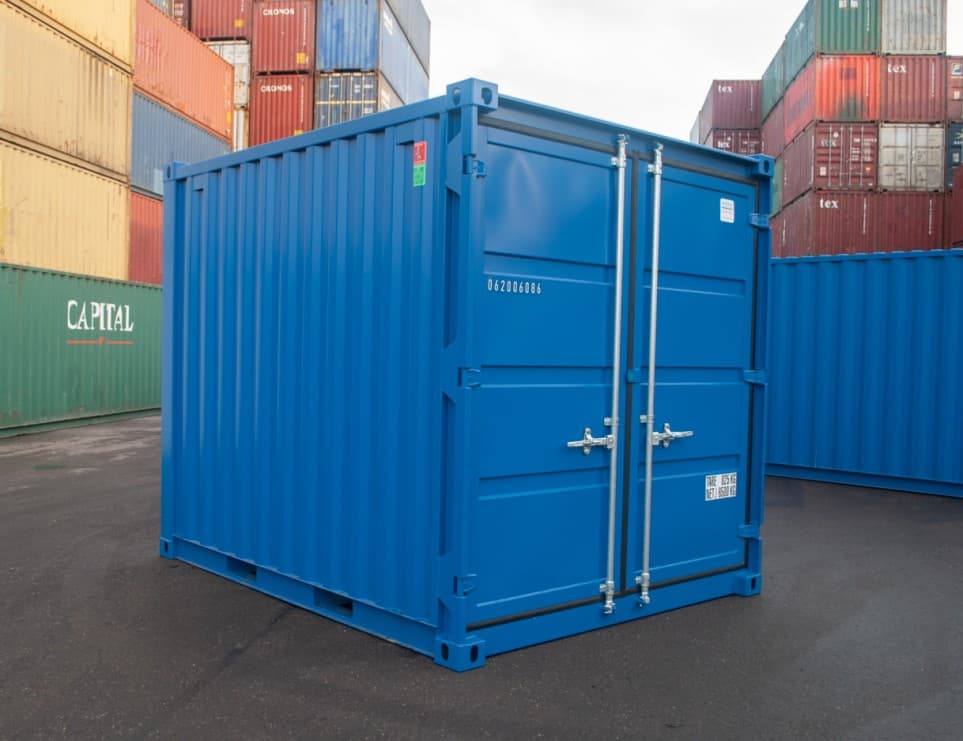
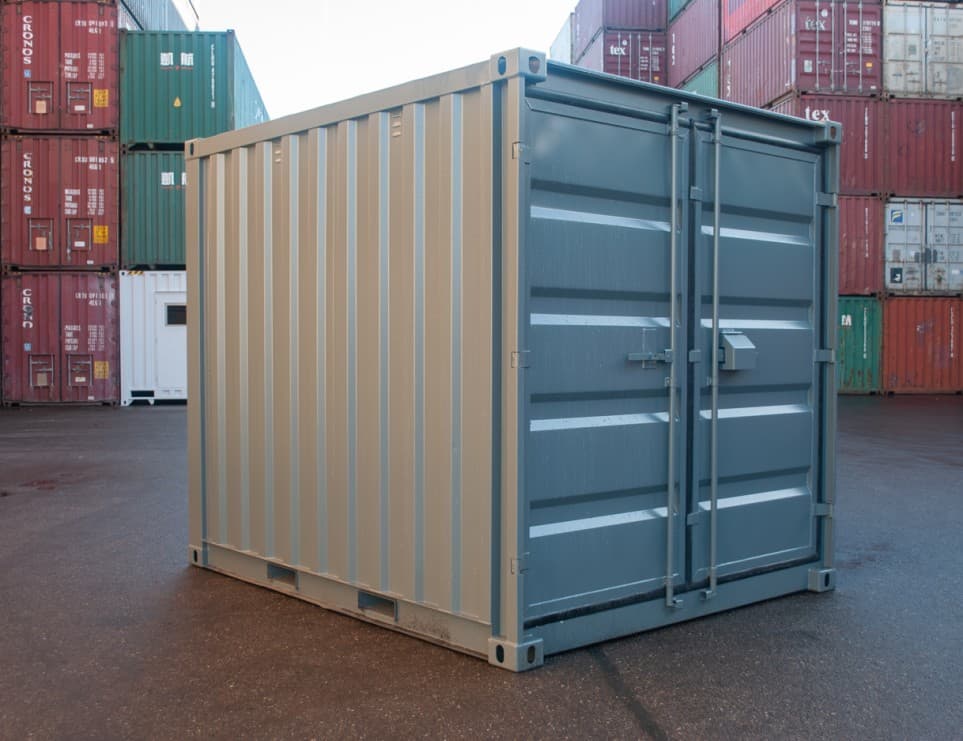
The new 6ft container, also known as "First Trip", is a compact Corten steel module designed for storage, transport or light conversion. Its small size allows it to fit into tight spaces where a standard 20ft or 40ft container would not. This format is particularly popular with craftsmen, retailers, site managers and individuals looking for a secure and mobile storage solution.
This container is described as "new" or "First Trip" because it was recently manufactured and has made at most one sea voyage for delivery. It therefore retains all its original characteristics: sound structure, intact paint, seals in good condition and optimal door operation. Unlike a used container, it shows no signs of advanced corrosion, major impacts or repairs. It is supplied with its ISO identification plate and original certifications, guaranteeing compliance with international standards.
The design of this container is based on a Corten steel frame, a low-alloy steel that resists atmospheric corrosion thanks to the formation of a protective surface layer. This gives it greater durability than ordinary steel, even when exposed to the weather. The walls, roof and floor are assembled by continuous welding, ensuring water and air tightness. The floor is made of 28 mm marine plywood, a dense material treated to resist moisture and heavy loads. It supports the passage of handling equipment or the storage of dense materials without deformation.
The rear doors are double-leaf, fitted with standard container locks (four vertical locking bars with handles). These locks allow effective locking and can be supplemented with a padlock or additional security system. EPDM rubber seals ensure watertightness around the doors. When open, the leaves provide a wide opening that facilitates loading and unloading, even for bulky items.
This 6ft container complies with ISO 668 and ISO 1496-1 standards, which define the dimensions and specifications of maritime containers. This means it can be handled with standard equipment (forklifts, cranes, spreaders) and stacked with other containers if necessary, subject to safety rules. Its relative lightness compared to a 20ft container makes it easier to transport and position, even in areas with difficult access.
In terms of uses, this compact container lends itself to many applications. It can serve as a storage room for tools, materials, goods or archives. On a building site, it becomes a basic site office, changing room or technical room. Individuals use it to store garden furniture, bicycles, leisure equipment or as a DIY workshop. In the events sector, it can be transformed into a stand, point of sale or temporary catering space. Finally, with suitable conversion, it can become a small office, garden shed or designer garden shelter.
Interior conversion of a 6ft container requires careful preparation. Steel walls are prone to condensation when the outside temperature varies. It is therefore recommended to install insulation (polyurethane foam, rock wool, sandwich panels) and ventilation to prevent mould and improve comfort. Electricity can be installed by drilling sealed passages and using suitable conduits. For habitable use, local planning and construction rules must be followed.
Maintenance of a new container is simple. Occasional washing with clean water and mild soap helps preserve the appearance of the paint. It is advisable to regularly check the condition of the seals and locks, and to grease the mechanisms to prevent seizing. In the event of a deep scratch, a touch-up of anti-rust paint can be applied to prevent corrosion. If the container is exposed to a harsh marine or industrial environment, more frequent maintenance is recommended.
When buying a new container, several points should be checked. Check for the CSC (Convention for Safe Containers) plate and its validity date, as well as the ISO identification plate. Ensure that the doors open and close without effort, that the seals are intact and that the floor shows no deformation. Ask whether the container has received additional anti-corrosion treatment or a specific paint. Finally, ask about delivery conditions: transporting a 6ft container can be done by lorry-mounted crane or forklift, depending on site accessibility.
In France, the transport and installation of a container are subject to certain regulations. Road transport must comply with the weight and dimension limits of the Highway Code. Installation on private land may require planning permission if it is considered a construction (depending on its surface area and height). It is recommended to contact the local planning department before any permanent installation. In addition, if the container is used as a workplace, it must meet the requirements of the Labour Code regarding safety and health.
This new 6ft container is offered by D.S. Globe Conteneur, a company based in Marseille, specialising in the sale and rental of maritime containers. We offer our expertise to guide you in choosing the container suited to your project. Whether for professional or private use, we advise you on conversion, transport and installation options. Contact us for a personalised quote and our availability.
In summary, the new 6ft container (First Trip) is a robust, secure and versatile solution for storage, transport or converting a workspace. Its Corten steel design, watertightness and compliance with ISO standards make it a durable investment. Thanks to its compact size, it adapts to many environments and uses. For any technical question or to place an order, our team is available to help.
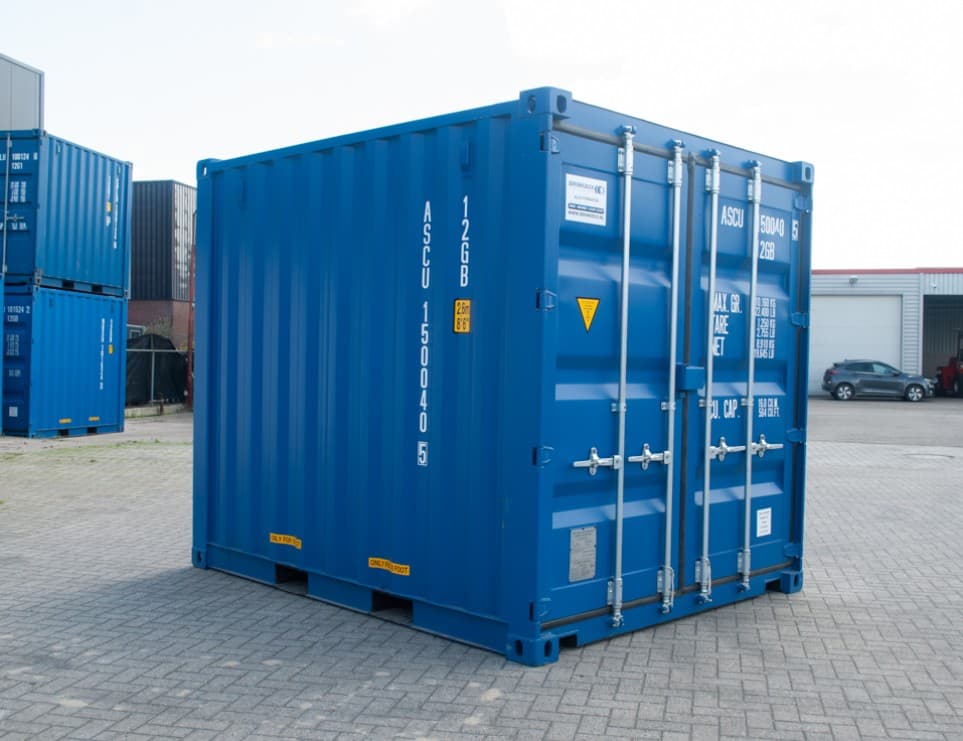
To go further, it is useful to place this format within the range of commonly available maritime containers. The standard dimensions of ISO containers are expressed in feet (one foot equals 30.48 cm). The most common formats are 20ft (about 6.06 m long) and 40ft (about 12.19 m long), to which are added variants such as the 40ft High Cube (interior height increased by about 30 cm) and the 45ft High Cube. The 6ft container falls into the category of small containers, often referred to as "mini containers" or "storage containers". There are also 8, 10 and 12ft formats, which share the same standard width (about 2.44 m) but offer different lengths and volumes. The choice between these formats depends mainly on the volume to be stored, the space available on site and handling constraints.
Compared to a 20ft container, the 6ft model has several specific advantages. First, its small footprint allows it to be installed in courtyards, gardens, narrow driveways or car parks without taking up a large area. Second, its lower empty weight (around 500 kg versus about 2,200 kg for a 20ft) makes it easier to move with a moderate-capacity forklift or a light lorry-mounted crane. Finally, its acquisition and transport cost is generally lower, making it a relevant option for small storage needs. On the other hand, its interior volume is limited (about 5.8 m³), which restricts the amount of goods or convertible surface. For office or workshop use, the conversion must therefore be carefully designed to optimise every square centimetre.
Compared to a used container, the new "First Trip" offers greater peace of mind: no perforating rust, no hidden repairs, no risk of contamination from previous goods. It is also easier to customise, as the paint and surfaces are sound. The higher purchase cost is offset by a longer service life and reduced maintenance. That said, a well-maintained used container may be suitable for non-sensitive storage, provided its condition is carefully checked. The choice therefore depends on budget, intended duration of use and the level of aesthetic or sanitary requirements.
Let us now look at more detailed sector-specific use cases. In the building and public works sector, the 6ft container has its place as a site room for storing valuable tools, consumables or personal protective equipment. It can be fitted with shelves, hooks and battery or generator-powered lighting. On urban sites, its compactness allows it to be installed in a parking space or delivery area without encroaching on the roadway. In events, it serves as a technical control room, storage room for sound and lighting equipment, or pop-up point of sale. Its aesthetic neutrality can be improved with paint or wooden cladding. In retail, it can become a seasonal kiosk for selling ice cream, drinks or craft products, especially in tourist areas where space is limited. In agriculture and market gardening, it houses seeds, tools, plant protection products (with regulatory precautions) or serves as a packing room. Associations and local authorities use it to store party equipment, archives or sports equipment.
For residential use, the 6ft container can be transformed into a garden shed, bicycle store or DIY workshop. Its watertightness and weather resistance make it a durable choice, provided ventilation is included to prevent condensation. It can also serve as a basic wine cellar if insulation is suitable, or as a technical room for a heat pump or generator. In camping and outdoor hospitality, it can become a small storage unit for linen, cleaning products or leisure equipment. Finally, artists and craftsmen find in it a modular workspace that is easy to secure and move.
It is important to distinguish container types by design. The "dry" (or "standard") container is the most common: it is closed, watertight and intended for transporting dry goods. The "reefer" container is equipped with a refrigeration unit for transporting perishable goods; it is insulated and can maintain a controlled temperature. The "open top" container has an opening roof (tarpaulin or removable panels) for loading tall objects. The "flat rack" container has no side walls or roof, allowing out-of-gauge loads to be transported. The "high cube" container is distinguished by a greater interior height. The 6ft container described here is a compact "dry" model, without refrigeration equipment or opening roof. It is therefore suitable for storing dry goods and for conversion, but not for transporting perishable goods without additional precautions.
French regulations also govern the movement of containers on public roads. Road transport of containers is subject to Highway Code rules concerning vehicle weights and dimensions. A 6ft container can be transported on a container truck, flatbed or suitable trailer. The driver must ensure the load is correctly secured, in accordance with Articles R. 312-19 et seq. of the Highway Code. For exceptional convoys, prior authorisation may be required if dimensions exceed regulatory limits. In practice, a 6ft container remains within standard dimensions, which simplifies transport. However, it is advisable to use a specialist carrier, such as D.S. Globe Conteneur, to guarantee transport safety and compliance.
Installation on public land (roadway, pavement, square) requires a temporary occupation permit issued by the town hall. On private land, a prior declaration of works may be required if the container is considered a construction. Rules vary according to municipality and zone (urban, agricultural, protected). It is therefore prudent to consult the local urban plan (PLU) and contact the relevant department before any permanent installation. For professional use, the container may be subject to health and safety rules, particularly if it accommodates workers. Ventilation, lighting and emergency exits may be required.
Long-term maintenance deserves particular attention. Even in Corten steel, a container exposed by the sea or in an industrial area may show superficial rust spots. It is advisable to regularly clean the roof and gutters to prevent the accumulation of leaves and moisture. Door seals should be checked at least once a year and replaced if cracked or hardened. Hinges and locks should be lubricated with suitable grease. If the container is intended for sensitive use (storage of electronic equipment, documents), it is recommended to install a dehumidifier or absorbent bags. Finally, a visual inspection of the structure after a major weather event (storm, hail) allows any damage to be detected.
The 6ft container can also be rented rather than purchased, depending on needs. Rental is attractive for short-term sites, one-off events or seasonal projects. It avoids tying up capital and managing resale. D.S. Globe Conteneur offers sales and rental solutions adapted to each situation. We can advise you on the most economical option according to duration of use and logistical constraints.
Finally, let us not forget environmental aspects. The maritime container is a reused product: its initial manufacture has already taken place, and its prolonged use avoids the production of new structures. When it is retired, Corten steel is recyclable. Container conversion can incorporate ecological materials (bio-sourced insulation, VOC-free paints, rainwater harvesting). For a housing or office project, it is possible to aim for a degree of energy autonomy by adding solar panels to the roof, subject to checking the structure's strength and the watertightness of the fixings.
In conclusion, the new 6ft container (First Trip) is a versatile, durable product that complies with international standards. It is suitable for a multitude of uses, from simple storage to creative conversion. Its purchase or rental should be considered according to the required volume, location, planning rules and transport constraints. The team at D.S. Globe Conteneur, in Marseille, is available to guide you through your project and provide a detailed quote. Do not hesitate to contact us to find out about availability and delivery options.