Description
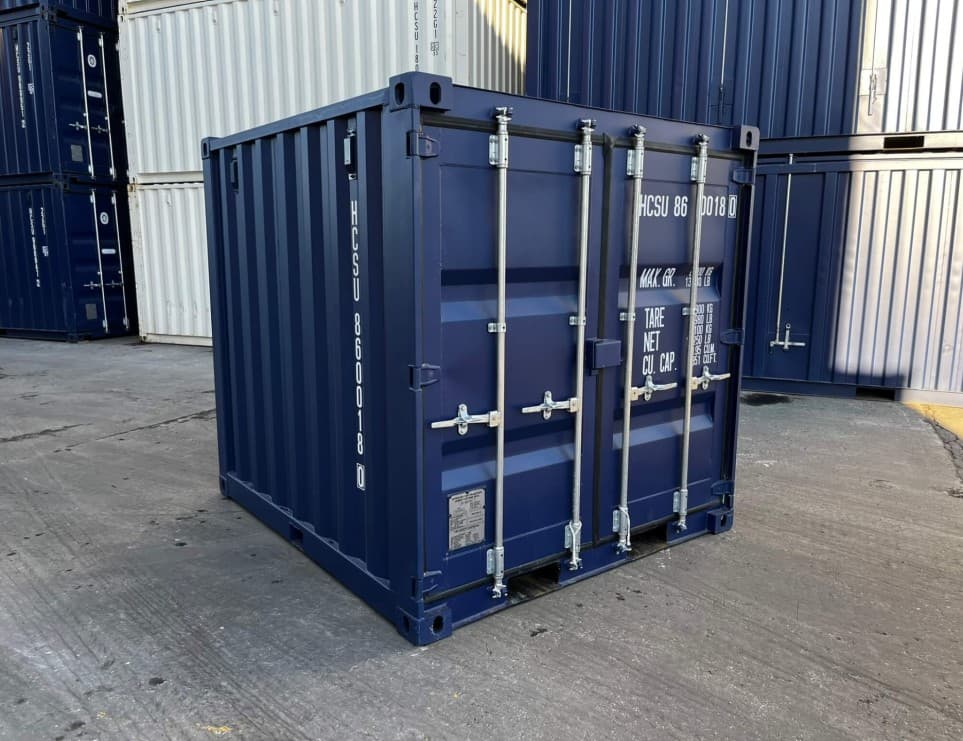
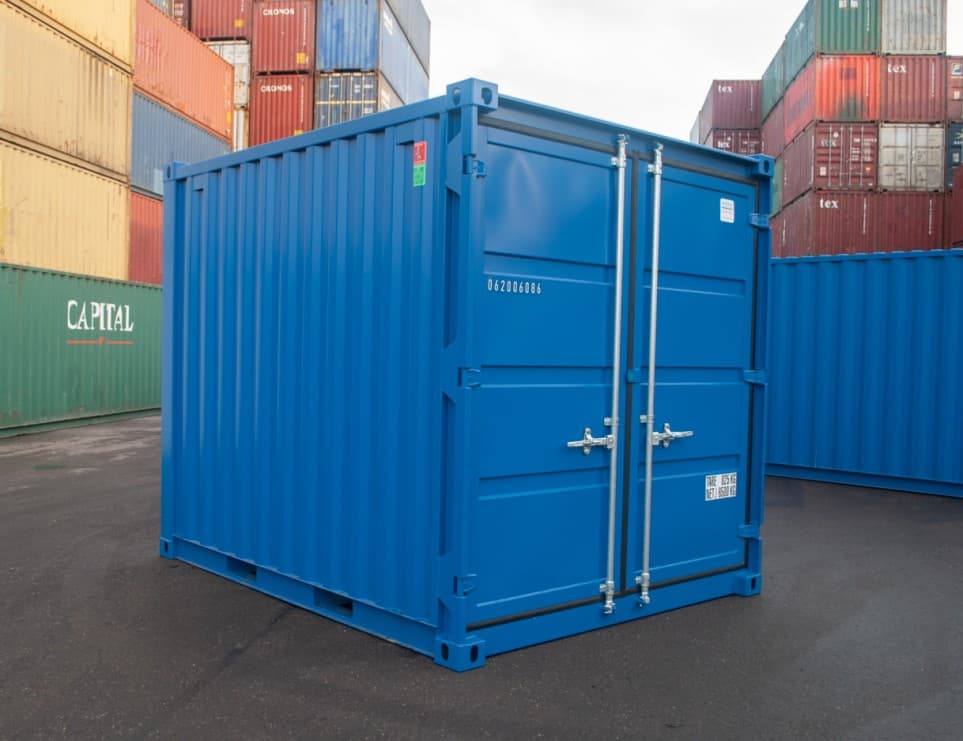
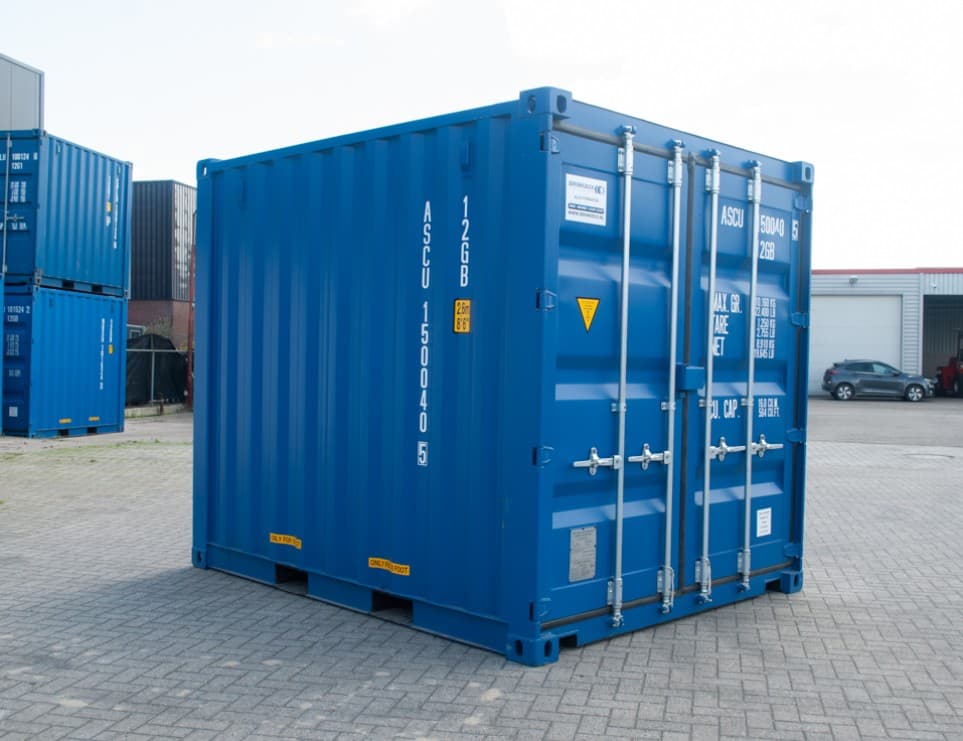
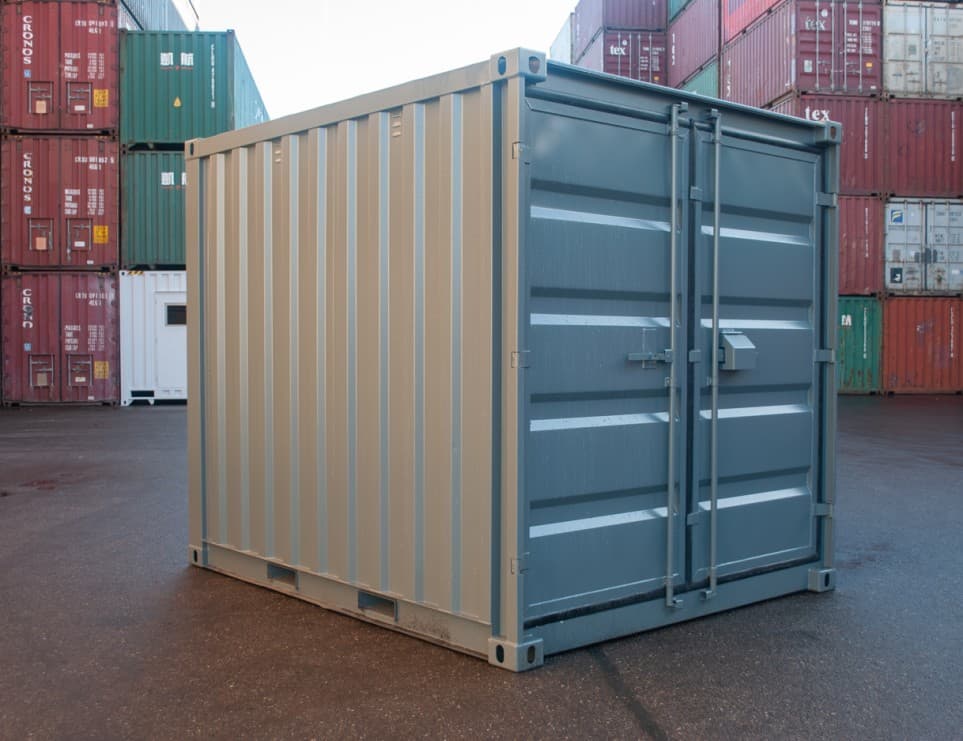
The new 8 ft container, also called a first-trip container, is a small maritime storage unit delivered in new condition, meaning it has never been used to transport goods. Its structure is made of Corten steel, a low-alloy steel with higher resistance to atmospheric corrosion than ordinary steel. This makes it a durable piece of equipment for outdoor use, whether on private land, a construction site, a port area or a logistics platform. The floor is made of 28 mm thick marine plywood, a panel resistant to moisture and concentrated loads, commonly used in the construction of shipping containers. The double rear doors are fitted with standard container locks, ensuring secure closure and good air and water tightness. The container meets ISO certification, which guarantees dimensions and characteristics in line with current international standards for this type of unit.
Technically, an 8 ft container belongs to the family of small ISO containers. Its standard external dimensions are approximately 2.44 m long, 2.44 m wide and 2.59 m high. Typical internal dimensions are approximately 2.28 m long, 2.35 m wide and 2.39 m high, offering an internal volume of around 12.8 cubic metres. Tare weight is generally around 1,000 to 1,200 kg, and the maximum permitted payload is around 5,000 to 7,000 kg depending on the manufacturer's exact specifications. These values may vary slightly from one model to another, but they remain in these ranges for a standard 8 ft container. The structure includes steel end frames, corner posts, top and bottom rails, and corrugated side walls that contribute to the rigidity of the assembly. The roof is also made of Corten steel, with a slight slope for rainwater drainage. The marine plywood floor rests on metal cross members and is treated to resist moisture and impact.
The main use of a new 8 ft container is secure storage. Thanks to its watertight design and lockable doors, it protects tools, electronic equipment, archives, sensitive goods or valuable equipment from bad weather, dust and intrusion. Its compact size makes it particularly suitable for small spaces: building courtyards, gardens, car parks, craft zones, back rooms or urban construction sites. It can also serve as a mobile site office, technical room, changing room, temporary sales point or storage room for associations. In the events sector, it is frequently used as a control room, storage room for equipment or preparation area. Finally, it is an interesting base for fit-out projects: mini-office, workshop, storage room for a campsite, guard post or even a small dwelling after insulation and interior fitting, subject to compliance with local planning rules.
Maintaining a Corten steel container is relatively simple. Regular cleaning with clean water and mild soap removes dirt and deposits that can retain moisture. It is advisable to periodically inspect the door seals, locks and hinges, and lubricate them if necessary to avoid rust spots and ensure proper operation. Deep scratches that expose bare steel can be treated with a suitable anti-rust paint. The marine plywood floor must be kept dry; when storing damp products, it is recommended to raise loads or use pallets. Ventilation can be added if the container is used to store products sensitive to condensation. Finally, it is important to check that the container rests on stable, level ground, for example on concrete blocks or cross members, to avoid deformation and facilitate water drainage.
When buying a new first-trip container, several points deserve attention. Check that the container has indeed never been used for maritime transport, which is reflected in a surface condition free of dents or rust, supple and intact door seals, and no persistent smell inside. ISO certification must be shown on the CSC (Convention for Safe Containers) plate fixed to the door, with the manufacturing date and load characteristics. The container identification number must be legible and match the documents provided. It is also advisable to check water tightness by closing the doors and verifying that no light passes through the seals, or by carrying out a water test if possible. Finally, ensure that the container is delivered with its standard accessories: locking bars, handles, seals, and possibly a padlock or additional locking system.
Regarding transport and regulations in France, an 8 ft container can be transported by truck, on a container ship or by train. Its mass and dimensions remain compatible with standard road transport, but it is necessary to check gauge and axle load rules. For private use, installing a container on land may be subject to planning rules: it is prudent to check with the town hall whether prior declaration or a building permit is required, especially if the container is intended for habitation or if it changes the external appearance. For professional use, the container may be considered a storage room or office, and must comply with applicable safety and accessibility rules. Finally, if the container is used for transporting goods, it must comply with international standards and be accompanied by the necessary customs documents.
To go further, it is useful to specify seasonal maintenance arrangements. In coastal areas, salt air accelerates oxidation of metal parts; rinsing with fresh water several times a year and applying a protective wax to painted surfaces extends the life of the shell. In industrial or urban areas, dust deposits and air pollutants can promote corrosion; more frequent cleaning is then recommended. In mountains or cold climates, freeze-thaw cycles can stress seals and fasteners; a visual check before and after winter helps detect cracks or detachment. The marine plywood floor, although treated, is sensitive to prolonged immersion: avoid washing the floor with a direct jet and prefer sweeping or moderate cleaning. If the container is used to store foodstuffs or sensitive products, cleaning with suitable products and complete drying between uses are essential to limit the risk of mould and odours.
Regarding transport regulations in France, several points should be highlighted. Road transport of an 8 ft container is generally carried out on a container truck or flatbed. The total mass (container plus load) must not exceed the limits authorised by the Highway Code, i.e. 44 tonnes for a road train with more than 4 axles in combined transport, and 40 tonnes for a standard combination. Axle load and weight distribution must be respected. The container must be properly secured, with twist-locks or compliant straps, and the doors must be locked during transport. If the container is used to transport dangerous goods, it must meet ADR (European Agreement concerning the International Carriage of Dangerous Goods by Road) requirements, particularly regarding signage and documentation. For private use, installing a container on land may be subject to planning rules: it is prudent to check with the town hall whether prior declaration or a building permit is required, especially if the container is intended for habitation or if it changes the external appearance. For professional use, the container may be considered a storage room or office, and must comply with applicable safety and accessibility rules. Finally, if the container is used for transporting goods, it must comply with international standards and be accompanied by the necessary customs documents.
In the construction sector, the 8 ft container has practical applications. It can serve as a storage room for power tools, consumables, PPE or spare parts. Its reduced size allows it to be positioned as close as possible to the work area, which limits movement and secures equipment. It can also be fitted out as a site office with a worktop, power socket and lighting, offering a sheltered space for meetings and planning. In agriculture, it is used to store seeds, fertilisers, plant protection products (in compliance with storage rules), or to shelter small equipment. In retail and crafts, it can serve as a stock reserve, preparation room or seasonal sales point. In the events sector, it is used as a technical control room, storage room for sound and lighting equipment, or catering area. Finally, for private individuals, it represents an additional storage solution for the garden, tools, bicycles, leisure equipment or archives.
Compared with other container sizes, the 8 ft has advantages and limitations. A 10 ft container offers slightly more volume (around 16 m³) for a larger footprint. A standard 20 ft container (around 33 m³) is more common and often more economical per cubic metre, but it requires more manoeuvring space and a suitable truck. A 40 ft container (around 67 m³) is intended for large volumes and industrial uses. The 8 ft stands out for its compactness: it can be moved with a forklift or crane truck, and it fits into spaces where a 20 ft would not. In terms of types, the dry (or standard) container is the most common and is suitable for dry storage. The high cube container offers additional internal height of around 30 cm, useful for tall volumes. The reefer container is fitted with a refrigeration unit for transporting perishable goods. The open top has a removable roof for loading out-of-gauge items. The flat rack has no side walls and is suitable for heavy or bulky loads. The new first-trip 8 ft container falls into the dry category, with a versatile purpose.
Finally, it is important to remember that buying a new first-trip container guarantees optimal service life and an attractive resale value. Unlike a used container, it shows no wear from maritime transport, which limits the risk of perforating corrosion, structural deformation or contamination. However, it is advisable to check the origin and ensure that the container is properly ISO and CSC certified. Regular maintenance and use in accordance with safety rules allow its performance to be maintained for many years. Whether for professional or private use, the new 8 ft container is a durable, modular and secure solution for storing and fitting out compact spaces.
To complete these points, aspects relating to handling and installation should be addressed. The 8 ft container is fitted with four corner castings at the upper and lower corners, in accordance with ISO 1161. These parts allow the use of twist-locks, spreaders or slings for lifting and securing. During handling, it is essential to check that hooks or slings are correctly engaged in the corners and that the container is balanced. A poorly secured container can tip over and cause accidents. For ground installation, it is recommended to place the container on a flat, stabilised surface, for example a concrete slab, prefabricated blocks or treated timber cross members. This prevents frame deformation and makes doors easier to open. If the container is intended to remain in place permanently, it can be anchored to the ground using suitable fixings, particularly in wind-exposed areas. It is also possible to add adjustable feet or jacks to compensate for slightly uneven ground.
Another important point concerns interior fitting. The new 8 ft container can be transformed into a workspace or living space after a few adaptations. Thermal insulation is often the first step: it can be done with mineral wool panels, extruded polystyrene or polyurethane foam, covered with an interior lining. External insulation is also possible, but it reduces the space available around the container. Electricity must be installed by a qualified professional, with conduits and boxes suitable for a damp environment. Ventilation, natural or mechanical, is necessary to avoid condensation and renew the air. For sanitary use, a water supply and drainage must be provided, which may require additional work. Finally, cutting additional windows or doors must be done carefully, as it affects the load-bearing structure of the container. It is advisable to consult a specialist to cut the walls without compromising the rigidity of the assembly.
In terms of security, the new 8 ft container offers good resistance to break-ins thanks to its steel walls and door locks. However, it is recommended to add a quality padlock, or even an additional locking system, to strengthen protection. Outdoor lighting and the presence of cameras can also deter intrusion. When storing valuable products, it is prudent not to indicate the nature of the contents on the container and to limit visibility from the street. Finally, it is advisable to regularly check the condition of locks and hinges, and lubricate them to prevent jamming.
In conclusion, the new first-trip 8 ft container is a versatile, robust and durable piece of equipment that meets many storage and fit-out needs. Its Corten steel design, marine plywood floor and ISO certification make it a reliable choice for professionals and private individuals alike. With regular maintenance and suitable installation, it retains its performance for many years. Whether for a construction site, a business, an association or a personal project, it offers a practical and modular solution that is easy to integrate into restricted spaces.