Description
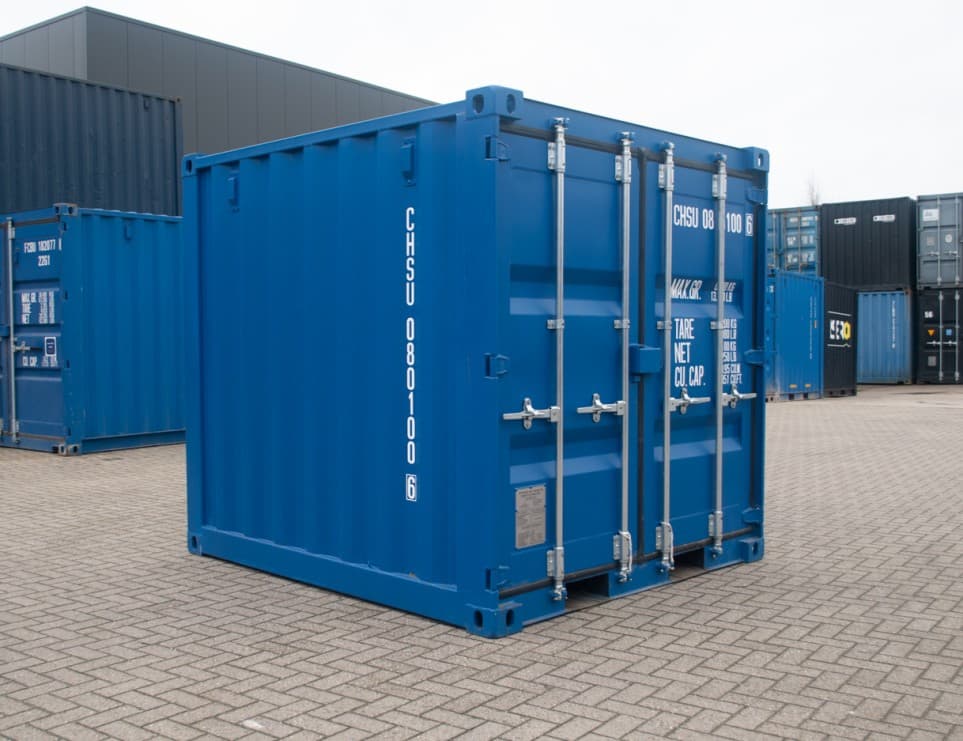
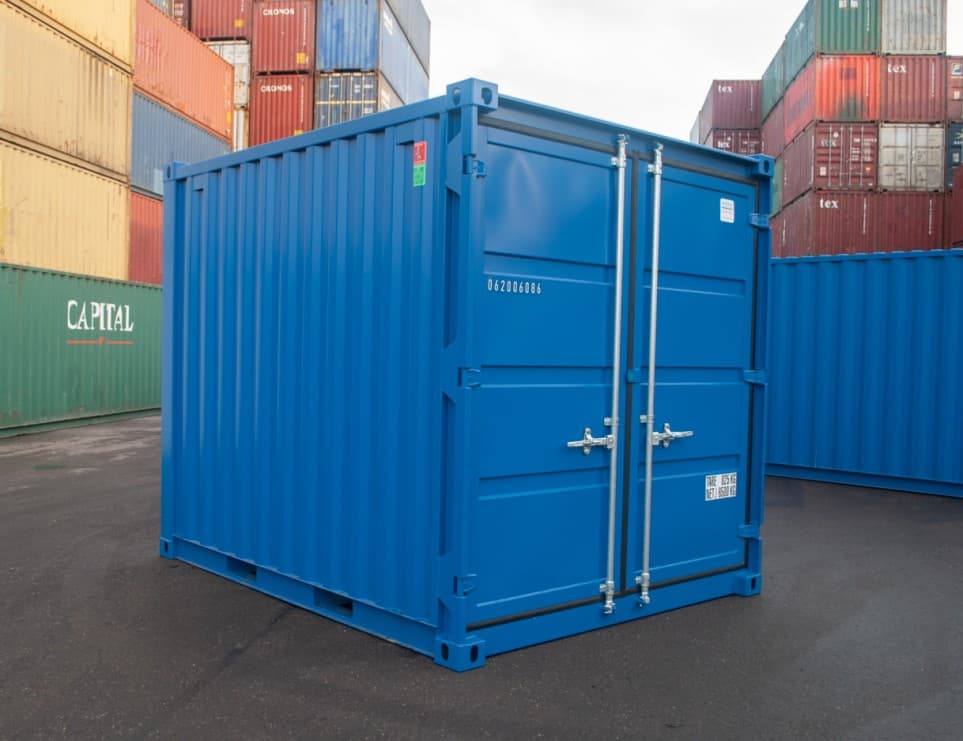
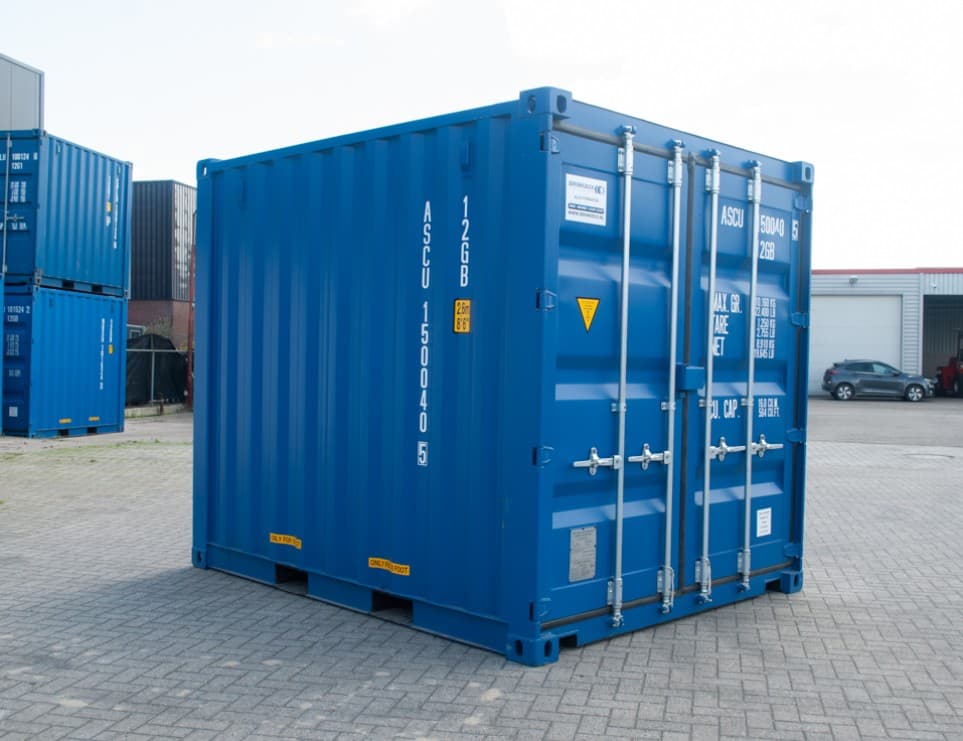
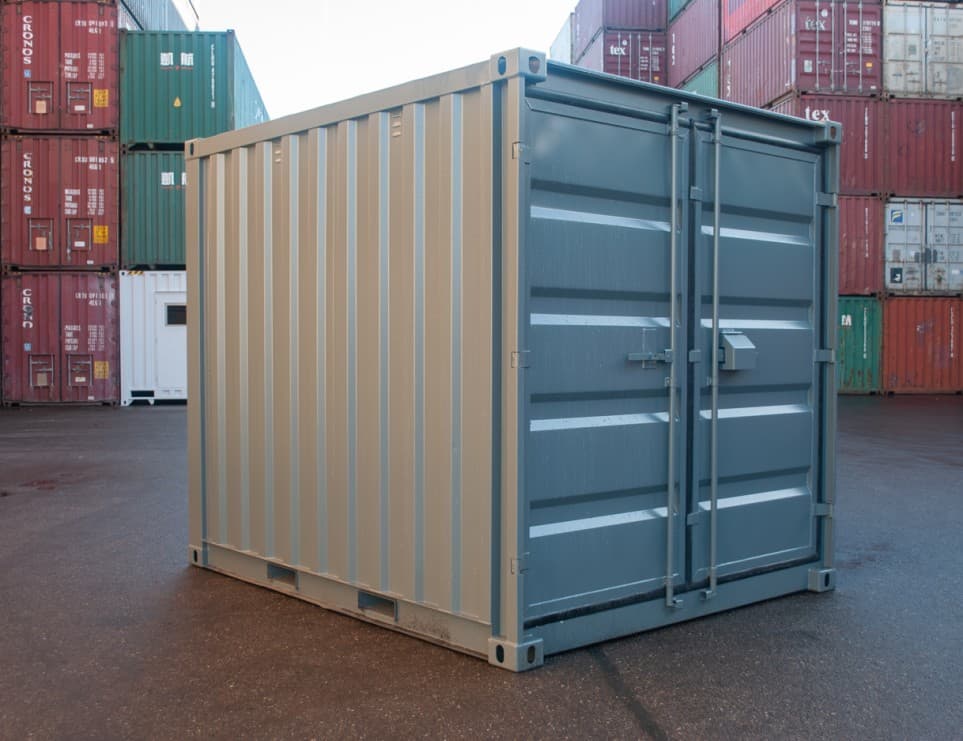
The new 8ft container, also called a first-trip container, is a compact storage module in Corten steel. About 2.44 metres long, it offers roughly 5.5 m² of floor area and about 13 m³ of internal volume. Its standard external dimensions are about 2.44 m long, 2.20 m wide and 2.26 m high, with an empty weight of around 700 to 800 kg depending on the configuration. This reduced format is particularly suited to tight spaces: urban yards, city-centre sites, car parks, backyards, or storage areas where a 20ft container would be too bulky. It can be moved with a forklift or a crane truck, and does not necessarily require a huge plot to be placed. Its self-supporting Corten steel structure, also called weathering steel, resists atmospheric corrosion thanks to the formation of a protective surface layer. This feature is essential for outdoor use, by the sea or in damp areas. The floor is in 28 mm marine plywood, a dense material treated to resist moisture and heavy loads. The double rear doors are fitted with standard container locks, with vertical locking bars and ergonomic handles. Watertightness is ensured by rubber seals around the entire door perimeter. This container is new, meaning it has made only one sea voyage (first trip) or is sold as new by the manufacturer. It therefore shows no rust, impact damage or wear from multiple rotations. It comes with its ISO identification plate and CSC certificate (Convention for Safe Containers) when intended for sea transport. For land use, these certificates are not mandatory but attest to compliance with safety standards. ISO 668 defines the dimensions and loads of series 1 containers, and ISO 1496-1 specifies strength and testing requirements. An 8ft container is not part of the standard series 1 (which starts at 10ft), but it is built to similar specifications to guarantee its robustness. It can be stacked, but it is advisable to check stacking compatibility with other containers, as its height and corner fittings may differ. The corner castings comply with ISO 1161, allowing it to be secured with twist-locks on a trailer or chassis. The new 8ft container is generally lighter than a 10ft, making handling easier. It can be used as a base for a site office, technical room, garden shed, storage room for tools or equipment, or even as a minimalist housing module after fit-out. Its modularity allows it to be combined with other containers to create larger spaces. In France, installing a container on private land may require planning permission depending on the surface area and duration of installation. A container under 20 m² installed for less than 3 months may be exempt from a building permit, but it is advisable to check with the town hall. For use as a site facility, the container must comply with safety and hygiene rules (ventilation, lighting, etc.). Transporting an 8ft container on the road requires a suitable vehicle (container carrier or crane truck) and may be subject to size rules. Renting an 8ft container is a flexible solution for short projects or temporary storage needs. It avoids the initial investment and generally includes delivery and collection. D.S. Globe Conteneur offers this container for sale and rent in Marseille and the Bouches-du-Rhône. For maintenance, regular visual checks of the seals, locks and floor are recommended. In case of deep scratches, a touch-up with anti-rust paint can extend its service life. Cleaning is done with soapy water, without a high-pressure jet inside to avoid damaging the plywood. Points to check when buying: no perforating rust, condition of seals, flatness of the floor, proper operation of locks, and presence of certificates. A first-trip container should have doors that open and close without forcing, and be light-tight (torch test). The price of a new 8ft container is around €2,150 excl. VAT, which may vary depending on availability and options. This container can be fitted with accessories: security lock, ventilation grille, lighting, shelving. It can also be customised with a specific colour paint. For urban use, sound and thermal insulation can be added. The 8ft container is a versatile solution for secure storage of sensitive equipment, as it is hard to break into and protects against bad weather. It is often used by tradespeople, retailers, individuals and local authorities. In summary, the new 8ft first-trip container is a durable investment for compact, secure and mobile storage space. It combines the strength of Corten steel with the practicality of a reduced format. Whether for a building site, a garden or a professional activity, it meets protection and organisation needs. Do not hesitate to contact D.S. Globe Conteneur for availability and delivery arrangements in Marseille and the surrounding area. To go further, let us examine in detail the technical characteristics that distinguish this container and the precautions to take to get the most out of it over the long term. The structure of a sea container is based on a steel frame made of longitudinal and transverse beams, corner posts and corrugated walls. The corrugated walls, or ribbed steel sheets, are made of Corten steel generally between 1.6 mm and 2 mm thick. This corrugation is not decorative: it increases the rigidity of the wall without excessively weighing down the whole, and allows the wall to work in bending under pressure loads (wind, impact, stacking). The roof is also made of corrugated or ribbed sheet, with a slight slope to the rear for rainwater drainage. The corner fittings, called corner castings, are moulded steel blocks drilled with oblong holes. They allow lifting by spreader, securing by twist-locks and stacking. These parts are standardised by ISO 1161, guaranteeing their interchangeability with standard handling equipment. The 28 mm marine plywood floor is fixed to steel or hardwood cross members. This plywood consists of several wood plies bonded with phenolic resin, making it resistant to moisture and fungi. It supports significant concentrated loads, such as forklift wheels or heavy pallets. The double rear doors are the only standard access. They consist of two reinforced metal leaves, each fitted with two vertical locking bars. These bars, operated by handles, fit into guides fixed to the frame. EPDM rubber seals ensure water and air tightness. A new first-trip container must be light-tight: a simple test is to go inside, doors closed, and look for any light leaks. The absence of visible light indicates good watertightness. The 8ft container, although small, retains the same construction principles. It is often mass-produced in Asian factories, then shipped by boat. The term first trip means it has been used to carry goods only once, or that it is sold as new after manufacture. In both cases, it looks close to new, with no rust or deformation. It is important to distinguish a first-trip container from a refurbished used container. A used container may have several years of service, repairs, rust marks and reduced watertightness. The first trip therefore offers a better durability guarantee, which justifies a higher price. For long-term storage use, this investment is often more cost-effective than a used container that will require repairs. Let us now move on to concrete sector uses. In the building and public works sector, the 8ft container serves as a site facility to store tools, sensitive materials, PPE, or as a mobile changing room. Its size makes it easy to position on an urban site, even without a high-capacity crane. It can be fitted with lighting, a power socket and auxiliary heating for staff comfort. In events, it is used as a technical room for sound and lighting equipment, or as a mobile sales stand. In retail, it can serve as storage for a shop, restaurant or convenience store. Restaurateurs store dry goods, terrace furniture or cleaning equipment in it. In agriculture and market gardening, it shelters tools, seeds, fertilisers, or small irrigation equipment. Winegrowers can store bottles or cellar equipment in it. In leisure, it becomes a garden shed, a room for motorbikes, bicycles, lawnmowers, or a DIY workshop. Local authorities use it for storing municipal equipment, seasonal decorations, or as a cleaning facility. Finally, individuals see it as an additional storage solution, secure and weather-resistant. The 8ft container can also be fitted out as a site office, sales unit, fixed food truck, or minimalist housing module. For an office fit-out, thermal and sound insulation, ventilation, lighting and a power supply are required. The walls can be lined with wood panels, plasterboard or insulating materials. The floor can be covered with PVC or tiles. The doors can be replaced by a glass door or sliding bay, but this requires cutting and reinforcement work. It is advisable to use a professional for this type of conversion, as the structure must remain stable. The 8ft container can also be stacked on another container to create a floor, but the strength of the corners must be checked and twist-locks used. Stacking containers of different sizes is possible if the corner fittings are aligned, which is not always the case. It is therefore recommended to consult a specialist before any stacking. Let us now address regulations and transport in France. Transporting an 8ft container on public roads is subject to the highway code and size restrictions. An 8ft container can be transported on a container truck or a suitable trailer. The authorised gross train weight (GTW) and authorised gross vehicle weight (GVW) must be respected. The driver must ensure the container is properly secured with twist-locks or approved straps. If size limits (width, height, length) are exceeded, a movement permit may be required, issued by the prefecture. For an 8ft container, dimensions generally remain within standard limits, but the total truck height may exceed 4 metres, which may require a permit. It is advisable to check with the carrier. Sea transport of an 8ft container is possible, but this format is not standard for international freight. It can be shipped as groupage or on a flat rack, but costs may be high. For import, customs rules and any taxes must be respected. A first-trip container can be imported from China or elsewhere, and is subject to customs duties and VAT. D.S. Globe Conteneur can assist you with these procedures. Regarding planning, installing a container on private land is considered a construction if it is fixed to the ground and intended to remain in place. A container under 20 m² may be exempt from a building permit, but a prior declaration may be required depending on the municipality. It is important to check with your town hall's planning department. For professional use, the container must comply with fire safety, accessibility and hygiene rules. For example, a site facility must be equipped with a fire extinguisher, a first-aid kit and displayed safety instructions. The electrical installation must comply with NF C 15-100. Ventilation must be sufficient to avoid carbon monoxide poisoning risks if a generator or combustion heater is used. For routine maintenance, it is recommended to inspect the container at least once a year. Check the condition of the door seals, which can harden and crack over time. Replace them if necessary. Lubricate the locks and hinges with a suitable lubricant. Check for rust on the walls, roof and floor. If rust spots appear, sand and apply anti-rust paint. Check that the floor shows no rot or delamination. If damaged, replace the affected boards. Clean the interior regularly to avoid dust and moisture build-up. If the container is stored in a damp place, use a dehumidifier or absorbent sachets. For outdoor use, ensure the container is placed on a flat, stable surface, such as concrete blocks or wooden sleepers. This prevents deformation and allows better ventilation under the floor. If the container is exposed to wind, it is advisable to anchor it to the ground with stakes or straps. By the sea, salt air can accelerate corrosion. Regular washing with fresh water and additional protection (marine paint) can extend its service life. The new 8ft first-trip container is therefore a durable, versatile and secure product. It represents an economical solution for many storage and fit-out needs. Let us now compare it to other sizes and types of containers to help you choose. The 10ft container is slightly longer (about 3 m) and offers about 16 m³ of volume. It is more common and often cheaper per square foot. The 20ft container (6.06 m) offers about 33 m³ and is the market standard. It is easier to resell and transport. The 40ft container (12.19 m) offers about 67 m³, but requires a larger plot and a suitable truck. The high cube (HC) container has a higher internal height (2.69 m instead of 2.39 m), which is useful for storing vertical volumes. The open top container has a removable roof for loading out-of-gauge items. The flat rack container has foldable walls for loading heavy or bulky cargo. The reefer container is refrigerated for transporting perishable goods. The 8ft container stands out for its compactness and ease of handling. It is ideal for small spaces and limited needs. If you need more space, a 10 or 20ft will be more suitable. If you need frequent mobility, the 8ft is lighter and can be moved with a simple forklift. In terms of price, the new 8ft is positioned around €2,150 excl. VAT, which is competitive compared with the new 10ft (about €2,500 excl. VAT) and the new 20ft (about €3,500 excl. VAT). The cost per square metre is higher for the 8ft, but it remains attractive for small needs. Rental is also a flexible option: expect around €50 to €100 per month for an 8ft, depending on duration and services included. D.S. Globe Conteneur offers you sales and rental solutions suited to your project. Whether you are an individual, a tradesperson, a company or a local authority, we can advise you on choosing the container, accessories and necessary permits. Contact us for a personalised quote and our availability in Marseille and the Bouches-du-Rhône. We deliver on site with suitable handling equipment. Our team also supports you with the fit-out and maintenance of your container. Choose a new first-trip container to benefit from optimal quality and a long service life.