Description
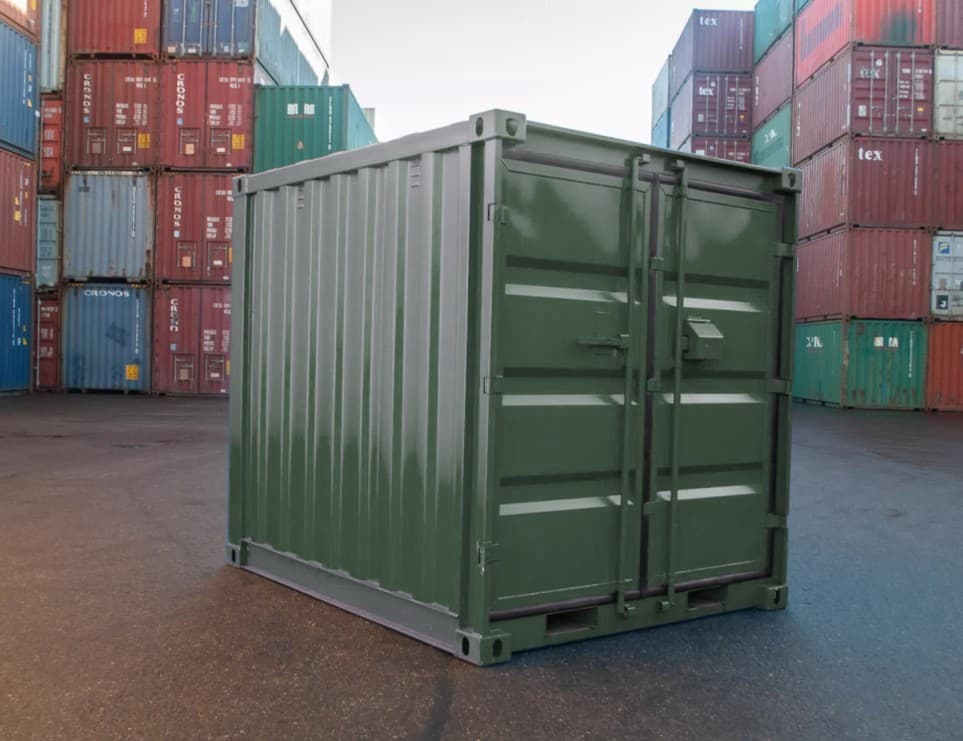
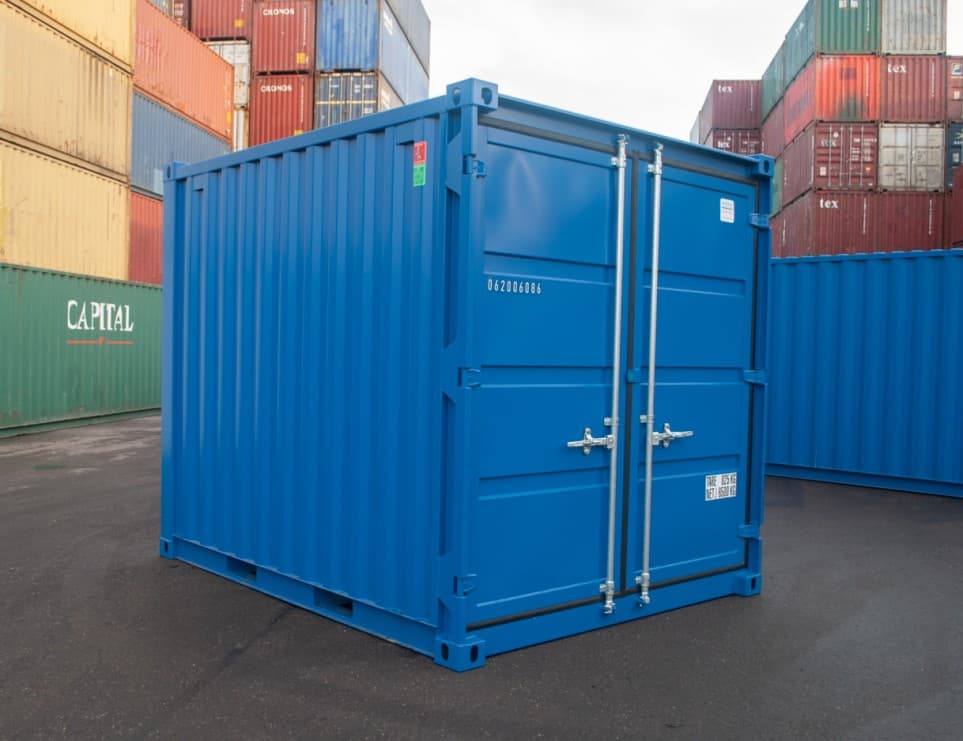
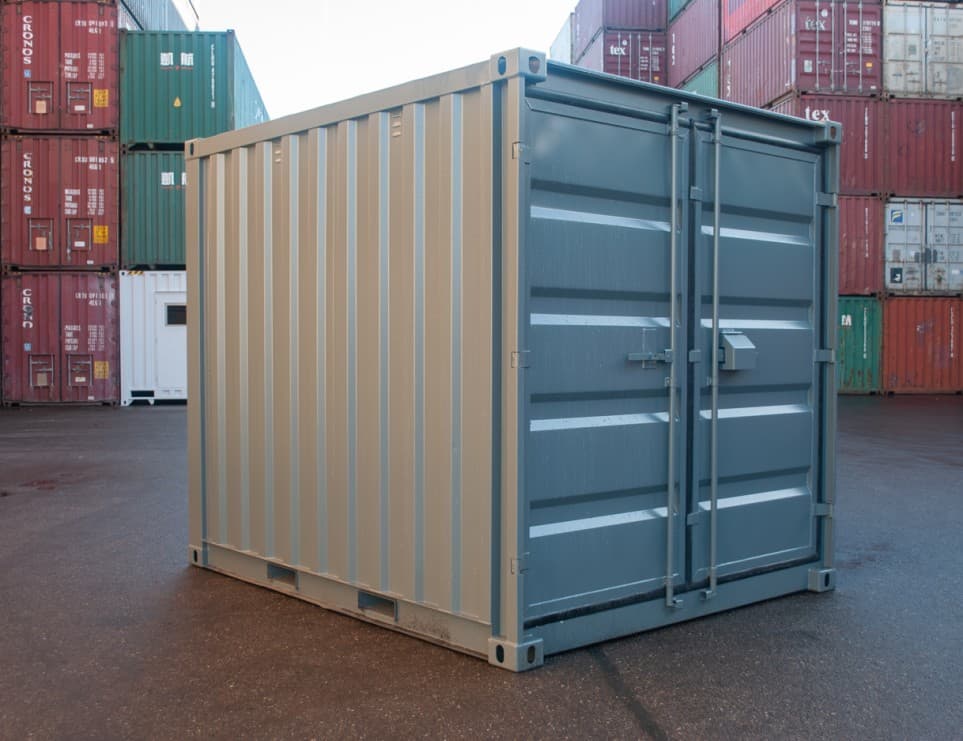
The new 8ft container (first trip) is a compact Corten steel storage module, built to current ISO standards. Its small size and robustness make it a practical solution for many uses, whether on a construction site, in a yard, a warehouse or a garden. This container is new: it has made only one sea voyage, meaning it has not suffered damage from intensive use or repeated handling. It is therefore in excellent condition, with no perforating rust or structural deformation. Unlike a used container, it shows no significant signs of wear and offers optimal watertightness.
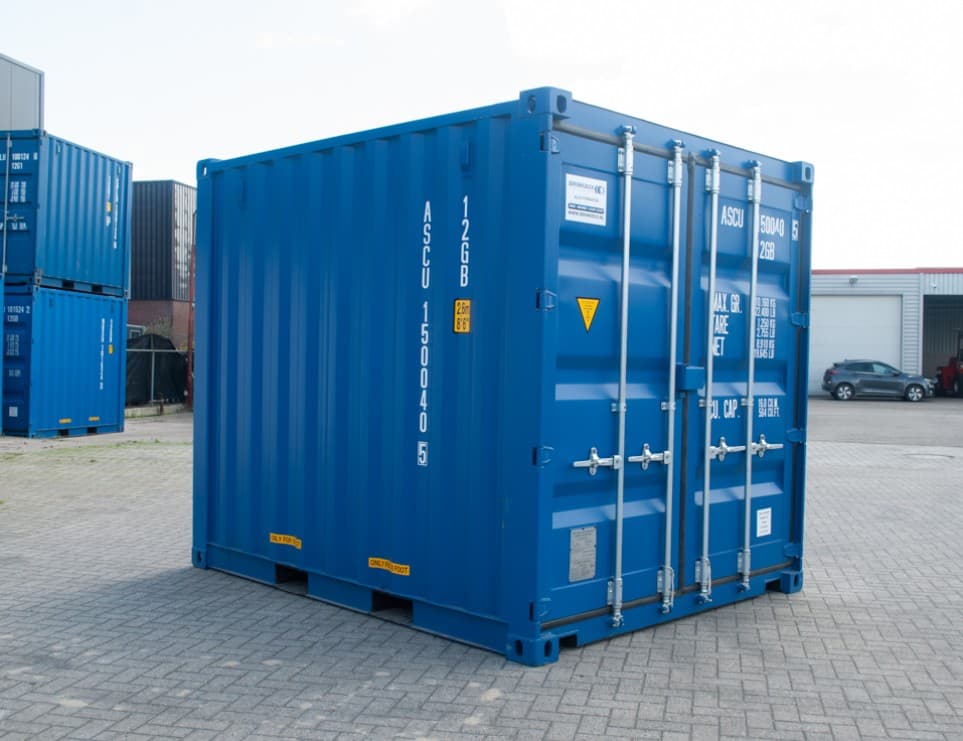
This container is made of Corten steel, a low-alloy steel that resists atmospheric corrosion thanks to the formation of a protective surface layer. This gives it better durability than ordinary steel, especially outdoors. The floor is 28 mm marine plywood, a dense, moisture-resistant material capable of supporting heavy loads without deforming. The walls, roof and floor are welded together, ensuring a monolithic structure. The double rear doors are fitted with standard container locks, with locking bars and handles. They ensure secure closure and easy access to the interior. Watertightness is ensured by rubber seals around the entire door perimeter.
The external dimensions of an 8ft container are generally about 2.44 m long, 2.44 m wide and 2.59 m high. The internal dimensions are about 2.29 m long, 2.35 m wide and 2.39 m high. The floor area is about 5.4 m², and the internal volume about 13.8 m³. The tare weight is about 1,300 kg, and the maximum payload about 3,000 kg. These values may vary slightly depending on the manufacturer, but they comply with the tolerances of ISO 668. This container is classified as a dry container (or dry van), i.e. without refrigeration or mechanical ventilation. It is designed for transporting dry goods and for storage.
ISO 1496-1 defines the design specifications and tests for series 1 containers. It ensures that the container can be stacked, lifted by the top or bottom corners, and secured to a chassis or railcar. The corner castings comply with ISO 1161. They allow the container to be handled with a spreader or a forklift equipped with hooks. The 8ft container is often used as a standalone storage unit, but it can also be integrated into a modular assembly.
In terms of use, this new 8ft container is perfectly suited to storing equipment, tools, goods or personal belongings. It can serve as a site office, technical room, changing room, or even as a base for a light dwelling or commercial premises. Its compact size allows it to be installed in confined spaces where a 20ft container would not fit. It can be placed on stabilised ground, concrete blocks or railway sleepers. For prolonged use, it is recommended to place it on a flat, drained surface to avoid water accumulation under the floor.
Maintenance of a Corten steel container is minimal. Regular cleaning with clean water and mild soap is enough to preserve its appearance. It is advisable to periodically check the condition of the seals and locks, and to grease the locking mechanisms if necessary. In case of a deep scratch, a touch-up with anti-rust paint can be applied to prevent corrosion. The original paint is generally applied at the factory and is weather-resistant.
When buying a new container, it is important to check the CSC certificate (Convention for Safe Containers), which certifies that the container complies with safety standards for sea transport. This certificate is generally valid for five years and can be renewed after inspection. For land use, the CSC certificate is not mandatory, but it is proof of quality.
Transporting an 8ft container in France is subject to abnormal load regulations if its dimensions or weight exceed the authorised limits. An 8ft container falls within standard dimensions, so it can be transported on a container truck without special authorisation. However, a suitable lifting means (crane, forklift) must be provided to unload it.
This container is sold new, first trip, meaning it has been used for a single transport of goods. It may show slight superficial marks of wear, but no deformation or corrosion. It is delivered as is, without interior fit-out.
In summary, the new 8ft container (first trip) is a robust, secure and durable storage solution. It offers an interesting alternative to traditional garden sheds or masonry constructions, with the advantage of being mobile and reusable. Its competitive price and immediate availability make it a relevant choice for professionals and individuals.
For any questions about exact dimensions, fit-out options or delivery arrangements, do not hesitate to contact our team. We will support you in your project.
To go further, let us examine in more detail the technical characteristics that distinguish this 8ft container from other modules. The structure consists of welded Corten steel sections, forming a rigid frame. The side walls and roof are made of corrugated sheet, which increases resistance to bending and compression. The sheet thickness is generally 1.6 mm to 2 mm for the walls, and 2 mm for the roof. The 28 mm marine plywood floor is fixed to steel cross members, themselves welded to the bottom frame. This floor can support a uniformly distributed load of up to several tonnes, but it is advisable not to exceed the indicated maximum payload. The corner castings are made of cast steel, with standard oval openings allowing twistlocks to pass through. They are located at the four top and bottom corners.
The 8ft container is often compared to the more common 10ft container. The 10ft offers an internal volume of about 15.9 m³ and a floor area of about 6.1 m², for a tare weight of about 1,300 kg as well. The 8ft is therefore slightly more compact, which can be an advantage for very confined spaces. The 20ft container, for its part, offers a volume of about 33 m³ and an area of 13.8 m², but it requires more manoeuvring space and a more powerful lifting means. The 8ft container can be handled with a medium-capacity forklift, which reduces handling costs.
In terms of regulations, installing a container on private land may be subject to local planning rules. In France, a container used as a storage room or office may be considered a light construction and require a prior works declaration if its floor area exceeds 5 m² and its height exceeds 12 m, or if it changes the external appearance. It is therefore recommended to check with the town hall before any installation. For temporary use on a construction site, a temporary occupation permit may be required.
Sea transport of an 8ft container is possible, but less common than for standard sizes. It can be shipped as groupage or as a full container. However, its reduced size may result in a higher volumetric cost. For land transport, a flatbed truck or a suitable container truck may suffice. It is important to check that the container is properly secured during transport to avoid any movement.
Interior fit-out of an 8ft container is an interesting option for creating a workspace or living space. Thermal and acoustic insulation, partitions, an additional door, windows, ventilation, and electrical and sanitary systems can be installed. Insulation is particularly recommended for outdoor use, as steel is a good thermal conductor. Without insulation, the internal temperature can vary greatly between day and night. Rock wool or polyurethane foam insulation, covered with a facing, helps maintain a stable temperature.
For use as a site office, this container can be equipped with a desk, storage, a changing area, and an electrical installation compliant with current standards. It can also serve as a secure storage room for tools and sensitive materials. Its lockable door and steel structure deter break-in attempts.
In the agricultural sector, this container can store seeds, fertilisers, or small equipment. It protects against moisture and rodents, provided the doors are properly closed and the seals are in good condition. In the events sector, it can serve as a technical room for sound and lighting equipment, or as a changing room for staff. In retail, it can be fitted out as a seasonal sales outlet, a collection point, or storage space for a shop.
Routine maintenance consists of checking the condition of the paint, seals and locks. It is advisable to clean the roof to avoid accumulation of leaves and debris, which could retain moisture and promote corrosion. There are no gutters on a container, but a slight slope can be created during installation to facilitate water runoff. If the container is exposed to a saline environment, such as by the sea, more frequent rinsing with fresh water is recommended to limit salt deposits.
In case of impact or scratching, it is important to quickly treat the affected area with anti-rust paint of the epoxy or polyurethane type. Surface rust can be removed with a wire brush before application. If the rust is perforating, repair by welding may be necessary, but this remains rare on a new container.
The new 8ft container is therefore a durable investment, which can be used for many years with minimal maintenance. Its purchase price is competitive compared to other storage solutions, and its resale value remains reasonable on the second-hand market. It is also possible to rent it for temporary needs, which can be an interesting alternative for short-duration projects.
In conclusion, this new 8ft container (first trip) combines compactness, robustness and versatility. It meets the needs of professionals and individuals alike, whether for storage, office use, or more extensive fit-out. Its compliance with ISO standards and its CSC certificate guarantee its quality and safety. For a specific project, it is advisable to call on a professional for fit-out and installation, in order to comply with good practice and current standards.
Let us now address the points to watch when buying, often overlooked but decisive for long-term satisfaction. Before any order, the actual condition of the container should be checked, even if it is advertised as new. A first-trip container may have suffered impacts during port handling operations. The corner castings, corner posts, top and bottom rails, as well as the side panels and roof should therefore be inspected. Look for dents, cracks, cracked welds or traces of rust. Also check that the doors open and close without forcing, that the seals are flexible and not cracked, and that the locks work correctly. A container whose doors are difficult to operate may indicate a deformed frame.
It is also recommended to check the floor. A marine plywood floor can be damaged by poorly distributed heavy loads or prolonged exposure to moisture. On a new container, the floor should be clean, without moisture stains, delamination or holes. If the container has been used to transport chemicals or foodstuffs, odours may remain. In this case, thorough cleaning and ventilation are necessary before storing sensitive goods.
Another important point is the presence of the CSC certificate and the approval plate. This plate, fixed on the door or on the side, indicates the date of manufacture, the serial number, the tare weight, the payload, and the date of the next inspection. It is mandatory for international sea transport. For land use, it is not required, but it demonstrates the container's compliance.
Finally, consider the accessibility of the delivery location. An 8ft container can be delivered by crane truck or by flatbed truck with a forklift. It is essential to check that the truck can access the site without difficulty, that the ground is stable enough to support the weight of the truck and the container, and that there are no overhead obstacles (power lines, branches). If the container is to be placed in a garden or on sloping ground, provide chocks or blocks to level it.
Let us now compare the 8ft container to other types of containers, to better understand its advantages and limitations. The standard dry container, like this one, is the most common. It is designed for transporting dry goods and for storage. It has no temperature control system. For goods requiring controlled temperature, a reefer (refrigerated) container should be chosen. The reefer is equipped with a refrigeration unit and reinforced insulation. It is heavier and more expensive, and requires a power supply. The open top container, for its part, has an opening or removable roof, allowing tall goods to be loaded from above. The flat rack container has no side walls or roof, which facilitates loading heavy or bulky loads. The high cube container is a variant of the standard dry container with an internal height increased by about 30 cm, offering additional volume.
The 8ft container stands out for its compactness. It is shorter than the 10ft, 20ft and 40ft. This reduced size makes it ideal for small spaces, but it limits storage volume. It is therefore important to assess your actual needs before choosing. If you need to store large quantities, a 20ft will be more economical per cubic metre. If you lack space, the 8ft will be more suitable.
In terms of price, the new 8ft container generally falls within a competitive range. The price may vary depending on availability, delivery location, and options. It is advisable to request several quotes for comparison.
To conclude, the new 8ft container (first trip) is a reliable and durable product that meets many needs. Whether you are a building professional, a farmer, a retailer or an individual, it can provide you with an effective storage or fit-out solution. Do not hesitate to contact us for a personalised quote and advice tailored to your project.