Description
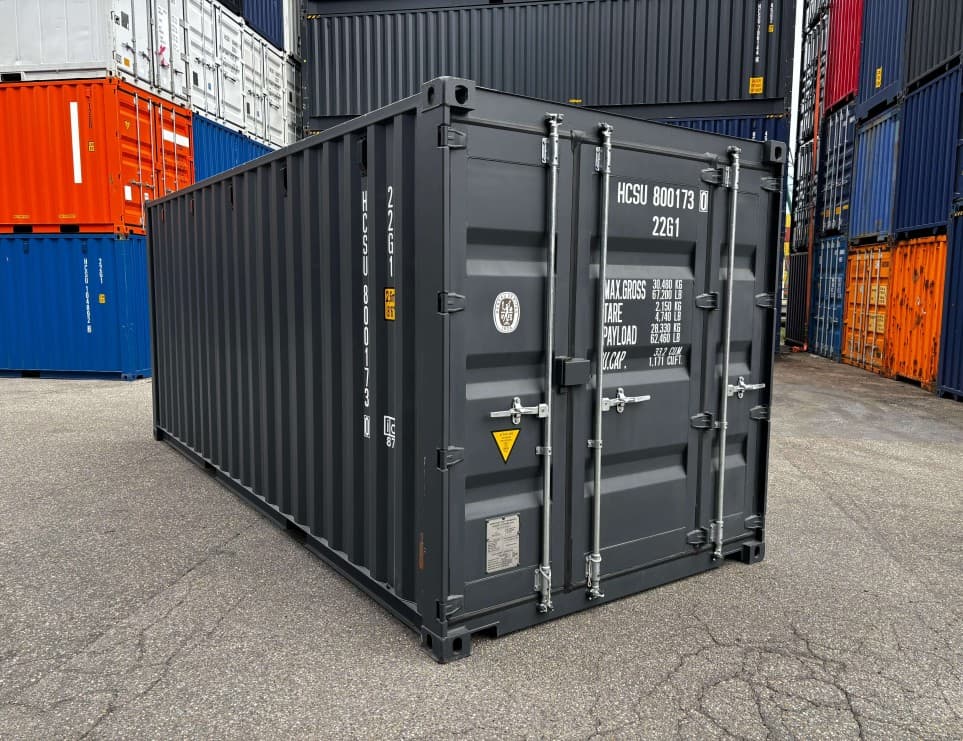
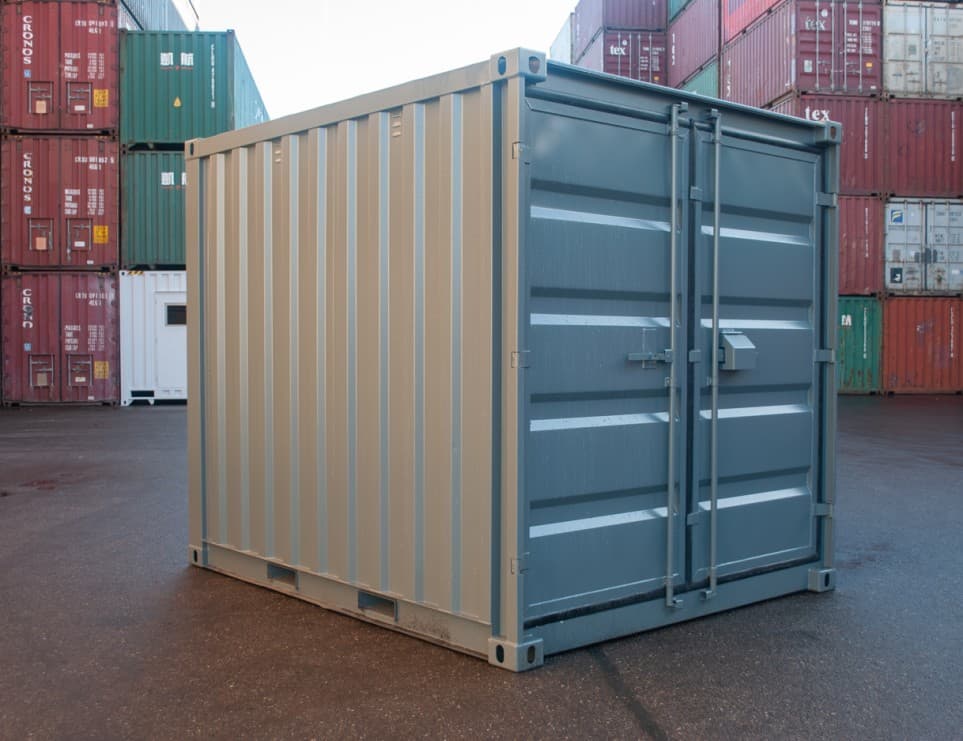
The converted 20ft workshop container we offer at D.S. Globe Conteneur is based on a proven foundation: a 20ft shipping container, built to ISO 668 standard dimensions, transformed into a functional workspace. Specifically, it is a standard dry container, made of Corten steel, whose interior has been adapted to accommodate a workshop, technical room, site office or organized storage space. Its standard external length of 20 feet, approximately 6.06 metres, provides a floor area of about 13.8 square metres, corresponding to an internal volume of approximately 33 cubic metres. These dimensions make it a sufficient volume to install a workbench, wall storage, an electrical panel and some machines, while maintaining proper circulation. The standard external width is 2.44 metres, with an internal width of approximately 2.35 metres, and the standard external height is 2.59 metres, with an internal height of approximately 2.39 metres. These values are those of a standard 20ft container; they may vary slightly depending on the manufacturer and the condition of the container. The tare weight of a standard 20ft container is generally between 2,100 and 2,400 kilograms, and its maximum permitted payload is approximately 28 tonnes for a new container. Even when fitted out, it retains significant residual load capacity, allowing heavy equipment to be stored without difficulty. The structure is made of Corten steel, a low-alloy steel that resists corrosion better than ordinary steel thanks to its protective oxide layer. It is the standard material for shipping containers, designed to withstand salt air, rain and temperature variations. The walls, roof and floor form a rigid assembly, braced by corrugated profiles that provide mechanical strength. The floor is made of 28 mm marine plywood, a dense panel treated to resist moisture and rolling loads. It easily supports trolleys, heavy workbenches or pallets. The rear doors are double container-locking doors, equipped with locking bars and sealing gaskets. They open across the full internal width and height, making it easy to load and move bulky equipment. The container is revised and watertight: gaskets are checked, rust spots treated, and the whole is tested to ensure no water infiltration. This means it is ready for immediate use, with no essential prior work required. The interior fit-out can take several forms depending on the intended use. In a workshop, there is often a wall-mounted workbench, tool storage, LED lighting powered by an electrical supply, and sometimes light insulation to limit condensation. In a site office, the fit-out may include a partition, an internal door, sockets, auxiliary heating and ventilation. In a technical room, priority is given to cable routing, wall fixings for electrical panels and ventilation grilles. These fit-outs are not standardized: they depend on the user's needs. The workshop container differs from a simple storage container in that it is designed to be occupied. This means thinking from the outset about ventilation, lighting and electrical supply. Natural ventilation through high and low grilles helps limit condensation and air renewal. Mechanical ventilation can be added if the activity generates dust, vapours or heat. Lighting must be suited to the work: watertight LED luminaires are common in this type of space. The electrical supply must be installed to professional standards, with a distribution board, residual current devices and proper earthing. In terms of installation, a 20ft container is placed on stable, level ground. The four corners are fitted with standard corner castings, which allow it to be lifted with a spreader or slings, and secured to a chassis, truck or another container. For ground installation, concrete blocks, crossbeams or timbers are often used to raise the container slightly and avoid direct contact with ground moisture. This elevation also allows air to circulate under the floor and limits corrosion from below. It is recommended to provide a slight slope or drainage around the location to prevent water from stagnating under the container. Ground anchoring is advisable in wind-exposed areas, particularly in the Mediterranean region where mistral episodes can be violent. Transporting a 20ft container in France is governed by exceptional transport regulations as soon as dimensions or weight exceed permitted limits. A standard 20ft container generally complies with road width and height limits, which simplifies its movement. However, its tare weight and the need for a suitable truck mean that site access conditions must be checked: street width, presence of overhead lines, ground bearing capacity, manoeuvring space for a crane truck or container carrier. In Marseille and the Bouches-du-Rhône, urban access can be constrained, so it is useful to validate the access route before delivery. In terms of maintenance, a Corten steel container requires little intervention. Sensitive areas must be monitored: lower walls, floor perimeter, corners, hinges and door gaskets. Regular cleaning with clean water and mild soap is enough to remove salt and dust. Deep scratches that expose bare steel can be treated with a suitable anti-rust paint. Door gaskets are checked by closing a sheet of paper between the gasket and the wall: if the paper slides without resistance, the gasket needs replacing. Locks and hinges should be lubricated once or twice a year. A roof watertightness check is useful after heavy rain or in the event of an impact. These simple actions extend the container's service life, which can exceed several decades in static use. When buying a revised second-hand container, several points deserve attention. The structure must be examined: no major deformation of profiles, no holes or cracks, sound and non-rotted floor, doors that close properly. Surface rust is normal on a container that has been used, but perforating rust is a sign of structural weakness. The ISO certificate, often affixed to the CSC plate, certifies that the container meets safety standards for maritime transport. This plate also indicates the manufacturing date, tare weight, payload and maximum gross mass. For static use, this information remains useful for knowing load limits and the container's history. A revised and watertight container is suitable for storage or workshop use, but this refurbishment should not be confused with a full renovation: interior finishes and insulation are not necessarily included. If the workshop is to be occupied year-round, thermal insulation must be provided. Steel is an excellent heat conductor: without insulation, a container can become very hot in summer and cold in winter. Insulation with rigid panels or sprayed foam, completed by an interior lining, improves comfort and reduces condensation. Condensation is a common phenomenon in containers: warm, humid air condenses on cold walls. Proper ventilation and insulation limit this risk. It is also possible to install a dehumidifier or moisture absorbers for sensitive storage. For a workshop, natural light can be provided by windows or translucent panels, but any cut must be made cleanly and reinforced so as not to weaken the structure. Interventions on a container's structure, such as cutting a door or window, must be designed to preserve rigidity: reinforcements are often added around openings. The workshop container can be used in many contexts. On a construction site, it serves as a welfare unit, works office, tool storage room or prefabrication workshop. In industry, it can accommodate a control station, maintenance room or break area. For events, it becomes a control room, ticket office or technical room. For an individual, it can become a DIY workshop, garage for small equipment or organized storage space. In all cases, its mobility is an asset: it can be moved to another site with a suitable truck, allowing the investment to be reused. The converted 20ft container also stands out for its security. Steel walls and lockable doors offer far greater resistance to break-in than a wooden or PVC garden shed. To enhance security, a quality padlock, an additional door lock or an alarm system can be added. The absence of ground-floor windows limits entry points. If openings are added, they must be fitted with bars or shutters. From a regulatory standpoint, installing a container on private land may be subject to planning rules. In France, a container used as living space or as an annex may be considered a construction and require prior declaration or a building permit depending on its surface area and duration of installation. For temporary use on a construction site, the rules are different. It is therefore advisable to check with the local planning department before installation. Similarly, if the container is intended to receive the public or workers, it must comply with the health and safety rules applicable to workplaces, particularly regarding ventilation, lighting, heating and exits. These points must be validated with the competent bodies. The price of a converted 20ft workshop container depends on several factors: the condition of the base container, the level of interior fit-out, the presence of insulation, electricity, windows or partitions. A revised and watertight container, such as the one we offer, is a sound base for later fit-out or immediate use. It is important to request recent photos, check dimensions and ask precise questions about the condition of gaskets, floor and structure. At D.S. Globe Conteneur, based in Marseille, we support our customers in choosing the container suited to their project, whether for purchase or rental. We can advise you on fit-out, installation and transport constraints. Do not hesitate to contact us for availability and possible options. To complete this presentation, it is useful to detail the maintenance operations to plan over time. A workshop container, even revised, remains exposed to the weather and intensive use. A visual inspection every six months helps identify changes: rust appearing on lower walls, deformation of a post, gasket wear, play in hinges. Roof cleaning is often neglected: leaves and debris accumulating there retain moisture and promote corrosion. Brushing with clean water, without aggressive detergent, is sufficient. For grease or resin stains, a mild cleaner suitable for painted surfaces is preferable. In the event of a deep scratch, emerging rust must be removed with a wire brush or abrasive paper, then anti-rust paint and a topcoat in a similar shade applied. This localized treatment prevents corrosion from spreading under the paint. Hinges and locking bars should be lubricated with water-resistant grease. Door gaskets should be replaced when crushed, hardened or torn. A gasket in good condition ensures air and water tightness, protecting the contents and limiting moisture ingress. The marine plywood floor can be treated with a specific oil or paint to extend its resistance, especially if exposed to water splashes or chemicals. If an area of the floor is damaged, it is possible to replace only part of it, provided the thickness and quality of the original panel are matched. These simple interventions, carried out at the right time, prevent major repairs. In terms of transport, a converted 20ft container can be moved by container truck, crane truck or high-capacity forklift, depending on the site configuration. Lifting is done using the four corner castings, never by the walls. It is prohibited to lift a loaded container by the upper corners if the fixings are not designed for this, and the load limits indicated on the CSC plate must be respected. In France, road transport of containers is subject to gross vehicle weight (GVW) rules and traffic restrictions in certain urban areas. For an exceptional convoy, prior authorization is required, with a defined route and sometimes an escort. Even when the container complies with standard dimensions, the truck transporting it may exceed weight or length limits; it is therefore important to check the applicable regulations and use a carrier accustomed to this type of load. The final positioning must be studied: the container must rest on a flat, stable and drained surface, with sufficient space to open the doors and manoeuvre. If the container is installed on sloping ground, earthworks or shims are necessary to prevent deformation. In some cases, a concrete slab or blocks are recommended to distribute the load and prevent sinking. Regarding sector-specific use cases, the converted 20ft workshop container meets varied needs. In construction and public works, it serves as a crew room, site office with plans and IT equipment, changing room or storage room for power tools. In industry, it can accommodate a quality control station, a maintenance room with workbench and tools, or a order preparation area. In the agricultural sector, it becomes a repair workshop, a storage room for seeds or plant protection products, provided ventilation and safety rules are respected. In events and entertainment, it is used as a technical control room, equipment storage room or temporary catering space. For local authorities, it can serve as a technical room for municipal services, storage room for green spaces or local office. In the maritime and port sector, it naturally finds its place as a storage or maintenance room, thanks to its resistance to salt air. Finally, for individuals, it constitutes a DIY workshop, a garage for a motorcycle or small equipment, or a secure storage space. Comparing the 20ft container with other sizes and types helps make the right choice. The 10ft, shorter, offers approximately 7 square metres and is suitable for a small workshop or storage room, but it is less common and sometimes more expensive per square metre. The standard 40ft doubles the surface area, with approximately 28 square metres, allowing several workstations to be installed or storage and workshop to be separated; however, it is heavier and requires wider access. The 40ft high cube gains approximately 30 centimetres of internal height, an advantage for activities requiring ceiling height, such as certain workshops with vertical machines. The 20ft high cube also exists and offers the same surface area as the standard 20ft with greater internal height. Open top containers, without a rigid roof, are useful for loading tall objects, but they are less suitable for an enclosed workshop. Flat racks, without side walls, are mainly used for transporting out-of-gauge loads. Reefer containers, insulated and equipped with a refrigeration unit, are designed for transporting perishable goods; they can be repurposed for workshop use, but their refrigeration unit and original insulation increase cost and complexity. The 20ft dry container remains the best compromise between surface area, cost, availability and ease of transport. Finally, it should be emphasized that buying a revised second-hand container is part of an economic and environmental approach: reusing an existing shipping container avoids the production of a new structure and extends the service life of equipment already manufactured. For static use, the constraints of maritime transport no longer apply, but the original robustness remains an asset. A well-maintained container can serve for several decades as a workshop, technical room or storage space. Before purchase, it is recommended to precisely define the use, required surface area, electricity, ventilation and insulation needs, as well as site access constraints. These elements make it possible to choose between a bare container to fit out and an already equipped container, and to avoid unpleasant surprises. D.S. Globe Conteneur, in Marseille, can support you in this reflection and offer solutions suited to your project, for purchase or rental.