Description
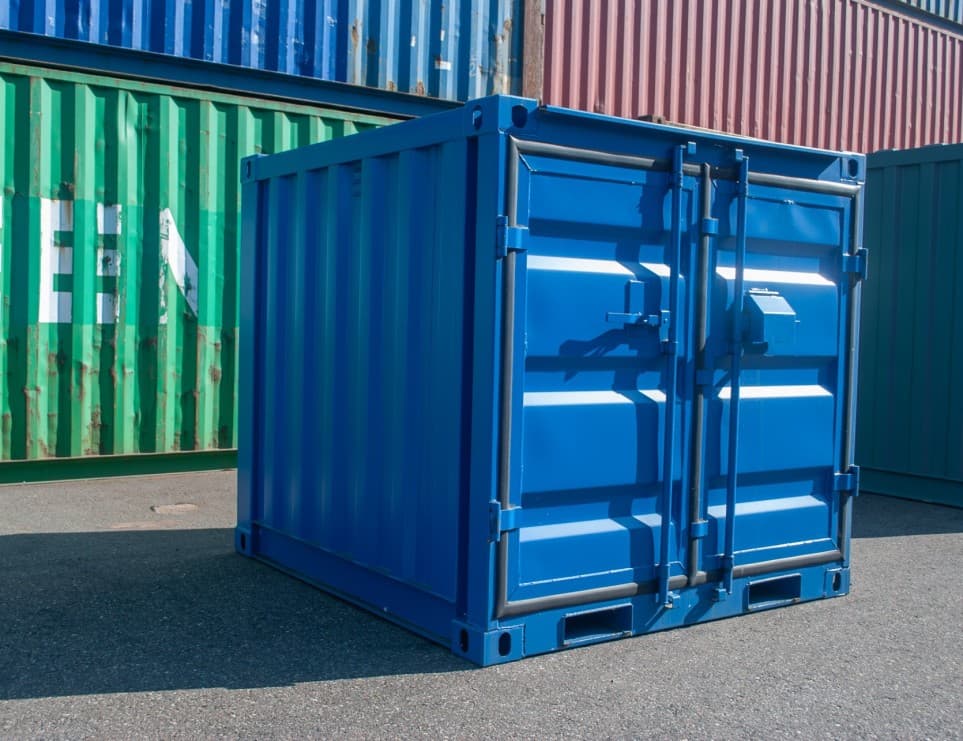
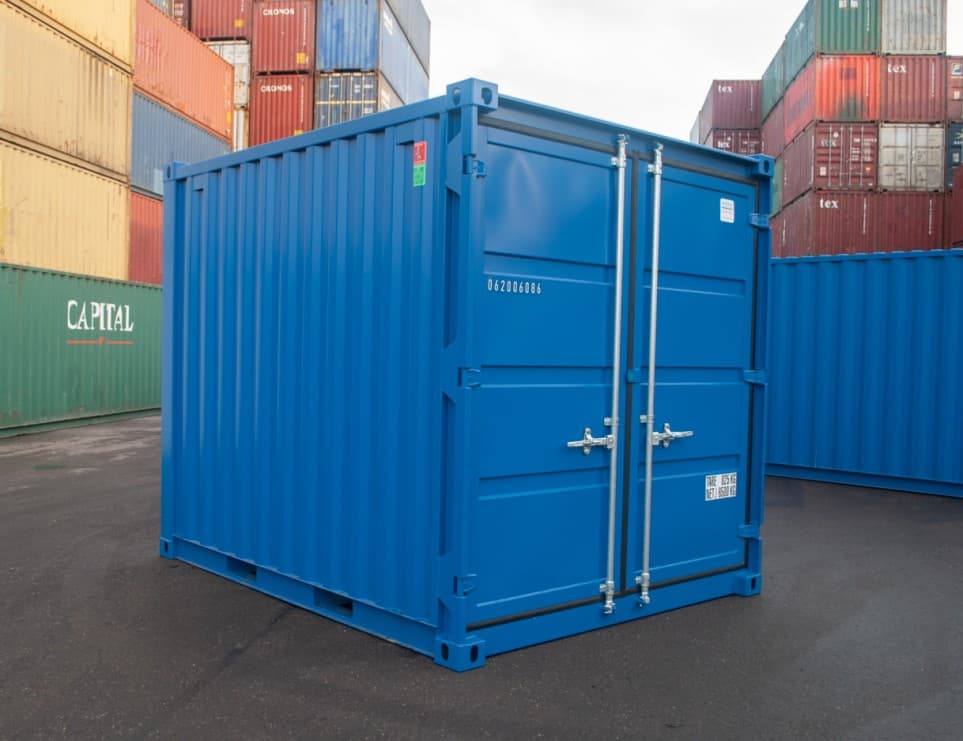
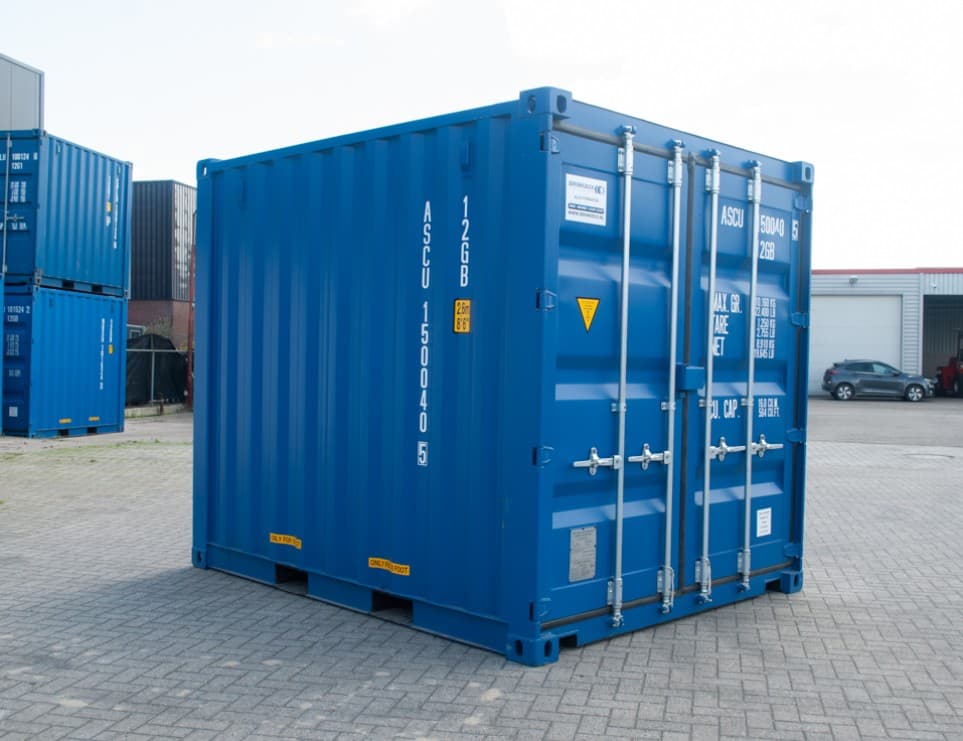
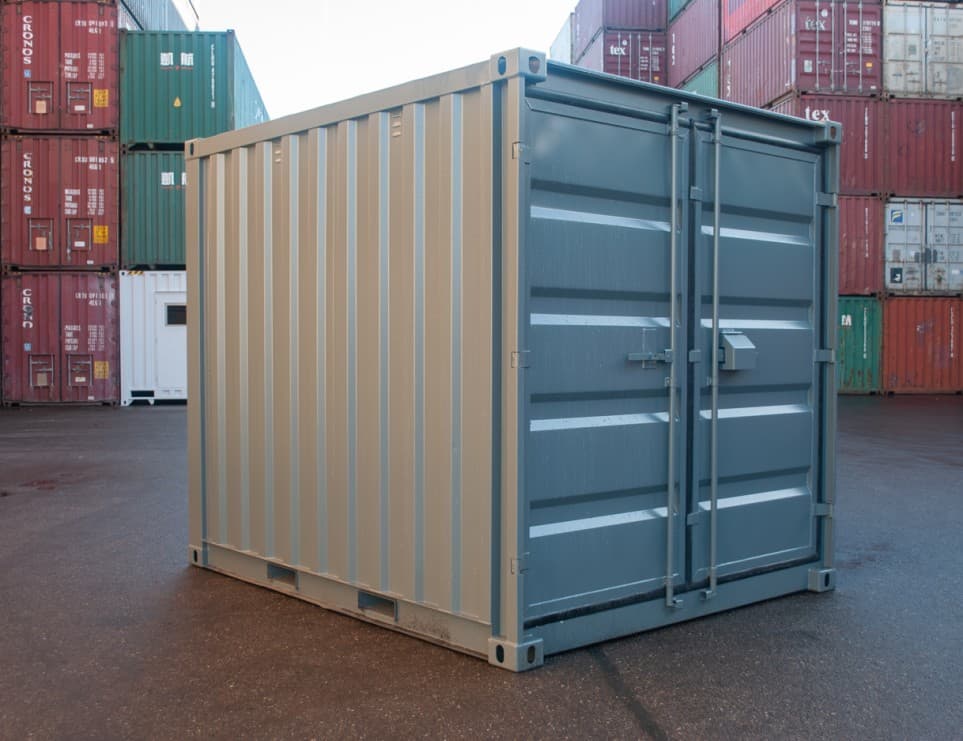
The new 1.8m storage container is a compact and robust solution for the secure storage of equipment, gear or various goods. Its Corten steel design, a low-alloy high-yield-strength steel, gives it high resistance to atmospheric corrosion and mechanical stress. This material, commonly used in the manufacture of shipping containers, ensures a long service life even outdoors. This model stands out for its reduced size, suited to confined spaces, while retaining the essential features of a professional storage container: watertightness, security and durability.
This container is new, meaning it has not yet been used for sea transport and therefore shows no signs of wear from previous use. It is delivered refurbished and ready for immediate use. Its water and air tightness has been verified, guaranteeing effective protection against bad weather and external humidity. The structure is designed to withstand varied climatic conditions, whether by the sea, in an industrial area or in a rural setting. The 28mm marine plywood floor provides a resistant and durable load surface, suitable for handling heavy loads and intensive use. The double rear doors, fitted with standard container locks, ensure secure closing and easy access. These doors are designed to be locked with a padlock or a seal system, further reinforcing protection against intrusion.
The dimensions of this container, although not precisely specified in the product information, correspond to a compact format of approximately 1.8 metres in length. This format is often used for storage on urban construction sites, in yards, warehouses or storage areas where space is limited. It can also serve as a technical room, a basic site office or a site cabin, depending on the fit-out carried out. Its height and width generally comply with ISO container standards, which facilitates transport and handling with standard equipment (forklifts, trucks with lifting arms, etc.).
The ISO certification mentioned in the specifications confirms that this container meets current international standards, in particular ISO 668 (dimensions and masses) and ISO 1496 (specifications and testing). These standards guarantee interchangeability, safety and manufacturing quality. Although this container is intended for storage and not for sea transport, its compliance with ISO standards is a mark of quality and reliability. It is important to note that ISO certification is not a commercial guarantee in the legal sense, but an attestation of conformity with normative requirements.
In terms of use, this storage container is suitable for many purposes. On construction sites, it helps secure tools, materials and sensitive equipment. In the agricultural sector, it can house seeds, fertilisers or small equipment. For businesses, it offers a temporary or permanent storage solution, particularly for archives, spare parts or finished products. Individuals can also use it to store bulky items, furniture or light vehicles (motorcycles, scooters, bicycles). Thanks to its watertightness, it protects the contents from humidity, dust and rodents, provided the doors are properly closed and the seals are in good condition.
Maintenance of this container is simple and low-effort. It is recommended to regularly inspect the condition of the paint and seals. In the event of scratches or chips, a touch-up with anti-rust paint can be applied to prevent corrosion. The door seals should be cleaned and checked periodically to ensure their effectiveness. The locks and hinges can be lubricated to make them easier to operate. Occasional cleaning of the interior and exterior helps keep the container in good condition. It is also advisable to check the marine plywood floor for any damage and to treat it if necessary.
When buying a storage container, several points require attention. It is essential to check the general condition of the structure: no major deformation, holes or cracks. The doors must open and close correctly, without excessive play. The seals must be supple and free of tears. The floor must be solid and free from rot or sagging. The presence of surface rust is normal on a used container, but it must not be perforating. For a new container, these defects should not be present. It is also important to ensure that the container is properly watertight: a water or light test can reveal leaks. Finally, check that the container complies with ISO standards and has a certification plate (CSC) if required.
In France, the use of a storage container is subject to certain regulations. Installing a container on private land may require planning permission depending on the duration of installation and the surface area. As a general rule, a container of less than 20 m² installed for less than 3 months may be exempt from a building permit, but it is advisable to check with the local town hall. For professional use, the container must comply with safety and accessibility rules, particularly if it is intended to receive the public. Transporting a container on public roads must be carried out by a professional equipped with a suitable vehicle and complying with size and weight rules. The 1.8m container, due to its reduced size, can be transported on a flatbed truck or a trailer, subject to weight and dimension limits.
This container is offered at a price of 2000 euros. This price includes a new, refurbished container ready for use. It is important to note that this price does not include delivery costs, which may vary depending on the destination and the handling equipment required. For any questions about delivery, please contact the seller directly. D.S. Globe Conteneur, based in Marseille, specialises in the sale and rental of shipping containers. The company can provide advice on choosing the container suited to each need and on transport arrangements.
In summary, the new 1.8m storage container is a practical, durable and secure solution for storing various goods. Its Corten steel construction, marine plywood floor and secure doors make it reliable equipment for many uses. Its compact format makes it suitable for confined spaces, and its compliance with ISO standards guarantees its quality. With minimal maintenance, it offers a long service life and effective protection against bad weather. Whether for professional or private use, this container meets the robustness and security requirements expected of a product of this type.
To explore sector-specific use cases, this 1.8m container is particularly useful in several fields. In the construction sector, it can be used as a storage room for power tools, consumables (screws, plugs, paints) or spare parts. Its reduced size allows it to be positioned as close as possible to work areas, limiting movement for teams. In the events sector, it serves as a technical control room or storage for sound and lighting equipment, with the advantage of being easily moved from one site to another. For farmers, it provides safe shelter for plant protection products (subject to compliance with specific regulations on the storage of chemicals), seeds or small animals. Local authorities can use it to store street furniture, road signs or green space maintenance equipment. Finally, individuals see it as an economical alternative to renting a storage unit, with the advantage of having private space on their property.
It is useful to compare this 1.8m container with other formats commonly available on the market. The 20-foot container (approximately 6.06 m long) offers an internal volume of around 33 m³, nearly three times that of the 1.8m model. It is suitable for large storage needs, but requires more floor space and heavier handling equipment. The 40-foot container (approximately 12.19 m long) offers around 67 m³, ideal for sea transport or large-scale industrial storage. The 10-foot container (approximately 3.05 m) is an interesting intermediate option, with a volume of around 15 m³. The 8-foot container (approximately 2.44 m) is close to the 1.8m format, but slightly longer. The choice will depend on the space available, the volume to be stored and transport constraints. The 1.8m format is particularly relevant when space is limited, for example in an urban yard, a modest-sized garden or a saturated warehouse. It can also serve as an additional container, complementing a larger one.
In terms of container types, the model described is a dry (or standard) container, i.e. closed, without a refrigeration system or special opening. Other types exist: the reefer container (refrigerated), equipped with a cooling unit, for transporting perishable goods; the open top container, whose roof is removable or opening, for loading tall objects; the flat rack container, without side walls or roof, for out-of-gauge loads; and the high cube container, whose height is around 30 cm greater than a standard container. Since the 1.8m container is a dry container, it does not have these specific features. However, it can be fitted out for a particular use: installing shelves, racks, hooks or even interior lighting. This fit-out must be carried out in compliance with safety rules, particularly regarding suspended loads and electrical installations.
French regulations also govern the transport of this type of container. On the road, the vehicle's gross combined weight (GCW) and gross vehicle weight (GVW) must be respected. A 1.8m container, even empty, weighs around 1,200 kg, which requires a suitable vehicle. For transport on a trailer, the trailer's load capacity and the required driving licence (category B or BE depending on weight) must be checked. Transport must be secured with straps or chains, and the container must be properly lashed down. In addition, container transport may be subject to traffic restrictions in certain urban areas, particularly regarding heavy goods vehicles. It is therefore recommended to plan the route and obtain the necessary permits if needed.
Finally, buying a new 1.8m storage container from D.S. Globe Conteneur in Marseille offers the advantage of a quality product, compliant with standards, and professional support. The company specialises in the sale and rental of shipping containers and can advise its customers on choosing the model, fit-out options and transport solutions. For a personalised quote or additional information, you can contact the company directly. This container represents a durable investment for the secure storage of goods, with a competitive value for money on the new container market.
To complete this presentation, the question of ventilation and condensation should be addressed. A closed metal container can be subject to internal condensation when temperature variations are significant between day and night, or when the outside air is very humid. This condensation can lead to mould appearing on stored objects or on the walls. To limit this phenomenon, ventilation grilles can be installed on the side walls or doors, or passive dehumidifiers (absorbent sachets) can be used inside. Another solution is to raise stored objects above the floor using pallets or duckboards, to allow air circulation. It is also recommended to avoid storing damp materials and to ventilate the container regularly in fine weather.
Another important aspect concerns security and protection against theft. Although containers are designed to be robust, they are not burglar-proof. To enhance security, it is advisable to use high-strength padlocks, such as disc padlocks or armoured padlocks, and to protect them with an anti-theft housing. There are also additional locking systems, such as security bars or recessed locks. Installing an alarm system or video surveillance can deter intrusion attempts. Finally, it is recommended to place the container in a visible and well-lit location, and not to store high-value items there without additional security measures.
In terms of interior fit-out, this 1.8m container can be equipped with various solutions to optimise storage. Metal or wooden shelves can be fixed to the walls, taking care not to pierce the outer walls to preserve watertightness. Rails and hooks allow tools or equipment to be hung. Interior lighting, powered by a battery or an electrical extension, improves user comfort. For use as a site office, a small table, a chair and a power socket can be installed, but this requires suitable insulation and interior cladding. This fit-out must be carried out by professionals to guarantee compliance and safety.
Regarding durability, the Corten steel used for this container is recognised for its corrosion resistance. However, this does not mean it is completely immune to rust. In a marine or industrial environment, salt particles or pollutants can accelerate corrosion. It is therefore advisable to wash the container regularly with clean water, especially if it is located by the sea, and to apply a protective coat of paint every few years. The paint used must be suitable for metal surfaces and resistant to bad weather. Regular maintenance helps extend the container's service life and preserve its watertightness.
Finally, it is important to emphasise that this 1.8m container is a new product, but that it may have been refurbished. The term refurbished means that the container has been inspected and restored by the manufacturer or seller. This may include replacing wearing parts, checking welds, replacing seals and repainting. A refurbished container offers a guarantee of proper operation and a neat appearance. It is recommended to request a refurbishment certificate or an inspection sheet when purchasing, to know what work has been carried out. This helps ensure that the container meets the expected quality criteria.
With these additions, the new 1.8m storage container presents itself as a complete solution for secure storage, combining robustness, practicality and compliance with standards. Its compact format, Corten steel construction and standard equipment make it a relevant choice for many users, whether professionals or individuals. For any specific questions or a fit-out project, it is advisable to consult a professional in the sector, such as D.S. Globe Conteneur, who can provide tailored advice and a personalised quote.