Description
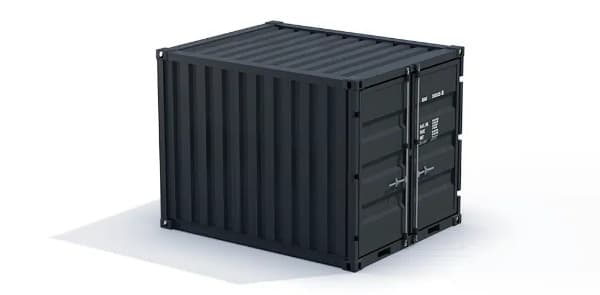
The 10ft dry shipping container is a compact, robust storage solution designed for a wide range of needs, from individuals to professionals. With its intermediate dimensions, it offers more usable volume than 6ft or 8ft models while remaining easy to install on a modest-sized plot. This container is made of corten steel, a material known for its corrosion resistance, enabling it to withstand bad weather and harsh environments. Its dry design means it is intended for transporting and storing dry, non-refrigerated goods. It is fully weatherproof, effectively protecting contents from moisture, dust and intrusions. The double rear doors, fitted with container locks, ensure secure closure and convenient access. The 28mm marine plywood floor is designed to support heavy loads and resist residual moisture. This container is new and ISO certified, guaranteeing compliance with international standards for dimensions and strength. It is stackable, allowing vertical space to be optimised on a storage site. It can be transported by crane or forklift, depending on the equipment available on site. For construction professionals, it provides a secure site unit for storing tools, materials and equipment. Tradespeople, SMEs and local authorities find it a long-term storage solution for archives, supplies or equipment. Individuals can use it for domestic storage, extra garage space or even as a base for a modular conversion (office, workshop, utility room). Its length of around 3 metres and width of 2.43 metres provide a floor area of around 7.3 m², with an interior height of around 2.39 metres, allowing bulky items to be stored. The internal volume of 15.8 m³ is optimised for a small footprint. The maximum payload of 1300 kg allows dense goods to be stored, but this limit should be respected to ensure the safety and durability of the structure. This container can be placed on a flat, stabilised surface, such as a concrete slab or compacted ground, to prevent deformation. A slight slope is recommended for rainwater drainage. Routine maintenance consists of regularly checking the paintwork and touching up any scratches with anti-rust paint to preserve the corten steel. Door seals should be checked to maintain weatherproofing. Periodic cleaning with clean water is enough to remove dirt. If storing moisture-sensitive materials, adding a dehumidifier or desiccant bags can be useful, as condensation can form in any closed volume subject to temperature variations. For conversion into an office or living space, insulation, ventilation and an electrical supply must be added, which requires a specific transformation. French regulations govern container installation: a planning permission may be required if the container is fixed to the ground and used as a structure (prior declaration or building permit depending on surface area and duration). For temporary use on a construction site, a prior declaration may be necessary. It is advisable to check with the local planning department. Transporting a 10ft container is generally done by container truck or by a truck with an auxiliary crane. The empty weight of 1300 kg and external dimensions (299 x 243 x 259 cm) must be taken into account when choosing the vehicle and site access. Delivery can be arranged in Marseille and throughout France, on quotation. This container is offered at a competitive price, with good value for money for a new ISO-certified model. It is important to check the container's compliance at purchase: presence of the CSC plate (Convention for Safe Containers) for sea transport, condition of welds, absence of perforating rust, correct operation of locks. A new container has uniform paintwork and intact seals. For intensive use, options such as lighting, shelving or a ventilation system can be added. In summary, the 10ft dry container is a versatile, durable and secure solution for many uses, combining compactness and robustness. Contact us for any questions or orders.
To go further with maintenance, a distinction should be made between preventive and corrective maintenance. Preventive maintenance involves visually inspecting the container at least once a year, and more frequently in marine or industrial environments. This includes checking the condition of the paint on the walls, roof and frame, the presence of surface or perforating rust, the condition of the door seals, the correct operation of hinges and locks, and the flatness of the floor. Dirt and debris should be removed from the roof to prevent water pooling and corrosion. Corrective maintenance is carried out when a defect is detected: a scratch should be treated quickly with epoxy or polyurethane anti-rust paint, after light sanding if necessary. A worn or cracked seal should be replaced to preserve weatherproofing. A damaged floor can be repaired by replacing the marine plywood section. Chlorinated or abrasive products that could attack the steel protection should not be used. If storing food or sensitive products, thorough cleaning with a mild detergent and careful rinsing is recommended before use. Ventilation is a key point: a closed container can experience internal condensation due to temperature differences between day and night. To limit this, ventilation grilles can be installed or moisture absorbers used. If the container is intended for regular use, it is useful to provide battery or mains-powered interior lighting, as well as shelving or fixing rails to optimise storage. These modifications do not alter the structure and remain reversible.
Regarding transport regulations in France, the shipping container is subject to several rules. For road transport, a 10ft container can be loaded onto a container truck or flatbed. The gross train weight (GTW) and the vehicle's payload must be respected. The container must be properly secured in accordance with the Highway Code and industry recommendations. Exceptional transport is generally not necessary for a 10ft container, as its dimensions remain within standard limits. However, if the container is transported on a vehicle whose dimensions exceed regulatory limits, a movement permit may be required. For sea transport, the container must be CSC certified and have a valid approval plate. This plate, affixed to the door, indicates the date of manufacture, maximum load, empty weight and dates of periodic inspections. The owner must ensure this certification is up to date, especially when shipping the container by sea. For rail transport, the 10ft container is accepted on container wagons, but its reduced size may require specific securing. Finally, for import or export, customs formalities apply, and the container may be used as packaging or as goods depending on the case.
Sector-specific use cases are numerous. In the construction sector, the 10ft container serves as a site unit for storing tools, PPE, plans and documents, or as a changing room for teams. Its compact size makes it easy to position on cramped urban sites. In industry, it can serve as a storage area for spare parts, consumables or chemicals (with the necessary precautions). In retail, it can be used as storage space at the back of a shop or as an order preparation room. In the agricultural sector, it houses seeds, fertilisers, small equipment or harvests, provided humidity is controlled. In services, it can become a utility room for networks (electricity, telecom), a security post or a temporary reception point. For individuals, it offers a storage solution for garden furniture, bicycles, tools, family archives or collections. It can also serve as a base for a DIY workshop or a garage for a small vehicle or quad bike. In the events sector, it can be used as a storage room for equipment or as a modular stand. Finally, in the maritime and port sector, it is used for storing nautical parts or as a utility room on quays.
Compared to other sizes, the 10ft container stands out for its small footprint. A standard 20ft container (6.06 m long) offers a volume of around 33 m³ and a floor area of around 14 m², double that of the 10ft. It is more suited to large storage needs or transporting bulky goods. A 40ft container (12.19 m) offers around 67 m³, but requires a large manoeuvring area and a suitable vehicle. The 10ft is therefore more manageable and can be moved with lighter lifting equipment. Compared to an 8ft container, the 10ft offers a significant additional volume (around 15.8 m³ versus 11 m³ for an 8ft), allowing longer or bulkier items to be stored. The 6ft, which is rarer, is even more compact but its volume is limited. In terms of types, the dry container differs from the reefer container (refrigerated), which is equipped with a refrigeration unit and insulation, and is intended for transporting perishable goods. The reefer is heavier, more expensive and requires a power supply. The open top container has a removable roof for loading out-of-gauge goods, while the flat rack has no side walls or roof, making it suitable for heavy and bulky loads. The high cube (HC) container is around 30 cm taller, offering additional volume, but the 10ft generally does not exist in high cube. Finally, the dry container is the most versatile and economical for dry storage.
When buying, several points should be checked. First, ensure the container is indeed new or in good condition depending on the intended use. A new container has uniform paintwork, new seals and a structure with no deformation. A used container can be classified in different categories (one-trip, cargo worthy, wind and water tight) and its price is lower, but it may require repairs. It is advisable to request recent photos or visit the container before purchase. Check the presence of the CSC plate and its validity. Inspect the welds, corner castings, hinges and locks. Ensure the floor is sound, without rot or sagging. Check weatherproofing by closing the doors and observing daylight through the seals. Take into account delivery and handling costs, which can vary depending on site accessibility. Finally, compare prices and services offered by different suppliers. A new 10ft container in corten steel with ISO certification is a durable investment that can be resold or reused.
For delivery, it is essential to prepare the site: access for the truck, drop-off space, flat and stabilised surface. The container can be placed on concrete blocks or sleepers to isolate it from the ground and limit humidity. If the container is to be stacked, twist-locks or appropriate fixings must be provided. If installing on sloping ground, earthworks may be necessary. The container can be moved later with a crane truck or a forklift of sufficient capacity (at least 3 tonnes). It is recommended to use professionals for handling to avoid any accident.
Finally, using a container as a living space or office requires conversion. Thermal and acoustic insulation, ventilation, electrical insulation, and possibly a heating or air conditioning system must be provided. Steel walls are conductive and can create condensation; internal insulation with insulating panels and a vapour barrier is recommended. Openings (doors, windows) must be cut and reinforced. These conversions must comply with construction and safety rules (fire, electricity). It is advisable to use professionals for these modifications.
In conclusion, the 10ft dry shipping container is a versatile, robust and durable product, suitable for many uses. Its corten steel, weatherproofing and ISO certification make it a reliable solution for storage and transport. Its maintenance is simple and its lifespan can be long if properly maintained. Whether you are a construction professional, tradesperson, SME, local authority or individual, this container will meet your secure storage needs. Do not hesitate to contact us for a personalised quote or advice on conversion.