Description
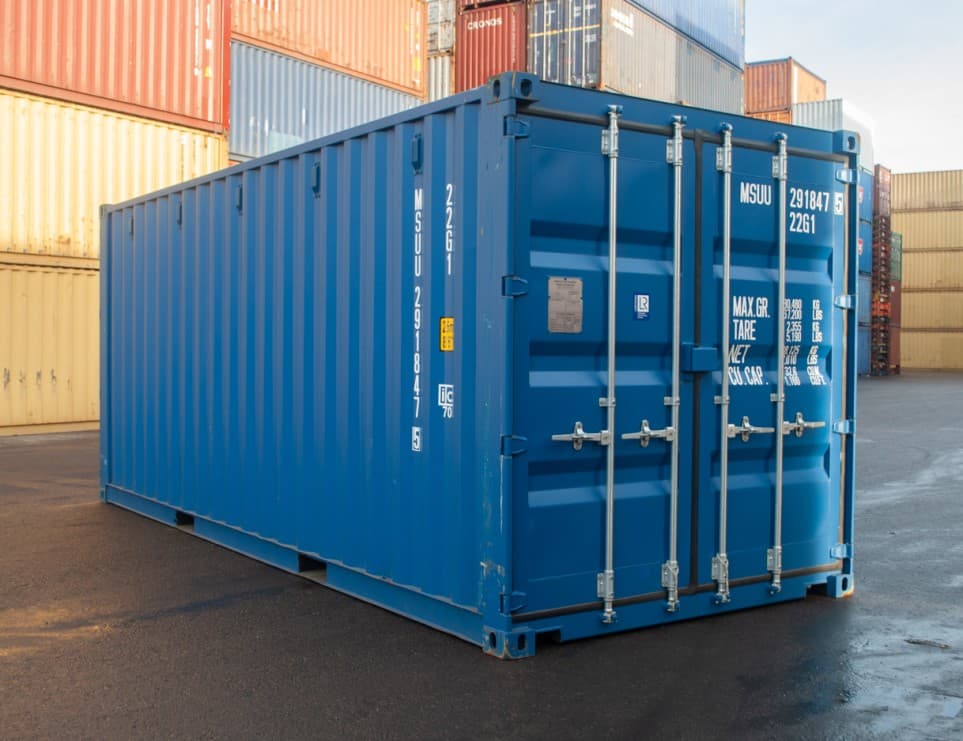
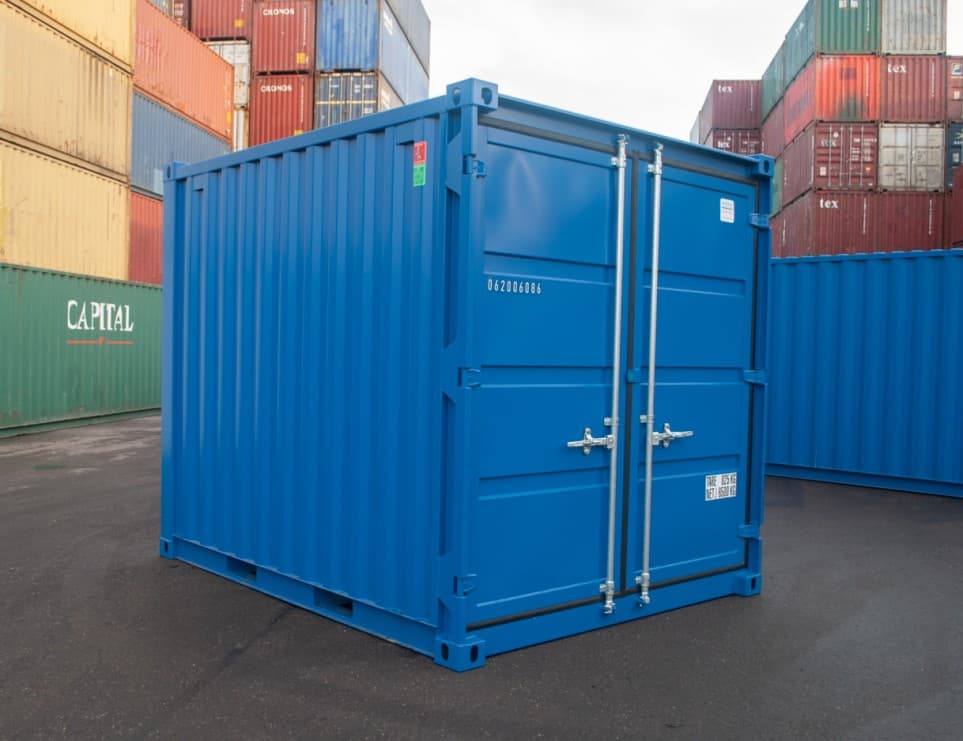
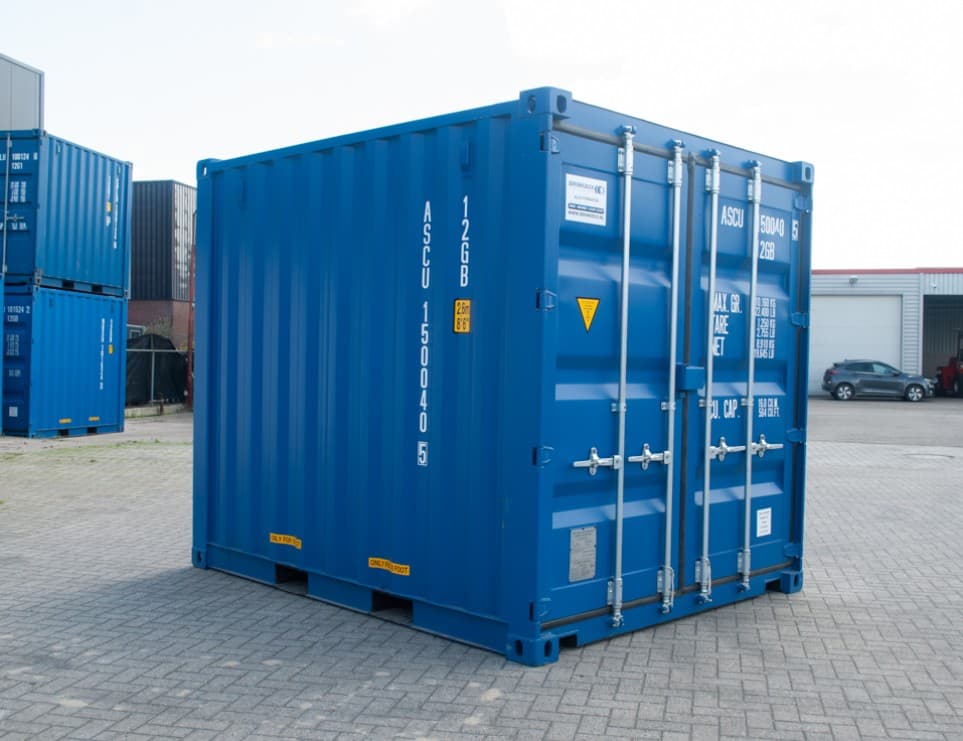
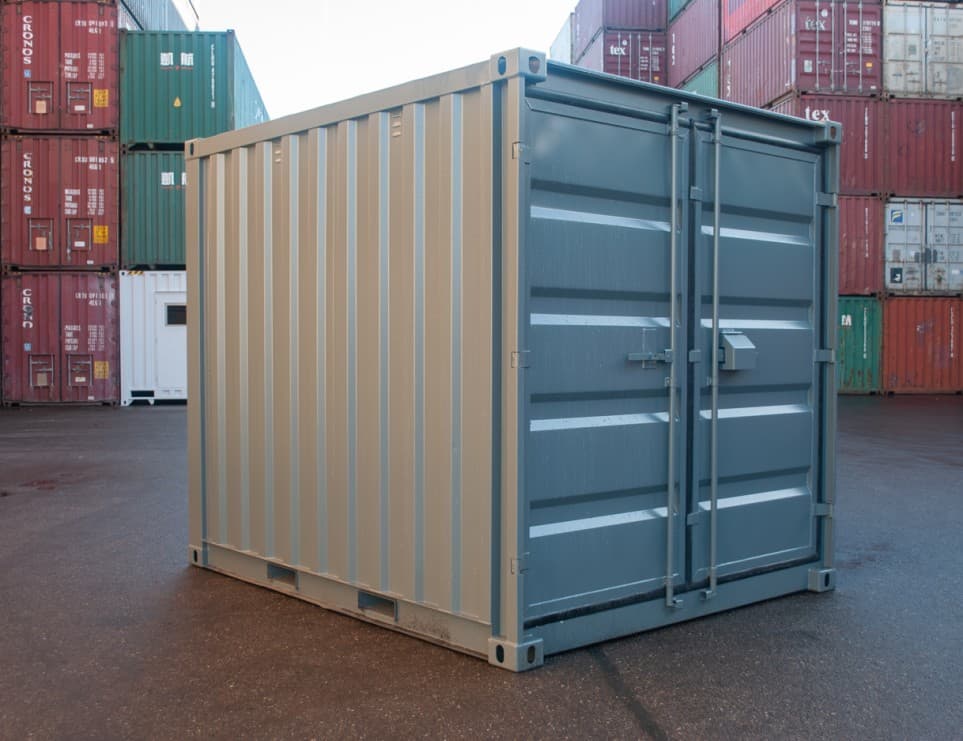
The 20 ft 'First Trip' shipping container is a new container, also known as 'one trip' or 'first voyage'. It has been used only once to transport goods from its place of manufacture to the port of destination, which explains its impeccable aesthetic and structural condition. Unlike a used container, it shows no advanced corrosion, no major impact, and no structural repair. This level of quality makes it a relevant choice for both demanding professional use and for a conversion or transformation project. Made of Corten steel, it benefits from natural resistance to atmospheric corrosion thanks to its chemical composition, which promotes the formation of a protective surface layer. This feature, combined with factory-applied paint, allows it to withstand weather over long periods, in urban, industrial or coastal environments, provided minimal but regular maintenance is carried out. The floor is made of 28 mm marine plywood, a dense material treated to resist moisture and rolling loads. It easily supports pallets, handling trolleys, moderate-sized construction machinery or heavy furniture. The double rear doors are fitted with standard container locks, with vertical locking bars and operating handles. These doors open to approximately 270 degrees, which provides a wide opening for loading and unloading. A security lockbox protects the locking point against common break-in attempts. This device is particularly recommended when the container is used to store equipment or sensitive goods. The forklift pockets integrated into the lower chassis facilitate handling on the ground, especially on sites where no hooklift truck or crane is available. The container can thus be moved by a forklift of suitable capacity, which simplifies repositioning operations on a logistics platform, a construction site or private land. The external and internal dimensions comply with the ISO standards applicable to 20 ft shipping containers, which guarantees compatibility with standard transport, lifting and securing systems. The useful internal volume is approximately 33 cubic metres, with an internal length close to 5.90 m, a width of approximately 2.35 m and a ceiling height of approximately 2.39 m. The maximum gross mass is generally around 30,480 kg, with a tare weight between 2,200 and 2,400 kg depending on equipment. These values may vary slightly from one manufacturer to another, but they remain within the tolerances set by ISO 668 and ISO 1496 standards. The container is delivered in standard colors RAL 5010 (blue) or RAL 7035 (grey), two neutral shades that blend easily into a professional or residential environment. Other colors may be considered depending on supplies, but blue and grey remain the most common for this type of product. In terms of uses, this new 20 ft container is primarily suitable for visible storage. On an industrial site, a construction site or a car park, it allows materials, tools, spare parts or fragile equipment to be stored away from rain, wind and prying eyes. Its rigid structure and locking reinforced by the Lockbox provide a first deterrent barrier. For event use, it can serve as a technical room, control room, changing room or mobile sales point. Its new finish and uniform color make it presentable without additional work. It can also form a conversion base: site office, fitted storage room, workshop, break room, changing room, sanitary facilities, or even modular housing after insulation and interior fitting. In this case, it is advisable to provide suitable thermal insulation, ventilation, electrical supply and additional openings (doors, windows) made by a professional. The container structure is designed to carry heavy loads, but any cutting must be studied so as not to weaken the whole. It is also possible to stack containers, subject to complying with safety rules and using suitable connecting parts. Transporting a 20 ft container in France is governed by regulations on vehicle weights and dimensions. A standard 20 ft container can be transported on a container truck or a suitable trailer, without exceeding legal size limits, as its length and width remain compatible with approved vehicles. The authorised gross train weight must be respected, and the carrier must hold the necessary permits where applicable. For a private individual, it is recommended to use a specialised carrier, equipped with a hooklift truck or container carrier, and to check the access conditions to the delivery site: street width, presence of branches, slope, stable ground. An empty 20 ft container weighs approximately 2.3 tonnes, which requires appropriate lifting equipment. When purchasing, several points deserve attention. First, check that the container is indeed a 'first trip' and not a repainted used container. A new container has a valid CSC (Convention for Safe Containers) marking, an ISO certification plate, and a unique identification number. The seller must be able to provide these elements. Then examine the sensitive points: door bottoms, threshold, structural corners, welds, floor. Even a new container may have suffered slight impacts during sea transport. A careful visual inspection allows any deformations to be detected. It is also advisable to check watertightness, particularly at the door seals, which must be flexible and free of cracks. Seals can be easily replaced if worn. Ventilation is another important point: standard containers are not ventilated, which can cause condensation inside when temperatures vary. For storing moisture-sensitive materials, it is recommended to install vents or a dehumidifier. Routine maintenance consists of washing the surface with clean water, touching up any scratches with suitable paint, and greasing the locking mechanisms once or twice a year. Regular visual inspection allows any emerging corrosion to be detected quickly, especially in marine environments. The container can be placed on stabilised ground, concrete blocks or wooden beams to avoid direct contact with the ground and promote water drainage. Finally, it is worth remembering that this container is sold with ISO certification, which attests to its compliance with international standards for dimensions, strength and safety. This certification is a guarantee of quality and facilitates its use in a professional context, particularly for transport or export. In summary, the 20 ft 'First Trip' shipping container is a new, robust and versatile product, suitable for many uses: storage, construction site, events, conversion. Its Corten steel, 28 mm marine plywood floor, lockable double doors with Lockbox and forklift pockets make it a reliable and durable solution. Available in RAL 5010 blue or RAL 7035 grey, it can be delivered and installed according to site constraints. For any specific project, it is advisable to contact a container professional to validate the technical and regulatory aspects. To go further, let us examine in more detail sector-specific use cases, long-term maintenance, regulations applicable to transport and installation, as well as a comparison with other container dimensions and types. In the building and public works sector, the new 20 ft container is often used as a site office or site facility. It allows power tools, consumables, PPE to be stored, or serves as a changing room and break room for teams. Its uniform color and new finish make it easy to integrate on a site subject to image requirements, for example in a city centre or on a site receiving the public. For use as a site facility, it is common to add interior insulation, flooring and electrical supply, but the raw container already provides a watertight and secure envelope. In the agricultural sector, it is used to store seeds, fertilisers, small equipment or crops sensitive to moisture, provided suitable ventilation is installed. Farmers appreciate its resistance to rodents and weather, as well as its ability to be moved by forklift thanks to the forklift pockets. In trade and logistics, the 20 ft container is a practical buffer storage unit: it can be placed on a loading area to store pallets awaiting shipment, or serve as a holding room for customer returns. Its capacity of approximately 33 m³ allows the equivalent of ten to eleven European pallets on the floor, or more with rack storage. In the events and cultural sector, the 20 ft container has become a common scenographic element: ticket office, dressing room, technical control room, catering stand, or display support. Its flat exterior surface is suitable for painting, wrapping or image projection. For temporary use, it can be rented or purchased, and its transport remains simple because it fits within standard road dimensions. In private storage, an individual can use it to store furniture, archives, leisure vehicles or garden equipment. It is then advisable to place it on blocks or beams to avoid direct contact with the ground, and to provide a quality padlock, ideally protected by the Lockbox. French regulations govern the installation of containers on private land. In most municipalities, a container used as a storage room or light dwelling may be subject to prior declaration of works, or even a building permit depending on its surface area, height and duration of installation. It is therefore recommended to check with the town planning department of the town hall before any permanent installation. For temporary use on a construction site, a declaration may also be required. In terms of transport, the 20 ft container complies with the size limits of articulated vehicles: its length of 6.06 m and width of 2.44 m fall within the dimensions authorised for a standard road combination. The vehicle's authorised gross train weight (GTW) must be compatible with the mass of the container and its load. An empty 20 ft container weighs approximately 2.3 tonnes, and a typical load can add several tonnes, which remains within the usual capacities of container trucks. For exceptional convoys, no specific authorisation is in principle required for a standard 20 ft container, unless the load exceeds weight limits or the route has restrictions. The carrier must nevertheless ensure that securing is compliant and have suitable lifting equipment. Maintaining a new Corten steel container is simple but must be regular to preserve its longevity. It is advisable to inspect the surface at least twice a year, paying particular attention to areas where water accumulates: door bottoms, threshold, lower corners, roof perimeter. Deep scratches that expose bare steel must be cleaned and repainted with anti-rust paint suitable for metal substrates. Door seals must be checked and replaced if cracked or hardened, as they ensure water and air tightness. Locking mechanisms must be lubricated with water-resistant grease, at least once a year, to prevent jamming. The marine plywood floor can be cleaned with soapy water and protected with a wood stain or floor paint if the container is used intensively. When storing chemicals or hazardous materials, compatibility and ventilation rules must be respected. For use in coastal areas, more frequent rinsing with clean water helps remove salt and limit corrosion. Finally, periodic verification of the CSC marking is mandatory for containers used in international transport, but it remains a good compliance indicator even for static use. Let us now compare the 20 ft container with other dimensions and types. The standard 40 ft container offers an internal volume of approximately 67 m³, twice that of the 20 ft, with a length of 12.19 m. It is more suitable for storing large quantities or transporting bulky goods, but it requires more powerful lifting equipment and more manoeuvring space. The 40 ft high cube (HC) container adds approximately 30 cm of internal height, which is appreciable for fitting out or storing tall loads, but it can cause size problems on certain routes. The 10 ft container, more compact, is practical for small spaces, but its internal volume of approximately 15 m³ and its relative rarity often make it more expensive per cubic metre. The 20 ft container therefore represents a good compromise between capacity, footprint and handling cost. Regarding types, the dry (standard) container is the most common and is suitable for most uses of storing and transporting dry goods. The reefer container is equipped with a refrigeration unit and reinforced insulation for transporting perishable goods; it is heavier and more expensive, and requires an electrical supply. The open top container has a removable roof for loading out-of-gauge goods from above. The flat rack container has no side walls or roof, which allows heavy or bulky loads to be transported, but it offers less protection against weather. The high cube container, finally, is distinguished by its additional height. The 20 ft dry 'First Trip' container positions itself as the most versatile solution for static or mixed use, with a good balance between volume, robustness and ease of implementation. If you are hesitating between several options, it is useful to define your needs precisely: nature of goods to be stored, frequency of access, installation constraints, budget, and possible evolution towards a fit-out. A new 20 ft container is often a relevant starting point, as it can be kept as is or transformed progressively. In conclusion, this 20 ft 'First Trip' shipping container combines the advantages of a new product, manufacture compliant with international standards and great flexibility of use. Its Corten steel, 28 mm marine plywood floor, lockable doors with Lockbox and forklift pockets make it durable and practical equipment. Whether for storage, construction site, events or conversion, it meets many needs with limited maintenance. For any questions on availability, delivery or fit-out options, it is recommended to contact a container professional, who can validate the technical and regulatory feasibility of your project.