Description
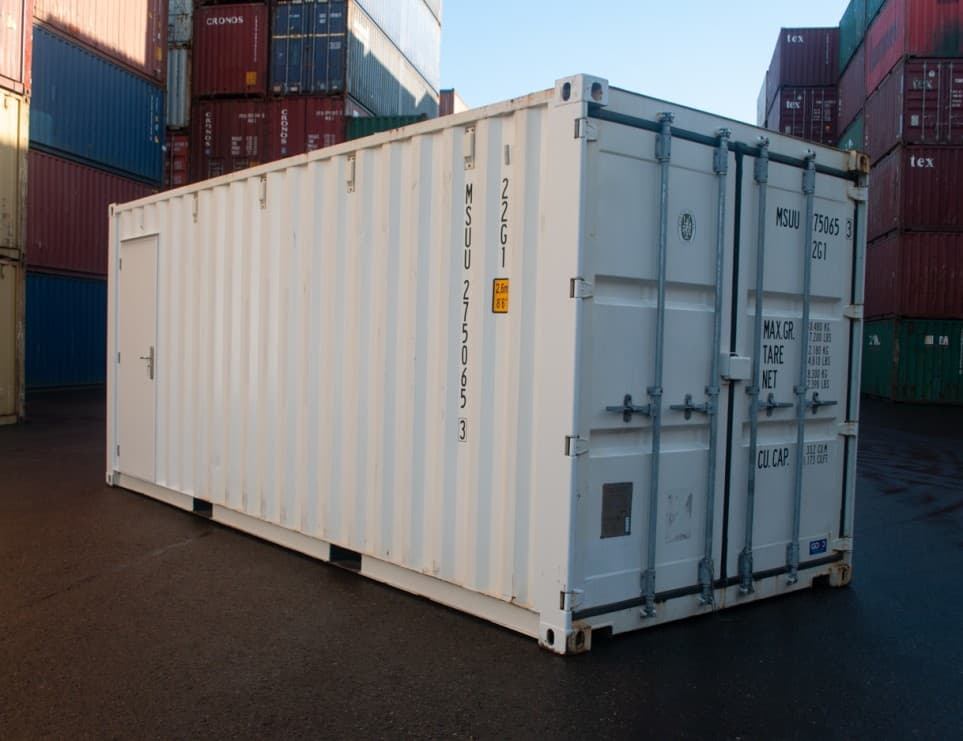
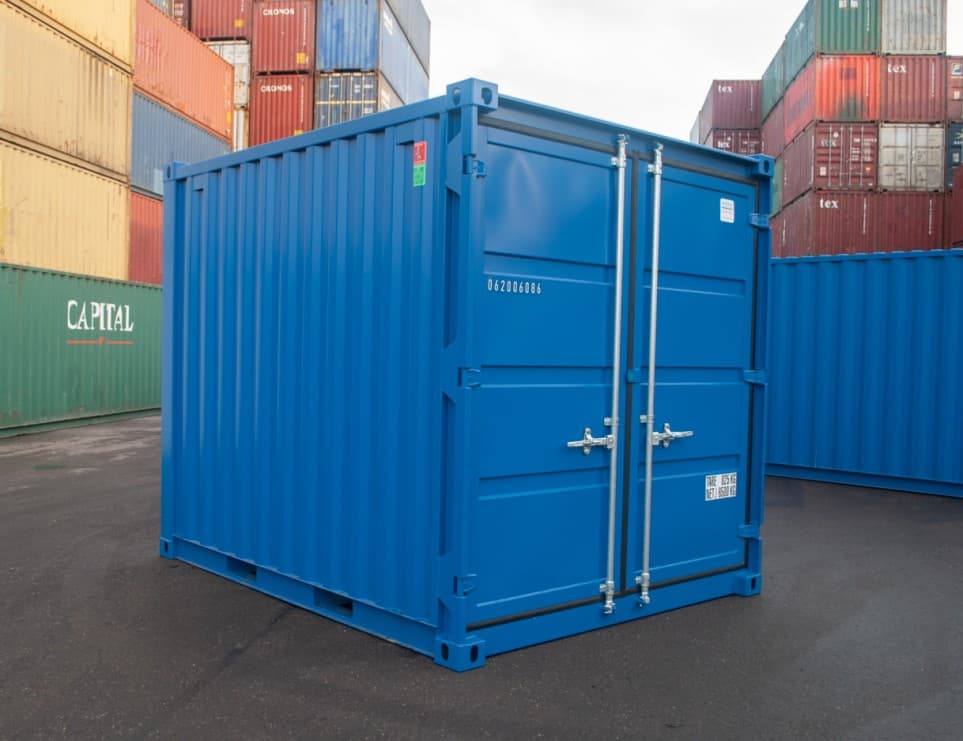
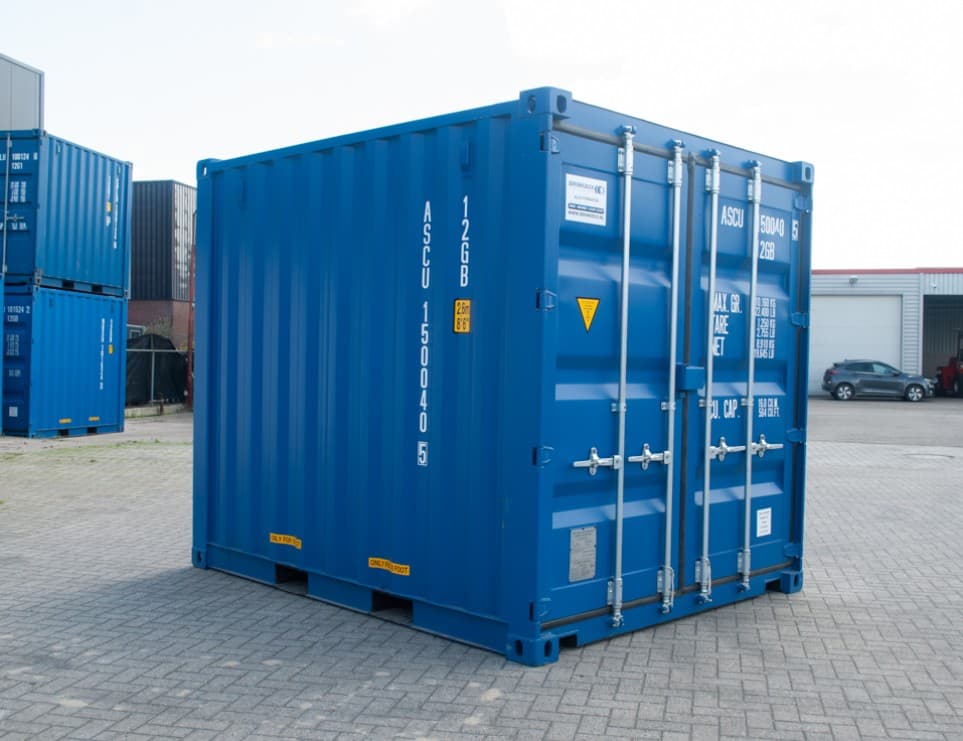
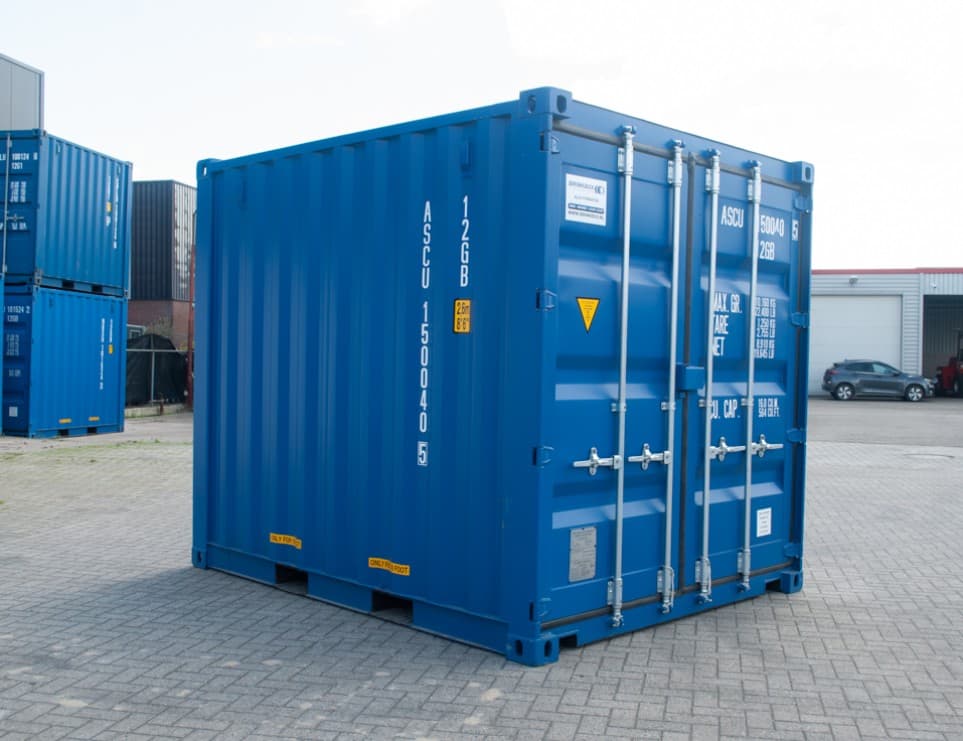
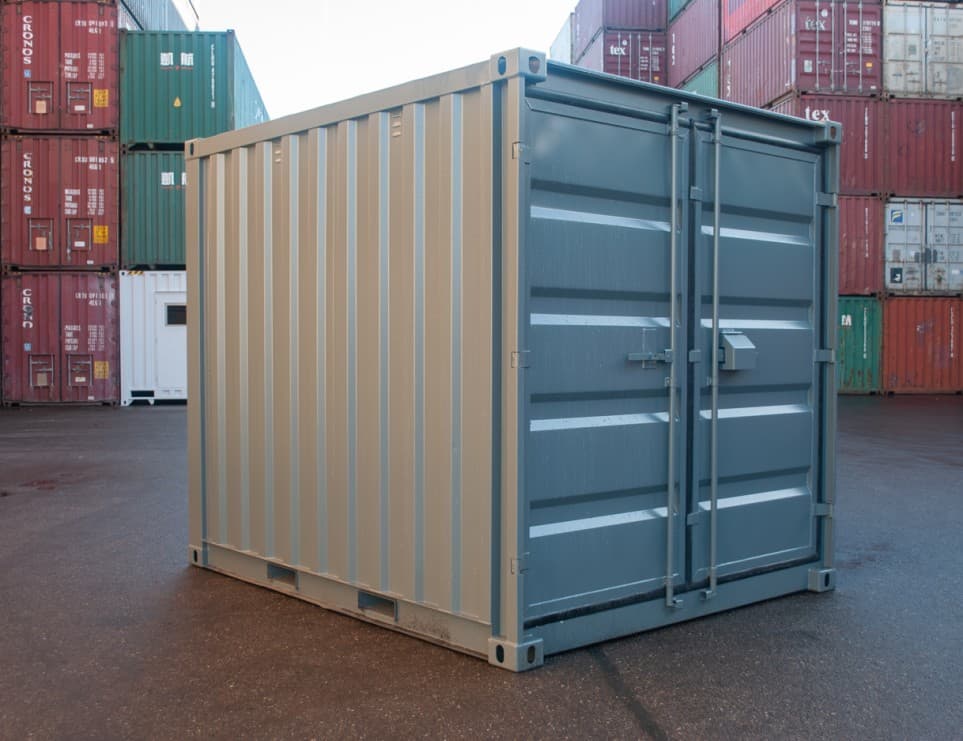
The new 20ft shipping container, often called "First Trip" or "One Trip", is a container that has made only one sea voyage to transport goods from its place of manufacture. It stands out from used containers by its impeccable aesthetic and structural condition: flawless paint, no rust, clean floor and door seals in perfect condition. This container is made of Corten steel, a low-alloy steel that resists atmospheric corrosion through the formation of a protective surface layer. It is equipped with a security lockbox that protects the padlock against cutting attempts, and forklift pockets for easy handling with a forklift. It is available in standard color RAL 5010 (Blue) or RAL 7035 (Grey).
This 20ft container is a dry model, meaning without temperature control, intended for the transport of dry goods and storage. Its standard external dimensions are approximately 6.058 m long, 2.438 m wide and 2.591 m high, with an empty weight (tare) of approximately 2,200 to 2,400 kg and a maximum payload of approximately 28,000 kg. The internal dimensions are approximately 5.898 m long, 2.352 m wide and 2.393 m high, offering an internal volume of approximately 33 m³. These characteristics comply with ISO 668 which defines the dimensions and masses of series 1 containers, and ISO 1496-1 which specifies design and testing requirements for dry freight containers. The floor is 28 mm marine plywood, a material resistant to moisture and heavy loads. The side walls and roof are corrugated steel, ensuring good structural rigidity. The rear doors are double-leaf, equipped with container locks (locking bars) and rubber seals. The container is also fitted with four lifting rings at the upper and lower corners, compliant with ISO corner castings, allowing lifting by spreader or slings.
This new "First Trip" container is particularly suitable for uses requiring a neat appearance and a long service life. It can be used for visible storage on a commercial, industrial or agricultural site, where aesthetics matter. It is also appreciated for events: stands, pop-up stores, box offices, temporary changing rooms, or as a base for conversion into a site office, technical room, workshop, or modular housing. Its sound structure and new paint make it an ideal base for insulation, cladding, bay openings, electrical and plumbing installation. Due to its strength and watertightness, it can also be used for transporting goods by sea, rail or road, subject to compliance with applicable regulations.
When buying a new container, several points should be checked. First, ensure that the container is indeed "First Trip" and not a reconditioned used container. A new container has uniform paint, no rust marks, a floor without stains or wear, and soft, non-cracked door seals. It must be accompanied by its CSC plate (Convention for Safe Containers), which certifies compliance with international safety standards, and its ISO certificate. Also check for the presence of the lockbox and forklift pockets, which are practical for security and handling. Finally, check that the dimensions and weight match the stated specifications, and that the container is delivered with functional doors, without deformation.
Maintenance of a Corten steel shipping container is relatively simple. It is recommended to clean the surface regularly with a water jet and mild detergent to remove dirt and salt deposits, especially in coastal areas. Deep scratches that expose bare steel should be treated with anti-rust paint to prevent corrosion. Door seals should be checked periodically and replaced if they show signs of aging. The marine plywood floor can be cleaned with a brush and soapy water; avoid abrasive products. It is advisable to grease the hinges and locking mechanisms once or twice a year. When storing moisture-sensitive materials, the use of dehumidifiers or desiccant bags can be useful, as condensation can form inside with temperature variations.
Regulatory-wise, transporting a shipping container in France is subject to a few rules. For road transport, a 20ft container can be transported on a container truck or a suitable trailer. The total gross weight (container + goods) must not exceed the limits authorized by the highway code (44 tonnes for a 5-axle road train, subject to special provisions). The container must be properly secured. For rail transport, it must comply with UIC standards. Finally, for a fixed installation (office, housing), it may be necessary to apply for planning permission from the town hall, as a container can be considered a construction. It is also important to check local planning rules, especially in protected or coastal areas.
This new 20ft container is a durable and versatile solution. Its Corten steel construction gives it superior corrosion resistance to ordinary steel, extending its service life even outdoors. Its new condition guarantees optimal watertightness and increased security for storing valuable goods. The integrated lockbox enhances protection against theft. The forklift pockets facilitate movement on site without requiring heavy lifting equipment. Finally, its standard color allows aesthetic integration into various environments.
In summary, this 20ft "First Trip" shipping container is a new product, compliant with ISO standards, made of Corten steel, with marine plywood floor, double rear doors, lockbox and forklift pockets. It is suitable for many uses: storage, transport, events, conversion into office or housing. Its maintenance is simple and its durability is a major asset. Before purchase, it is advisable to check the CSC plate, the condition of the seals and the presence of the mentioned equipment. For any questions about delivery, transport or installation, it is recommended to consult a professional.
To go further into maintenance, a distinction should be made between preventive and corrective maintenance. Preventive maintenance consists of regularly inspecting the container, at least once a year, paying particular attention to sensitive points: welds, corner castings, hinges, locking bars and the door perimeter. Washing with clear water under moderate pressure removes dust, salt and atmospheric pollutants. In an industrial or marine environment, this cleaning can be quarterly. Applying a protective wax to the paint is not essential but can slow tarnishing. Corrective maintenance is carried out as soon as an anomaly is detected: paint chip, deep scratch, beginning of rust, detached seal, damaged floor. In this case, scrape the rusted area down to sound metal, apply an anti-rust primer then a finishing paint of a similar shade. For floors, a damaged marine plywood panel can be replaced with a panel of the same thickness, screwed or nailed to the metal cross members. Door seals are easy to replace: they are generally clipped or glued into a groove. A worn seal lets water and air through, which can damage stored goods. Finally, locking mechanisms should be lubricated with water-resistant grease to prevent jamming.
Transport regulations deserve clarification. In France, road transport of containers is governed by the highway code and European Commission rules. A 20ft container can be transported on a rigid vehicle or a semi-trailer. The maximum authorized gross train weight (GTW) must not exceed 44 tonnes for a 5-axle combination, or 40 tonnes for a 4-axle combination, unless local exemptions apply. The driver must ensure that the container is locked onto the chassis with twist-locks. The transport of dangerous goods (ADR) imposes additional rules: signage, driver training, transport documents. For sea transport, the container must be stackable and comply with ISO 1496-1, with a valid CSC plate. The CSC plate must be renewed periodically (every 30 months for new containers, then according to maintenance arrangements). Regarding planning, installing a container as a fixed construction may require a building permit or prior declaration, depending on its surface area and duration of installation. Containers used as site offices may benefit from specific rules. It is advisable to contact the local planning department before any installation.
Sector-specific use cases are numerous. In agriculture, this 20ft container can be used for storing grain, animal feed, equipment or inputs, provided moisture is prevented. In construction, it is commonly used as a site office, changing room, canteen or storage for tools and materials. In retail and events, it becomes a pop-up shop, exhibition stand, box office, or catering space. In industry, it can house spare parts, consumables or archives. In logistics, it is used for transporting dry goods, palletized or bulk. Finally, in alternative housing, it serves as a base for modular constructions, container homes, guest houses or studios, after insulation and interior fitting.
Compared to other sizes, the 20ft container offers a good compromise between volume and footprint. The standard 40ft container offers about 67 m³, double, but it is longer (12.192 m) and heavier (about 3,750 kg empty). It requires more powerful lifting equipment and larger maneuvering spaces. The 40ft high cube container adds about 30 cm of internal height, useful for taller volumes, but it is less common in 20ft. The 10ft container is more compact (about 3 m long) and easier to move, but its internal volume is reduced (about 15 m³). The 20ft container remains the most widespread, which facilitates resale and supply of spare parts. Compared to an open top container, the dry container does not allow top loading, but it is more watertight and simpler to use. The flat rack container, without side walls, is suitable for out-of-gauge loads, but it offers no protection against bad weather. The reefer container, with refrigeration unit, is intended for perishable goods, but it is heavier and more expensive. Finally, the 20ft high cube container is rare; the standard remains the 20ft dry with 2.591 m external height.
When choosing between new and used, the "First Trip" container offers advantages: no repairs, original paint, unaltered structure, better watertightness, longer service life. It is recommended for conversion projects where aesthetics and durability matter. A used container, cheaper, may be suitable for simple storage or non-visible use, but it may show rust marks, dents, a worn floor and tired seals. The new container also retains better resale value. The price of a new 20ft container is generally higher than a used one, but the difference can be offset by longevity and no refurbishment costs.
Finally, it is useful to specify delivery and installation methods. A 20ft container can be delivered by container truck with lifting arm (crane truck) or by flatbed truck with unloading by forklift if the site has suitable equipment. With an empty weight of about 2.3 tonnes, a forklift with a minimum capacity of 3.5 tonnes is often necessary. The ground must be stable and level to avoid subsidence. It is advisable to provide sufficient maneuvering space and check access (width, height, load-bearing capacity). Once placed, the container can be shimmed at the corners with plates or blocks to distribute the load. For prolonged use, it is recommended to raise it slightly off the ground to avoid direct contact with moisture and to provide ventilation if storing sensitive materials. These simple precautions extend the container's service life and preserve its contents.