Description
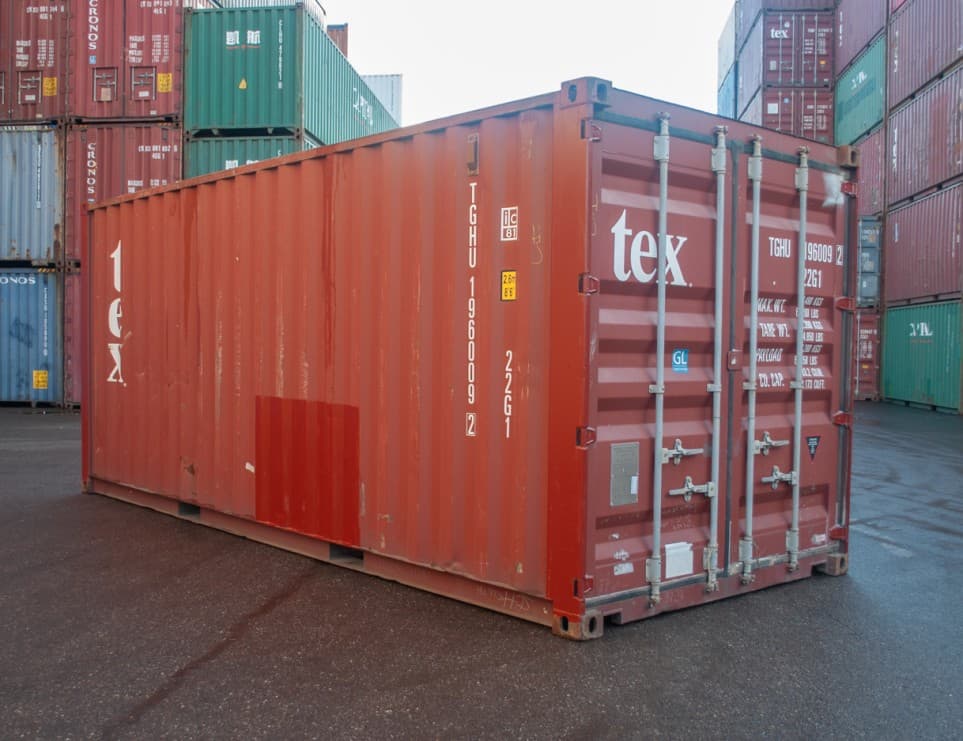
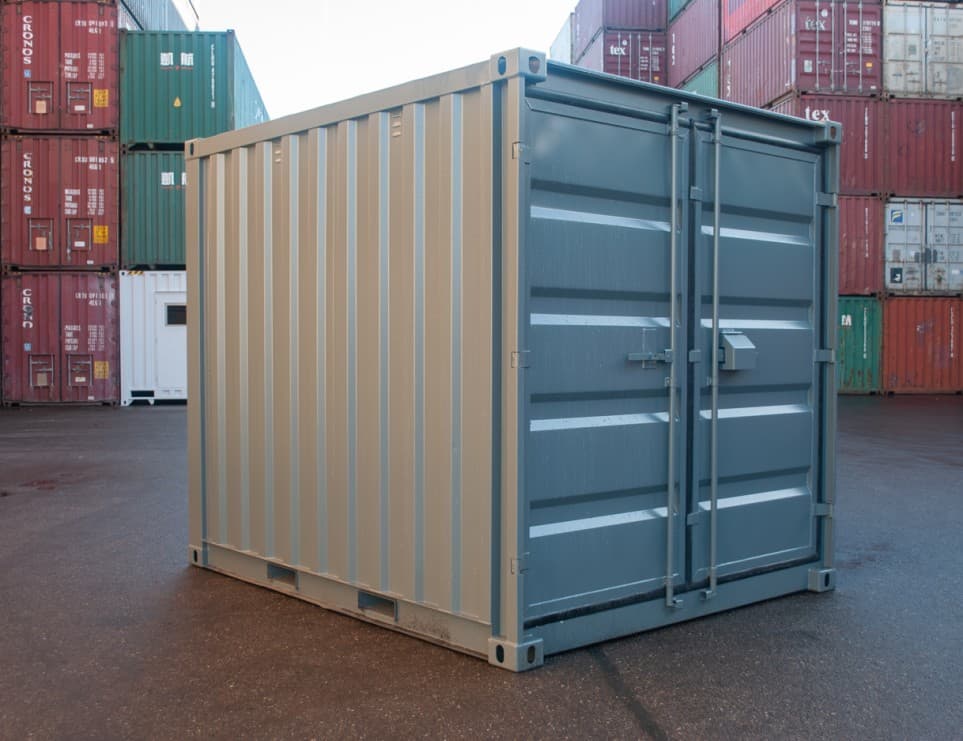
The used 20ft Dry shipping container is a widely used storage and transport equipment, valued for its robustness and modularity. This model, known as "Dry" or "Standard", is the most common container type worldwide: it is designed for transporting dry goods, i.e. non-refrigerated and non-hazardous under IMDG regulations. Its design is based on a Corten steel structure, a low-alloy steel that resists corrosion better than ordinary steel thanks to the formation of a protective oxide layer on the surface. This feature is essential for prolonged outdoor use, near the sea or in industrial environments. The floor is made of 28 mm marine plywood, a cross-laminated panel bonded with phenolic resin, capable of supporting rolling and static loads while resisting moisture. The side walls and roof are corrugated steel, giving the assembly high structural rigidity for a low weight. The rear doors are double doors equipped with container locks (vertical locking bars and handles), with rubber seals that ensure air and water tightness when in good condition. This container is sold used, meaning it has already been used for sea transport or storage. It is inspected and guaranteed "Wind & Watertight" (WWT), a common industry term indicating that the container has been tested and found wind and watertight, without guaranteeing perfect long-term tightness without maintenance. This commercial guarantee, specific to the seller, should not be confused with an official certification. The stated interior volume is approximately 33 m³, corresponding to the standardised dimensions of a 20ft Dry container: about 5.90 m interior length, 2.35 m width and 2.39 m height, for a floor area of about 13.8 m². These dimensions are defined by ISO 668, which sets the external dimensions and maximum masses of series 1 containers, and by ISO 1496-1, which specifies the design and testing of series 1 freight containers. Note that interior dimensions may vary slightly depending on the manufacturer and the container's condition. The maximum gross mass (MGW) of a 20ft container is generally 30,480 kg (30 tonnes), with a tare (empty weight) between 2,200 and 2,400 kg depending on the model, allowing a payload of about 28 tonnes. These values are indicative and may differ depending on the specific container; refer to the CSC plate (Convention for Safe Containers) on the door for exact specifications. The CSC plate certifies that the container meets international safety requirements and has been inspected. For a used container, it is advisable to check the date of the last inspection and the general condition of the structure. The use of a used 20ft Dry container is varied. For static storage, it secures equipment, archives, tools, construction equipment, goods or personal belongings. Its closed and lockable design (with a suitable padlock, not included) offers protection against intrusion, weather and pests, subject to regular maintenance. On a construction site, it can serve as a technical room, a basic site office or a tool store. For export, it can be used to ship goods by sea, rail or road, provided it is in good condition and meets carrier requirements. For conversion, it can be transformed into a storage room, workshop, break room, or even modular housing after specific work (insulation, electricity, plumbing, ventilation). However, such transformations require technical skills and compliance with local planning rules. Maintaining a used container is simple but regular. Clean the roof and walls to prevent debris accumulation and corrosion, check the condition of door seals and replace them if necessary, grease hinges and locks, and check the floor for rotten or weakened areas. In case of deep scratches on the steel, a touch-up of anti-rust paint can extend its life. The container should be placed on stable, level ground, such as wooden beams or concrete blocks, to avoid deformation and ensure good ventilation under the floor. Allow space around for door opening and access. There are many points to check when buying a used container. Examine the structure: no holes, cracks or major deformations on walls, roof and floor. Doors must open and close without forcing, and seals must be flexible and not cracked. The floor must not have soft spots or delamination. Surface rust is normal, but perforating rust is a sign of weakness. The CSC plate must be legible and up to date. It is also advisable to check that the container has not transported dangerous or polluting goods, which could leave residues. A "food grade" container is sometimes offered, but this is not an official certification; it is a commercial term. Finally, the price of a used 20ft container varies depending on condition, age, location and availability. The price indicated here is €1,350.00 (excluding transport and options). This price may vary. Note that transporting a 20ft container requires a container truck with a suitable chassis. In France, road transport of containers is subject to regulations on vehicle weights and dimensions, notably Decree No. 2003-468 of 21 May 2003 on the weights and dimensions of motor vehicles, which sets the maximum width at 2.55 m and maximum length at 16.50 m for articulated combinations, as well as the maximum authorised gross train weight (GTW) at 40 tonnes for a road train. A 20ft container complies with these limits, but the carrier must have the necessary permits. For static use, planning permission may be required if the container is considered a construction; it is advisable to check with the local town hall. This container is therefore an economical and durable solution for many needs, provided its condition is carefully checked and it is maintained. It is not a new product, and its appearance may show signs of use (scratches, small dents, surface rust), which do not affect its functionality. The "Wind & Watertight" guarantee offered by the seller covers tightness at the time of sale, but not subsequent damage. No guarantee of conformity to specific standards other than ISO is provided. The technical information given here is based on standard characteristics of 20ft Dry containers and on specifications provided by the seller. For any technical questions or to check availability, it is recommended to contact the seller directly, D.S. Globe Conteneur, in Marseille. Good preventive maintenance can significantly extend the life of a used container. Beyond basic care, a few annual operations deserve particular attention. Inspect the roof after each episode of strong wind or hail: corrugations can retain water and promote corrosion if the paint is flaking. Check the welds on corners and floor rails, where moisture accumulates. Check the four corner castings, the massive corner pieces used for handling and securing: they must be free of cracks and deformation. If the container remains closed for a long time, open the doors in dry weather to renew the air and limit condensation. Adding a passive dehumidifier or absorbent sachets is common practice for storing moisture-sensitive equipment, such as documents, electronics or tools. Slight high and low ventilation, if done properly, reduces condensation without compromising tightness. Finally, note that the "Wind & Watertight" guarantee does not cover damage caused by impact, overloading or lack of maintenance: it certifies a condition at delivery, not all-risk insurance. The regulations applicable to shipping containers should be clarified, as they govern both transport and installation. Internationally, the CSC Convention (Convention for Safe Containers), in force since 1977 and managed by the International Maritime Organization (IMO), requires that any container used in international transport have a valid CSC safety approval plate and undergo periodic inspections. For a new container, the first inspection deadline is generally set at five years, then inspections are renewed according to a cycle defined by the approving state. In France, the decree of 18 December 2001 on container safety and related texts specify the inspection procedures. ISO 668 defines dimensions and maximum masses, while ISO 1496-1 covers design and testing. For road transport, Decree No. 2003-468 of 21 May 2003 sets maximum vehicle weights and dimensions: a road train must not exceed 40 tonnes gross train weight (GTW), 16.50 m length and 2.55 m width. A 20ft container, with its 2.44 m width and length of about 6.06 m, fits within these limits, but the carrier must have a container chassis and comply with securing rules. For sea transport, IMO rules on verified gross mass (VGM) apply: the weight of the container and its cargo must be declared before loading. For a fixed installation, the container is often considered a construction or light installation; depending on the municipality, a prior declaration of works or a building permit may be required, especially if the container is visible from the public road or intended for habitation. It is therefore prudent to consult the local planning department before any installation. Furthermore, if the container is used as a workplace, occupational health and safety rules apply, particularly regarding ventilation, lighting and fire safety. Sector-specific use cases are numerous and vary by need. In construction and public works, the 20ft container serves as a tool store, site changing room or break room; its strength and secure closure make it a frequent choice. In industry, it is used to store spare parts, consumables or non-hazardous chemicals, subject to storage rules. In agriculture, it houses seeds, fertilisers or small equipment, and can be fitted with shelving. In trade and logistics, it serves as temporary storage, a receiving point or promotional support. For individuals, it is an economical alternative to a garage or shed, useful for storing furniture, bicycles, garden tools or archives. In the events sector, it can be used as a technical room, control room or equipment storage. In energy and telecoms, it sometimes serves as a room housing generators or technical equipment, with ventilation adaptations. Finally, for export, it is used to ship palletised goods, machinery or manufactured products; in this case, it must be in good condition and meet the requirements of the sea carrier. Comparing the 20ft to other sizes and types helps choose the right container. The standard 40ft offers an interior volume of about 67 m³, double that, with an external length of about 12.19 m; it is more suitable for transporting large volumes, but it is heavier and requires a longer truck. The 40ft High Cube (HC) adds about 30 cm of interior height, useful for loading tall volumes or for more comfortable interior conversion. The 20ft High Cube also exists, but is less common. The Open Top container has a removable (tarpaulin) roof for loading tall objects or by crane; the Flat Rack, without walls or roof, is designed for out-of-gauge loads. The Reefer container is insulated and equipped with a refrigeration unit for transporting perishable goods; it is heavier and more expensive. The 20ft Dry container remains the most versatile and economical for static storage, as it offers a good compromise between volume, floor footprint and price. Compared to a new container, a used one reduces cost but requires careful condition checks. Compared to a garden shed or masonry building, the container is faster to install, movable and robust, but requires maintenance and possible permission. Finally, remember that the 20ft Dry container is not designed for storing hazardous materials without specific modifications, nor for habitation without insulation and ventilation work. It has no windows or pedestrian door as standard; any additional opening must be made by a professional to preserve the structure. These elements must be considered in the purchase project. For any further questions on availability, delivery options or the exact condition of the container, it is recommended to contact D.S. Globe Conteneur directly, in Marseille.