Description
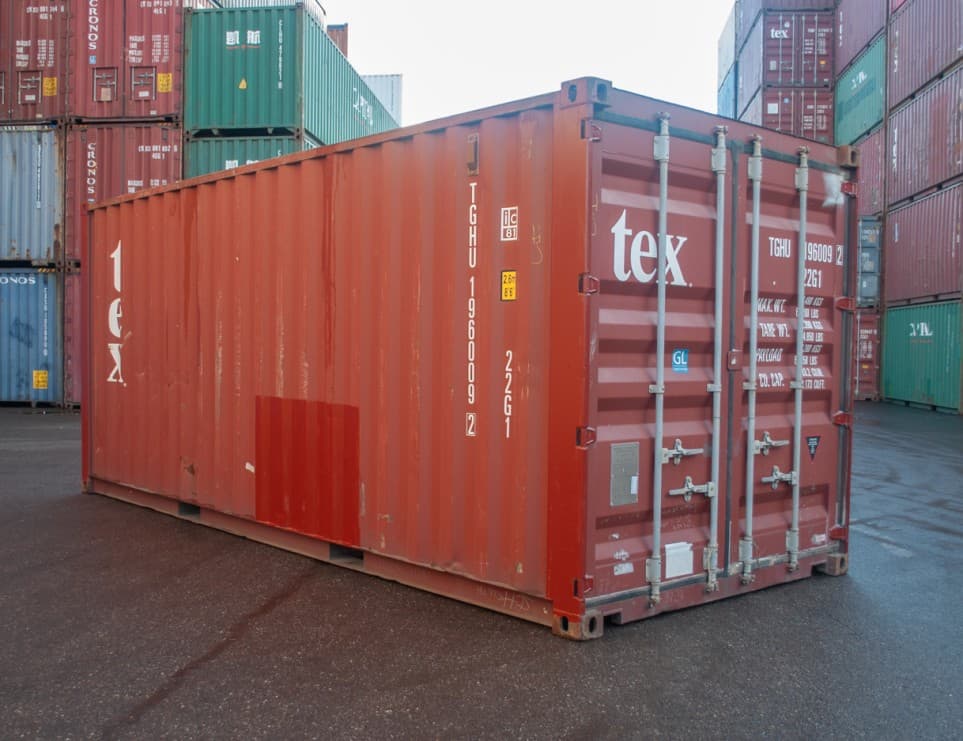
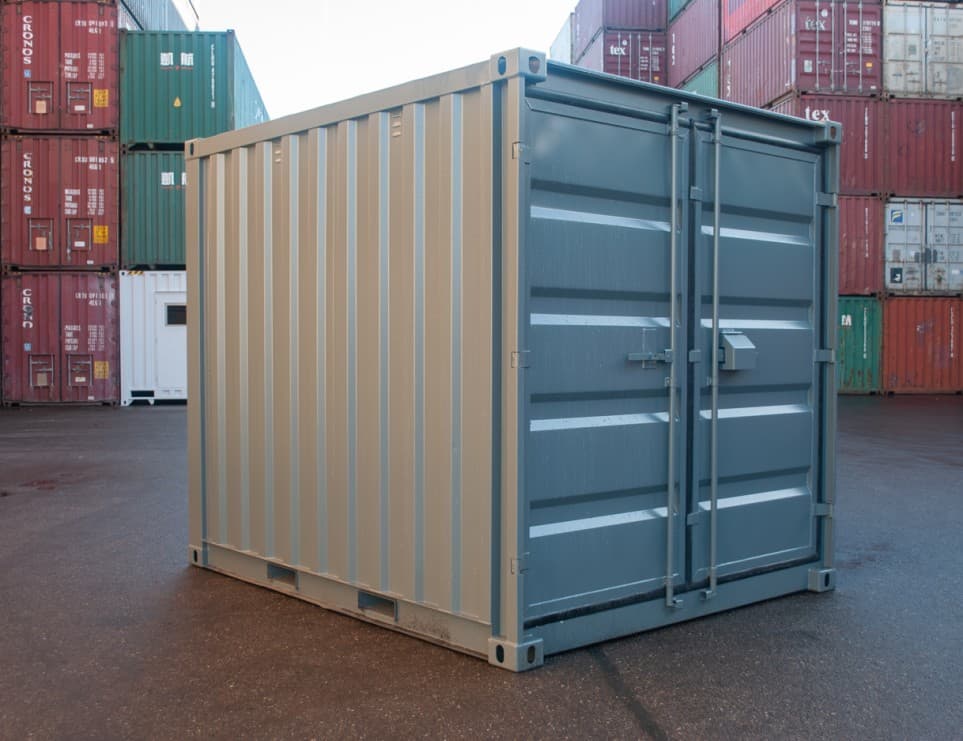
The used 20ft Dry shipping container is a widely used storage and transport unit, valued for its robustness and modularity. At D.S. Globe Conteneur in Marseille, we offer this refurbished and inspected model with a "Wind & Watertight" guarantee. This container provides a practical solution for protecting goods, archives, construction equipment, or as a base for modular conversion. In the following paragraphs, we detail its technical specifications, uses, maintenance, and points to check before purchase.
A 20ft Dry container, also called "20' DC" (Dry Container), is a rectangular steel box built to ISO 668 and ISO 1496-1 standards. Its standard external dimensions are approximately 6.058 m long, 2.438 m wide and 2.591 m high. Typical internal dimensions are approximately 5.898 m long, 2.352 m wide and 2.393 m high, giving an internal volume of about 33 m³. The tare weight is generally around 2,200 to 2,400 kg, and the maximum payload can reach about 28,000 kg, depending on the exact specifications. The maximum gross weight (MGW) is commonly 30,480 kg. These values may vary slightly between manufacturers, but they are the reference for this type of container.
The structure is based on a Corten steel frame, a low-alloy steel that resists atmospheric corrosion through the formation of a protective surface layer. The side walls and doors are corrugated sheet, giving the unit good rigidity and impact resistance. The floor is 28 mm marine plywood, a dense material treated to resist moisture and heavy loads. The double rear doors are fitted with container locking bars and rubber seals. These seals are essential for ensuring airtightness and watertightness; they must be checked regularly and replaced if necessary.
The 20ft Dry container is versatile. For static storage, it secures sensitive goods: tools, materials, archives, furniture, electronic equipment, etc. Its "Wind & Watertight" rating means it is designed to withstand rain and wind, but this does not make it airtight against ambient humidity. For long-term storage, it is advisable to add a moisture absorber or suitable ventilation, as condensation can form inside with temperature changes. For transport, this container complies with maritime standards and can be shipped by rail, road or sea. It can be stacked up to nine high on a ship, and handled by lifting equipment with spreaders or hooks suitable for corner castings.
For conversion, the 20ft Dry container can be turned into a site office, technical room, workshop, changing room, or even modular housing after works. Its internal volume allows for insulation, partitions, electrical systems and ventilation. However, converting a container for habitable use generally requires thermal insulation and enhanced airtightness, as well as compliance with local building regulations. The marine plywood floor can be covered with a floor covering suited to the intended use.
Maintenance of a used container is simple but regular. Door seals should be inspected, cleaned and lubricated with a silicone-based product to prevent drying and cracking. Hinges and locks should be greased periodically. The Corten steel structure can be cleaned with fresh water; for deep scratches or early rust, anti-corrosion treatment and suitable paint are recommended. It is also advisable to check the floor, especially at corners and under the doors, where moisture can stagnate. A sound floor should not have soft spots or delamination.
Before buying a used 20ft container, several points deserve attention. First, watertightness: ask if the container is guaranteed "Wind & Watertight" and visually check seals and welds. Second, structural condition: look for perforating rust, major deformation, non-professional repairs. The floor must be solid and free from rot. Doors must open and close without forcing, and locks must work properly. Finally, check for the CSC plate and regulatory markings, which confirm the container's compliance for maritime transport. A used container may have been reconditioned: in that case, repairs may have been carried out, which is common and acceptable if of good quality.
Regarding transport regulations in France, a shipping container is considered an intermodal load unit. For road transport, it must be loaded on a suitable vehicle, respecting weight and dimension limits of the highway code. The vehicle's gross combination weight (PTRA) and payload must be taken into account. For maritime transport, the container must be CSC certified (Convention for Safe Containers) and have a valid approval plate. This plate is issued after inspection and is valid for five years, renewable. In France, using a container as a site office may require planning permission depending on duration and location. It is recommended to check with the local town hall for any permanent installation.
The used 20ft Dry container we offer at D.S. Globe Conteneur is refurbished and inspected. It is available for sale in Marseille. We can help you choose the model suited to your needs, whether for storage, transport or a conversion project. Do not hesitate to contact us for availability and delivery options.
To summarise, the used 20ft Dry shipping container is a reliable and economical solution. Its Corten steel structure, marine plywood floor and doors with checked seals make it durable equipment for many uses. Whether you are a business, individual or public body, this container can meet your needs for secure storage or a modular base. Remember to check the general condition, watertightness and regulatory compliance before purchase, and do not hesitate to call a professional for inspection and maintenance.
To go further, let us examine sector-specific use cases that justify choosing a used 20ft Dry. In the building and public works sector, this container frequently serves as a site office: storage of power tools, consumables, spare parts, or a changing room for teams. Its compact size allows positioning on small sites, and its weather resistance protects equipment. In industry and logistics, it is used as a buffer zone for parts awaiting quality control, as a spare parts store, or as a temporary packing unit. Landscaping and green space companies store mowers, brushcutters, fuels and tools, protected from moisture and theft. In retail, it can serve as storage for seasonal goods, or as a pop-up sales unit after basic conversion. Local authorities and associations use it to store event equipment, archives, or as a technical room for pumping or water treatment equipment. Finally, individuals see it as a secure storage solution for furniture, leisure vehicles (motorcycles, scooters, quads), or DIY equipment, when they have a fenced plot.
Now let us compare the 20ft Dry with other container sizes and types to inform your choice. The 40ft Dry (40' DC) offers an internal volume of about 67 m³, double that of the 20ft, with an external length of about 12.192 m. It is more economical per cubic metre transported, but requires a longer site and a suitable transport vehicle (semi-trailer). The 40ft High Cube (40' HC) adds about 30 cm of internal height (about 2.695 m), useful for bulky but light loads, or for conversion with a false ceiling. The 20ft High Cube also exists, with an internal height of about 2.684 m, but it is less common on the used market. The Open Top container (20' OT or 40' OT) has a removable or opening roof, allowing tall objects to be loaded from above, such as machines or out-of-gauge parts. The Flat Rack (20' FR or 40' FR) has no side walls or roof, only a reinforced floor and collapsible end walls; it is designed for heavy or exceptional loads, but offers no weather protection. The Reefer container (20' RF or 40' RF) is equipped with a refrigeration unit and enhanced insulation for transporting perishable goods or pharmaceuticals; it is heavier, more expensive and requires a power supply. Finally, the tank container is intended for liquids and gases, with a stainless steel tank inside a 20ft frame. The choice therefore depends on the nature of the load, weight, volume, protection and budget constraints. The 20ft Dry remains the most universal format for dry storage and general cargo transport.
Let us address maintenance in more detail, as a well-maintained used container retains its value and functionality for many years. The first operation is a visual inspection of the whole container: walls, roof, floor, doors, seals, welds. The roof is often neglected: check for perforating corrosion or impact deformation. The corner castings must be intact and uncracked, as they bear handling forces. Door locking bars must slide without excessive play; adjustment may be needed if doors close poorly. Rubber seals are easy to replace: they are usually glued or clipped into a groove. A dry or cracked seal lets water in, which can damage goods. For the floor, cleaning with soapy water is enough; avoid high-pressure jets that could lift wood fibres. If the floor has oil or chemical stains, use a suitable degreaser and rinse. For localised rot, a patch repair is possible, but it is often simpler to replace the affected board. For the metal structure, brushing rusted areas followed by an anti-rust primer and topcoat stops corrosion. Repainting every five to ten years is advisable, depending on exposure. Finally, to combat condensation, you can install ventilation grilles (vents) on the walls, or use passive dehumidifiers. These accessories are common and inexpensive.
The regulations applicable to shipping containers in France should be clarified. Internationally, the CSC (Convention for Safe Containers) of the International Maritime Organization (IMO) requires that any container used in maritime transport has a valid CSC approval plate. This plate, affixed to the door or wall, shows the date of manufacture, country of approval, identification number, maximum gross weight, tare weight, payload, and date of next examination. Periodic examination is generally carried out every 30 months for new containers, then every 24 months for older containers, but rules may vary. In France, using a container as a site office is subject to regulations on temporary installations: if the installation period is less than three months, prior declaration is often not required, but beyond that, a development permit or planning permission may be required. For permanent use (housing, office), you must comply with the local urban plan (PLU) and construction rules (DTU). Furthermore, road transport of a 20ft container requires a vehicle whose gross vehicle weight (PTAC) and gross combination weight (PTRA) are compatible with the mass transported. An empty 20ft container weighs about 2.3 tonnes; loaded, it can reach 30 tonnes. The driver must respect speed limits and marking rules for wide or heavy loads. Finally, for import or export, customs formalities apply; the container itself may be considered packaging or goods depending on the case.
In conclusion, the used 20ft Dry shipping container is a durable and versatile investment. It suits many uses, from simple secure storage to modular conversion, including general cargo transport. Its compact format, Corten steel structure and marine plywood floor make it resistant, repairable and scalable equipment. At D.S. Globe Conteneur in Marseille, we provide refurbished and inspected containers with a watertightness guarantee. We invite you to contact us to discuss your project, check availability and arrange delivery. Whether you are a building professional, industrialist, retailer or individual, we will guide you to the most suitable solution.