Description
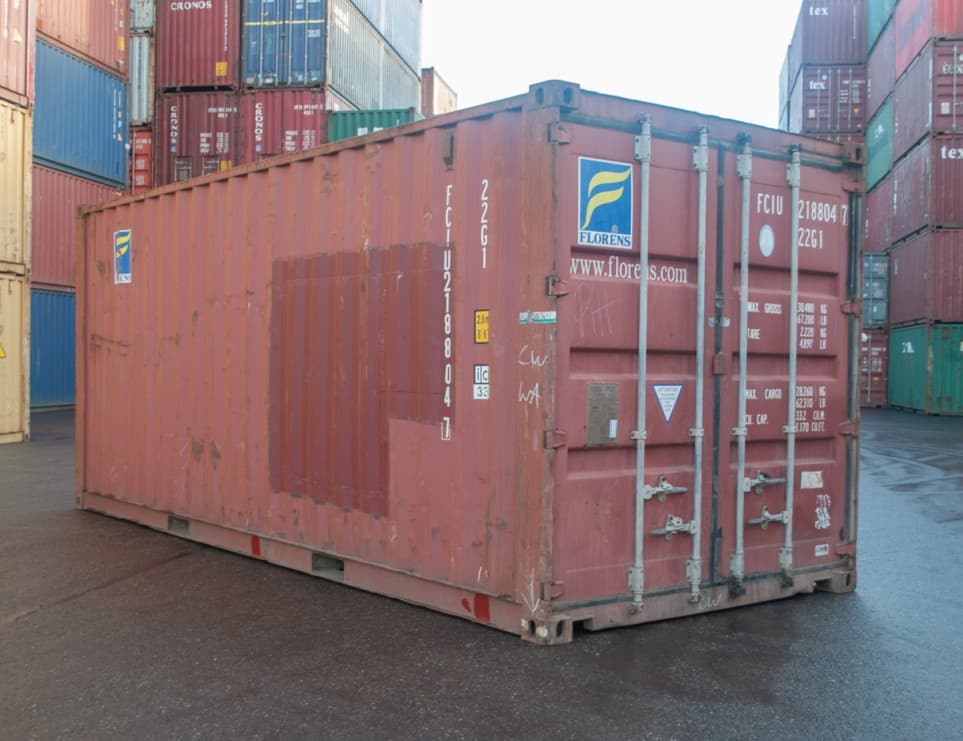
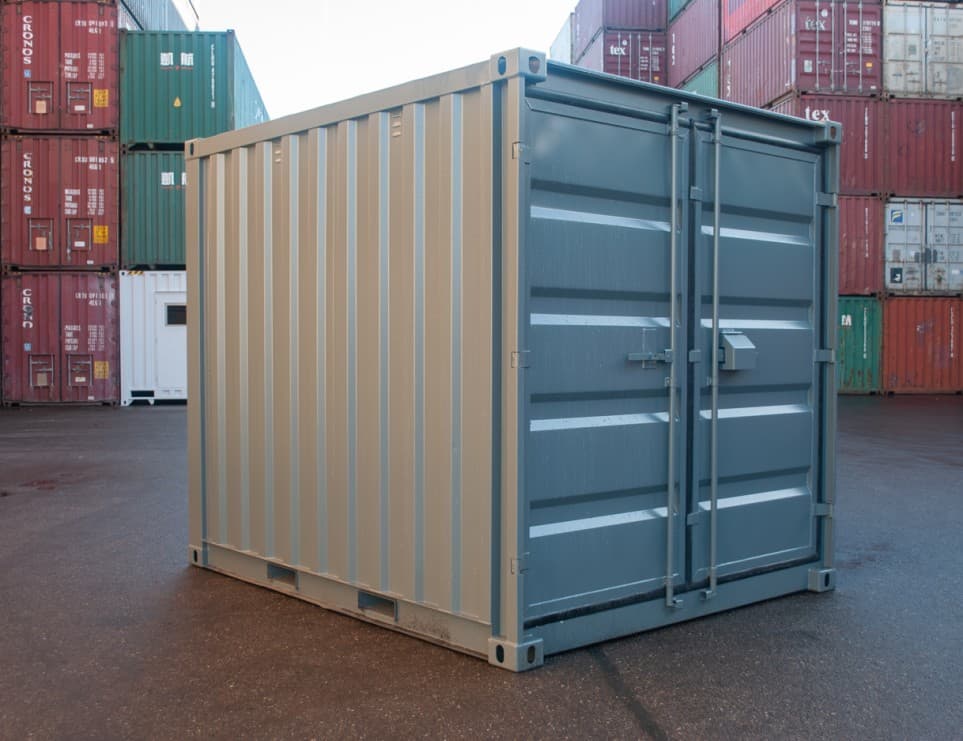
The used 20ft Dry shipping container is a widely used storage and transport equipment, valued for its robustness and modularity. It is an ISO Dry container, meaning it has no refrigeration or active ventilation system, designed for transporting and storing dry goods. Its one-piece Corten steel structure and 28 mm marine plywood floor give it high mechanical strength and good weather resistance. This used model is refurbished and leak-tested, with a Wind & Watertight guarantee: door seals, welds and structure are checked to limit air and water infiltration. With an internal volume of around 33 m³, it offers substantial storage space while remaining compatible with international handling and transport standards.
Technically, a 20ft Dry container complies with ISO 668 and ISO 1496 standard dimensions. Its usual external dimensions are approximately 6.06 m long, 2.44 m wide and 2.59 m high. Internal dimensions are around 5.90 m long, 2.35 m wide and 2.39 m high, giving a usable volume close to 33 m³. The tare weight is generally between 2,200 and 2,400 kg depending on the manufacturer and reinforcements. The maximum payload is commonly around 28,000 kg, but it depends on the actual tare weight and transport limitations. The 28 mm marine plywood floor is fixed to steel cross members; it supports rolling or point loads within the manufacturer's usage limits. The side walls and roof are made of corrugated steel sheet, which contributes to the overall rigidity. The double rear doors are fitted with container locks (locking bars, handles, cams) and rubber seals. These seals are wearing parts: their condition determines air and water tightness. A refurbished used container should have flexible seals, free from cracks or tears, and functional locking mechanisms.
Corten steel, also known as weathering steel, is a low-alloy steel that develops a protective oxide layer on its surface when exposed to air. This characteristic slows corrosion and explains why this material is used for shipping containers. However, this does not mean a container is indestructible: deep scratches, impacts and water-retention areas can promote rust. That is why periodic maintenance is recommended, especially on edges, lower walls and around the floor. Regular cleaning, debris removal and visual inspection of sensitive points help extend the container's lifespan. For surface rust, a wire brush and suitable paint may be enough; for perforations, repair by welding or patching is necessary.
The used 20ft Dry container suits many uses. For static storage, it secures equipment, archives, tools, furniture or various goods. Its closed, lockable design provides weather protection and a deterrent physical barrier. On a construction site, it can serve as a technical room or tool store, provided safety and fitting-out rules are checked. For export, it remains a standardised transport method, compatible with container ships, trains and trucks. It can also be converted into a site office, fitted storage room or modular housing base, but such conversions must comply with current construction, insulation and safety rules. In all cases, ventilation is advisable if the container is occupied or stores humidity-sensitive products.
When buying a used container, several points deserve particular attention. First, check the general condition of the structure: presence of holes, major deformations, perforating rust or non-compliant repairs. Doors must open and close without force, seals must be flexible and complete, and locks must work properly. The floor must not have rotten areas, delamination or holes. A leak check can be done by visual or water test, but the Wind & Watertight guarantee announced by the seller must be specified contractually. It is also useful to request the CSC (Convention for Safe Containers) marking and identification plates, which attest to the container's compliance for transport. For static use, these requirements may be less strict, but they remain a quality indicator.
Transporting and handling a 20ft container requires suitable equipment. A truck with auxiliary crane, a forklift with sufficient capacity or a reach stacker can be used. Lifting points are the four top and bottom corners, fitted with standardised corner castings. It is essential never to lift a container by its walls or roof. The total weight (container plus load) must comply with French road limits. In France, road freight transport is governed by the Highway Code and regulations on weights and dimensions. For a 20ft container, the authorised gross train weight depends on the vehicle and trailer type. Exceptional transport may be necessary if dimensions or weight exceed regulatory thresholds. It is recommended to use a specialised carrier and check the necessary permits.
Ground installation must be considered. A container can be placed on concrete blocks, hardwood beams or slabs, to avoid direct contact with the ground and limit humidity. A slight slope can help water drainage. If the container is to remain in place, anchors can be provided to resist wind, especially in exposed areas. For housing or office use, insulation, ventilation, electricity and interior fitting-out must be considered, complying with construction and safety standards. Such conversions may require planning permission depending on the intended use and duration.
Routine maintenance of a used container includes cleaning the floor and walls, checking seals, lubricating locking mechanisms and inspecting rust spots. Any scratch or paint chip should be treated quickly to prevent corrosion spread. Door seals can be replaced when they harden or crack. A well-maintained container can serve for many years, whether for storage or more specific use. Finally, it is useful to keep purchase documents and any inspection certificates, especially for export or later resale.
The used 20ft Dry container is therefore a versatile and economical solution, suited to many needs. Its ISO standardisation ensures compatibility with global transport infrastructure, while its Corten steel structure and marine plywood floor offer proven resistance. Refurbished and watertight, it is a reliable base for storage, construction sites or export. As with any used equipment, the actual condition of the container and warranty terms must be verified with the seller. An informed purchase, with careful inspection and regular maintenance, allows you to get the most out of this container over the long term.
To delve deeper into maintenance, it is useful to distinguish preventive actions from corrective repairs. Preventively, a quarterly visual inspection helps identify changes: paint blistering, surface rust marks, deformation of a locking bar, hardening of seals. Cleaning is done with clear water, a soft brush for the floor and a sponge for the walls. Aggressive detergents, chlorinated solvents and pressure washers directed at seals should be avoided, as they can degrade rubber and force water into gaps. After cleaning, air-drying with doors open limits mould growth on plywood. For areas of emerging rust, light sanding followed by an anti-rust paint suitable for Corten steel is usually sufficient. If corrosion has perforated the sheet, repair by welding or fitting a riveted, watertight patch is necessary; such work should be done by a professional to preserve geometry and watertightness. Door seals are easy to replace: they are usually fixed by a fitted or glued profile, and their cost remains moderate. Locking mechanisms should be lubricated with light grease, without excess, to avoid attracting dust. Finally, it is prudent to slightly raise the container and clear vegetation around it to limit stagnant humidity and rodent access.
Applicable regulations depend on use. For maritime transport, the container must comply with the CSC convention and carry a valid approval plate; periodic inspections (ACEP) are mandatory for containers used in international transport. For road transport in France, the container is considered goods or a vehicle accessory depending on the case. The authorised gross train weight (PTRA) and vehicle payload must be respected, as must maximum authorised dimensions (width 2.55 m, height 4 m, length 16.50 m for a road train, subject to regulatory changes). A loaded 20ft container may exceed the weight limits of some light vehicles; therefore, check the payload of the truck and trailer. Exceptional transport is required when thresholds are exceeded, with prior authorisation and a defined route. For static use, rules fall under planning law: installation may require prior declaration or a building permit depending on surface area, duration and intended use. Electrical installation, if any, must comply with NF C 15-100. In protected areas or co-ownership, additional constraints may apply. It is therefore recommended to check with the local town hall and, if necessary, a design office.
By sector, uses vary. In construction, the 20ft container serves as a tool store, changing room or break room, with simple fittings (shelving, lighting, ventilation). In industry and logistics, it provides rapid storage extension, placed on a stabilised area, for parts, consumables or archives. For events, it can become a sales point, stand or technical room, with suitable decoration. In agriculture, it houses small equipment, seeds or packaged products, provided humidity is controlled. For individuals, it offers storage space for furniture, garden tools, bicycles or seasonal equipment. In all these cases, the modularity of the 20ft is an asset: it can be moved, stacked (within the limits provided by the structure and corner castings) and combined with other modules. However, stacking used containers without checking their structural condition and using compliant corner castings is not advised.
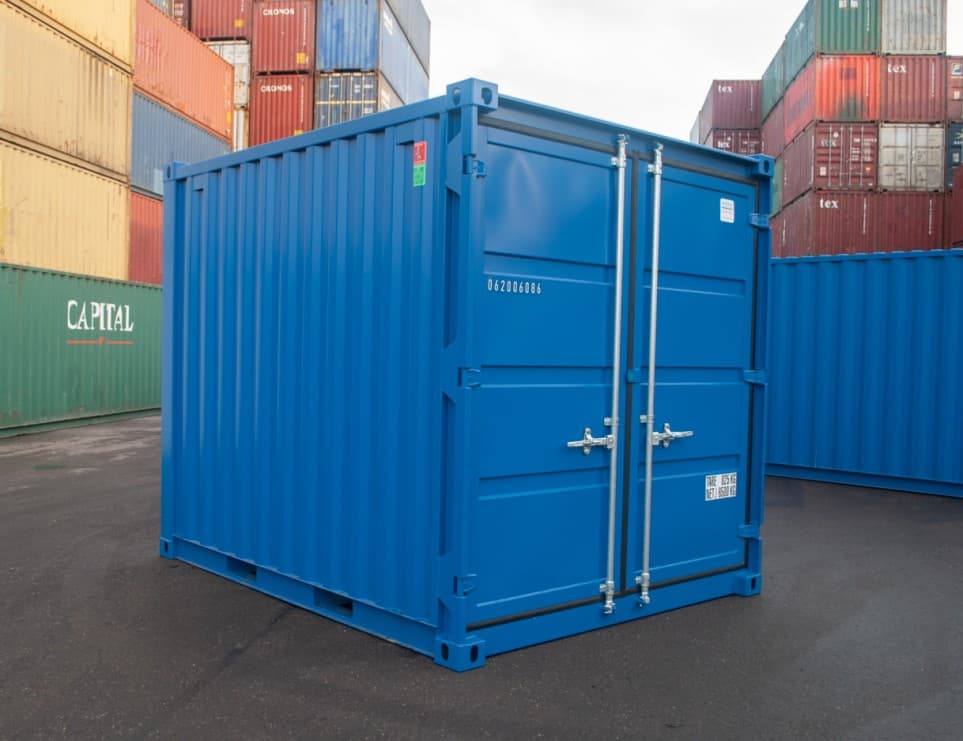
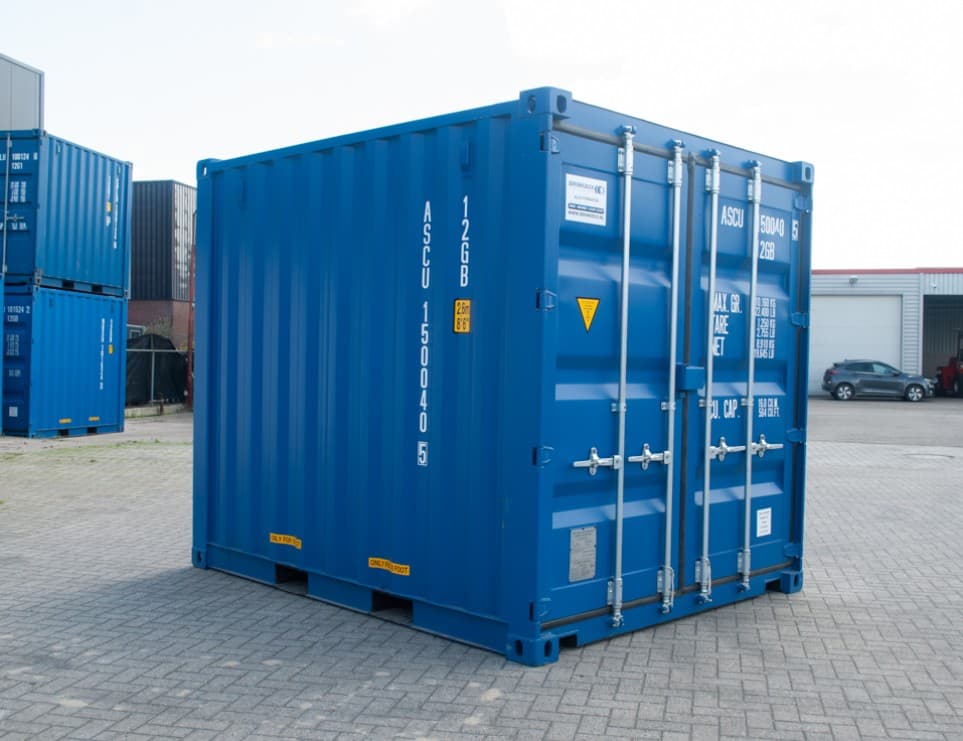
Compared to other formats, the 20ft has advantages and limits. Against the 40ft, it is more manoeuvrable, easier to transport and place on tight sites; it weighs less empty and can be moved by more common machinery. However, it offers about half the volume, which may require several units for a large need. Against the 10ft, it provides significantly more volume while remaining transportable on a standard truck, whereas the 10ft is often used for very constrained spaces. The 20ft High Cube offers about 30 cm more internal height, useful for taller volumes or fitting-out, but it is less common used and may be more expensive. The Open Top container, without a rigid roof, facilitates top loading of tall or heavy items, while the Flat Rack, without side walls, suits out-of-gauge loads. The Reefer container, finally, is equipped with a refrigeration unit and intended for perishable goods; it is heavier, more expensive and requires a power supply. The Dry 20ft remains the most standard and economical choice for storing and transporting dry goods.
Finally, a few practical buying tips complete these points. Ask for recent photos and, if possible, an on-site visit. Check the marking, serial number and CSC plate. Have the Wind & Watertight guarantee, its duration and scope specified in writing. Ask about the container's origin: a container that has carried chemicals or foodstuffs may require specific cleaning. For food or sensitive use, a cleaning certificate can be requested. Plan the delivery and unloading method: a truck with crane is often necessary, as an empty container weighs over two tonnes. Anticipate the location, access and ground stability. If you plan fitting-out, check technical feasibility (drilling, insulation, electricity) and permits. Finally, compare offers taking into account actual condition, transport costs and warranties, rather than just the advertised price. A well-chosen and well-maintained used container remains a durable investment for many uses.