Description
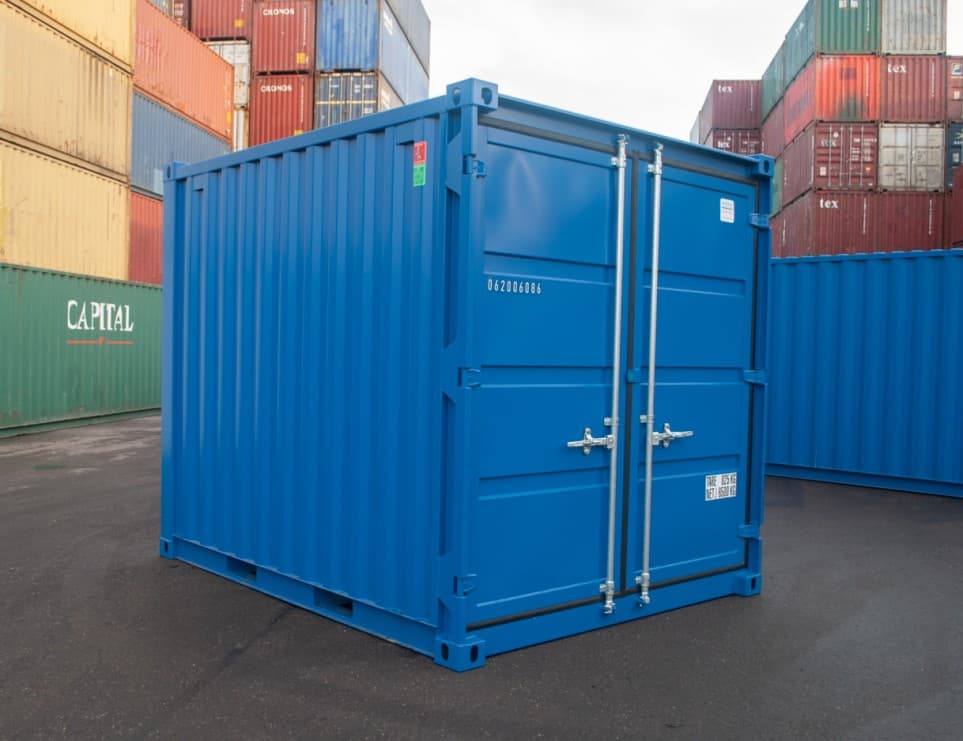
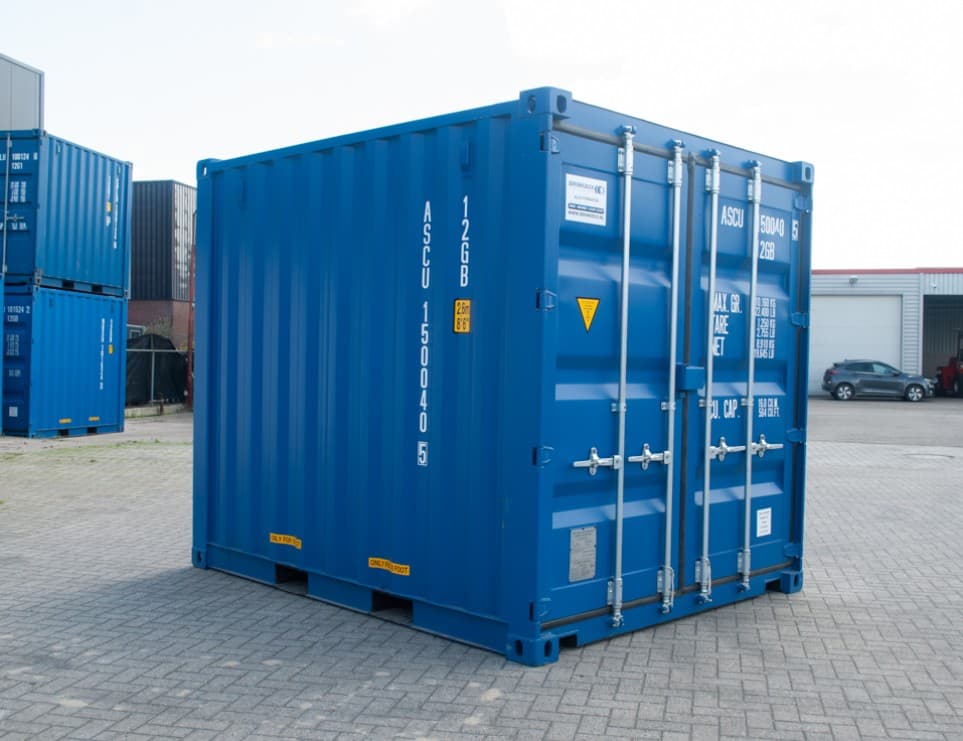
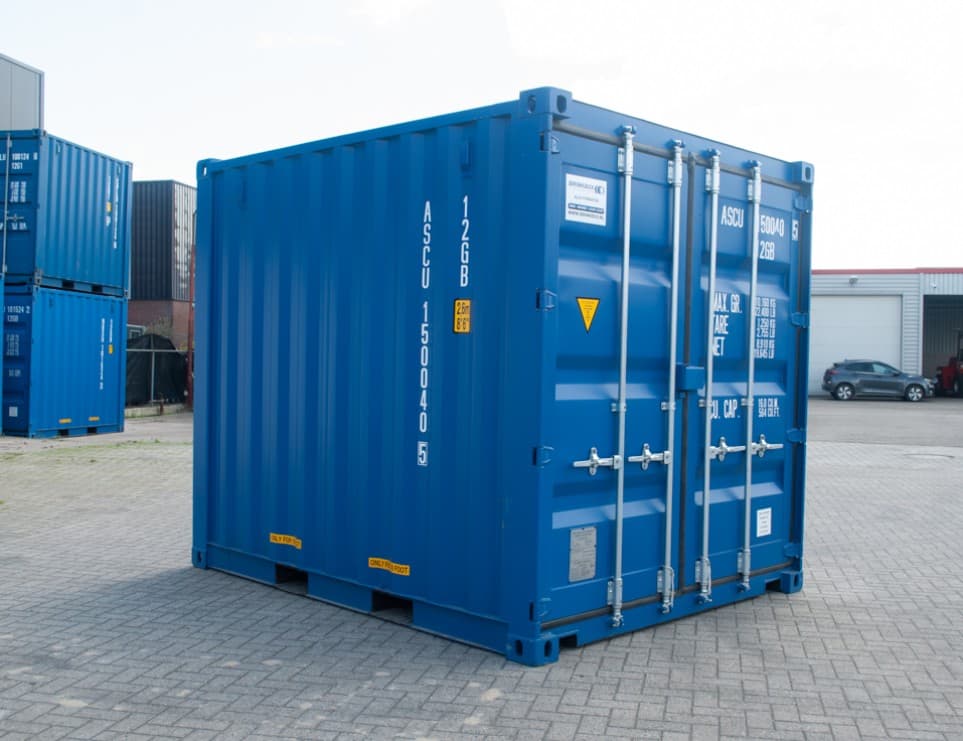
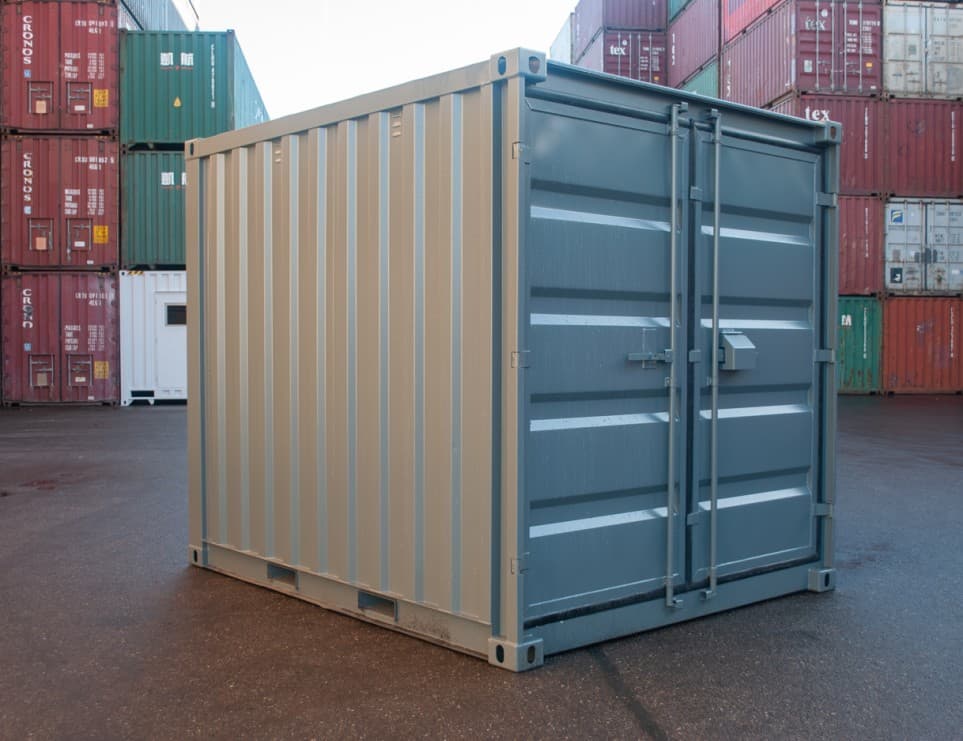
The used 20ft Dry shipping container we offer is a standard model, inspected and checked to meet watertightness and sturdiness requirements. With its standard external dimensions of 6.06 m long, 2.44 m wide and 2.59 m high, it is the most common format in maritime transport and overland logistics. This container offers an internal volume of around 33 m³ and a floor area of around 14 m², making it a versatile solution for many uses. Its structure is made of Corten steel, a low-alloy steel that resists atmospheric corrosion through the formation of a protective surface layer. This feature allows it to withstand bad weather and marine environments without requiring heavy maintenance, which is a major advantage for long-term outdoor use.
The floor is made of 28 mm thick marine plywood, a dense, moisture-resistant material commonly used in shipping containers for its ability to support heavy loads and withstand climate variations. The side walls and roof are made of corrugated steel sheet, giving the whole unit significant structural rigidity. The double rear doors are fitted with standard container locks, with rubber seals that ensure airtightness and watertightness. During inspection, these seals are checked and replaced if necessary to ensure compliance with the watertightness standard commonly known as "Wind & Watertight" (WWT). Although not official in the ISO sense, this standard is an industry reference for qualifying a container suitable for dry storage and export.
The 20ft Dry container is designed for transporting dry goods. It has no refrigeration system or active ventilation, but it can be fitted with additional vents if needed. Its ISO design (ISO 668 for dimensions and ISO 1496 for technical specifications) guarantees universal compatibility with ships, trains and container trucks. This means it can be handled, stacked and transported without special adaptation, making it easy to integrate into an existing logistics chain.
For storage, this container offers a robust and secure alternative to traditional shelters. Its solid walls and lockable door (with a suitable padlock, not supplied) effectively deter intrusion. It is commonly used on construction sites to store tools, materials or sensitive equipment. Businesses also use it to store archives, spare parts, furniture or seasonal goods. For residential use, it can serve as a garden shed, workshop or storage room, provided local planning rules are respected (see below).
One of the advantages of the 20ft is its modularity. It can be stacked up to nine units high in maritime configuration, but in static ground use, stacking is generally limited to two or three levels, subject to checking the ground's load-bearing capacity and using appropriate fixing techniques. It can also be placed side by side to create larger spaces, with openings made between modules. This flexibility makes it an interesting base for conversion projects: site office, technical room, changing room, break room, or even a light dwelling after conversion.
Converting a shipping container is common practice, but it requires taking several constraints into account. The steel structure is thermally conductive, meaning an uninsulated container can become very hot in summer and very cold in winter. For regular use, it is recommended to add insulation (for example with mineral wool or rigid panels) and an interior lining. In addition, condensation can form inside if the air is not renewed; installing ventilation grilles or an air conditioning system may be necessary. Finally, any structural modification (drilling walls, adding windows, etc.) must be carried out in accordance with good practice and may affect the watertightness warranty. It is advisable to call on professionals for this type of work.
When buying a used container, several points should be examined. First, the condition of the structure: look for perforating rust, major deformations or cracked welds. Surface rust is normal and can be treated, but deep corrosion can compromise strength. Next, check the floor: it should not have soft areas, rot or delamination. Marine plywood can be sanded and treated, but if it is too damaged, replacement is costly. Also check the doors: they should open and close without forcing, the locks should work properly and the seals should be supple and free of tears. A light test (closing the doors and looking for gaps) can give an initial indication. Finally, make sure the container has a valid CSC (Convention for Safe Containers) plate, which certifies its compliance with safety standards for transport. This plate is mandatory for any container used in international transport.
Transporting a 20ft container in France is subject to a few rules. On the road, a 20ft container can be transported on a suitable container truck, generally an articulated vehicle with a specific chassis. The total loaded weight (container + goods) must not exceed the legal limits of 44 tonnes for a 5-axle road train, but the empty weight of a standard 20ft Dry is around 2.2 to 2.4 tonnes, leaving a large margin for cargo. For exceptional transport (out-of-gauge container), prior authorisation is required. Delivery to the destination can be carried out by crane truck or by a truck with a loading arm, allowing the container to be placed on the ground without an additional crane. It is important to provide a stable, level surface to avoid any subsidence.
Maintaining a shipping container is relatively simple. Regular cleaning with clean water and mild soap removes salt deposits and dirt. Avoid overly powerful pressure washers that could damage the seals. Periodically inspect the door seals and apply a silicone-based care product to keep them supple. If paint chips appear, it is advisable to treat them with anti-rust paint to prevent corrosion. The floor can be swept and, if necessary, treated with linseed oil or a fungicide to protect it from moisture. Finally, regularly check the fixings and locks to ensure they remain functional.
This used 20ft Dry container is offered at a competitive price, making it an economical option for businesses and individuals alike. Its 33 m³ volume can store the equivalent of a small apartment's contents or several pallets of goods. Its strength and durability make it a cost-effective long-term investment. Whether for static use or export, it meets the most common needs. We invite you to contact us for availability and delivery arrangements. D.S. Globe Conteneur, based in Marseille, specialises in the sale and rental of shipping containers. We can advise you on choosing the model suited to your project and support you in its implementation.
To go further, let's look at sector-specific use cases that make the most of this format. In the building and public works sector, the 20ft container serves as a site welfare unit: it can be fitted out as a changing room, canteen or site office. Its robustness allows it to remain on site throughout the project, and its ISO design allows it to be moved by crane truck from one phase to the next. Logistics companies use it as a buffer storage unit on their platform, particularly for goods that are not sensitive to moderate humidity and require protection against theft and bad weather. In agriculture, it is used to store seeds, fertilisers or small equipment, provided suitable ventilation is arranged to prevent condensation. Local authorities see it as a technical room for municipal services, a shelter for archives or a temporary collection point. Finally, individuals adopt it as an extra garage, DIY workshop or storage space for garden furniture and seasonal equipment.
Let's now compare the 20ft with other formats to inform the choice. The standard 40ft offers a volume of around 67 m³, double that, for a length of 12.19 m. It is more suited to large volumes and international moves, but it requires a longer site and a suitable truck, often more expensive to move. The 40ft High Cube gains around 30 cm of internal height, which is valuable for storing bulky but light goods, or for a conversion with a suspended ceiling. The 10ft, rarer, is suitable for very restricted spaces but its price per cubic metre is generally higher. The 20ft High Cube also exists and adds height without lengthening the footprint. Finally, specialised containers such as the Reefer (refrigerated), Open Top (open roof) or Flat Rack (no side walls) meet specific needs: Reefer for perishable goods, Open Top for loading objects from above, Flat Rack for out-of-gauge loads. The 20ft Dry remains the most versatile and economical for most common uses.
Let's address French regulations regarding installing a container on private land. A shipping container is not considered a permanent structure under planning law, but its installation may be subject to formalities depending on its duration and use. If the container is placed for less than three months, no authorisation is generally required. Beyond that, a prior declaration of works may be required, especially if it is visible from the public highway or changes the appearance of the land. For residential use, even temporary, the rules are stricter: you should check with the local planning department, as the container may be treated as a construction and require a building permit. In addition, if the land is in a protected area (listed site, nature reserve, near a historic monument), additional constraints apply. It is therefore essential to check the Local Urban Plan (PLU) before any installation. Regarding transport, the container must comply with the CSC standard and carry a valid plate; during a road check, this plate is verified. The carrier must also comply with loading and securing rules, including the obligation to use twist-locks to secure the container to the chassis.
As for preparing the ground, a few precautions are necessary. The container should be placed on a flat, stabilised surface, such as concrete slabs, blocks or a bed of compacted gravel. Soft ground can cause differential settlement and deform the structure. It is recommended to provide a slight excavation or shims to raise the container a few centimetres, to facilitate air circulation under the floor and prevent water stagnation. If the container is intended to remain in place, an anchoring system (straps, stakes or ground fixings) can be considered in windy regions. Finally, think about accessibility: allow enough space in front of the doors for opening manoeuvres and the passage of a pallet truck or forklift.
In conclusion, the used 20ft Dry shipping container is a proven product, whose ISO design guarantees compatibility with existing infrastructure. Its Corten steel and marine plywood floor give it appreciable longevity, provided minimal maintenance and regular inspection. Whether you are a professional looking for a durable storage solution or an individual wanting to create extra space, this format is a balanced compromise between capacity, footprint and cost. We remain at your disposal to support you in your project and provide additional information on available models.