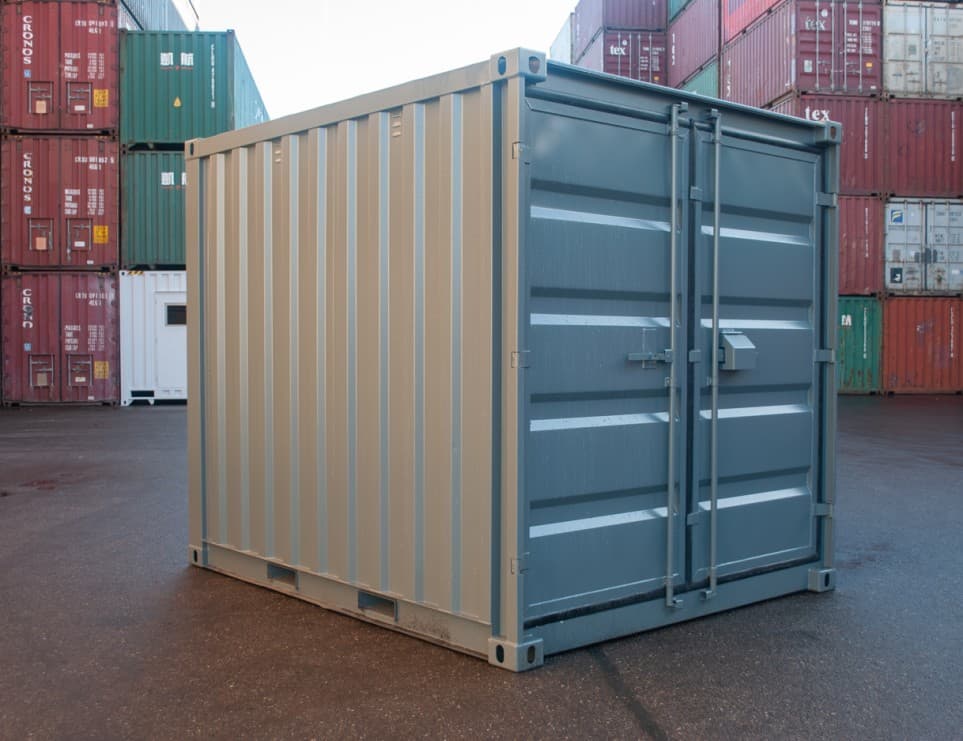
Description
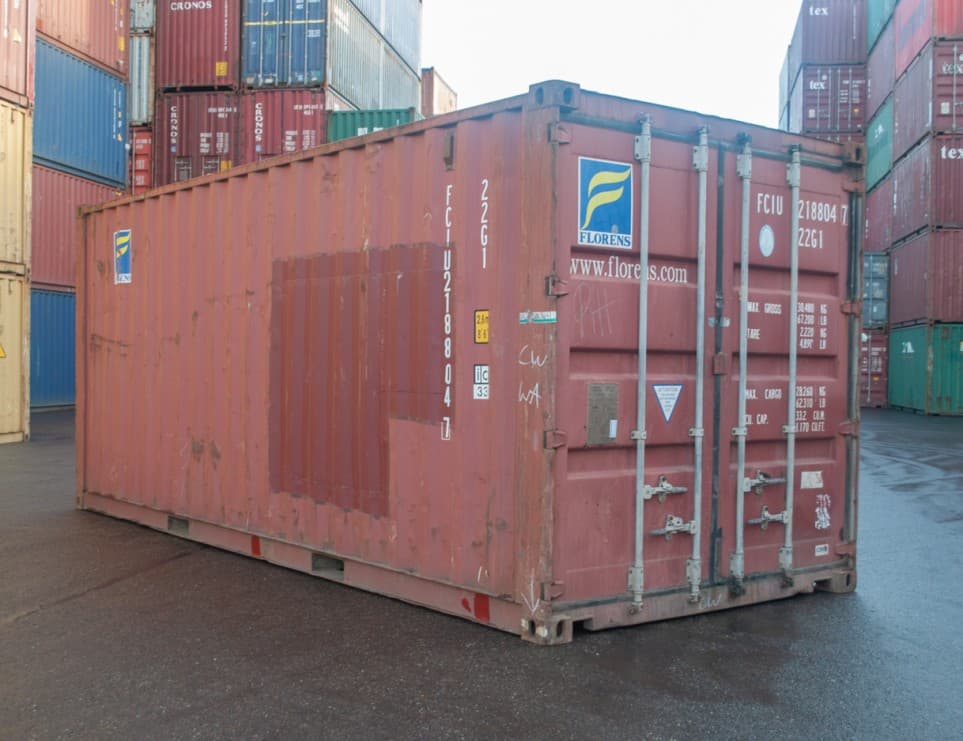
The used 20ft Dry shipping container we offer at D.S. Globe Conteneur is a standard dry model, meaning it has no refrigeration or mechanical ventilation. It is a unit that has already been used for sea transport or storage, refurbished and checked before being put up for sale. This type of container is very common in the transport and logistics world, which explains its availability and low cost. It is suitable both for static use, such as storage on a plot of land or a worksite, and for shipping use if you need to send goods by sea. Its standardised dimensions allow it to be handled with the usual equipment (forklifts, reach stackers, cranes) and to be stacked or transported by truck, train or ship. Below we detail its technical characteristics, its practical uses, the points to check when buying and the maintenance points to know.
Technically, a 20ft dry container complies with ISO 668, which sets the external dimensions and maximum masses of series 1 containers. Its nominal external dimensions are approximately 6.058 m long, 2.438 m wide and 2.591 m high. The usual internal dimensions are approximately 5.898 m long, 2.352 m wide and 2.393 m high, giving an internal volume of about 33 m³. The tare weight is generally around 2,200 to 2,400 kg depending on the manufacturer and equipment. The maximum payload, as defined by the standard, is about 28,000 kg for a standard 20ft, but it can vary slightly depending on the model and country of registration. The maximum gross weight (MGW) is commonly around 30,480 kg. These values are indicative and may differ from one unit to another; the nameplates on the door or side panel show the exact data for the unit concerned.
The structure of a dry container consists of a steel frame and Corten steel wall panels. Corten steel, or weathering steel, is a low-alloy steel that, when exposed to air, develops a protective surface rust layer. This layer slows corrosion and explains the longevity of shipping containers, even when exposed to sea spray. The side walls and roof are generally corrugated, which increases their rigidity. The floor is marine plywood, often 28 mm thick, laid on metal cross members. This treated wood resists moisture and supports rolling loads or pallets. The rear doors are double metal doors fitted with rubber seals and locking bars. These seals ensure water and air tightness; their condition is decisive for protecting stored goods. The container can be fitted with lifting hooks at the four upper and lower corners, called corner castings, which allow slinging and lashing.
Watertightness is a key point for a used container. A container described as "Wind & Watertight" (WWT) has been tested or inspected to check that it does not let water or wind through. This does not mean it is perfectly airtight like a new container, but that it effectively protects against ordinary weather. When buying, it is advisable to check the condition of the door seals, the absence of holes or cracks in the walls and roof, the flatness of the floor and the operation of the locks. A simple test is to close the doors and see whether daylight passes through the gaps. Another, more thorough test uses a water spray or a light test to detect leaks. We also recommend checking for perforating rust, especially on the roof and lower walls, as well as the condition of the welds.
The uses of a 20ft dry container are varied. For static storage, it is used to store building materials, tools, archives, palletised goods, furniture or seasonal equipment. Its closed, lockable design offers some security against theft and bad weather. On a worksite, it can serve as a technical room or equipment store. Some companies convert it into a site office, changing room or break room after fitting it out (insulation, electricity, ventilation). For export, the 20ft container is widely used because it corresponds to a standard transport unit, accepted by shipping lines and road hauliers. It can be loaded, sealed and shipped to many destinations. Finally, it can serve as a base for modular housing or commercial premises projects, but this requires specific work and compliance with local planning rules.
When buying a used container, several points deserve your attention. First, location: a container available in a depot near you reduces transport costs. Then, general condition: a container can be classified into several categories according to its condition (for example, "one-trip", "cargo worthy", "wind and watertight", "as is"). The "Wind & Watertight" mention generally indicates a good level of watertightness, but it does not prejudge the aesthetic condition. It is common to find containers with traces of rust, dents or scratches, without this affecting use. For static use, these defects are often acceptable; for export use, you must ensure that the container is accepted by the shipping line, which generally requires a CSC (Convention for Safe Containers) certificate. This certificate attests that the container is fit for international transport. Check its presence and validity date if you plan to ship.
Another point concerns transport regulations in France. A shipping container is considered as goods or a vehicle depending on use. For road transport, the total weight of the container and its load must not exceed the limits of the vehicle and road regulations (GVW, GTW). Exceptional transport may be necessary if the dimensions or weight exceed the thresholds. For installation on a plot of land, it may be necessary to check local planning rules, especially if the container is used as a building. In some cases, a prior works declaration or a building permit may be required. It is recommended to enquire with the town hall or the competent planning department. Furthermore, if the container is intended to accommodate people (office, housing), safety and sanitation standards apply, particularly regarding insulation, ventilation and electrical installations.
Maintenance of a used container is relatively simple. It is advisable to regularly clean the roof and walls to prevent the accumulation of debris and leaves, which retain moisture and encourage rust. Door seals can be maintained with a suitable product (for example, talc or silicone lubricant) to prevent them from sticking or drying out. Locks and hinges can be greased periodically. If areas of rust appear, brushing and anti-rust paint can extend the service life. For outdoor use, the container can be placed on blocks or cross members to isolate it from the ground and limit corrosion from below. Ventilation can be added if you store products sensitive to humidity, as condensation can form inside when temperatures vary.
Regarding security, a locked container is not a safe. It offers a deterrent barrier, but can be forced. To strengthen security, additional locks, protective bars or alarm systems can be installed. The weight of the container itself (about 2.2 to 2.4 tonnes) makes it difficult to move without equipment, which provides relative protection against theft. If the container is placed on the ground, it can be anchored or ballasted to resist wind, especially in exposed regions.
The price of a used 20ft dry container varies according to condition, location and availability. The price indicated for this product is EUR 1,350.00. This amount generally corresponds to a used container in correct, watertight condition, with no aesthetic guarantee. It does not necessarily include transport to your site, nor any handling costs. We invite you to contact us for a quote including delivery if necessary. D.S. Globe Conteneur is based in Marseille, which can facilitate access to ports and depots in the region.
To summarise, the used 20ft Dry shipping container is a robust and economical solution for many storage and transport needs. Its ISO standard, its Corten steel structure and its marine plywood floor make it a durable product. Before buying, check the watertightness, the presence of the CSC certificate if you are exporting, and local installation rules. Minimal maintenance can extend its service life for many years. If you have any questions about this model or the available options, our team can assist you with your project.
To go further, it is useful to compare the 20ft dry with other container formats and types, because the choice depends above all on the volume to be stored, the weight of the goods and access constraints on site. The 40ft dry, for example, offers an internal volume of about 67 m³, roughly double that of the 20ft, for an external length of about 12.19 m. Its tare weight is higher (often around 3.7 to 4 tonnes) and its maximum payload is around 26 to 28 tonnes. The 40ft is interesting when you have a lot of volume but little weight, because the price per cubic metre stored is generally more advantageous. On the other hand, it requires wider access and suitable handling equipment, and it is more difficult to move once placed. The 40ft High Cube (HC) adds about 30 cm of internal height compared with the standard 40ft, bringing the volume to about 76 m³. This extra height is appreciated for storing tall loads, for fitting mezzanines or for modular housing projects where headroom matters. The 20ft High Cube also exists, but it is less common on the used market.
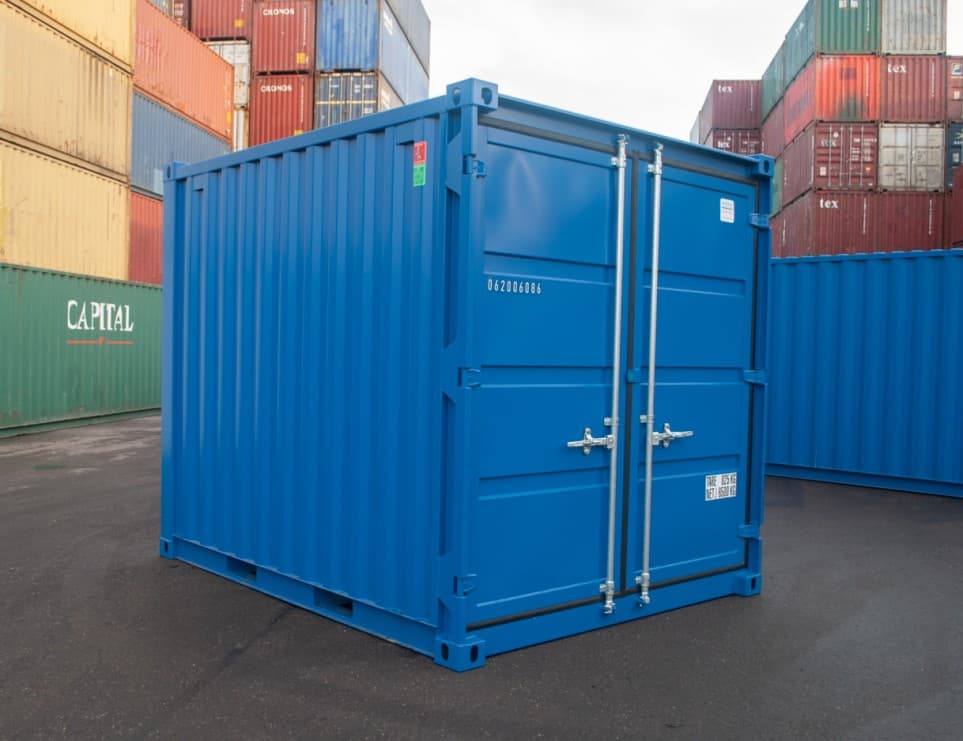
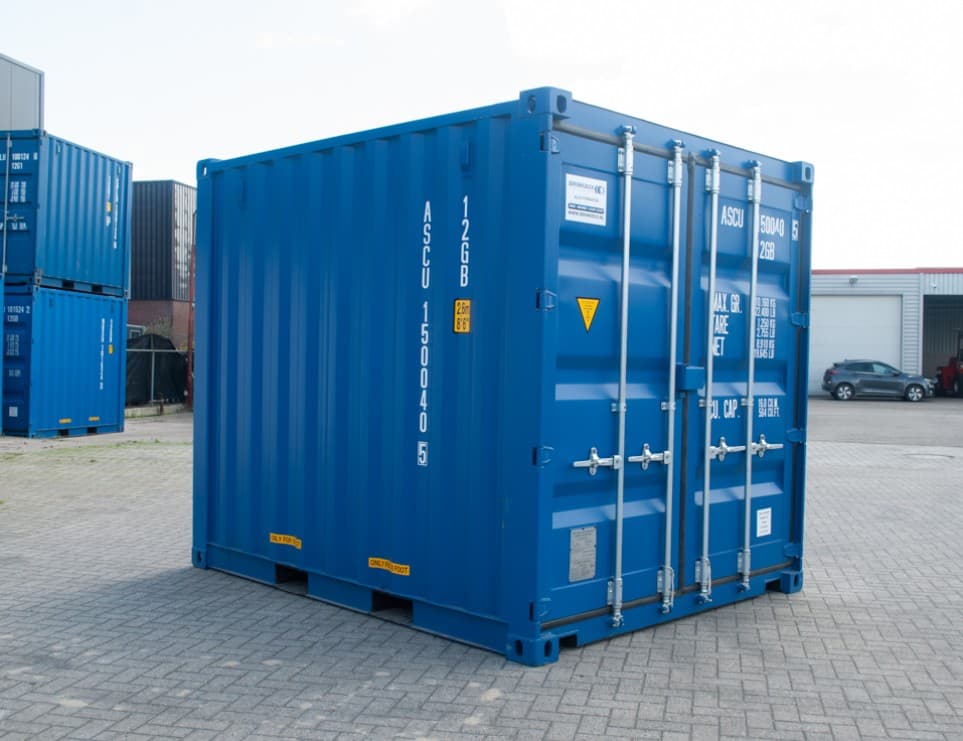
The 10ft container, more compact, offers a volume of about 15 to 16 m³. It is practical when floor space is limited or when you only need a small technical room. Its price per cubic metre is often higher than that of the 20ft, but it can be moved more easily and installed in tight areas. The 8ft, even smaller, is mainly used as a site office or mini-storage. Conversely, 45ft containers, which are rarer, are mainly used in certain countries and less widespread in Europe.
Beyond size, the type of container matters. The standard dry, the subject of this sheet, is suitable for the majority of dry goods not sensitive to temperature. The reefer container (refrigerated) is fitted with a refrigeration unit and allows transport or storage of products at controlled temperature (food, pharmaceutical, flowers). It costs significantly more, consumes energy and requires specific maintenance. The open top container has an opening roof (tarpaulin or removable) that facilitates loading tall or bulky goods from above, using a crane. The flat rack container, without side walls or roof, is designed for heavy or wide loads (machines, equipment, pipes) that do not fit in a dry. The tank container, finally, is a tank mounted in a container frame, intended for liquids. For ordinary storage use, the dry remains the most versatile and economical.
It is also necessary to distinguish the new container (or "one-trip", meaning it has been used for a single voyage) from the used container. A one-trip is generally in excellent condition, with new paint and recent seals, but its price is higher. A used container like this one has already lived, which results in marks of wear, but its price is more accessible. The choice depends on your budget and use: for static storage out of sight, a watertight used one is often enough; for regular export or a polished brand image, a one-trip may be preferable.
Regarding transport regulations, it should be remembered that the shipping container is subject to the CSC convention, which requires periodic inspections (generally every 30 months for containers in service). In France, road transport of containers is governed by the Highway Code and the rules on vehicle dimensions and weight. A loaded 20ft container can be transported on a suitable container truck, but the gross train weight must not exceed legal limits (44 tonnes for a standard road train in international transport, with possible derogations). For exceptional convoys, prior authorisation is required. If you import a container from abroad, customs formalities may apply, especially if the container is considered as imported goods. Enquire with a freight forwarder or customs.
For installation, it is recommended to provide a stable, flat surface, preferably concrete or compacted gravel, to prevent the container from sinking or deforming. A slight slope can hinder door opening. If the container is placed on sloping ground, wedges or blocks are necessary. Anchoring to the ground is advisable in windy areas. Finally, if you wish to fit out the interior, note that the marine plywood floor can be covered with a surface, and the walls can be insulated with rigid panels or sprayed foam. Any electrical work must comply with current standards (NF C 15-100 for domestic installations).
Finally, a few sector use cases illustrate the versatility of the 20ft dry. In construction, it serves as a tool store, a storage room for materials sensitive to humidity (cement, plaster) or a site welfare unit. In agriculture, it can house seeds, fertilisers or small equipment. In trade and logistics, it serves as buffer stock or a picking area. In events, it can be used as a technical room or storage space for stage equipment. In the maritime and port sector, it remains the basic unit for shipping containerised goods. Finally, for individuals, it offers a storage solution for garden furniture, tools, bicycles or family archives. In all these cases, check that the container is suited to the load and the climatic conditions of your region, and do not hesitate to ask our team for advice on choosing between a 20ft, a 40ft or another format.