Description
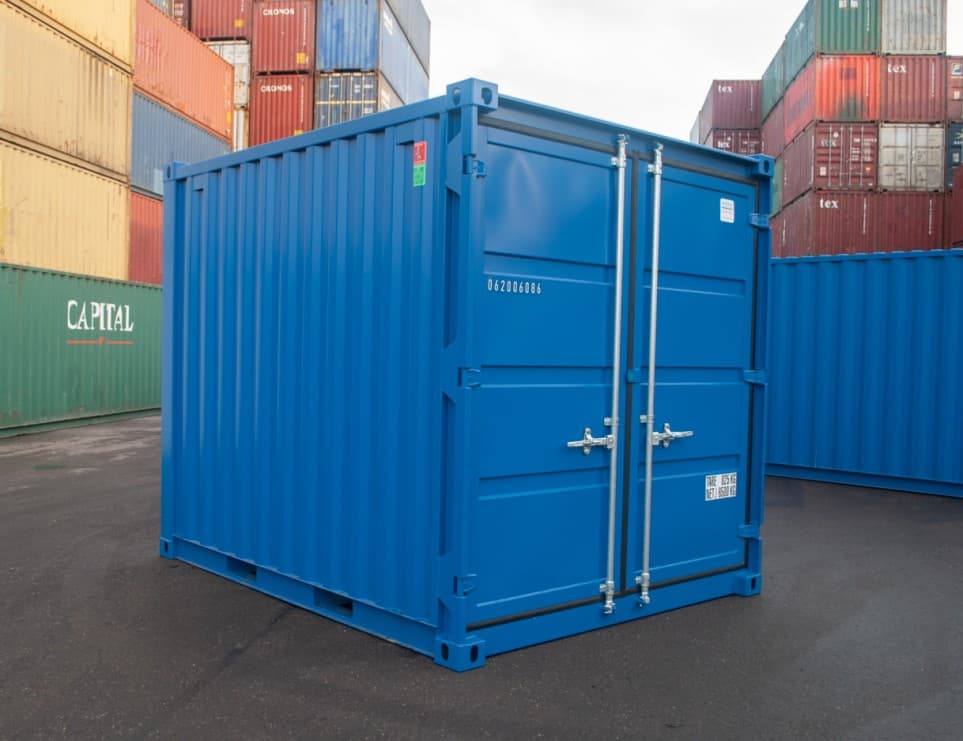
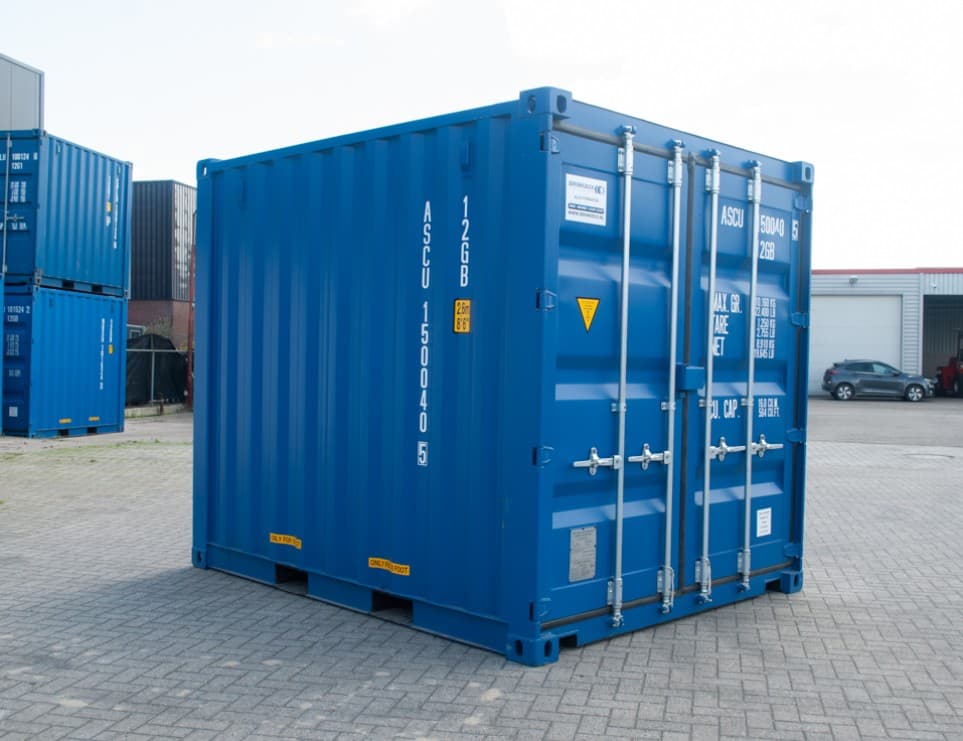
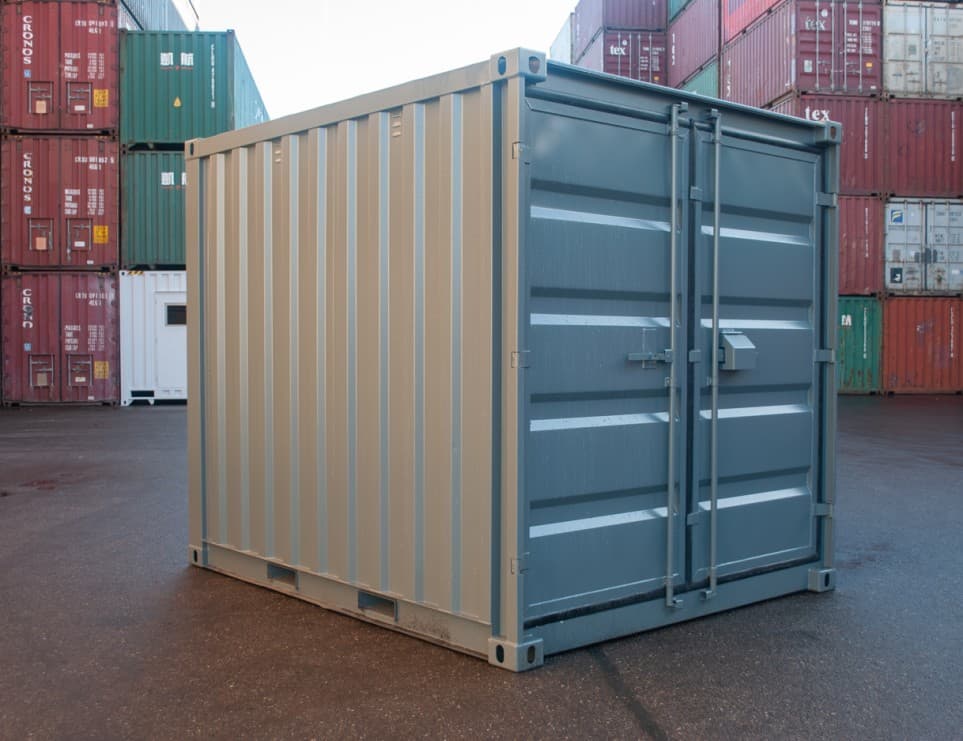
The used 20ft Dry shipping container is a common choice for storage, conversion, or transport of goods. This model, offered by D.S. Globe Conteneur, has already been used for sea transport and has been revised to restore reliable watertightness. It is sold with the Wind & Watertight guarantee, which certifies that the structure withstands driving rain and sea spray. Upon delivery, it can hold equipment, archives, tools, or various goods without requiring any special fitting.
Before going into detail, it is useful to recall what a 20ft Dry container is. It is a standard shipping container, called "dry" because it is designed for dry goods, without refrigeration or forced ventilation. Its external dimensions are standardized by ISO 668: approximately 6.058 m long, 2.438 m wide, and 2.591 m high. These dimensions are consistent across manufacturers, allowing these containers to be stacked, stowed, or transported on any suitable ship, train, or truck. The usable internal volume is about 33 m³, with a floor area of about 13.8 m². The maximum payload is around 28 tonnes, but it depends on the exact tare of the container, which varies by manufacturer and condition. The empty weight (tare) is generally between 2.2 and 2.4 tonnes.
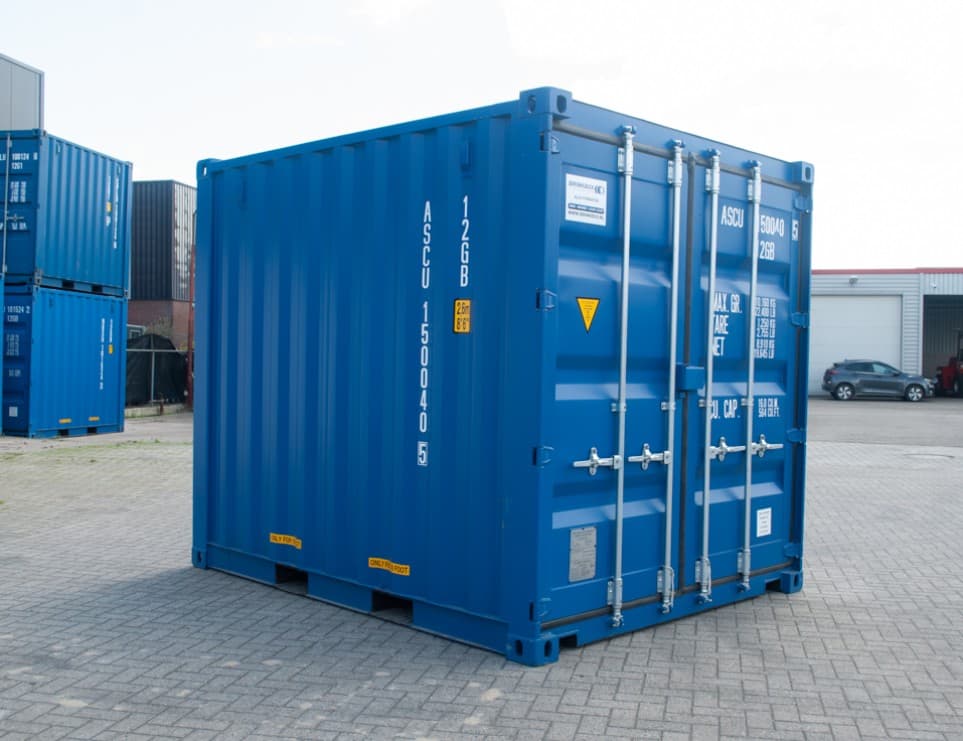
The structure of this container relies on a Corten steel frame. This steel, also called weathering steel, contains alloying elements such as copper, chromium, and nickel that allow it to develop a protective oxide layer on the surface, slowing corrosion. It has been the standard material for shipping container construction for decades. The side walls are made of corrugated steel sheets, which provide rigidity and impact resistance. The roof is also corrugated steel, and the floor is 28 mm thick marine plywood, treated to resist moisture and heavy loads. This floor is fixed on metal cross members welded to the frame. The rear doors are double doors equipped with locking bars and rubber seals. These seals are checked during revision: they must be flexible and tear-free to ensure airtightness and watertightness.
A used 20ft Dry container can have several uses. The most common is static storage: on private land, a construction site, a company parking lot, or an industrial area, it serves as a secure space for equipment, tools, spare parts, archives, or seasonal goods. Its robust design and padlock locking (not included) make it a cost-effective alternative to traditional storage facilities. It can also be used for export: after revision, it can go back to sea to transport goods, provided its CSC plate (Convention for Safe Containers) is valid and its structural condition allows it. The CSC plate is a mandatory international certification for any container used in sea transport; it must be checked before any shipment.
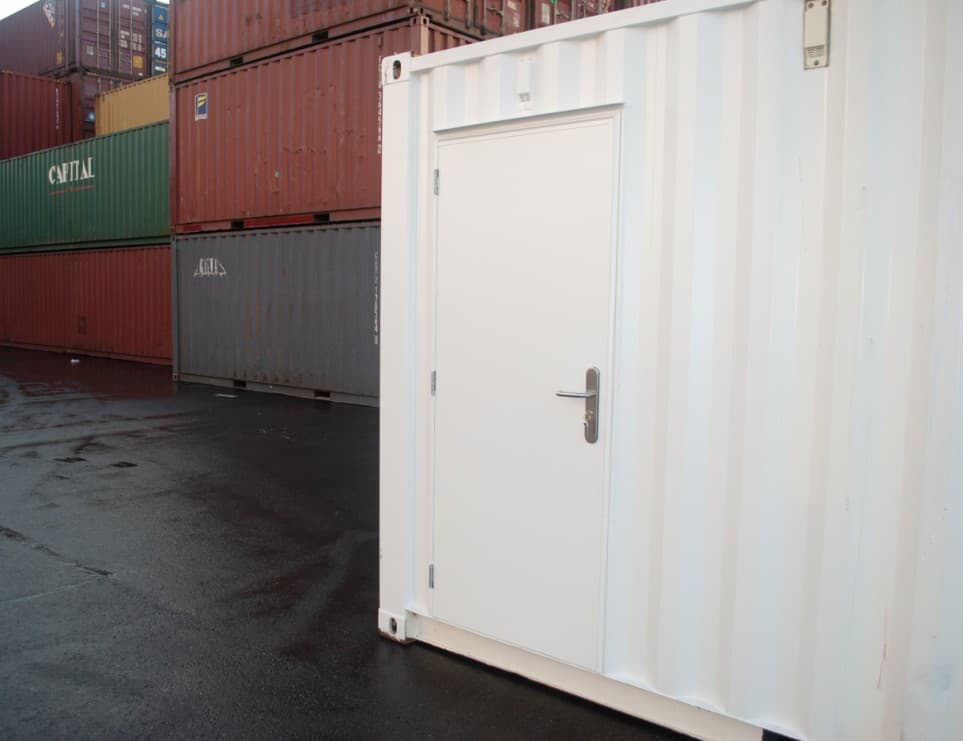
Beyond pure storage, the 20ft container is frequently converted into a site office, technical room, changing room, workshop, or even modular housing. Its rigid structure and standard dimensions facilitate the installation of openings (doors, windows), partitions, insulation, and electrical systems. However, these conversions must comply with local building regulations, particularly regarding planning permission or prior declaration if the container is permanently installed. In France, installing a container on land may require planning permission depending on its duration and surface area. It is advisable to check with the town hall before any fixed installation.
When buying a used container, several points deserve your attention. First, the condition of the structure: check that there is no perforating corrosion on the walls, roof, or frame. Traces of surface rust are normal and can be treated, but holes or heavily thinned areas compromise watertightness and strength. Next, the floor: ensure it is not rotten, deformed, or infested. A sound floor should be hard, without soft spots, and properly screwed to the cross members. The doors must open and close without forcing, and the seals must be intact. A simple test is to close the doors and check that no light passes between the seals and the frame. Finally, the CSC plate must be legible and valid for transport use.
Maintenance of a shipping container is limited but regular. It is recommended to visually inspect the structure at least once a year, paying particular attention to areas exposed to moisture: lower walls, corners, door surrounds. Dirt and debris should be removed from the roof to prevent water pooling. If paint chips appear, touching up with a suitable anti-rust paint helps prevent corrosion. Door seals can be cleaned and possibly treated with a rubber care product to prolong their flexibility. Inside, it is advisable to regularly ventilate the container to prevent condensation, especially if used to store moisture-sensitive materials. Adding a moisture absorber or passive ventilation can be useful.
Transporting a 20ft container in France is regulated. A 20ft container can be transported on a container truck, train, or ship. For road transport, the container must be securely lashed to a suitable chassis, and the total weight (container plus cargo) must not exceed the legal gross vehicle weight (GVW) limits, i.e., 44 tonnes for a standard road train in France. Exceptional transport may be necessary if dimensions or weight exceed regulatory thresholds. It is also important to follow safety rules for lifting: a 20ft container is handled by its four corner castings using spreaders or suitable slings. Never lift a container by its walls or roof.
Buying a used container offers a clear economic advantage over a new one. The price of a used 20ft Dry generally falls within a range depending on condition, age, and availability. The container offered here is listed at €1,350.00 excluding VAT. This price reflects its revised condition and Wind & Watertight guarantee. It is important to note that the price of a used container can vary with the market, region, and period. It is therefore advisable to request an updated quote.
D.S. Globe Conteneur, based in Marseille, offers this used 20ft Dry container. The company specializes in the sale and rental of shipping containers. For any questions about availability, delivery options, or accessories (padlocks, ventilation, insulation), it is recommended to contact the company directly. This container can be delivered throughout France, according to terms to be agreed.
To complete this presentation, it is useful to examine in more detail the routine maintenance and preventive measures that extend the life of a used container. A shipping container is designed to withstand aggressive marine environments, but once placed on the ground, it faces other stresses: ground moisture, thermal variations, sun exposure, and handling impacts. The first rule is not to let water stagnate around the base. If the container is placed directly on the ground, moisture can rise by capillarity into the floor and frame. It is therefore preferable to place it on blocks, treated wood beams, or concrete slabs, to create a ventilated air gap under the floor. This simple precaution significantly reduces the risk of corrosion of the bottom frame and rotting of the plywood. Next, monitor welds and corners. The corner castings, these massive pieces at the eight corners of the container, are fixing and lifting points. They can accumulate dirt and moisture; annual cleaning and visual inspection help detect any early rust. If necessary, localized anti-rust treatment is sufficient. The corrugated walls can also retain dirt in their recesses; cleaning with a water jet (without high pressure directed at the seals) followed by natural drying is recommended once or twice a year. For containers exposed near the sea, salt air accelerates corrosion; in this case, a half-yearly inspection is more prudent. The original paint is generally an epoxy or polyurethane paint that protects the steel. If it flakes, it should be touched up quickly with a compatible paint. Finally, the interior must remain dry. If the container is used to store hygroscopic materials (paper, fabrics, wood, electronics), installing a dehumidifier or moisture absorber bags is advisable. Passive ventilation, for example through protected ventilation grilles, may suffice in temperate climates. Never obstruct the door seals with objects that could deform them.
The regulations applicable to shipping containers in France also deserve clarification. As a transport unit, a container must comply with the International Convention for Safe Containers (CSC), which entered into force in 1977. This convention requires that each container bear a CSC plate indicating its date of manufacture, maximum payload, tare, and dates of periodic inspections. For use in international sea or land transport, the plate must be valid. For static storage use, regulations are less stringent, but a container with a degraded structure can present a risk. In terms of planning, installing a container on private land may be considered a construction if it is fixed to the ground and intended to last. In this case, a prior declaration of works or a building permit may be required, depending on the surface area and nature of the project. Rules vary by municipality and zone (urban, agricultural, protected). It is therefore essential to check with the local planning department before any permanent installation. For temporary use (construction site), authorization may also be necessary if the container remains in place for more than a few months. Finally, if the container is used as a workplace, it must comply with health and safety rules (ventilation, lighting, emergency exits), even if it is a temporary installation.
Sector-specific use cases are numerous and vary by need. In the construction sector, the 20ft container serves as a site store for tools, PPE, spare parts, and consumables. It can be equipped with shelves, a workbench, and lighting. In events, it is used as a technical room, control room, changing room, or storage for stage equipment. In agriculture, it houses seeds, fertilizers, small equipment, or moisture-sensitive crops. In trade and logistics, it acts as seasonal storage extension or order preparation area. In the maritime and port sector, it is obviously a transport tool, but also temporary storage on terminals. For individuals, it can become a motorcycle garage, DIY workshop, gardening shed, or even a base for a tiny house project. In energy and telecoms, it can house generators, batteries, or technical equipment, provided suitable ventilation is planned. Each use imposes its constraints: storing chemicals requires ventilation and retention; storing food requires rigorous cleanliness and pest control; installing an office requires thermal and sound insulation, as well as compliant electrical supply.
Comparing the 20ft Dry container to other sizes and types helps make the right choice. The standard 40ft container offers double the volume (about 67 m³) for a floor area of about 28 m². It is more suitable for bulk storage or transporting large volumes, but it is heavier, bulkier, and requires more land. The 40ft High Cube (HC) container adds about 30 cm of internal height, which is useful for storing tall loads or creating a living space with a better sense of volume. The 10ft container, rarer, is compact and fits into tight spaces, but its volume is limited (about 16 m³). The Open Top container has a removable or open roof, practical for loading bulky items from above (machines, long materials). The Flat Rack container, without side walls or roof, is designed for out-of-gauge loads. The Reefer container is a refrigerated container, with a cooling unit, intended for perishable goods; it is more expensive and requires a power supply. The 20ft Dry container remains the most versatile and cost-effective for common use. It is also the easiest to resell, as demand is constant. In terms of transport, the 20ft is often more practical for deliveries in city centers or on sites with limited access, as it can be handled by crane trucks or medium-capacity forklifts. The 40ft often requires more powerful equipment and more maneuvering space.
Another important point concerns preparing the container before use. If you plan to store sensitive items, a thorough cleaning is necessary: sweeping, possible washing, drying. Check that the floor does not emit odors (containers that have transported odorous products may retain smells). A coat of paint on the floor can help protect it and facilitate cleaning. If you want to insulate the container, several solutions exist: rigid insulation panels (polyurethane, extruded polystyrene), mineral wool with vapor barrier, or spray foam. Insulation must be installed leaving a gap to avoid condensation between the insulation and the metal wall. For office use, ventilation, lighting, and electrical supply must be provided. These installations must comply with current electrical standards. For residential use, the rules are stricter (building permit, compliance, sanitation). It is advisable to use professionals for major conversions.
Finally, it should be emphasized that buying a used container should be done from a reliable seller, capable of providing accurate information on the condition and history of the container. D.S. Globe Conteneur, in Marseille, offers this model with a watertightness guarantee. It is recommended to visit the container before purchase or request detailed photos, especially of the corners, roof, floor, and doors. A revised container guaranteed Wind & Watertight offers peace of mind for long-term storage use. With minimal maintenance, it can serve for many years. Its low price and robustness make it a rational investment for many professionals and individuals. Whether you need additional storage space, a site office, or a base for a conversion project, the used 20ft Dry container meets a wide range of needs, provided safety and planning rules are followed.