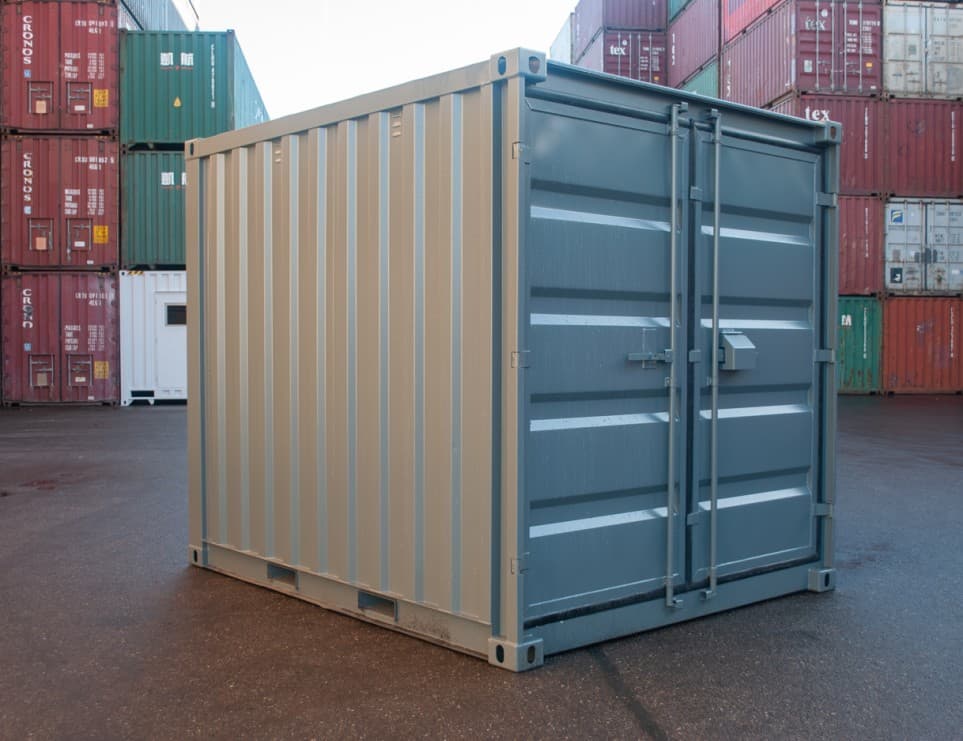
Description
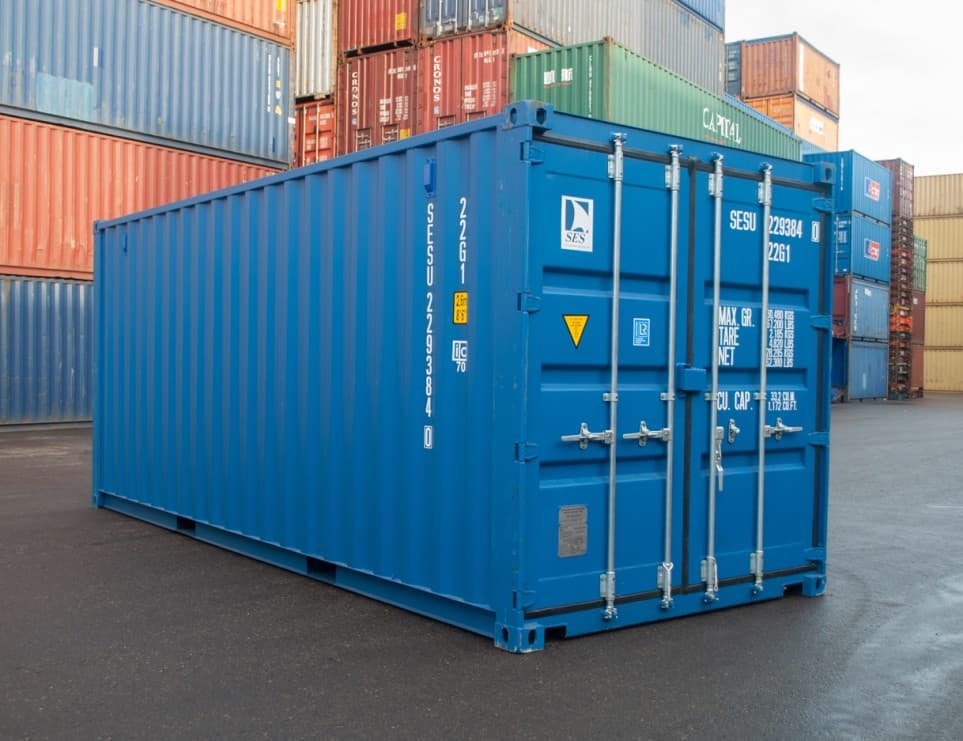
The used 20ft Dry shipping container is one of the most widely used storage and transport units in the world. Its standardised design, based on ISO 668 and ISO 1496 standards, allows it to be handled, stacked and transported across all maritime, rail and road networks. This used model, inspected and tested for watertightness, is a cost-effective alternative to a new container while retaining the essential features that make this type of unit so robust.
Let's start with the structure. The 20ft Dry container is built around a Corten steel frame, a low-alloy steel that resists corrosion better than ordinary steel thanks to the formation of a protective oxide layer on the surface. The side walls, roof and front panels are made of corrugated steel sheets welded to a rigid frame. This manufacturing method gives the unit high mechanical strength, capable of withstanding the stresses of stacking and port handling. The floor is made of 28 mm thick marine plywood, a dense material treated to resist moisture and rolling loads. It rests on metal cross members that distribute the weight. The rear face is fitted with double doors, with checked seals and container locking bars (closing bars and handles) in good working order.
In terms of dimensions, the standard 20ft container has an external length of approximately 6.058 m, a width of 2.438 m and a height of 2.591 m. Typical internal dimensions are approximately 5.898 m long, 2.352 m wide and 2.393 m high, giving an internal volume of approximately 33 m³. The usable floor area is around 13.8 m². The tare weight is generally around 2,200 to 2,400 kg depending on the manufacturer, and the maximum payload can reach approximately 28,000 kg, for a maximum gross weight (MGW) of 30,480 kg. These values are indicative and may vary slightly from one container to another; they are shown on the CSC plate fixed to the door.
The uses of a used 20ft Dry container are particularly varied. Static storage is the most common application: construction equipment, tools, archives, various goods, agricultural or industrial equipment. Its watertight and lockable design protects the contents from rain, dust and intrusion. On a construction site, it frequently serves as a technical room or storage unit for tools and consumables. In logistics, it remains a reliable shipping solution for sea, rail or road transport, particularly for exporting palletised goods. Its compact size makes it easy to transport on container trucks and standard trailers, without requiring special exceptional convoy permits in most cases.
Another common use is conversion. The 20ft Dry container can be converted into a site office, secure storage unit, workshop or even basic living quarters. However, this conversion requires specific work: insulation, electrical wiring, ventilation, and sometimes cutting openings. It is important to note that an unmodified used container is not designed for permanent habitation without suitable conversion, particularly due to possible condensation and the lack of sufficient natural ventilation. For regular use, it is recommended to provide ventilation, anti-corrosion treatment and a check of the roof's watertightness.
Maintaining a used 20ft container is simple but should be regular. The paintwork and door seals should be visually checked at least once a year. Rubber seals can harden or crack over time; replacing them is inexpensive and preserves watertightness. The marine plywood floor should be kept clean and dry; if stained with oil or chemicals, prompt cleaning prevents absorption. Hinges and locks should be lubricated periodically to make them easier to operate. Finally, if the container is stored outdoors, slightly raising it on blocks or beams prevents direct contact with the ground and limits corrosion of the base.
When buying a used container, several points deserve attention. First, the general condition of the structure: look for perforating rust, major deformation of walls or roof, and cracked welds. Second, watertightness: a simple test is to check that the door seals are supple and uncut, and that the locks close properly. The floor should be examined: soft or delaminated areas may indicate water ingress. The CSC plate, mandatory for international sea transport, must be present and valid; it certifies that the container has been inspected according to the rules of the International Convention for Safe Containers. Finally, the origin and history of the container (previous use, number of voyages) can provide indications of its condition, but do not replace a careful visual inspection.
Regarding transport regulations in France, a standard 20ft container complies with the maximum dimensions authorised for heavy goods vehicles without special dispensation. Road transport is therefore possible with a suitable container truck, subject to compliance with the authorised gross vehicle weight. For export, the container must comply with ISO standards and have a valid CSC plate. If the container is used as a site office, it may be subject to local planning rules, particularly if it is installed for more than a certain duration or is visible from the public highway. It is advisable to check with the local council before any permanent installation.
The used 20ft Dry container offered here is inspected and guaranteed Wind & Watertight, meaning it has been tested to withstand wind and water. This designation is common in the industry: it indicates that the container has no significant leaks in the roof, walls or doors. It is a guarantee for storage use, but does not exclude regular maintenance. The price of €1,350 excl. VAT reflects the cost-effective positioning of a used container compared with a new one, while offering a durable and secure solution.
Let's now look in more detail at sector-specific use cases, as the 20ft Dry container adapts to very different needs depending on the trade. In the construction and public works sector, it is commonly used as a site store for sensitive tools, PPE, spare parts or consumables. Its lockable door and rigid structure reduce the risk of theft and damage. Some companies install a workbench and lighting to create a mobile workshop. In agriculture, it is used to store seeds, fertilisers, small equipment or harvests sensitive to moisture. Winegrowers and producers see it as a solution for storing bottles, crates and cellar equipment, provided correct ventilation is installed. In retail and distribution, it becomes seasonal storage space or a order preparation room, particularly during peak periods. Construction tradespeople, landscapers, cleaning or maintenance companies find it a mobile storage unit, movable with a truck or suitable forklift. Finally, individuals use it to free up a garage, store furniture, archives, light vehicles (motorcycles, quad bikes, small equipment) or leisure equipment.
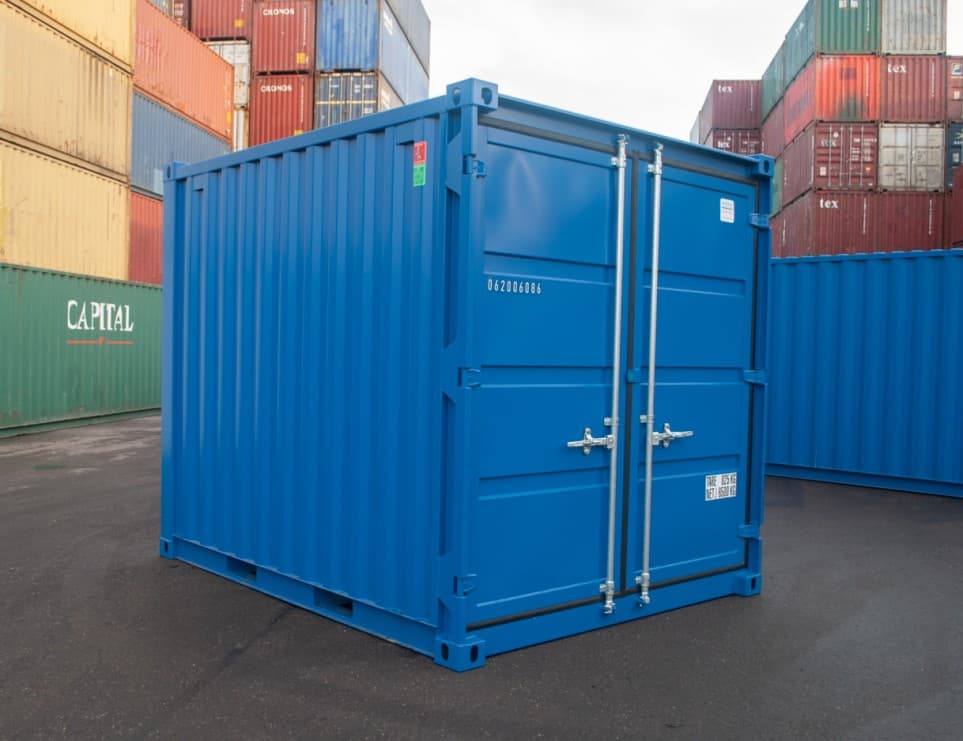
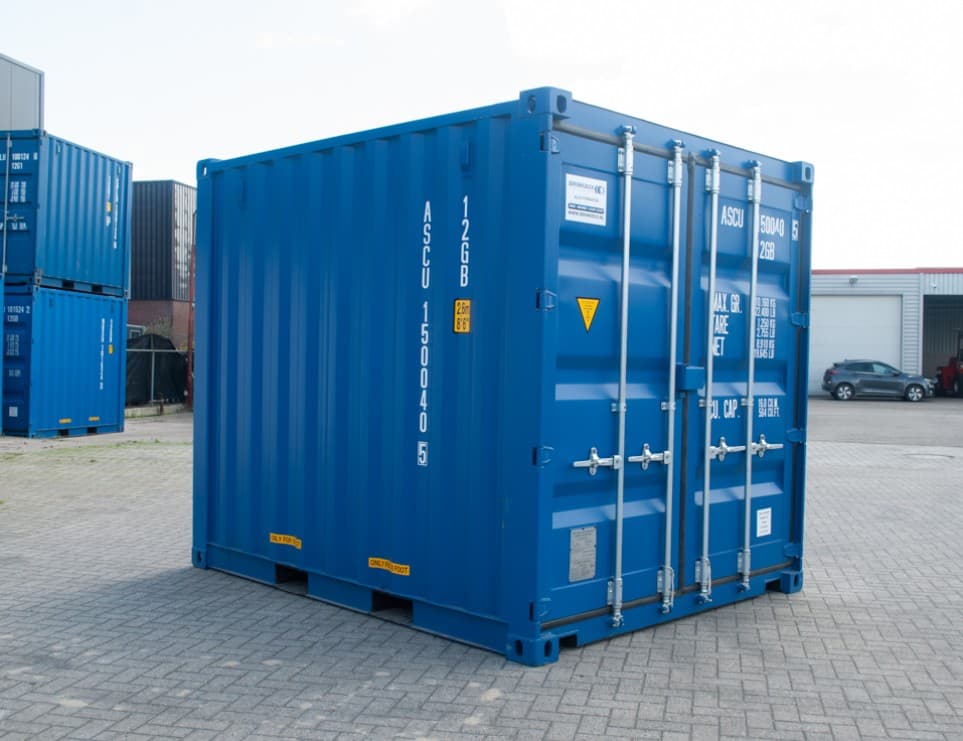
To choose well, it is useful to compare the 20ft Dry with other container sizes and types. The 40ft Dry offers approximately 67 m³ and an internal length of around 12 m; it is suitable for large volumes and group shipments, but it is heavier, bulkier and requires a larger floor area. The 40ft High Cube gains approximately 30 cm of internal height, which is valuable for storing bulky goods or for conversion. The 10ft, which is rarer, is suitable for confined spaces but offers limited volume. The 20ft High Cube combines the length of the 20ft with the extra height of the High Cube: it is useful for tall loads. Open Top containers are designed for loading goods from above, while Flat Racks have no side walls for out-of-gauge loads. Reefer containers are fitted with a refrigeration unit for transporting perishable goods; they are heavier and more expensive, and their use for static storage is less common. Finally, a new container offers superior watertightness and appearance, but at a significantly higher price; a used one, inspected and checked, offers good value for money for many applications.
An often overlooked point concerns ground preparation and installation. A loaded 20ft container can weigh several tonnes; it is therefore essential to provide a stable, level support. Concrete blocks, hardwood beams or load-spreading slabs are commonly used. Soft or sloping ground can cause structural deformation and difficulty closing the doors. Accessibility for the delivery truck and the clearance needed to manoeuvre the double doors must also be considered. If the container is to remain in place, periodic checks of flatness and absence of corrosion at the bottom rails are recommended.
In terms of security, a closed container is difficult to break into, but it is not inviolable. Adding a quality padlock, or even a reinforced locking system, improves protection. For sensitive storage, a standalone alarm or motion-detection lighting can complement the setup. It is also advisable not to store chemicals incompatible with steel or wood without precautions, and to comply with the storage rules specific to each product.
The question of thermal insulation also deserves mention. An uninsulated container is strongly affected by temperature variations: it can become very hot in summer and cold in winter. For storing sensitive materials, insulation with rigid panels or spray foam can be considered. For office or workshop use, full insulation with ventilation and heating is necessary. This work must be carried out in compliance with safety rules, particularly regarding electrical installations.
Finally, the environmental impact of reuse deserves emphasis. Choosing a used container means extending the life of an already-manufactured industrial unit and avoiding the production of a new one. This approach is part of a circular economy logic, without compromising functionality. A well-maintained container can serve for several decades in static storage.
To go further, let's examine the practical arrangements for delivery and installation, as these often determine the success of the project. A 20ft container is transported on a container truck equipped with a hydraulic arm or a high-capacity forklift. Delivery requires sufficient vehicle access, manoeuvring space for the truck and a flat drop-off area. Where access is difficult, it may be necessary to transfer to a smaller truck or use a mobile crane. These operations must be anticipated with the carrier to avoid additional costs and delays. Once positioned, the container must be shimmed and checked: the doors should still open and close easily, indicating that the structure is not under stress.
Regarding lifespan, a well-maintained used container can remain watertight for many years, especially if used for static storage and not subjected to the repeated cycles of sea transport. The main ageing factors are corrosion, mechanical impacts and prolonged exposure to salt or moisture. Near the sea, rinsing with fresh water and more frequent paint checks are recommended. In industrial areas, particle-laden air can also accelerate soiling; periodic cleaning is generally sufficient.
Let's finish with some additional buying advice. Before placing an order, it is useful to request recent photos of the container, particularly of the corners, roof, floor and doors. If possible, a site visit allows you to see the actual condition. For export use, check that the container is indeed ISO 20ft type and that its CSC plate is legible. For storage use, the absence of holes and through-corroded areas is essential. Finally, comparing several offers helps to gauge the price and choose a container suited to your needs, without overpaying for unnecessary options.
In summary, the used 20ft Dry shipping container is a robust, standardised and versatile product. It is suitable for both temporary and permanent storage as well as goods transport, and can serve as a base for light conversions. Its Corten steel, 28 mm marine plywood floor and doors fitted with checked seals make it a rational investment for professionals and individuals alike. Before purchase, a careful check of the structural condition and watertightness remains the key to fully enjoying its longevity.