Description
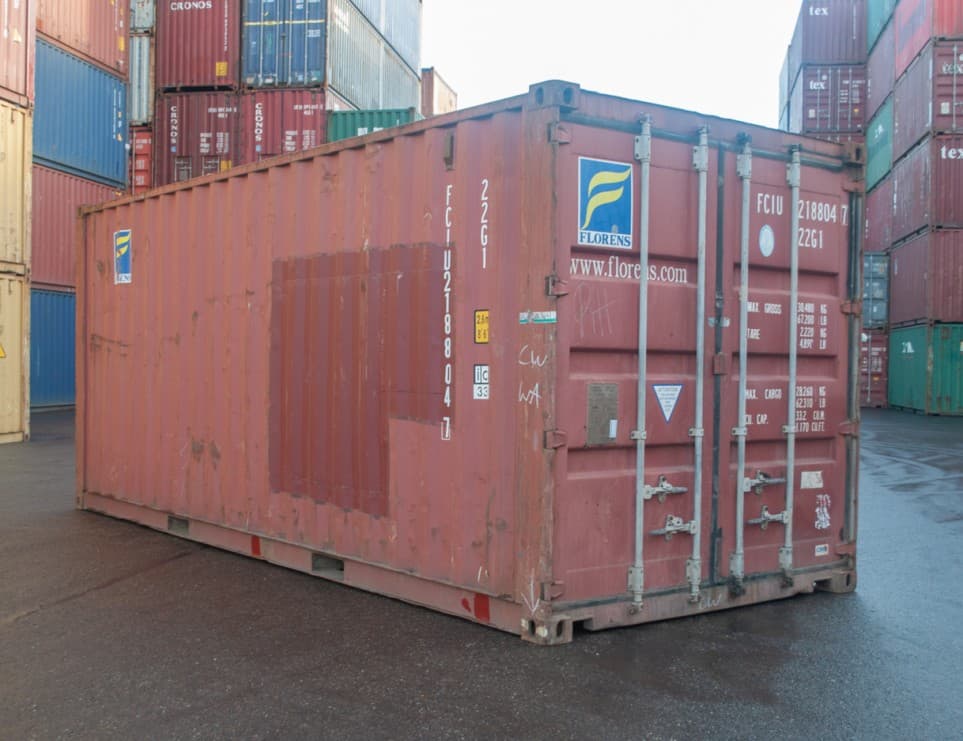
The used 20ft Dry shipping container is one of the most widespread storage and transport equipment in the world. Its standardized design, robustness and low acquisition cost make it a sought-after solution for both individuals and professionals. This used model is inspected and tested watertight, with a Wind & Watertight guarantee: the doors close properly and the seals are checked, ensuring effective protection against weather and dust. It offers a usable interior volume of around 33 m³, a secure space for equipment, archives, goods or construction site gear.
To fully understand what you are buying, it helps to look at the standard governing this type of container. 20ft shipping containers, often called TEU (Twenty-foot Equivalent Unit), comply with ISO 668 for dimensions and ISO 1496-1 for technical characteristics and testing. A standard 20ft Dry container measures approximately 6.06 m long, 2.44 m wide and 2.59 m high externally. Internally, usable dimensions are around 5.90 m long, 2.35 m wide and 2.39 m high, which gives that roughly 33 m³ of volume. Tare weight generally ranges between 2,200 and 2,400 kg depending on the manufacturer and reinforcements. The maximum permitted payload is around 28,000 kg, but it depends on the maximum gross weight (MGW) shown on the CSC plate fixed to the door. These benchmarks help you verify the consistency of the stated specifications and prepare your storage or shipping project.
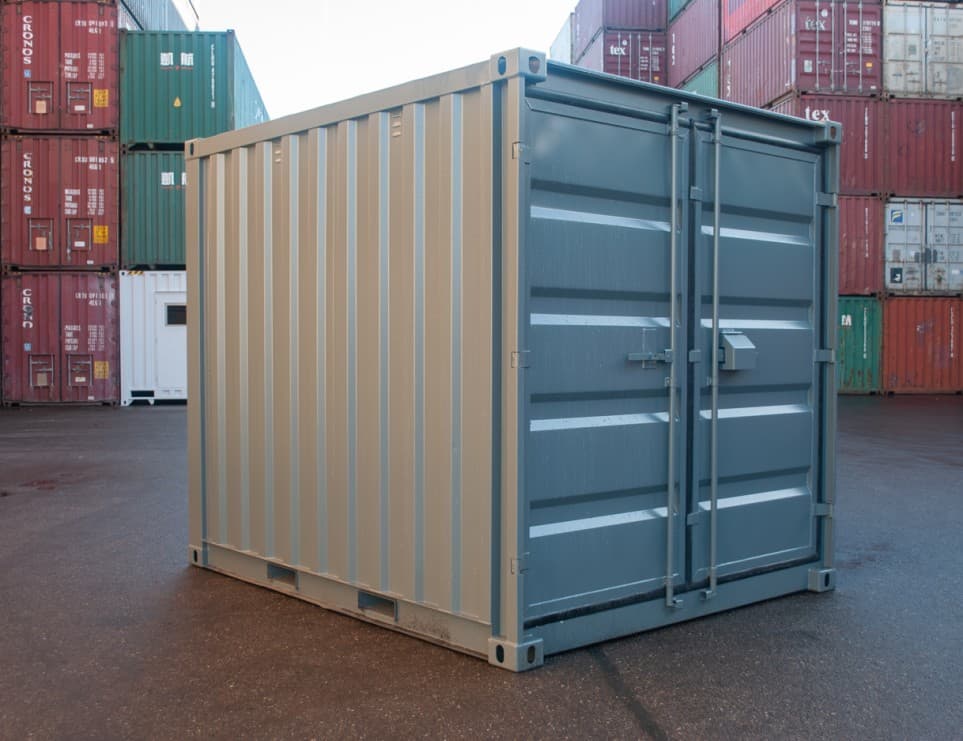
The structure is based on a Corten steel frame, also known as weathering steel. This steel contains alloying elements such as copper, chromium and nickel that allow it to develop a protective oxide layer on the surface, slowing internal corrosion. This explains the longevity of shipping containers, even when exposed outdoors for years. The side walls are made of corrugated steel sheets, the roof is slightly curved to drain water, and the floor is 28 mm marine plywood, treated to resist moisture and rolling loads. This floor easily supports trolleys, pallets or suitable handling equipment. The rear doors are double doors fitted with container locks (locking bars, handles, latches) and rubber weather seals. On a used container, these seals are wear points to check: a supple seal, free of cracks or permanent crushing, ensures airtightness and watertightness.
The uses of a 20ft Dry container are many. The most common is static storage: construction equipment, tools, furniture, archives, seasonal stock, agricultural or leisure equipment. Its compact size makes it easier to install than a 40ft, especially on urban land or small plots. It can also serve as a base for conversion: site office, technical room, workshop, changing room, or even modular housing after insulation, ventilation and electrical work. In that case, you need to plan for insulation (for example mineral wool or rigid panels), a raised floor, ventilation and protection against condensation. The Dry container is not designed to be habitable as is: without insulation or ventilation, condensation and temperature swings make it uncomfortable. For regulated use (public access, workplace), additional requirements apply and it is wise to consult a building professional.
Another frequent use is export or sea transport. The 20ft Dry container is the benchmark for shipping miscellaneous goods, as it is accepted by all shipping lines and handled by all equipped ports. Before any export, check that the container has a valid CSC plate (Convention for Safe Containers), which certifies its compliance for transport. This plate shows the date of the last periodic examination and the maximum permitted weight. A used container intended for export must be clean, dry, odour-free and free of residues from previous goods, especially if it carried food or dangerous products. Customs authorities and carriers may refuse a non-compliant or poorly maintained container.
When buying a used container, several points deserve your attention. First, the condition of the structure: look for perforating rust, significant deformation on the walls or roof, or unprofessional repair welds. Slight surface oxidation is normal on a container that has sailed, but it must not have pierced the steel. Next, the floor: check that it is not rotten and has no soft spots or holes. A sound floor is essential to support loads and prevent moisture. Also check the doors: they must open and close without forcing, the locks must slide, and the seals must be supple and complete. Excessive play or missing seals compromise watertightness. Finally, examine the CSC plate and markings: they indicate the tare weight, payload and date of the last inspection. A container without a legible CSC plate can cause problems for transport.
Maintaining a shipping container is relatively simple. Regular cleaning with clean water and mild soap removes salt deposits and pollutants, especially near the sea. Avoid overly powerful pressure washers on seals and rust areas. For small corrosion touch-ups, brushing followed by anti-rust paint suitable for Corten steel extends the service life. It is also advisable to lightly grease the door locking mechanisms and hinges. If the container stays stored on the ground, make sure it rests on stable supports (concrete blocks, wooden beams) to avoid direct contact with ground moisture and allow air circulation under the floor. Even minimal ventilation limits condensation inside. Finally, periodically check the watertightness of the roof and seals, especially after strong wind or hail.
Transporting and installing a 20ft container in France follows a few practical rules. A 20ft container weighs over two tonnes empty: it cannot be moved without suitable equipment, such as a crane truck, a high-capacity forklift or a container truck with a hydraulic arm. Delivery must be prepared: sufficient access, stabilized ground, no overhead lines or obstacles. On public roads, transport is subject to regulations on vehicle weights and dimensions; an exceptional convoy may be necessary depending on the route and dimensions. For installation, check local planning rules: in some municipalities, a container used as a permanent structure or storage may require planning permission. A container simply placed and used as temporary storage is not always subject to the same obligations, but it is wise to check with your local planning department. Moreover, if the container is intended to receive the public or workers, the safety and hygiene rules applicable to workplaces apply.
From an environmental standpoint, buying a used container is part of a reuse approach: you extend the life of an already manufactured industrial item, avoiding the production of a new container and the associated resource consumption. A well-maintained container can serve for decades in static storage. At end of life, Corten steel is recyclable. This is one more reason to choose used when the use does not require perfect aesthetics or new-standard watertightness.
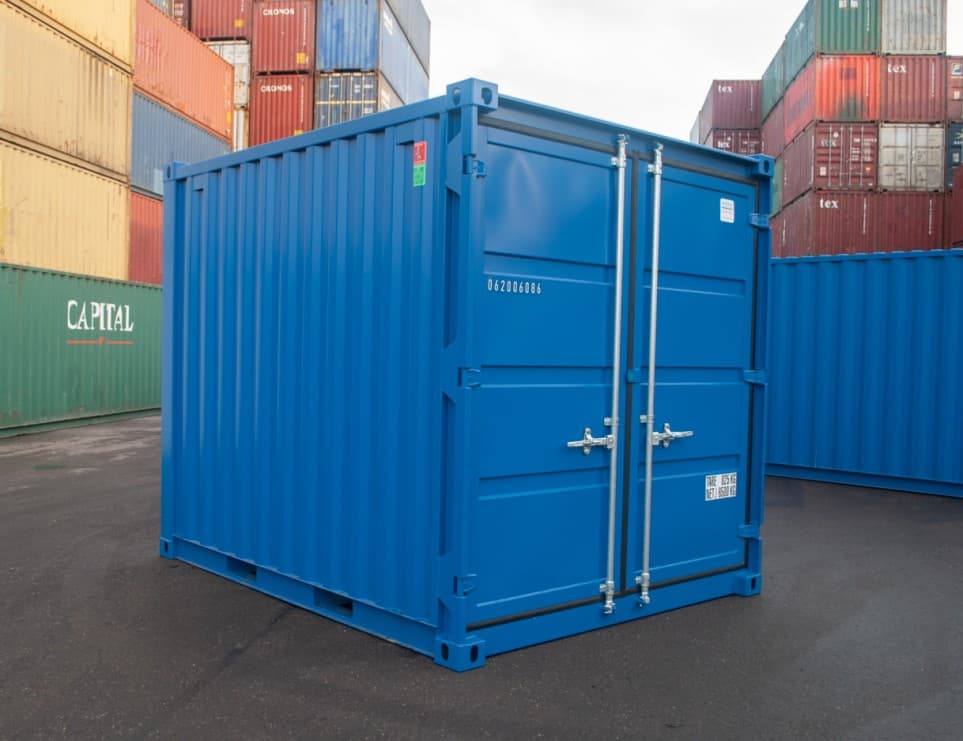
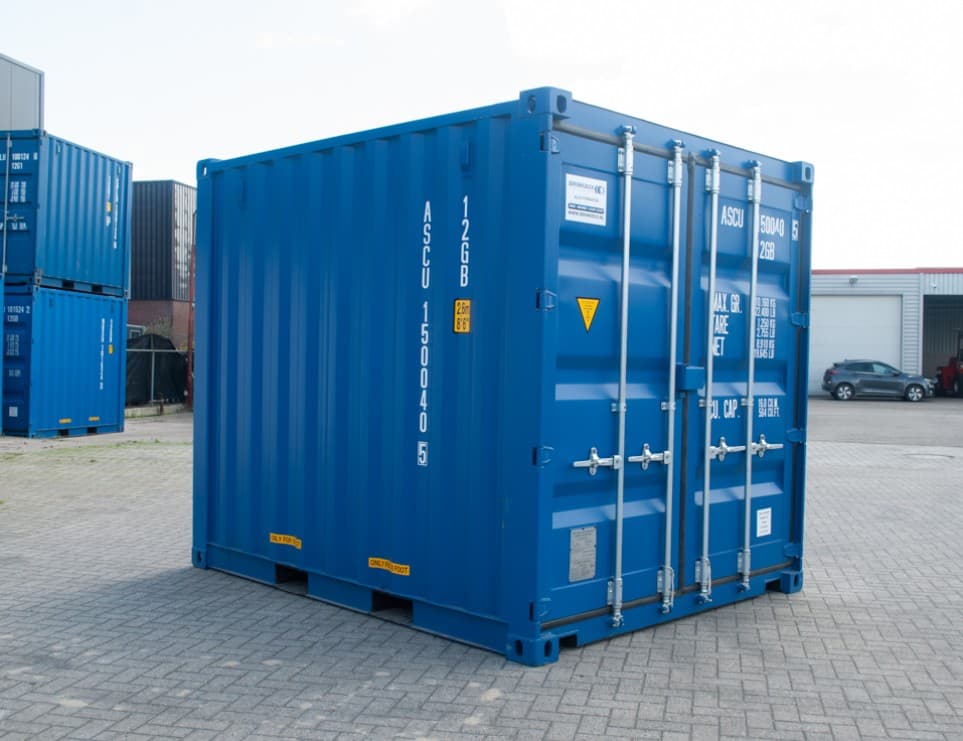
To choose the right container, it helps to compare formats and types. The 20ft Dry is suitable when you need moderate volume, easy installation and a controlled budget. The 40ft Dry offers about double the volume (nearly 67 m³) for a price often less than double that of a 20ft, but it requires more ground space and more powerful handling equipment. The 40ft High Cube gains about 30 cm of interior height, which is valuable for storing tall items or for interior conversion. The 20ft High Cube also exists, though rarer, with the same length but greater height. Conversely, 10ft or 8ft containers are more compact and easier to fit in urban settings, but their cost per cubic metre is generally higher. The 20ft Dry remains the best compromise between footprint, volume and availability.
Other container types meet specific needs. The Reefer container is insulated and fitted with a refrigeration unit: it is used to transport perishable goods or temperature-sensitive products, but it consumes energy and costs more. The Open Top container has a removable open roof or a tarpaulin, allowing tall or bulky items to be loaded from above, such as machinery or out-of-gauge parts. The Flat Rack container has no side walls or roof: it is a platform with foldable sides, designed for heavy or bulky loads (machinery, tubes, structures). The Tank container is a cistern in an ISO frame, for liquids. Finally, the High Cube container stands out for its extra height. For everyday storage or shipping of dry goods, the standard Dry, and in particular the 20ft, remains the simplest and most economical choice.
In practice, several sectors commonly use the 20ft Dry container. Construction and public works store tools, materials, PPE and small equipment on sites; its mobility allows it to be moved from one site to another. Agriculture stores seeds, fertilizers, machine parts and crops away from moisture and rodents. Trade and logistics use it as a storage annex or shipping unit. Local authorities and associations find it a solution for storing event, sports or cultural equipment. Individuals use it for furniture, archives, leisure vehicles or bulky items when their garage or cellar is no longer enough. In all these cases, the container provides security against theft, weather and dust, provided it is properly closed and maintained.
Before finalizing your purchase, it is recommended to check a few documents and markings. The CSC plate, mandatory for sea transport, must be legible and up to date. The container identification marking (owner code, serial number, country code, type) allows its history to be traced. The maximum gross weight, tare weight and payload are shown on the door. If you are buying for professional use, ask for an invoice mentioning these elements, as well as the container's condition. For export use, make sure the container has not carried dangerous goods without proper cleaning; in some cases, a cleaning certificate may be required by the carrier or the destination country. Finally, if you plan to modify it (cut openings, add insulation), be aware that such changes can affect ISO compliance and resale value: it is better to entrust them to a professional.
This used 20ft Dry container is offered at the price of €1,350.00. This pricing corresponds to an inspected, watertight-tested container, ready for use for storage or export. The price may vary depending on actual condition, availability and delivery options. We invite you to contact us to find out about available models, arrange a visit or obtain a transport quote. Whether you need secure storage space on your site, a site office or a container to ship goods, this 20ft Dry offers a volume-to-price ratio that is hard to beat. Its ISO standardization ensures compatibility with handling equipment and ships, which simplifies logistics operations. With minimal maintenance, it is a durable and scalable investment that you can move, resell or convert as needed.